Home Blog Page 87

Dreii PS4 ( PSVita) Review

Dreii is an odd little game. With a simple but pleasing asthetic, it draws you in with a deceptively simple play style that quickly becomes one mean mother of a time sink that grips you and won’t let go. Reminding me of the flash games of old (albeit waaaay prettier) this physics engine puzzler  is not only great to look at but the PS4 release is smoother than a baby’s backside.

This game has already won a whole bunch of rewards, and deservingly so. In the same vain as the new wave of explorative games, or “anti” games ( I hate that term), Dreii invites you to play the game under your own terms, and discover how to play on your own. Like Hohokum and Env, you are dropped into the game and taken on a stylistic journey throughout it.

The puzzles begin as fairly simple, but you quickly learn to adapt to the increasingly complicated physics of balancing the various shapes and laterally solving the problems presented to you. This coupled with a soundscape that is incredibly pleasing makes for a peaceful and gently challenging experience for the player.

Where the game shines though is in its inclusiveness. Featuring a rare type of crossplay coupled with a myriad language settings, Dreii’s mission statement is bringing people together, almost to the same level as Journey. The best way to experience the game is through crossplay, but you can have a great time soloing the game, too.

Not convinced? check out the below.


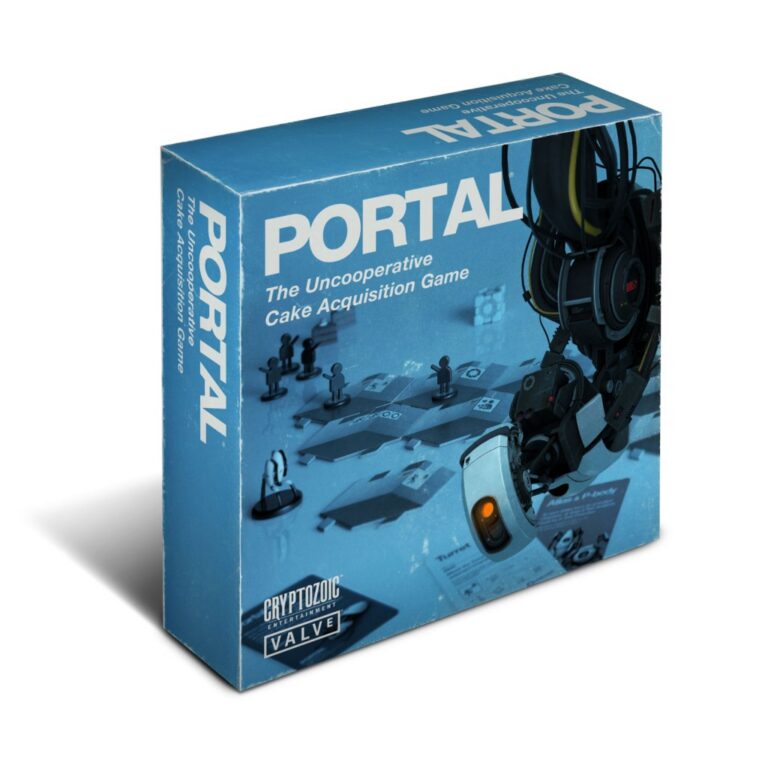
Portal: The Uncooperative Cake Acquisition Game

Opening up the ‘TESTING AND SAFETY INSTRUCTIONS’ manual, you’re greeted with a message from Aperture Science (the scientists who constructed the Test Chambers in the Portal series) with instructions to “please read the following in an authoritative and slightly condescending, yet, excited tone to the other players”:

Hello, humans.
Now that you’ve been awakened from your Covert Hibernation Vault™, it’s time to resume testing. To motivate the best results, you’ve been divided into divisions and assigned a jumpsuit in your new favorite color. The best performing division will be forever remembered in the history book I’m writing entitled: “Team of Rivals: The Scientific Genius of <insert jumpsuit color here>.” Good luck!

A couple of years ago Portal 2 was one of my favourite games. It was fun, it was interesting, it had puzzles, and it had a humour I couldn’t get enough of. So, when given the chance to play the new Portal board game, I jumped at the chance to give it a go.


The box itself is a testament to the humour of the series, as it looks beaten up and weathered, like one of those old games you got for Christmas and just forgot in the attic. The bottom features an image of a rather unenthusiastic ‘family’ playing the game, whilst being monitored by two shadowy figures with clipboards (because as Adam Savage once said, “the only difference between Science and screwing around is writing it down”).

Setup and Gameplay

So, how is it played? Well, first off you set up fifteen Test Chambers, arranged in three rows of five. Players add their Test Subjects to the Chambers (one on top,  two in the middle, and one on the bottom). Turn then goes as follows

  • If you are in possession of any Aperture Cards, you may choose to play any number of them.

What are ‘Aperture Cards’? Well, as you play you can gain these cards through a variety of actions, such as only moving only one Test Subject. When the card has been used, it gets discarded to reveal a Character Card, which edits the rules of the game. For example, it can introduce a rule that at the start of a players turn, the player can swap one Aperture Card with another player’s.

Or, you can sacrifice a card’s effect to fire off your Portal gun once per turn

  • Choose a single Chamber containing one or more of your Test Subjects, and move some or all of them into a Chamber adjacent to the one they are in.

So, you can move one or more of your Test Subjects from one Test Chamber to another connecting Chamber. This can be backwards, or even up or down to a Test Chamber in a different row. What you cannot do is choose to move multiple Test Subjects in different directions.

Additionally, if you choose a Chamber with a Portal, you may move through to the Chamber with the other Portal, skipping sections of the Laboratory.

  • Activate any one Chamber on the right-hand edge of the Laboratory (the entirety of the board) by placing a GLaDOS token in it. The player with the majority of Subjects in the ‘activated’ Chamber earns that Chamber rewards. Additionally, you can ‘deliver’ any newly rewarded Test Subjects to one or more of the starting Chambers (left-hand) of the Laboratory.

So, it’s hard to have a Portal game without GLaDOS, who here is used to determine which of the far right Chambers is to be activated. The Player with the most Test Subjects in the ‘activated’ Test Chamber receives the rewards displayed on that panel. You can earn a new Test Subject (delivered to one of the starting Chambers), a Cake Slice (again, delivered to one of the Starting Chambers), and may receive an Aperture Card (a player may only have a maximum of 3 in their hand). If the icons are there, then the Companion Cube  or Turret are also activated (more on them later).

  • Recycle the ‘activated’ Test Chamber by flipping the Panel over (destroying all Test subjects and Cake slices in that Chamber) and adding it to the new edge of the Laboratory. Place the GLaDOS token near the old edge of the Laboratory.

So, after all the icons in the Chamber have been dealt with, then the time comes to flip the Test Chamber over, and add it to the other side of the board (although you can choose to place the Chamber in a different row, all rows must be at least three Chambers wide). All Test Subjects are collected by their owners for further testing, and all Cake is incinerated and cannot be reclaimed. Other tokens, such as Portals, stay in the ‘recycled’ Chamber’.

Win/End Conditions

If any player has no Test Subjects on the board, or has all 8 pieces of their Cake Slices incinerated, then the game ends. At which point, the player with the most Cake Slices on the board is declared the winner. If there is a tie, then the winner is the tied player with the most Test Subjects in the Laboratory.

If any divisions are still tied, they may appeal their cases in 10 words or less to the other divisions (or anyone nearby) and put it up to a vote. None of these 10 words may contain the letter ‘E’.

Good Luck!

Extras

Now, in the third part of the turn, I mentioned Companion Cube and Turret.

  • The Companion Cube is placed in any Chamber. Because the Companion Cube is designed for optimal friendship, no Test Subject may earn rewards from a Test Chamber that contains the Companion Cube.
  • If the Turret icon is activated, then the Turret figure can come into play. It is either placed on one of the far-left Test Chambers, or (if it is already in play) can be moved to an adjacent Chamber. All Test Subjects in the same Test Chamber as the Turret are destroyed.

Additionally, Cake which is placed on the board may be ‘carried’ by Test Subjects. Only one Subject can carry one Cake Slice…and it is worth noting that the Cake Slice you can carry doesn’t have to be your own (which grant you the opportunity to carry one of theirs to the incinerator)

Sample Game

I know my Portal, so I decided that I would be testing with the mindset of a fan who had picked it up because they were familiar with the series. I recruited someone who had no prior knowledge of the series (to the extent that midway through the match they looked up at me and admitted that they were confused about why the game revolved around cake) to test it with the mindset of someone who likes to play boardgames.

At the end of our gaming session, I came to the conclusion that the game does a fantastic job – in both packaging, instruction manual and tone of the game – of emulating the humour and atmosphere of the Portal series as a whole. Through my opponent, I came to the conclusion that although it seems a little confusing for someone with no prior knowledge of the series the game is fun and most definitely has replay value.

There were a few issues coming into the game. For starters, the game seemed a little daunting at the start, and resulted in the rule book remaining open just so we could check it every so often. Another thing is that the instructions at time can be a little vague – when the Test Subjects get ‘destroyed’ by a Turret, are they brought back to the hand or are they permanently dead (we settled for permadeath, as it meant we had to be especially careful with the turret)?

However, one of the main issues we came across wasn’t how the game played, but how it looked. To be more specific, the Testing Chambers interlock like puzzle pieces. However, it is tough at times to get them to fit and can get damaged quite easily. One way to fix this is to keep the chambers separate but in line with each other, so you know which Chamber is in which row (so you don’t make the puzzle pieces connect, but still make the picture).

Another issue we found was that the Portal and GLaDOS tokens are small and could be easily lost or misplaced. In fact, one thing my opponent noted was that it was a shame that GLaDOS didn’t get the same figurine treatment as the Turret or Companion Cube, especially considering how important she is to the game. I guess it’s a small issue, but I do agree a little bit.


Overall, we had a good time. Despite the fact that it starting off slow, we eventually found our stride and had a lot of fun with it. There is definitely replay value, for both fans of the series and those who haven’t played the games before. Just be aware that if you are playing with someone new to the series, all the quotes you’ve stored in your head are probably worthless.

The game also comes with a Steam Activation Code for Portal 2 to play on your computer, so you can get those who have yet to play the game to give it a go.

Portal: The Uncooperative Cake Acquisition Game can be bought for £35.99 here

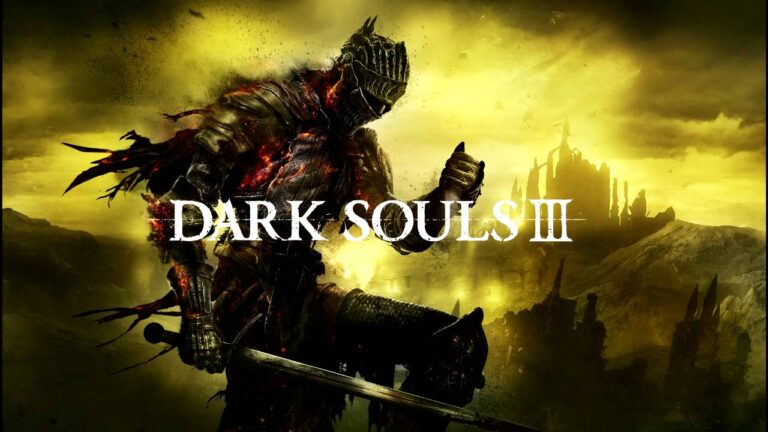
Dark Souls 3 Review

0

DarkSouls3

In the opening cinematic for Dark Souls 3, the narrator tells you that ‘the Lords go without thrones.’ Originally, I took this to mean that they do not have their thrones, that they have been taken away. About twenty or so hours into the game, following the plot and dying, oh God dying, so much dying progressing without any real problems, I realised that this actually meant that the Lords have abandoned their thrones. They are in hiding, all but one shirking their responsibility to reignite the First Flame. Once I’d worked this out, I felt a small sense of satisfaction, a knowledge that I’d put something together that From Software wanted me to work out.

That sense of working out a tough problem or coming up with a novel solution is the very essence of every game in the Soulsborne genre, particularly those from the masters From Software, and this essence is very much the core of the Dark Souls 3 experience. It is a fantastic entry into the series, though not one without its flaws.

Concentrating on the gameplay stuff first off, the combat in DS3 is somewhere between Bloodborne‘s fast pace, Dark Souls 2‘s fluidity, and Demon’s Souls overall weightiness. Parrying is more difficult than in Dark Souls or Demon’s Souls, but a little more forgiving than Dark Souls 2. Backstabs are not instant but have a small checking window, during which time it is very possible – believe me – to fail and look like an idiot as you slowly pull back for a coup de grace that won’t happen. Power-stancing is gone, sadly, but there are twin weapons that replicate this effect. Shields overall have been nerfed, with enemies either doing large amounts of stability damage with their attacks or having long, multiple-hit combos that will break your guard. As such, you’d better get used to dodging.

https://www.youtube.com/watch?v=LUIQR2iK7uI&nohtml5=False

This latter change was the first problem I had with DS3, but it’s more of a problem with my play style in these games. Adaptation and learning from your mistakes is the core of any Soulsborne game, after all.

Almost every aspect of the design is flawless. The visual aesthetic starts off a lot like Bloodborne, gothic towers and decrepit shanty towns, but quickly reverts back to the medieval fantasy genre. Enemies now look grotesque but also withered, drained, or bloated with unsavoury miasma. The level design is absolutely stellar: it has astonishing verticality, a good number of shortcuts and intricacy, with some very well-realised traps and set pieces. The Smoldering Lake is one of my favourites, with an enormous ballista on one side and a giant lightning skeleton worm (you heard me) on the other. And the soundtrack… the soundtrack is beautiful as always, composed with the skill and care of masters.

Dark Souls 3 takes a lot of cues from the previous games – more on that later – and one of the big improvements to a common complaint from Dark Souls 2 is in the number and complexity of the covenants available. For those who don’t know, covenants are like factions the players can join where you can either be summoned automatically to help/kill other players or choose to co-operate or eviscerate in others’ worlds. There are so many covenants with some being very obscure to find and it adds to the feeling of hidden depth and unearthing secrets that fills the game.

DD3-noscale

This hidden depth applies to the plot too. I think I know what happened, but I’m still not sure. For example, the Hollows that explode into black masses of Dark still don’t make much sense to me. I did discover one of the optional areas and get one of the ‘secret’ endings during my playthrough, choosing to betray the world, but I think there is at least one more secret ending available. It’s again the kind of game you need to piece together yourself, just like in Dark Souls.

Which leads me onto one of my bigger problems with Dark Souls 3 – which is like criticising the third best oral sex you’ve ever received – and that is just how much the game reveres and refers to the original Dark Souls. Enemies and set pieces are taken directly from the first game, as are a couple of areas. I understand the logic of cycles – and even of sequels – but this all felt a little too much like fan service. Dark Souls 3 is strongest where it doesn’t copy its predecessor. Yes, it takes a lot from Demon’s Souls as well, but these are cues and not direct references. It’s really the major sticking point I’d have on giving this game a 10/10.

Another, lesser gripe is the ‘Heat Up’ mechanic that was played up so much pre-launch is just an excuse to have every boss in the game be a two-stage boss. Two-stage bosses can be brilliant – see Ludwig the Accursed in Bloodborne: The Old Hunters for an amazing example – but having almost every single boss be two-stage cheapens those that were well done, like the game’s final boss. There needed to be more variety in the boss’ mechanical design. I hope to see this in the forthcoming DLC packs.

dark-souls-iii_2015_10-15-15_009

And while we’re on gripes, there are a few balancing issues in the game. Some of the bosses do a lot more damage than it feels like they should, and the hitboxes on some of the grab attacks are messed up. I had a Mimic attempt a grab whilst facing away from me, but, because its ankle touched mine, it did an instant 180 and killed me. People complained about Dark Souls 2‘s grabs… well, they’re back with a vengeance, unfortunately. Which is all the more worse because some of the hardest bosses have grab attacks!

For me, these gripes are enough to knock Dark Souls 3 down from being the best in the series – that’s still probably Bloodborne or the game this one loves so much, Dark Souls – but they’re far smaller problems than 99% of games have. This is still another masterpiece in the Soulsborne series, a deep and intricate piece of craft worth two hundred hours of anybody’s time. If you’ve not already bought it then you definitely should.

Review of Doctor Who: The Ninth Doctor #1

0

The 9th Doctor is the one that many, including myself, would like to have seen with a longer run on the TV show. Christopher Eccelston’s portrayal brought a new era of Doctor Who and put the term Whovian back in mainstream. But with only one season with 9, fans often wonder what could have been.

Cover A
Cover A

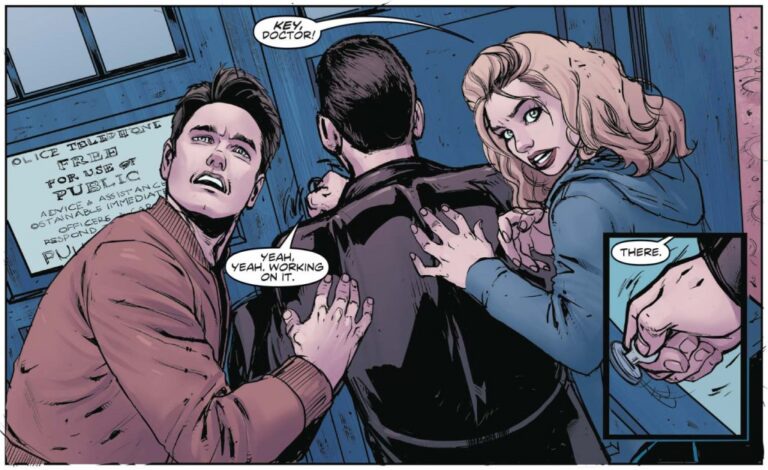
Doctormania is the first issue and the start of a three part story. Whovian’s will find themselves thrown back into the adventures of the Doctor and Rose in the ongoing series from Titan Comics. With Rose and Captain Jack by his side the Doctor finds himself attracting unwanted attentions of a fangirl on an alien world similar to ours for their love of celebrity obsession, selfies and hard core fans. When the Doctor and Jack get themselves arrested for identity theft, Rose heads off to find out exactly what is going on. This first part of three ends with the reveal of a familiar enemy.

The great thing about this issue is that I am able to imagine the characters we know and love delivering the dialogue, it doesn’t feel out of place and is keeping with the characters. Cavan Scott has written the 9th Doctor in last years mini-series and it’s clear he knows these characters.

The 9th Doctor #1

The story is instantly captivating with action from the start, a little TARDIS time and a new world to explore, it also eludes to a larger story arc without taking away from the immediate adventure. It is fun, intriguing and a little bit meta however the choice of enemy feels a little over used at this point and fans may want to see something new. From a writers point of view there is a tendency to go with what you know will hook fans of the 9th Doctor’s season and I must confess I smiled at the reveal.

The artwork from Adriana Melo is impressive, perfectly capturing the likeness and facial expressions of the Doctor and Rose, though I didn’t feel this was done as well with Captain Jack. The quality of the drawing fits nicely in to the whole experience of familiarity and doesn’t distract you from the story at hand. This first issue is available with a number of variants including artwork from Shea Standefer and Blair Shedd. 

The 9th Doctor
Variant Covers

With writing and artwork this fantastic, I’m looking forward to the next issue and finding comfort in reading the adventures we didn’t get to witness. Fans of Doctor Who should add this to their read pile, particulary those missing the 9th Doctor and Rose.

Doctor Who: The Ninth Doctor #1 hits comics stores and digital platforms on April 13.


Two Historic Space Anniversaries Celebrated Today

0

11 04 12

The 12th of April is a special day for all space nerds out there as it marks the anniversary of not only the first manned flight into space but also the first space shuttle flight. We at Geek Pride are delighted to share two insightful documentaries of these two amazing events.

First Orbit

On a bright April morning on the plains of now modern day Kazakhstan, Soviet air force pilot Yuri Gagarin boarded Vostok 1 and rode the massive booster into the unknown. Orbiting the earth in just under 90 mins, Gagarin really did travel where no man has went before. Whilst he left the earth unbeknownst to the world he came back a celebrity; the poster boy for the Communist regime technical superiority over the west.

garin
Soviet Propaganda Poster celebrating the achievements of Yuri Gagarin


The Americans were lagging behind in every respect of the space race which was ignited when the Russians launched the first satellite less than 4 years before. They continued to rack up the firsts, first woman in space, first three man crew, first space walk, before the untimely death of the enigmatic rocket designer Sergi Korleov.  Whilst the moon landing in 1969 became the symbol of ultimate triumph, some say Gagarin is overlooked in the west due to the cold war politics. However in mother Russia he is still revered as a symbol of a faded glorious era. Gagarin sadly could never cope with his superstar status in the USSR and succumbed to alcoholism. He sadly perished in a flight accident in 1968.

First Orbit was made for the 50th anniversary of the first manned flight into space and is a real time recreation of the event. Best viewed in full screen, this film really gives you a sense of what it was like to fly in orbit.


Hail Columbia 


Space_Shuttle_Columbia_launching
Launch of STS-1 Columbia

Fast forward twenty years later and standing atop launch pad 39 in Cape Canaveral is one of the most technologically advanced machines ever created. A symbol of America in the 80’s, the Space Shuttle Colombia was to revolutionise space travel. Commanded by one of the most experienced astronauts in history, moon walker and Gemini veteran John Young and accompanied by rookie Bob Crippen the flight of STS 1 was to be the most ambitious manned test flight to date.

crew_sts1
Astronauts John Young and Robert Crippen

No one knew what to expect from a space vehicle that was to be launched like a conventional rocket yet be able to land like a glider with pin point precision. The risky test flight went like clock work and was to be the dawning of a new era of reusable spacecraft that would make NASA commercially viable through to the 21st century. However it was not to be. 25 flights later complacency set in and the deaths of the crew of the Challenger STS 51-L in January 1986 put an end to that optimistic vision. Whilst the shuttle retuned to orbit in 1988, the work horse of space would never be the same again. Colombia herself was lost whilst attempting to re-enter the Earth’s atmosphere in 2003 killing all 7 crew aboard. The remaining shuttles, Discovery, Atlantis and Endeavour have now taken their places in American museums having being retired in 2011. Now NASA is working in tandem with private contractors to replace the shuttle with another American manned vehicle.

Hail Colombia is a dramatic look into the mission that was to begin America’s shuttle programme. It was also one of the first IMAX films ever made. Here it is in full.

https://www.youtube.com/watch?v=G7PNAjJFC3s

55 and 35 years later you’d like to think we’d be living on the moon but it’s nice to look back and remember our’ first steps into the final frontier.

Spring is coming! And it brings Games of Thrones!

The highly anticipated show is finally returning to our screens, exactly 12 days from now. If you don’t feel like looking at a calendar, I’ll give you a helping hand and let you know it’s returning on April 24th. Mark that down in your calendars!

However, as if the wait wasn’t agonising enough (it’s not like it’s been a year of unanswered questions and theories, one wilder than the other, after all),  HBO has released a new trailer teasing some of the events in the new series. From what I’ve gathered there’s a recurring theme of: revenge, revenge, some more revenge and oh, yes! A war between the actual enemies: the living and  the dead.

Since I wouldn’t want to suffer alone, I thought I’d share this trailer with you. Enjoy and let the waiting begin. (Or continue really, but it always feels like time moves slower when you’re nearing you goal, doesn’t it?)

Post Apocalypse: Shattered Immersion

It’s a funny thing, the post-apocalyptic genre, and I don’t mean in a comedic sense, not that there aren’t end-times comedies out there. No, I just mean that no other genre breaks my willing suspension of disbelief quite like it, the tiniest of logic errors turns something that should be scary and suspenseful into something I can’t quite take seriously anymore. In short…nothing offers itself up for being picked apart quite like the downfall of society. Unsure what I mean? Well…the internet’s already said it better than I can.

Oh Captain, my Captain.
A Federation education at work.

Sure as hell wasn’t the zombies – this ain’t Land of the Dead, where they’re learning how to use tools again, and I don’t see any roaming flocks of sheep keeping everything neat in The Walking Dead. Now you’re probably thinking – ‘Dude, that’s petty. Is it important to the plot?’ – and on this occasion, the answer is no. It’s not important. But sometimes it can be, and they bring me out of my immersion faster than an in-shot microphone boom. I’ll start you off with a couple of my pet hates and move you up to the big stuff – mainly giving you TWD examples since that’s the biggest name in humanity’s aftermath right now. Then you can make your own list at home…or leave it in the comments.

Why Are You Dressed Like That?

You’ve got two options when it comes to fashion in your average apocalypse. You can go Mad Max, decorate yourself with leather, spikes and warpaint, or you can get somebody to drag you through a hedge backwards, tear up your jeans and get your nice white shirts all dirty. Fallout and The Walking Dead are amongst the best at handling this particular situation – without getting into any spoilers, the hygiene and appearance of the main cast in TWD generally has something to do with their surroundings – if they’re safe, they’re cleaner, if they’re in trouble, they look like it. Outfits in Fallout also come in clean and dirty varieties, so at least somebody is doing laundry.

"Fetishwear for everyone!"
Her hair is kept in place by several giant eyeliner pencils..

The film that most sums up this problem for me is the 2008 film Doomsday. Scotland has been trapped behind Hadrian’s Wall 2.0 because of a deadly virus. Despite having access to every clothing store in the land, the principal antagonists of the film are leather-clad pseudo Picts – even if you say that no evil cannibal will ever stoop to wearing ‘off the rack’, then where the hell are they getting all that leather from? And why does that guy have a can of lager? Scotland’s supposed to have been in apocalyptic quarantine for nearly thirty years. The lager would be gone in thirty days.

Oh God, Showers Are The Best!

I’m looking at you for this one, Series One of The Walking Dead. You had all that camping gear and nobody had a portable shower? I don’t even mean one of the upright tents or any of that fancy kit – for less than a tenner you can go to any camping supply store and buy a twelve litre bag with a shower head attached to it. Some of them even heat themselves up, but I’m sure they wouldn’t melt if you warmed some water up on the fire first.

Placeholder
Bag of water. Nozzle. Clean faces. Simple.

This happens in later series of TWD as well – any time they get a hot shower there’s a montage of how much they’re loving it. I know they’ve got cubicles and privacy in those showers, but they could have been having the hot shower aspect of the hot shower since day one. Until pretty late in the series they never have a problem finding water, so it’s not like they’re doing it to conserve supplies. Clean yourselves up, scrubs!

Gasoline. Is That Still A Thing?

In case you didn’t know…gasoline goes off. Really. It does not last forever, and I don’t mean in a ‘fossil fuels are a finite resource’ kind of way. I mean that it has an expiration date. It becomes useless. I’m sure there’s more out there, but I’ve only encountered one post-apocalyptic show that actually addresses this, and it’s a bloody comedy – The Last Man On Earth. So in all these TV shows, movies and games that are supposed to be about drama and tension would you get rid of a fact of nature that’d cause drama and tension? Just so Daryl can have a motorbike?

Placeholder
This show is an extended advert for RVs, and its working.

I can let Fallout off the hook for this one, since everything is running on the science-magic version of nuclear power, but there are a hell of a lot of shows and movies that don’t address this issue. Mad Max has working refineries in the setting so that’s fine, at least they have an explanation as to how new fuel is being produced, but TWD, Doomsday, half the people with working vehicles in The Last Ship…no excuses guys.

Minor immersion problems or a systematic disregard for realism? Answers scrawled on the safehouse wall, please.

Dark Souls Issue #1

Dark Souls: Breath of Andolus is Titan Comics latest licensed offering written by George Mann with artwork by Alan Quah. It’s a solid romp but it struggles with capturing the essence of the source material.

When I found out that Dark Souls was getting a comic book, I have to say my interest was piqued. Firstly due to my love of the games and secondly because I wondered how it was going to work. To clarify my second point, for me and many others one of the big attractions of the Souls series is that the narrative is given to you piecemeal. It is open to interpretation and serves to provide the world that you play in with an atmosphere all its own. I’m not one to go into the specifics of the plot and I won’t. All I have to say is that the comic’s story seems in the vein of more traditional fantasy fare than the dark, brooding, almost horror like narrative of the games.

However, the book does provide the reader with some touchstones that they will be familiar with from the Souls franchise. The story opens with the protagonist Fira resting by one of the bonfires that are dotted about the Souls world. There is also a cameo by one of Dark Souls‘ most loved and memed characters; although he doesn’t display his usual “sunny” disposition. These are fine nods to the source material and I’m sure there will be more of this sort of thing later on in the series.

The artwork, like the plot and overall narrative feel, struggles to capture the Dark Souls aesthetic. Once again, it looks great and if this was an original straight fantasy comic I feel I wouldn’t be making these comparisons. The colour is too vivid and Fira’s armour is too shiny. When I think of Dark Souls I think of muted colours, weather beaten equipment and decrepit and ruined environments.


Interior art dark souls
That armour is more Skyrim than Undead Burg

Overall, Dark Souls Issue 1 is an ok time. It seems to stick to close to the generic conventions of traditional fantasy comic storytelling and art style. This is disappointing, because it seems that perhaps they have not taken the chance to adopt the source materials unique narrative structure, muted grandeur and foreboding atmosphere. Remember, however, that this is only issue 1, this series has all the time in the world to evolve.

Dark Souls Issue 1 is on sale from the 20th April 

Magical New Trailer for Fantastic Beasts and Where to Find Them

0

You are invited by J.K. Rowling to go back to the wizarding world of Harry Potter as the magical trailer for the ‘Fantastic Beasts and Where to Find Them’ flies in. My response? a lot of OOOOs and AAHHHs even a couple of goosebump moments. There is more magic than we have seen in the previous teaser which is both exciting and reassuring for a film about wizards. We find a little more out about Eddie Redmayne’s character Newt Scamander, get a little tease of these beasts and what appears to be a villainous Colin Farrell as Percival Graves. The goosebumps inducing factors included the mention of Dumbledore’s name and then there is the music. It’s a comforting feeling when a new film has familiarity and serves to up the levels of excitement.

Fantastic Beasts and Where to Find Them also stars Ezra Miller, Katherine Waterston, Samantha Morton, Alison Sudol, Ron Perlman, Jon Voight, Carmen Ejogo, Jenn Murray and newcomer Faith Wood-Blagrove. The film is due for cinematic release on the 18th November 2016.

Blood Rage!

Vikings are pretty popular right now. Numerous TV shows, app games and even board games have been springing up in the last couple of years. Your choice in cardboard Norseman shenanigans is immense with great titles like Champions of Midgard, Raiders of the North Sea and Vikings: the board game. So how did I choose to take my dose of angry beards and dragon-headed boats? Why, Blood Rage!

Kickstarted by Cool Mini or Not in 2015, Blood Rage is a miniatures game based around clans attempting to earn as much Glory as possible during the last days of Ragnarok. Glory can be earned in many different ways as we’ll see in the review below.

The game itself is split into three Ages. At the beginning of each Age, players are given eight cards from which they will draft six to use during the rest of the turn. These cards consist of upgrades, combat cards or quests (the use of each is explained below). Once drafted, players go into the Action phase.

There’s plenty in the base game alone

During the Action phase, players have five different options. Each uses a varying amount of Rage, the currency in the game (think Action points and you won’t go far wrong). These options include:
– Upgrading. This improves the stats of your various models in your clan, or allow you to summon massive monsters to the table, each with their own powers of destruction and dominance.
– Raid: This allows you to place one of your clan into a village in one of the provinces the board is split into. Each province only has limited space so maintaining dominance is vital to good strategy.
– Pillage: The Active player attempts to take the Pillage icon in a Province they have clan minis in. Other players have the opportunity to move their own clan minis into any free villages if they are close enough to the pillaged province. This creates a wonderful cascade of considerations for each player: do I Pillage now and risk a big monster moving in, or wait and see if I can fill all the villages in a province with my own stuff? If two or more clans occupy the same province, a fight breaks out. The participating clans then choose a combat card and reveal at the same time. Each player then adds the combined strength of all their minis in the combat plus any bonus and special effects on the combat cards. The winner takes the pillage icon (which invariably allows then to raise one of their clan stats) plus victory points, whilst the losing clans are sent to Valhalla.
– Move: Simply put, a player can move all their minis in a province to another.
– Quest: These are cards played facedown. During the Quest phase, each player reveals their quests and earns victory points and clan stat increases if they were able to complete them. These Quests tend to be linked to controlling a particular province, or having a lot of minis in Valhalla (so losing minis can in fact be beneficial!)

Play continues in this fashion until either all the provinces have been pillaged or all players run out of rage. At this point the Age advances to the Quest phase, then onto the Ragnarok phase where one of the provinces (and all minis within it) gets smashed! Any minis destroyed this way earn the owning player some glory points (AN EPIC DEATH!) and the region becomes impassable in the next Age. Finally, Valhalla releases and all the minis go back to their owners.

This combination of actions and phases creates a massive variety in choices for the players. Knowing when to Pillage or Upgrade, to send in a ship instead of a monster, or abandon a doomed province all give that wonderful touch of a Euro game whilst enhancing the theme. You actually feel like the end of the world is fast approaching and glory can be yours if you act boldly, planning your next move with care before crushing your foes with a well-timed Pillage. The gameplay runs the perfect balance of choice depth without becoming overwhelming, leading to analysis paralysis.

The artwork is suitable dark and gritty

The upgrade and improvement systems of Blood Rage add the sense of progression you need to keep you engaged in a game like this. Each upgrade card opens new ways to get cheaper minis on the board, or score glory points through more unusual means such as getting minis sent to Valhalla deliberately. The improvements to your clan stats (Rage for Actions, Axes for glory won in Pillage combats and Horns for number of minis you can field) means each turn you can do more and gain more; the feel of your clan getting bigger and more bad-ass from Age to Age is awesome!

That said Blood Rage does have a bit of a learning curve that may put off more casual players. The drafting of cards will reward players who have played before as they understand what tactical paths are available to them based on their opening hand. This makes Blood Rage very unforgiving for new players as it is all-too-easy to be locked out of a game by one bad choice of combat card or upgrade; once you start to fall behind you’ll find catching back up virtually impossible, as your opponents continue to improve their clans, gaining more actions per turn and keeping more minis on the board.

The monster minis that come in the box

The artwork of the game is suitably dark and gritty, evoking the theme of the end of the world amongst clans of brutal men and women in a harsh time. The production values are also excellent with thick token and card stock, plus intuitive graphic design on the player boards and game board, making Blood Rage simple to keep up in terms of ‘accounting’.

It’s the minis however where Blood Rage truly shines. These sculpts are gorgeous, from the tiny Viking long boats, through the individual clansmen to the giant monsters like the troll and the sea serpent. Both a pleasure to behold on the table top and the robustness to survive the ministrations of fumble-fingered gamers, these minis look great even unpainted.


Pictures courtesy of CoolMiniOrNot.