Home Blog Page 249

Elephantmen Volume 6: Earthly Desires

0

In this latest volume, the killer Razorback is dead, but not before taking out two of LAPD’s finest. Flask and the rest of the Elephantmen know her by another name though: Yvette, the leader of the French resistance during the bloody war against China that they were bred to fight. Another killer known as The Silencer has emerged, and is currently holed up in Casbah Joe’s Eye of the Needle restaurant. Meanwhile Sahara, devoted wife of Obadiah Horn (CEO of megacorp Horn Industries and media focal point for Elephantmen) has just informed him that she’s pregnant with his child.

On paper, the idea of Richard Starkings’ Elephantmen seems destined to fail: anthropomorphic animals are genetically engineered and indoctrinated to be killing machines by an insidious corporation, and sold for an eyewatering price, to take part in a war between Africa and China over the remnants of European countries ravaged by a deadly pathogen.  Sounds fun in a disposable pulp-inspired way, however that’s not where this story takes place.

The war has long since faded into history, with the UN emerging victorious- at great cost. The surviving Elephantmen, some 15,000 having been victims themselves, have been granted amnesty, and now co-exist alongside the regular population.

Anthropomorphic animals are for the most part seen in a cartoonish light, due to Disney and Hanna-Barbera’s numerous characters being etched into the fabric of pop culture for decades. Whilst there are several exceptions -like Blacksad from Juan Díaz Canales and Juanjo Guarnido or Bryan Talbot’s Grandville books- this rule still generally applies.  Elephantmen is a story about crime investigators in a bleak future Los Angeles, in a stark contrast to this idea which may be an obstacle for some.  Elephantmen is actually

Hip and Gruenwald investigate the sewers.

spun out from an older title ‘Hip Flask’ which laid the foundations, which is another potential stumbling block.

Despite this, Elephantmen is one of the best titles currently being produced today. Existing seemingly in its own pocket universe- far removed from the likes of Marvel and DC and superheroes altogether.

It should be noted that Elephantmen is not for the casual reader. There’s a lot going on here.

'That's a big hole'
‘That’s a big hole’

‘The Long and Ghastly Kitchen’, for example, features an exploration of the title’s backstory from the perspective of one of Mappo’s scientists, who narrates his life story to a strange individual who has appeared to record his confession.

Seeing the already rich mythology further expanded upon from an alternate perspective is an interesting twist. The exploration of the historical and philosophical underpinnings of animal/human hybrids is impressive stuff alongside the medical science history which gives the story its title. The further demonstration of Nikken (the grand architect of the transgenic program) and his god complex adds another layer to an already despicable character. The crowning achievement though is the sting in the tale of this story.

On the surface Elelphantmen is hard boiled noir blended with dystopian science fiction. Under the surface though it’s about relationships and people just trying to get by. Panya finds herself shacked up with The Silencer despite hating him, Miki and Hips relationship takes a battering after both of them make misguided assumptions on things they’ve seen, a recovering Ebony mistakes Vanity’s platonic love for something more and Sahara and Horn’s relationship underpins the whole narrative.

One of the things that has also been present from the start is social commentary- the most obvious theme being genetic experimentation, but there’s also the examination of racism in a fictional world; Elephantmen being referred to as ‘munts’ by those that hate them, and even a burgeoning black market in Elephantman meat for those that can afford it.

Vanity, Hip, Ebony and friends return from Blackthorne and Dekker's funeral.
Vanity, Hip, Ebony and friends return from Blackthorne and Dekker’s funeral.

Relationships between humans and Elephantmen are frowned upon, and the relationship between Sahara and Horn is a lightning conductor for all the prejudice it generates; the announcement of Sahara’s pregnancy only further complicates things. On top of this, Gruenwald has to tell Hip that the higher ups want him to stop spending time with his girlfriend Miki due to the bad publicity it might generate for the agency.  Miki’s mother disapproves of her feelings for Hip for this very reason, although their relationship is more complicated than even Miki originally thought .

There’s also the recurring theme of war veterans and their difficulty adapting to society. Ebony is the real embodiment of this, being subject to bizarre hallucinations where he is a barbarian, and unable to talk about the visions that plague him with Vanity despite their close bond. There’s a poignant character moment as the still wheelchair-bound Ebony attends the funeral of Blackthorne and Dekker, where he encounters an embittered Elephantman veteran in far worse condition who berates him for being so morose and not taking advantage of Vanity the ‘little hottie’.

Gabbatha brings with him some commentary on religion, as despite being an Elephantman he is a Buddhist spiritual leader. A TV debate with an irate representative from the ‘Children of God’ displays one of the ironies of the series, as Gabbatha comes across as far more ‘human’ than the reverend who dismisses him with the callous refrain ‘And who appointed him a religious leader? Munts should be forbidden any religious affiliation’.

While Starkings’ story may be a rich and involving tapestry of interwoven plot threads another fundamental part of Elephantmen is the art:.an ensemble team of Axel Meddlin, Tony Parker, David Hine, Shaky Kane, Dave Sim and Tula Lotay with colours from Axel Meddlin, Blond and Rob Steen.

Meddlin does most of the heavy lifting here- the double page of Blackthorne and Dekker’s funeral is a sombre display, as befits the setting. It also displays the importance of scale in Elephantmen, with Gabbatha and Trench dwarfing Gruenwald stood beside them, and the wheelchair-bound Ebony still being the same height as Vanity. He handles action and emotion well too, with flashbacks to Ebony fighting and an argument between Hip and Miki both contrasting examples of extremes.

The contrast between Ebony's hallucinations and reality.
The contrast between Ebony’s hallucinations and reality.

Elsewhere several dream sequences are handled with style by Dave Sim and Tula Latay, whilst David Hine and Shaky Kane provide some contrasting artwork for their stories.  

There’s plenty of dry humour too, whether it’s the diners at the Eye of the Needle thinking the irate cyborg is the evening’s entertainment, or the great image of Ebony stood outside a Hooters playing on the different definitions of the word ‘hooter’ in the US and UK. Casbah Joe is a wry play on Camel Joe the logo and advertising image of the American Camel’s cigarettes.

It should be noted how lavishly well-produced these volumes are. The hardback packs over 300 glossy pages, a foreword from artist Dave Sim, an interview with Richard Starkings, a section which features profiles on everyone that contributed, and a dedication gallery to great artist Arnaldo Putzu (responsible for the amazing painted covers of Look In magazine in the 70s and 80s) who died in 2012.

Through profoundly deft characterisation Richard Starkings has created a cast of characters and a stage which is both compulsive and enthralling.

GEEKS MEAN PRIZES #16 – Red Molotov Tees

0

The guys at Red Molotov.com  have teamed up with us to give the Geek Pride faithful a chance to win one of these awesome Tees, in a colour and size of their choice….ooooooouuuwwwwwwwwww

All you need to do, as always, is click the Giveaway Ap on our FB PAGE or below….SIMPLZ

Giveaway will be open until midnight of Sunday the 6th Oct. 

REDMOLOTOV GIVEAWAY

cake-or-death-tshirt_lightoxfordtshirt schrodingers-cat-is-alive-dead-tshirt_design


For a look at the great range of Tees and other Merch check out Red Molotov.com at the following links:

http://www.redmolotov.com

http://www.redmolotov.com/catalogue/tshirts/geek-tshirts.html


 [toggle_simple title=”Disclaimer” width=”Width of toggle box”]This promotion is in no way sponsored, endorsed or administered by, or associated with, Facebook. We hereby release Facebook of any liability. Winner(s) will be contacted by email  after the giveaway ends. If you have any additional questions – feel free to send us an email![/toggle_simple]

Total War: Rome II

This is a special audio, visual and written review. that you can watch, listen to or read… fill your boots and enjoy!


Being a Geek, I have numerous hobbies and activities (so many activities! ) that I enjoy partaking in. Two of which activities (SO MANY ACTIVIETIES!)  I enjoy more than the others, to the point of mild obsession: Wargames and Military History (well I did do a degree in it)

It is therefore understandable that I have been a total war, fan boy since its first incarnation (Shogan total war in 2000) and have loyally bought and played every subsequent title. Here was a set of games that took Military History and strategy gaming, mixed them together, with a pinch of creative licence and came out with some of the best War games around! PLEASURE OVERLOAD PLEASURE OVERLOAD!

Fast forward 13 years, 8 games, 3 spin offs and many ex girlfriend’s later (nothing to do with gaming…. Ok maybe a little to do with gaming… I HAVE A PLOBLEM!)  and we come to not a new game, per say, but a reboot of one the best titles; Rome: Total War, originally named…. Total War: Rome II.

 rome2 2013-09-15 15-51-24-08

Campaign

As you can expect there isn’t a massive change in setting from the original and is focused around Europe, the Middle East and North Africa; which feels a lot bigger after playing what is ostensibly quite a small area in Shogun 2. There is still a great number of nations to play (some broken down into sub factions like Roman clans, Carthaginian dynasties and Greek city states), the map is beautifully rendered, showing off nice little animations when you win or lose a battle, lay siege to a city, sink a ship, or expand your settlements and, as always, when you pick a fight the camera zooms into the two opposing protagonists before you choose to have at it in person or let the computer deal with the action for you.

One nice little add to this total war staple is that if you do chose the computer to fight for you, you can also chose how the computer fights as well: either offensively, defensively or neutrally. Each has its own benefits depending on the situation and the army you face: for example you wouldn’t want to fight defensively if your opponent had mostly skirmishers and ranged weapons because you would just get shot to pieces. Best you take the damage and wreak havoc when you get in amongst them.

Things CA have changed about the campaign map / mechanics are subtle but generally add to the gaming experience. City management is streamlined and despite being a bit confusing to start with (if you are used to the older system) works well; you can now set edicts for provinces you control, giving you bonuses in tax, food production and moral etc; the diplomacy tab gives you more of an insight into why people don’t like you (most of the time they don’t.. WHHHY DON’T YOU LIKE ME!?) Armies are not unlimited, growing as you empire does and you have to have a general for each one; resource centres (like mines etc) are no longer outside the city walls, as in all other TW games but encompassed within.

Armies have different stances when moving: Ambush, forced march, fortify and raid, the latter meaning your army lives of the land and reduces production of the area and increasing civil unrest; when wanting to embark your units to other lands, you DON’T have to build a fleet, as they automatically get ships to take them where they are needed (nice) and lastly you don’t have to recruit garrisoning troops to defend your towns as, depending on the buildings you have within, If you are attacked, you automatically get a defence force comprising of infantry, ships and plebs… one less thing to worry about.

I have to say I was quite impressed with these little improvements (little amuses the innocent and all) especially the fact that you don’t have to have garrisoning units. I always felt bad that those poor jos weren’t getting to see enough action but now when I build an army its sole purpose is to bring it to the uncivilised world… and then get unceremoniously wiped out by a bunch of farmers with rusty spoons and silly hats.

 Rome II battle

Battles

The Battles are, arguably, the main pull for total war fans and for many the sole reason they play the game at all. There is nothing better than building an army, gaining experience and marching it to victory over overwhelming odds, or more soul destroying than doing the same only to be defeated in a close run battle.  Battles are the proving ground in TW and you can be the best administrator in the land, but if you can’t win a stand up fight, you aren’t going to build an empire.

For those purists who worried that CA might mess with the mechanics you can let out a sigh of relief as the combat system, which has barely changed in 13 years, is still alive and kicking; with a few bells and whistles to keep things ticking over.

There are now a lot more options for your generals to use in combat, and so depending on what traits you pick, giving you an edge; capturing cites is not about running to the town square and standing there like a norman, or should I say Roman, as there are numerous points you can conquer; they have merged naval and land combat giving you the chance to engage in coastal assaults, which adds an extremely interesting dynamic to the proceedings; Line of sight has been improved to ‘true line of sight’ so you can really use the terrain to your advantage; and finally, the unit cap, although still 20 can be increased to 40 with reinforcements (a la medieval total war 2) When I found this out, it made me happy.

As with the rest of the game, graphics have been improved and if you zoom in you are met with different faces, gestures, speeches and comical insults, a nice touch that is made all the more satisfying by the introduction of cinematic mode, which allows you to zoom in as if on the march with your troops and move the camera around as if you were filming an epic movie…. Be careful with this new mode though as if, as I did, you forget to come out of it and give your units orders, they will just stand there and take a volley of spears to the face… ouch   

All this being said though, I still feel a slightly underwhelmed. Don’t get me wrong I enjoy the battles and the coastal assaults in particular but as I said, things haven’t really changed that much mechanics wise form previous titles and for me that is slightly annoying. You still have the same sort of formations that you got in Shogun 1 and for a game that ‘prides itself on historic accuracy’, I cant help but be irked by the lack of historic formations and combat options, as well as for the same old problem that if you deploy in a town you cant get too close to the buildings…. No no, perish the thought of garrisoning said tall tower or being able to actually deploy units from one side of an ally to another without a gap!

Also, as much as the AI seems to be slightly more intelligent, blocking off key allys when attacking towns, charging your skirmishers and redeploying to face an encroaching threat, man can it also be stupid. Some prime examples are keeping a chunk of their forces, in a nice dense box so my artillery can bombard them with flaming shot, attacking me (a superior force) when they are on the defence and rigidly sticking to their defensive positions in cities, even though my cavalry is about to trample them to death from behind!

These AI issues also spill over onto the campaign map and some times you will find your huge army, replete with fortifications and support, being assailed by a raiding party of some second rate nation, only to be wiped out, with little or no loss to my forces… thanks for the XP… I guess? Or some ailing city state decides that its time to declare war on you out of the blue even though it has an icecube’s chance in hell to survive… I’ll be having your city then and you women and children as my slaves!

 rome2 2013-09-15 15-52-06-38

Multiplayer

I have yet to play a MP campaign but I am a seasoned vet of Total War MP battles.. the increased challenge of finally beating someone of worth, instead of a mediocre AI, the elation at said victory and the frustration when you finally meet your match, and are defeated by an army of stampeding elephants or spear wielding Spartans camped in a corner.(RAGE QUIT!)

For those of you who do decided to venture into the unremitting and dog eat dog world of multiplayer, CA have laid on a fair few options for you to blood yourself on : MP Campaign, Quick Battles, Historic battles and, of course, head to heads (Ranked and unranked). Again, as above there isn’t a huge change from previous titles but they have tried to mix things up a bit with what is effectively the ability to fight a battle anywhere on the campaign map: Inland, coastal and at sea. My first battle was in the area of N. Ireland that is effectively where my village is… Imagine if the Romans had managed to take Scotland and Ireland eah… that’s a ‘what if’ and a half!

Suffice to say I was slightly impressed by this addition and if you couple it with new tweaks to the battles you will have a pretty good MP experience and one that wont result in battles occurring on the same maps.. over, and over, and over, and over again. Sadly as with good there is always the bad and as much as you get rid of the strategically and tactically challenged AI you will still find spam armies and people who have more interest in winning at all costs than playing a nice balanced game… but hey, War’s Hell and I cant blame the game for people being douchebags.


Conclusion

I am very much a man of, if it is not broken, don’t fix it but I have always longed for more in a total war game, things are always promised and never quite delivered and as much as graphics get better and innovation does come in dribs and drabs It just doesn’t seem to be enough for me and what seems a lot of other people.

Don’t get me wrong it is still a good game, enjoyable and with huge replay ability (especially when they bring out more DLC) but It’s losing its lustre and granted die hard TW fans like me will still probably still buy the new games but if they want to increase their fan base and not alienate the existing one, then they need to make changes and not just stand at the side of the pool and dip their toe in the water.

All in all good game, some nice bells and whistles but still more of the same, with questionable AI.


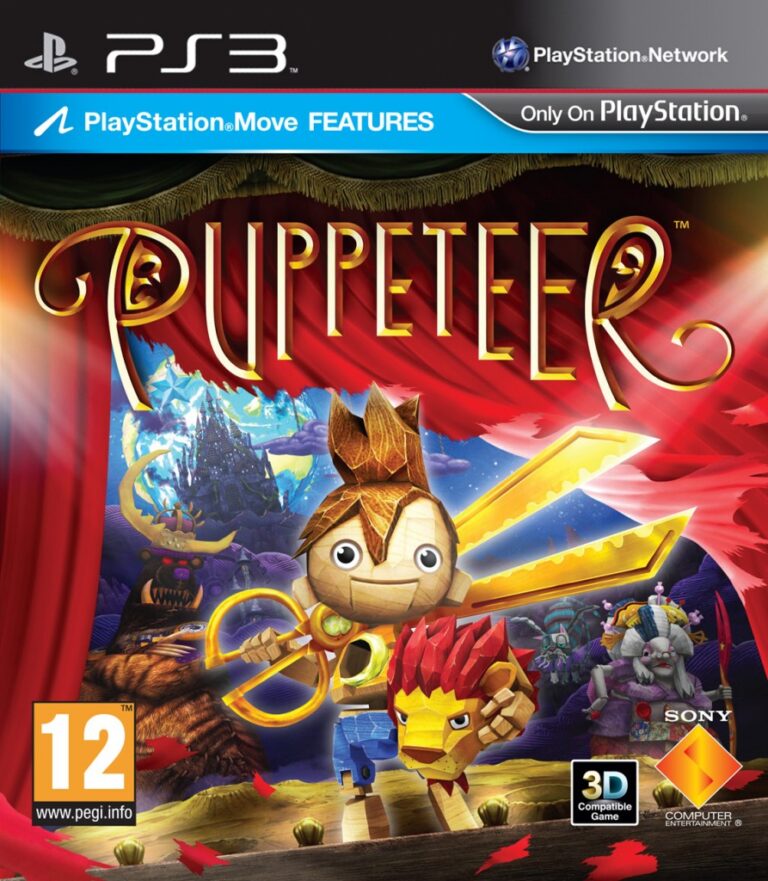
Puppeteer Review

0

It’s not easy being a side-scrolling 2D platformer these days. Development costs are getting larger, end product retail costs are increasing and everyone understandably now expects more from their games than ever before.

Since the original Little Big Planet in 2008, Sony’s first party studios have been at the head of a campaign to prove the continuing relevance of what was becoming a dying genre. Puppeteer from Japan Studio is the latest new IP to use a combination of slick visuals, slightly unique mechanics and comedy in the hope of joining the ranks of Sackboy and Rayman. Unfortunately though, it seems like something just went wrong along the way.

Levels take place across multiple worlds including a castle, on a pirate ship, and under the sea.

A slightly bizarre combination of Japanese game design fused with British humour and style, Puppeteer is the brainchild of Gavin Moore who is most known for his work on the Siren survival horror series and the PS2 Grand Theft Auto clone; The Getaway.

Puppeteer follows the story of Kutaro, a young boy who’s soul is kidnapped from Earth and embodied within a puppet by an evil self-imposed king of the Moon. After failing to impress the Moon Bear King, Kutaro’s head is ripped off leaving him to find substitute heads throughout the approximately 10 hour adventure.

These substitute heads take different forms and each enables different abilities as well as providing Kutaro’s life line. Kutaro’s head will fly off in the event of an enemy attack, leaving him with no choice but to pursue it across the screen. A small number of heads can be stacked up in reserve but becoming completely headless means losing a life.

If a lot of that sounds like it could be a bit dark for an ‘E for Everyone’ family adventure then that’s because it probably is. Aside from retrieving his head so that he can return to Earth, Kutaro is duty bound with freeing the souls of other kidnapped children enslaved by the Moon Bear King and ending the furry bastard’s reign of terror once and for all.

Japan Studio do a fantastic job at restoring the Disney effect through some innovative and incredible use of art direction that cannot fail to impress when seeing the game for the first time. The entire story takes place on a theatrical stage and the characters and scenery are drawn with a paper effect in some of the most original video game artwork since Okami.

Just as in a real theatre, curtains rise and fall and some fantastic use of lighting along with jeers and gasps from the virtual audience add to the effect.  The characters will address the audience as the game proceeds and can fly off the stage towards the screen in scenes that can be especially dazzling if you’re one of the few people with a Stereoscopic 3D TV.

Bosses look impressive but are mostly just uninspired fight sections with occasional QTE sequences.

The theatre and paper setting also allow Kutaro to travel vertically and diagonally by cutting through parts of the scenery after he discovers a pair of magical scissors early in the story.

The right analogue stick controls a companion reminiscent of Zelda’s Navi that can be used to unveil hidden parts of a level or solve puzzles. Additional powers are earned as the game progresses such as bombs and hooks that are also used to interact with the stage or destroy one of the bosses that conveniently show up at the end of each stage.

It’s this familiarity that is Puppeteer’s biggest problem. Proceed through a level, collect some new heads, win a boss fight, learn a new skill and repeat. That remains the formula throughout the entire campaign and it doesn’t take long for it to become tiresome. New heads and power ups are useful for a very brief period before moving on to the next one and the whole story just feels like one long chore.

The humor on which the game seems to pride itself also isn’t anything particularly special. It’s all very British and the pantomime motif is appealing at first but cutscenes soon become long and dull and the constant narration can start to grate to the point where you just don’t want to hear it any longer.

The occasional pop culture references to the likes of The Wizard of Oz and Resident Evil can raise a smile as can some of the more tongue-in-cheek characters such as a King Triton who just can’t stop eating his aquatic subjects but these become lost in a mass of what is just mostly inane nonsense.

Despite it's flaws, Puppeteer is still one of the best looking exclusives on the PS3 and with full 3D TV support.
Despite it’s flaws, Puppeteer is still one of the best looking exclusives on the PS3 and with full 3D TV support.

It doesn’t help that the game is almost frustratingly difficult in parts. The controls are nowhere near as simple and responsive as they should be and the game is extremely unforgiving of mistakes. The difficulty level is also seems to spike at times and players may find that they will struggle on one section only to then breeze through the next act without any hiccup.

When heads are lost, players only have a short amount of time to reclaim them before they disappear but during some boss fights this is inexcusably made impossible by the heads just immediately flying off-screen.

Lose all of your heads and you’ll be forced to sit through an awful revival animation that I actually never want to see again for the rest of my life. Lose all of your lives and you’ll need to start the whole level all over again. It doesn’t leave you feeling like you want to persevere though, it just leaves you feeling cheated by poor game design.

On the whole, Puppeteer is not without it’s strong points but it is still a mostly uninspiring paint by numbers affair held together by some impressive visuals and a sleek layer of polish. It is a game without any real sense of identity. It takes a collection of old tropes such as pirates, races and magic and just tries to mash them together in the vain hope of creating something charming.

Puppeteer lacks the fun and broad approachability of New Super Mario Bros or Rayman Origins but also fails to invoke the imagination, creativity and dark humour of LIMBO.

It is always good to see a new IP and the visuals and presentation alone are worthy of credit but those looking for a good side-scrolling platformer are likely to find much better elsewhere.


Official trailer:

Tsuro – The Game of the Path

Designers – Tom McMurchie
Number of Players – 2 to 8
Publisher – Various (currently Calliope Games)

A game in progress, Stones following their paths to destiny! (or ignominious defeat)

Straight to the point – A simple mechanic makes for an interesting game, but lacks true strategy.

Tsuro is the tile-laying game where players lay the path they will follow, avoiding going off the edge of the board whilst hoping you opponents have a bad sense of direction!

Play takes place on a square board divided into squares. Each player picks a Stone to represent them on the board, and a hand of 3 square cards featuring four pathways. The clever part about the cards is that each pathway enters and exits at the same 8 points on the edges of the square. This means, no matter which way you place it in the board, the pathways will always connect.

Each turn, the player places one of these pathway squares on the board and draws a new one. The only rule is that the pathway must continue from where their Stone sits on the board; in this way, each player’s Stone moves around the board. But beware! If at any point your path leads to the edge of the board, or puts you onto the same path as an opponent, you’re out! This includes your opponent placing cards next to your Stone, so make sure you don’t get too cosy with your neighbour!

And that’s it in a nutshell. Play continues until only one Stone is left on the board; as players go out they hand their cards to those remaining, marking the next recipient using a special square card with a different design.

With a set number of cards and positions on the board, play time is kept consistent at 10 to 15 minutes. This makes Tsuro ideal as a filler game or an evening starter, something to play until Jimmy-come-Lately turns up.

With its simple mechanics and fast play time, Tsuro is also a perfect game to crack out when some of the players are not your typical hard core board gamer. However, there is only one tactic in Tsuro: don’t let your opponent dictate your Stone’s path. Even with a hand of three cards to pick from, this is basically what this game comes down to. For me, this lack of strategy is a sticking point I can’t quite get over. Don’t get me wrong; I like this game, it’s just the inability to plan beyond my next move can sometimes leave me frustrated. This can be a frame of mind i.e. don’t come into it thinking Tsuro is more than it claims to be. Just be aware that randomness can rule.

A highly stylised game.

The artistic design of this game is understated with a limited colour palette. Rich golds and reds, crisp black and whites and simple, bold calligraphy stylings make for an elegant board game. It’s just gorgeous to look at, and everything looks perfectly understated. The card stock is heavy duty and will stand up to many, many play-throughs (watch out though, the brown Stone looks like a half chewed toffee…… might just be me…)
A short and sweet review for a short and sweet game. A nice filler game which oozes a sophisticated style; just don’t expect to spend all evening playing it!

Images courtesy of Boardgamegeek and Calliope games

Slasher Saturdays – Origins

Slasher Saturdays

Where did the slasher film come from? How did it all start, and most importantly, what was the very first movie that we can can say with any certainty was the very first of the kind? 

If you know your horror than you will already be familiar with the more popular answers. Halloween (1978) is recognized by many as the film that set the blueprint for the whole sub-genre, while Psycho (1960) has been called the slasher prototype. I will be taking a closer look at both of those masterpieces in due time. But during the course of my research I discovered something interesting, a film which has been cited by some as perhaps the earliest example of a slasher movie, though certainly not by all. 

Thirteen-Women-One-SheetThirteen Women, made in 1932, predates any other movie that has been called the first slasher by a considerable distance. Evidently what convinced some viewers to call it so was the presence of two very important tropes; that of a number of victims being systematically picked off in inventive ways by the killer, and the cause of the murders being a past trauma or event that acts as a spark for what happens in the film. 

Suffice to say, these are the only things which link this movie to the slasher genre and so to call it a slasher film is a very tenuous leap to say the least. Nevertheless I thought I would watch this picture and see if anything else was hidden away that could further connect it to our subject. 

In truth there really isn’t anything else that could make me call this the first slasher. It is interesting to see the two most prominent themes of the genre present in the narrative but all the other aspects of the movement are absent. True, the murderer is similar to the slasher killer in the sense that the crimes committed are fairly elaborate and methodical, but there is very little actual slashing involved, save for one murder committed with a knife. 

thirteen-women-e1332350399870One thing that I do find interesting is the female focus of this movie. A common theme of this blog will invariably be alleged misogyny and whether the slasher film is an attack on feminism in general (spoiler, not really, but we’ll get to that later). One thing is certain about the slasher genre; while male characters do meet with brutal deaths, the focus has always been on the plight of the female, whether by design or unintentionally. In the case of this film, not only are all of the victims women, but so is the killer. That isn’t a spoiler by the way, it’s an important plot point, one which therefore separates this movie from a typical slasher as the mystery of the murderer’s identity is a fairly common trait of the genre. 

What Thirteen Women really is to the slasher fan is a pleasant distraction. A brief foray out of the territory of the genuine slasher film into something that is slightly similar to what we know and love but not actually a part of the movement. It certainly isn’t the start of it. No, this is an intriguing example of what the Hollywood horror/thriller was like in the 1930s.

myrna-loy-thirteen-womenThe best horror films are representations of the fears and anxieties of contemporary society, and this one fits that bill perfectly. Scarred by the experience of the First World War, the United States had adopted an isolationist policy, preferring to steer clear of international politics and focus on its own interests. Many horror films from this time were shaped by this stance, which is why so often the villain was a foreign entity, as in Dracula (1931), and the hero was an American placed in danger in a far away land, as in White Zombie (1932).

Thirteen Women features a villain who is explicitly oriental, and her motivation for murder is a direct comment on American mistrust of of the native, white norm. 

This is not the first slasher, but it is a pretty fascinating old American thriller which I recommend checking out. 

So where do the answers to the questions with which I started this little essay lie? We will find out next week in Slasher Saturdays, exclusively at Geek Pride. 

Geeky Chat Up Lines

0

Hello my lovely proud geeks. I thought I’d chuck together a list of geeky chat up lines for you. I’ve tried to put something for everyone: girls, guys, gamers, Trekkies… Let me know if you have any success! I’d totally fall for some of them.

give a geek

Is your name Google? Because you have everything I’ve been searching for.

Is your name Wi-fi? Because I’m really feeling a connection.

If Princess Toad looked like you, I would have killed Bowser years ago.

I may look like an ewok, but I’m all wookie where it counts, baby.

Urkuk lu Stalgo. That’s Klingon for ‘I love you baby’
jedi sithLife is better played in co-op than in single player.

The truth is, I am Iron Man.

If I were to look in the Mirror of Erised, I’d see the two of us together.

Did you survive avada kedavra? Cause you’re drop dead gorgeous.

You know, when I said “Accio gorgeous one” I didn’t actually expect it to work.

You’re the Obi-Wan for me.

Baby, you’ve been looking for love in Alderaan places.

Are you related to Yoda? Cause Yodalicious.

Hey baby, your phasers must be set to stunning.

I heart you like a zombie hearts brains.

Is that a sonic screwdriver in your pocket? Or are you just happy to see me?

You had me at Halo.

Are you full of Beryllium, Gold and Titanium? Because you’re Be-Au-Ti-ful.
CuTe

Do you play World of Warcraft because the first thing I thought when I saw you was WoW.

If I was Gollum, you’d be my precious.

The fires of Mount Doom aren’t nearly as hot as you are.

I know there’s fourteen of them, but YOU are my final fantasy.

If you were a transformer, you’d be Optimus Fine.

How many COD points does it take to unlock you?

Are you a care package? Because you must’ve fallen from heaven.

Why don’t you come back to my place so we can have some wibbly wobbly timey wimey?

You must be made of Kryptonite because being around you makes my knees weak.

Yoda one for me.

Chat me up, Scotty.

Is this the Matrix? Because I think you’re ‘the one’.

watt is love

Free Film Friday – The General

GeneralGetting back to basics this week I thought we’d take a look at one of the most renowned silent comedies ever made. I couldn’t decide between Buster Keaton or Charlie Chaplin, but in the end the charm of this brilliant film was what convinced me to go with the former. We’ll check out a work of Chaplin next week…

Keaton is a stark contrast to the contemporary little tramp. His face adorned with an ever-present stern expression, he looks like man to whom comedic mishaps would be a severe annoyance rather than a whimsical laugh-a-minute extravaganza. Sometimes this detracts a little from the humour, but his timing more than makes up for it, and as the movie progresses he takes a number of increasingly wacky pratfalls to great effect. 

The General is based on a real incident from the American Civil War in which Union soldiers hijacked a Confederate train with plans of using it to carry supplies to soldiers engaging in a sneak attack upon the Southern troops. One Southerner fought back, and it is this legendary figure that Keaton portrays with charming spirit. 

General2The film is a little slow to start but once it gets going the story becomes a frenetic charge replete with incidents of increasing silliness. Keaton’s struggles with a cannon are among the early highlights, and his efforts to save the love of his life from captivity among the Union soldiers are a joy to behold. The iconic actor’s direction too is a wonder in that he manages to balance epic railroad cinematography with clever camera tricks and long takes of physical comedy. 

All right, so it isn’t like watching a Marx Brothers film. You won’t find yourself laughing hysterically at truly timeless comedy, but I think you will enjoy this picture. As one of the most acclaimed and well-known films of the silent era, it is a must-see for serious fans of cinema, and I think you will agree having watched it that it is deserving of its reputation.

http://www.youtube.com/watch?v=ncapCvkPgVw

RIPD – Dead on Arrival

0

ripd-banner

* **SPOILERS***

I shall preface this review by saying that I have not read the RIPD comic, so I do not know how badly mangled or faithfully represented the storyline is. If it is faithful, then I will not be reading the RIPD comic.

I don’t like to be negative about films (aside from The Dark Knight Rises and X-Men: The Last Stand). Films require a lot of work. People spend days, even weeks, trying to pull them together. They sweat, they toil, on making the effects sharp and the sound perfect. RIPD is broadly well-shot, its effects are reasonable and its editing is good.

The problems, for me, came from the script, story and acting performances.

Ryan Reynolds plays Ryan Reynolds, a Boston cop who has just taken a bribe at the behest of his partner, Hayes (played by Kevin Bacon, who seems to have realised he wasn’t in a great film and gives a performance almost identical to the EE adverts). Desperate for money to pay for… something for this French wife, who says ‘all I need is you’ because she *just* is so adorably free and endearing, he has taken gold from a drug cartel, which he buries.

The next day, Ryan’s conscience gets to him and he tells his partner he won’t take any more bribes. Hayes is annoyed but quickly takes Ryan’s point, saying it was getting on his conscience too, that he won’t take any more either. Three seconds later, they are coincidentally called out on a major bust which requires half the Boston P.D. to take down another drug ring.

During the shoot-out, Hayes surprises no-one by shooting Ryan and killing him. A cool moment follows, with everything frozen as Ryan leave the building and ascends to Heaven and Judgement. This was really well done, and I liked it.

Then, fate kicks in and Ryan is pulled away at the last moment to join RIPD. They give him the chance of getting into Heaven if he spends a century returning souls which escape Hell. For some stupid reason, they think it brilliant to plonk him back down in Boston, where all his unresolved feelings for his wife and his killer remain. They also give him a partner, a tough Wild West era Lawman who doesn’t play by the rules and is a loner and EVERY OTHER DAMN COP CLICHE IN THE BOOK. This man is also Rooster Cogburn Jeff Bridges, though he calls himself Roy to protect his identity.

Roy takes Reynolds down to his own funeral, for ‘closure’. Of course, Reynolds goes up to his wife to say his still exists, but neither she nor Hayes recognise him because he now looks like an old Chinese man, something RIPD do to protect the living from the dead and also to help on ‘stake-outs’. Roy looks like a beautiful woman who has forgotten how to wear clothes, because the idea that an attractive female could be capable is so funny. Reynolds is obviously upset, not by the sexism but because not only has he seen himself buried but he saw his wife and his killer. If only there had been some way of preventing that…

Anyway, afterwards, they go out on a bust, which just so happens to be related to the gold Ryan was burying in the first few seconds of the film. Roy and Proctor will not believe that there is a connection though, particularly as the two RIPD cops completely botch the bust and barely catch their criminal. Reynolds though, who seems to know how ridiculous all of this is, will not let that plot thread die and so convinces Roy to continue the search.

They go to Roy’s informant, a soul he allows to remain in Boston because the plot needed somewhere to go (Seriously, souls in the RIPD universe rot and destroy everything around them, getting worse the longer they remain. Quite why this would be acceptable is beyond me). They interrogate this Red Sox fan, but he says he knows nothing. Reynolds gives him a piece of the gold he stole and asks him to find out more.

Luckily, though, every dead thing in Boston is in on the BIG PLAN, so the informant is able to contact someone to sell the gold to. And it’s HAYES! Would you believe it?! I certainly did. Reynolds and Roy follow Hayes as he then passes the gold onto another dead soul, this one made up like Ginger Elvis. They assume that this is a sale, despite the fact that no money exchanges hands, and continue to follow Ginger Elvis.

They trap GE in a fridge and interrogate him using Curry which, somehow, reveals the undead. GE decides this is all a bit silly and huffs a great handful of the stuff, before beating Roy and Reynolds up and leading them on a chase across the city. This action sequence is really well done, and a little amusing in places. However, GE gets away, leaving the gold behind.

ripd-ryan-reynolds-mary-louise-parker-jeff-bridges

Roy and Reynolds then get into big trouble because apparently no dead soul has EVER done this before, and this has now revealed the existence of the dead to the world. Despite how powerful these souls are, and the fact that they know they face erasure or a return to Hell if caught, no-one has ever decided to try and use their true form and its near-invulnerability to escape the RIPD before. They’ve never carried around sealed Curry powder for when they were cornered, apparently all having the IQ of walnuts. It’s amazing that these two aren’t congratulated for facing the first intelligent dead soul. But, instead, they are told exactly what the gold is all for and then summarily removed from the case and told they will be erased themselves the next day.

Now, you could argue that those who run the RIPD, implied to be from Heaven, knew what would happen next and did this to encourage it. But I find the ‘off the case, but continue with the case anyway’ schtick to be so terribly overdone. It angered me. A lot. I realise they were going for a tongue-in-cheek piss take of Police films, but that has been done so many times that I find such an aim in itself is a cliche! RIPD, I feel, has and had nothing new to add to the formula, just tried to tip us a wry wink as it did what everyone else has done ever.

Anyway, being off the case obviously is sad for a while. Roy and Reynolds argue, then make up, and they decide to continue after the case when Reynolds realises that Hayes might be undead too, because he’s after the gold which will return all the undead from Hell and Heaven and end the world. Roy just casually mentions, for the first time, that the dead can hide their destructive presence using artifacts. And Hayes wears a bracelet which the film made a big deal about. SO HE’S DEAD TOO!

DUN DUN DUN!

They capture Hayes, allowing us a brief, enjoyable moment when the artifact is removed from Hayes and his pent-up evil destroys his home, and bring him in for arrest and questioning. Hayes taunts both as he is taken in, and neither questions why he’s so happy to be captured and face returning to Hell. Because plot.

Hayes and a few of his cronies are placed together and then they take down every RIPD officer using a substance that apparently is quite common but the RIPD officers never thought to check for. It’s even hidden inside one of the souls, making this a rip-off Joker Gambit. He then steals pieces of the artifact kept in RIPD’s vaults and escapes, because Act 2 needs to end on a down note in the Standard Script Formula.

Act 3 consists of running to stop the end of the world. Quite generic stuff. Hayes captures and kills Reynolds’ wife because plot, and then is defeated. The amazing artifact which will end the world is taken down with the help of a conveniently located bus (which, again, you could argue that Heaven put there but a story should never rely on Deus Ex Machina). The good guys win, the bad guys lose, Roy and Proctor get back together and everything is as it should be at the end of a cliched and formulaic film.

For me, RIPD is not a good film. It did have a few funny moments, but the tired Cop Movie plot grafted onto a Supernatural idea did not work. If you have the ability to switch your mind off, and want to try this ability out beyond the confines of a menial job, then RIPD is the film for you. Otherwise, I’d recommend not paying for it, and only watching it on a dare or if no other entertainment is available.