Home Blog Page 24

MechWarrior 5: Mercenaries review

The MechWarrior franchise has a long pedigree of mech simulators.  The recent BattleTech game (reviewed here) has proved that interest in the setting remains, and the MechWarrior Online multiplayer game demonstrated that piloting a mech never becomes boring.  However, it has been over fifteen years since the last single-player focussed game, MechWarrior 4: Mercenaries, was first released.

Enter MechWarrior 5: Mercenaries, set during the final decade of the Third Succession War of the Inner Sphere, where the player takes on the role of a young MechWarrior pilot taking control of their father’s decimated mercenary unit as they attempt to learn why they were attacked.

The technical nature of the game necessitates a high-performance PC, and this is no different, as it requires a solid-state drive (SSD) just to play the game.  That is on top of the minimum requirements of at least an Intel Core i3-7100/AMD Ryzen 3 1200 CPU, a NVIDIA GeForce GTX 770/AMD Radeon R9 280X graphics card, 8GB of RAM and 55GB free space.

The game can be played using a gamepad or a keyboard and mouse.  Whilst the keyboard and mouse offer greater control over the individual commands, the gamepad is easier play with when attempting multiple commands.  For example; turning, increasing speed and target locking are much easier to accomplish simultaneously through the gamepad (when using a keyboard, it feels like Twister for fingers).

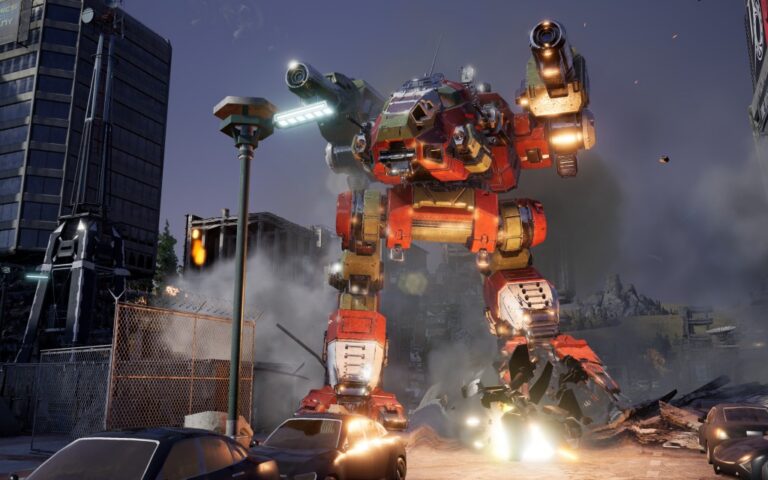
From the outset, what MechWarrior 5 does incredibly well is conveying the epic scale of mechs, giving them a sense of weight and momentum.  Accelerating takes time due to inertia from their mass, and aiming weapons in the vertical axis (such as aircraft) is limited due to a mech being able to only pivot so far.

MechWarrior 5 is, more than anything else, a mech simulator and not a first-person shooter (FPS).  It is a game that rewards the strategic use of weapons and advanced tactics. Playing as an FPS, by charging into danger with guns blazing, frequently results in the player’s mech being destroyed. Instead, it is incumbent upon the player to lure enemy forces into danger.

One of the core precepts of the MechWarrior universe is that mechs are kings of the battlefield, due to their size and incredible firepower.  MechWarrior 5 is no different, as the firepower carried by mechs can devastate any vehicles they encounter and it is only other mechs that have a chance against them.

Another of the core elements is that everything comes with a cost.  Firing weapons together or too often can lead to the mech overheating, and potentially shutting down.  This can be mitigated by environmental factors, such as operating in glacial regions, as well as switching between high-heat generating weaponry (such as lasers) and low-heat generation weapons, like missiles.  However, these latter weapons expend ammunition, which need to be replenished.

Damage also needs to be repaired in MechWarrior 5.  Should a mech have some minor damage to the armour, then it will take a few days to be restored.  But, should the mech suffer critical damage, such as legs or arms being shot off, then it will be out of commission for several weeks.  This is one of the key points on the game, as precision firing can allow players to hamstring mechs by destroying a mech’s legs.  Even worse, if the cockpit is destroyed, then the mech is instantly destroyed.

Like all MechWarrior games, MechWarrior 5 allows for mech customisation.  This enables players to change the weapon and equipment loadout of their mechs to suit their playstyle.  However, such changes take time to be completed, which can vary from a few days for a weapon to be changed, to a couple of weeks for a complete refit.

Such refits naturally take place between missions.  During this time, players can choose their next mission and – for the first time in any MechWarrior game – explore their dropship. This latter part seems unnecessary, but it reinforces the sense of immersion within the game’s setting.  Players can genuinely feel like they are running their own mercenary company and piloting their own BattleMechs.

The MechWarrior universe has always thrived on its rich background; a series of political factions vying for dominance within space.  This has been well utilised in the recent mech-based strategy game BattleTech (reviewed here), but unfortunately less so in this game.

What is frustrating is that the premise is fantastic, but it’s execution is bland and passionless.  None of the characters seem adversely affected by what has happened.  In attempting for MechWarrior 5 to remain grounded and realistic – as BattleTech is intended – it seems to have neglected the epic aspect and emotional resonance of the setting.

Unfortunately, one of the core issues of the MechWarrior series as whole remains; in that enemy mechs attempt to run behind the player’s mech to shoot it in the back where the armour is weakest.  This consequently devolves into a series of skirmishes, where mechs endlessly circle trying to shoot each other.  Charging into close-quarter combat is unfortunately not a solution, as melee attacks are unavailable, and all that happens is that both mechs politely stop and attempt to shuffle past each other.

That said, what MechWarrior 5 does well is the mech piloting.  The game offers a fantastic experience of what it could be like to pilot one of these colossal titans.  Each type of mech feels unique, and has been redesigned for the modern age.  These redesigns may disappoint purists, but it maintains the grounded approach of the setting.

Overall, MechWarrior 5: Mercenaries is a great game, but one that comes with glaring flaws.  Whilst these flaws do not in any way affect the core gameplay, they do feel like a missed opportunity to elevate what is an already great game into a truly fantastic one.
Phoenix Point

It would be fair to say that Julian Gollop invented turn-based tactical squad-combat computer games, when he released Rebelstar Raiders on the Spectrum in 1984.  From there, he created Laser Squad and later UFO: Enemy Unknown (also known as X-COM) and its sequels.  Each game introduced new elements, from the Geoscape strategic overlay of the world between missions to new mission types.

Since then, X-COM was acquired by Firaxis in 2012, who released it as the critically acclaimed, and slightly renamed, XCOM series, which proved that there was more than enough interest in the genre that Gollop had created.

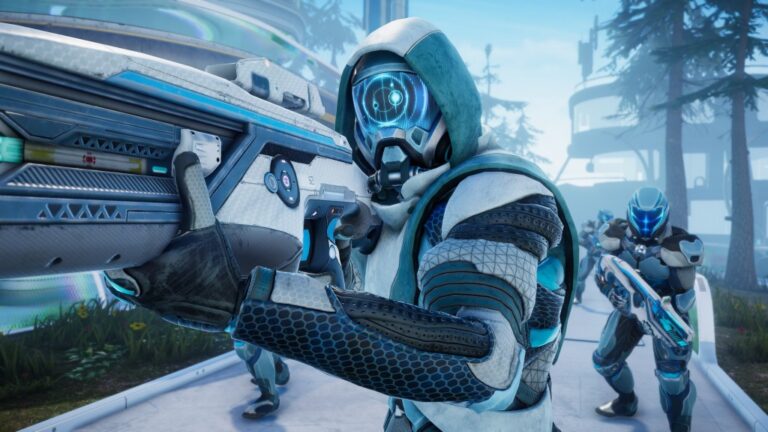
So, when it was announced that Julian Gollop was making a new turn-based tactical squad-combat game that was not XCOM, naturally we sat up and took notice.  The result is Phoenix Point, a tactical turn-based game that pushes the genre in new and interesting directions.

Rather than aliens from outer-space or Lovecraftian entities from Atlantis, Phoenix Point has players facing off against the Pandora virus, which mutates everything it comes into contact with, creating an army of mutants, called Pandorans.  Just to keep things interesting and to stop the player from becoming bored, the virus keeps mutating.  This means that enemy units continue to evolve throughout the game.

Anyone familiar with the recent XCOM games will see that they are cosmetically similar to Phoenix Point.  Both are turn-based, have Geoscapes, and involve players battling a hostile alien force.  The similarities end there, as the systems in Phoenix Point are more complex, but also offer more flexibility to the player when developing new strategies.

Given the cosmetic similarities, some players may be tempted to dive right in to the game and get started.  However, such haste can lead vital information being missed, such as how this game operates and the different abilities of each unit class.

In some ways, Phoenix Point is similar to Chess.  The core of the game takes place in an isometric battlespace, where the player orders their soldiers around the battlefield in a series of turns to achieve their objectives, whilst also protecting their units from the enemy.  This can be harder than it sounds, as the enemy frequently outnumbers the player and can be better equipped.

When a player’s soldiers are given orders to fire, the view changes to an over-the-shoulder perspective, offering a soldier’s view of the target.  Unlike the XCOM games, the difficulty to hit is not given as percentage, but as a series of concentric circles showing the likely spread of fire.  It is therefore up to the player’s instincts to determine whether the shot is worth taking.  This can be initially off-putting for players used to XCOM providing more specific information.  But it puts the player more in control, as they are responsible for making the judgement call.

One of the key differences is that a unit does not automatically end their turn after making an attack, as they are still able to move if they have sufficient action points left.  Also, there is more than one enemy faction: players have to engage with three separate independent factions, each with conflicting objectives.  It is entirely possible to make an enemy of at least one of those factions, leaving the player facing two hostile enemy forces.

Another major difference is that each unit how has a willpower rating alongside their health.  Just as health diminishes during combat missions, willpower is a finite resource for each unit that can be spent to activate special abilities, such as overwatch (firing during the enemy’s turn).  It is also used to resist the effects of mind control or becoming panicked.

However, it is not just in the battlefield that players will be focussing their attention, as they also need to pay attention to the Geoscape.  Here, like in XCOM, players need to assign research, manufacture equipment, manage relations with the other factions and choose which missions to do next.  Unlike the turn-based battlescape, this is in (pausable) real time.  Players can also assign their soldiers new skills between missions, as they gain experience and unlock new abilities, as well as increasing their statistics.

The Geoscape is possibly the weakest part of the game, as it is comparatively shallow compared with the in-depth and complex nature of the battlespace. That said, the Geoscape is also a comparatively small part of the game, as Phoenix Point is ultimately a game about tactical squad combat.

Players may be surprised to find that the Pandorans and other factions do not idly sit by and wait for the player to make an action.  Instead, they have their own agenda, and the Pandoran’s area of operations – indicated as an encroaching mist in the Geoscape – expands across the world.

The Pandorans are continually evolving in response to the player’s tactics.  For example, the crab-like Arthrons can develop a shell-like shield that they can deploy to resist oncoming fire.

Phoenix Point is a challenging game, and it can take a few false starts before players are fully prepared for tackling this game.  However, restarting Phoenix Point is not as frustrating as it could be.  Whilst the core story structure remains the same, the inherently changing nature of the game means that no two games start the same.

If I have one criticism of the game, then it would be that the difficulty curve is more akin to a series of hills, rather than a gradual curve.  Unprepared players will encounter sudden spikes in difficulty, potentially necessitating starting the game afresh, which could be off-putting.

Overall, Phoenix Point is another excellent game by the master of turn-based tactical squad combat.  It will be a must for any fans of the XCOM series, whilst still being sufficiently different to not feel derivative of what has come before.

Alien: The Roleplaying Game

When Free League Publishing, the people behind Mutant: Year Zero and Tales from the Loop, announced they were going to make an Alien roleplaying game, people naturally sat up and took notice.

Alien is one of the most iconic – and quoted – franchises in science fiction.  Whilst the later sequels and prequels repeatedly failed to capture the spirit of the original films, there remains an undiluted appeal to exploring the Alien universe.

This is not the first time that an Alien roleplaying game has been developed.  The Aliens Adventure Game was released in 1991 by Leading Edge Games, but sadly failed deliver the Alien experience.  Instead, it felt like the combat system from Phoenix Command was designed for the Colonial Marines (from Aliens), without incorporating the blue-collar workers that are such an iconic part of the Alien films.

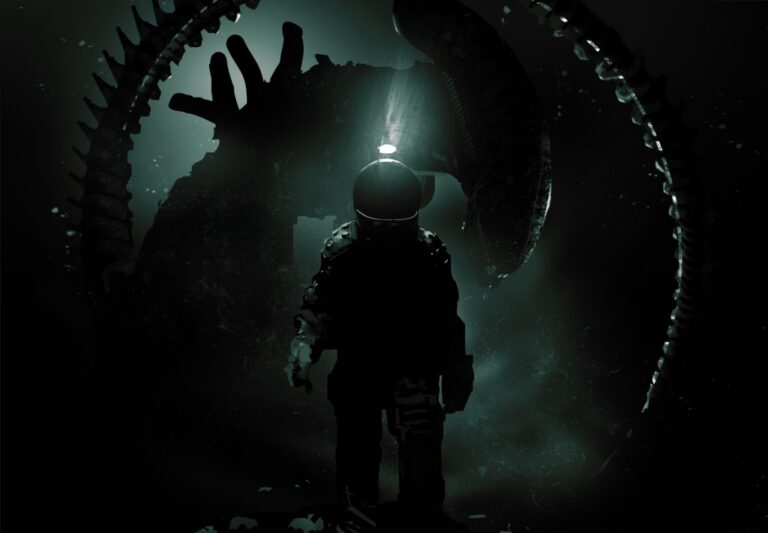
Alien: The Roleplaying Game is far different (star) beast of a game.  Incorporating the first three Alien films, as well as the prequel films Prometheus and Covenant, the game is set in 2183 in the Alien universe.

According to the in-universe timeline, Alien: Resurrection has not happened yet, although there are repeated references to military experiments and genetic engineering.  They also assume Aliens Versus Predator (AVP) never happened (as do most of us), so there is no mention of Predators.

Mechanically, Alien: The Roleplaying game uses a version of the D6-based Year Zero system.  This rules-light system evokes the intensity of Alien and Aliens, with the minimum of dice rolling.  One of the key elements are the stress dice, which increase the chance of succeeding, but also carry with them a risk of further danger.  This simple mechanic maintains the growing intensity of Alien, which grows as a character’s stress levels increase.

The game can be run using conventional D6’s, with a 6 signifying a success.  Likewise, on stress dice, a 1 indicates a failure.  However, the Alien dice packs are coloured and coded such that they swiftly and easily reflect the results at a glance and evoke the setting, such as stress dice 1’s being face huggers.

It would be fair to say that Alien: The Roleplaying Game is a game designed for running games in the mood and style of Alien.  It is not for running other styles of game set in the Alien universe.  The available character classes reflect this, as they are limited to archetypes frequently seen in the Aliens universe, such as colonial marines and blue-collar workers.  However, the system is sufficiently flexible for it to be relatively easy to create new character types.

The combat is swift and vicious, for both the players and the enemies.  Anyone expecting to be able to run and gun through the game should watch Aliens again to see how such tactics ended for the marines.  Instead, Alien: The Roleplaying Game works best as an investigative game, where the players are exploring to find out what has happened.

Alien: The Roleplaying game has two modes of play.  There is the classic campaign style play of ongoing adventures, usually with a low character-death ratio.  Alongside this is cinematic play, where the adventure is completed in a single session and the risk of character death is much higher, but is truer to the ethos of Alien (no one ends in a happy place at the end of an Alien film).

The core rulebook is a whopper at nearly four hundred pages long, but is a deceptively easy read and is beautifully laid out.  The quotes peppered through the book prove that the creators were genuine fans of the setting.  The artwork is also fantastic and is incredibly evocative of the setting.

Over half of the book is dedicated for GMs, or Mothers as they are known in this game (a homage to the name of Artificial Intelligences in Aliens).  This section incorporates all that GM’s need to know when running a game, from rules for hostile environments through to starship combat.

One aspect that some may find bizarre were the randomised scenario generation and adventure complication tables.  These D6-based systems felt like a throw-back to random encounter tables in Dungeons and Dragons and felt out of place in a game like Alien.  It might have been better to list them as possible missions and goals, followed a similar list of possible complications that could be encountered.  That said, they are all reflective of the setting and get the creative juices flowing, so in that sense, they are effective at sparking ideas for games.

The GM section also includes a three-hour cinematic style scenario.  This scenario introduces the rules and perfectly demonstrates how cinematic scenarios can work, with competing rivals and personal objectives.

One thing that is great are the abundance of ship layouts, allowing players to accurately plot where they are in relation to each other.  Rather than having to photocopy layouts from the book, they are offered as free downloads from the Free League Publishing website.

Accompanying the release of Alien: The Roleplaying Game core rulebook, there is also the GM screen, which presents the game’s essential references tables for quick checks, to minimise flicking through the rulebook for them.

There is also a Maps and Markers pack, providing an excellent source of further layouts and plans for future games (since finding new maps for ongoing campaigns could be tricky).  This pack includes a series of markers for showing “blips” on the motion sensors (with artwork replicating the blips from the motion trackers), which can be turned to over to reveal what they are.

Finally, there is the Chariots of the Gods cinematic scenario.  Given this example of the cinematic scenarios that Free World Publishing have planned, I cannot wait to see what else they have planned.  Without going into details, Chariot of the Gods wonderfully evokes Alien’s feeling of dread and Prometheus’s sense of cosmic horror.

Overall, this is a fantastic game for anyone with even a passing interest in the Alien franchise.  The light system mechanics make it ideal for the science fiction fans who have not yet tried a roleplaying game but have wondered what it would be like to run around with a pulse rifle.

And let’s be fair, who hasn’t?

Reboots Assemble : Jay and Silent Bob Reboot!

To say i’m a Kevin Smith fan is putting it lightly and to even say i’m in the demographic doesn’t even scratch the surface of my adoration of this man. With an evening of Reboot Pie, followed by an after show Q&A, I couldn’t quite understand why the gods hadn’t struck me down right there because this was as good as life was going to get… Or so I thought…that was until I met him after!

I am therefore what some may call a ‘Super Fan’ from the beardy face, to the backwards cap and icehocky jersey this now Legendary host, writer, actor, Pod-castor, Director and all round lovable man has been a huge influence on my life for so long. Not only from his work in films but his general attitude and positive spoken word message. In a world where actual heroes, who turn out to be exactly as they are on TV is hard to find, Kevin Smith IS the real deal. Friendly, funny, appreciative and interested in talking to his fans; it isn’t hard to understand why they are so, well… Super. He gives them everything and in return they give him their undivided loyalty.. My Captain, My Captain indeed.

And yet things took a turn for the worst just over a year and a half ago when he suffered a massive heart attack, or the “Widow Maker” as it was deemed in the medical community – a 100% blockage of the arteries where 80% of the sufferers would die.- Luckily for Mr Smith though he managed to be in the best hospital for this sort of attack and with only a 20% chance of survival his doctor looked at him and said “You’re gonna live cause I’m good!” while disappearing into Kevin’s crotch.

AND HE DID!

With the operation behind him and a new bill of health provided  by this Angel of a doctor, Kevin Smith, sorted out his diet, became Vegan and used his near death experience to set us all on the road to reboot!

The hype started, as it always does, at the Cantina of Scum and Villainy where Kevin and co host Marc Bernardin do their weekly “Fatman Beyond” pod cast for the good people of Hollywood. There Kevin announced that in a couple of weeks he will begin shooting in New Orleans his direct sequel to “Strike Back” affectionately titled “Jay and Silent Bob Reboot” much to the roar of applause from the live crowd watching the show. Just like that, the “FAT-SIGNAL” was lit and Kevin started to assemble his stella star studded ensemble of a View Askewniverse final “wink wink” swan song.

Following Clerks II, news appeared often of other titles to be released in the View Askewniverse; including Clerks III and Mallrats 2 but sadly in 2017, Kevin Smith had confirmed that those projects were cancelled.. booo!. Luckily for us the script for Reboot was already finished when it was announced and it was said that Miramax would produce it. It was then announced on 25th January, 2019 that Saban Films (yes that Saban as in Power Rangers) had acquired distribution rights to the film in association with Universal Pictures. It is the first film in the View Askewniverse not to be produced by Scott Mosier, and the first film in the View Askewniverse, since Mallrats, not to be produced by Harvey and Bob Weinstein (for obvious reasons).

Filming was initially set to begin mid-2017, then to August 2018, then November of that same year but after numerous delays, finally, filming began on 25th February in New Orleans;  exactly one year after Smith suffered his heart attack!

During the filming of the movie, Smith released a weekly documentary called “Road to Reboot” to which I was a frequent viewer, keeping fans updated on what was being filmed that week. Production wrapped on  27 March, 2019 after 21 days of shooting, which was the same number of days it took Smith to film his first movie, Clerks, 26 years earlier.

Now, if you don’t know how far Kevin will go to get what he wants, well, lets just say his “i had a heart attack” was used so often to bring back past film actors to make cameo appearances the words lost all meaning…but hey, it worked.

To list the full cast and cameos would probably take several hours so I’m just gonna link the IMDB page right here https://www.imdb.com/title/tt6521876/fullcredits so you can take a gander, Yes before you ask, Kevin got his boyfriend back, with Ben Affleck returning as Holden.

The film was released on 15 October 2019, as part of two Fathom Events showings. The first showing on the 15th gave away a limited edition poster and the second on the 17th was a double feature with “Jay and Silent Bob Strike Back”. Following the Fathom showings, Kevin embarked on a North American roadshow titled “The Reboot Roadshow Tour” with a presentation of the film, followed by a Q&A session. The roadshow began on 19th October in Asbury Park, New Jersey and will continue until February 26, 2020 in New Orleans, Louisiana. Thankfully for us Brits, within this time, he made time to come over to our side of the pond show the film off and do a Q & A too.

The Film itself is a “Masterpiece” and if he retired tomorrow from making films I could confidently say that he would be able to do so with his head held high.  I haven’t laughed so much in a long time and i left feeling I had been apart of history and in high spirits.

Kevin is the master of making fun of himself / his work and this is very much evident in Reboot with the grace of a ballet dancer and often the KO of a drunken boxer. He also shows no qualms in poking fun at other reboots, remakes and hashjobs that Hollywood has spat out lately and it was good to see that breaking the 4th wall was still a thing like the rest of the Jay and Silent bob movies.

Aside from the slapstick comedy that you associate with Jay and Silent Bob, Reboot actually has some amazing “Feels” moments and even has a Stan Lee guest spot in an after credit scene. I would challenge the Geek who didn’t leave with at least one tear in his or her eye.

If you haven’t as of yet seen Reboot, what the hell are you waiting for, check your local listings with Vue Cinema or go to www.jayandsilentbobreboot.com to find out more… JAY AND SILENT BOB: REBOOT IS OUT NOW!

Before I finish I would also like to comment that this whole event wouldn’t have been possible without the amazing team behind Legion M. Legion M is the world’s first entertainment studio that allows fans to invest in and be part of the creation of new movies, television shows, virtual reality and other pieces of entertainment content, a studio that I am also an investor in.

Legion M partners with filmmakers to create and/or distribute movies and Jay and Silent Bob Reboot was one of them; on the night if you were a member or investor, The head of Marketing and Publicity; Clare Bateman-King gave an amazing Chronic Con lanyard as a memento of the night. Clare was amazing and the show couldn’t have been made possible without all Legion M and her hard work.

THANKS GUYS!


The King – A Netflix film that opts for style over accuracy.

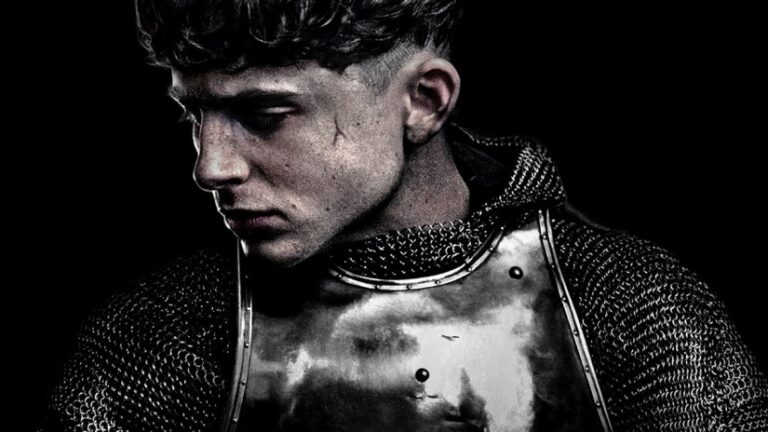
The King is a new Netflix film, directed by David Michôd, based loosely on Shakespeare’s Henriad and staring Timothée Chalamet as the Prince of Wales “Hal,” soon to be Legendary Henry V, Joel Edgerton as Sir John Falstaff and Robert Pattinson as the Dauphine of France. It is also a film that I have very mixed feeling s about.

On the face of it, you have a well shot, well-acted (bar Pattison’s French accent) and quit visceral, if somewhat stylistic,  film that for the most part is enjoyable to watch and flows quite well. Chalamet’s Henry V is  stoic but yet intense, coming across as the archetypal  Shakespearian Hero and for the most part supporting rolls follow suit.

Where my issue comes in though, is the distinct lack of historic bedrock. Yes, I know its based on Shakespeare and I know Sir John Falstaff doesn’t exist BUT:

  1. Its loosely based on Shakespeare and has little or no Shakespearean language or lines.
  2. Just because it is based on Shakespeare, or any other writer for that matter, why does it have ignore historical accuracy?

If you have a film like Inglorious Bastards, which for all intents and purposes is so brazen about its lack of care for historical accuracy  that they actually assassinate Hitler, I can accept that as its not touting itself as an historical epic but a World War 2 themed Action film. But there are so many “historical” films out there that play so loose with the source material that, apart from some historical figures, you couldn’t really call it an historic at all: generally anything with Mel Gibson in it (Braveheart, The Patriot etc)and travesties like U-571 to name a few.

In the case of “the King” the main issues are the 3 main “engagements” / battles and Henry 5th character.

  1. The film depicts Henry / “Hal” as a brave but yet reluctant leader, who wants peace and on 2 occasions calls out his opponent in single combat to spare the lives of his men and has no real interest in the throne of England. This was just not the case.Henry the V may have been a brave King and was no doubt an accomplished leader but he wasn’t as estranged from his father, Henry IV, as is depicted. In fact, one of the reasons the Percy’s rebelled against King Henry was because of the favour given to Henry the Prince of Walesh over them. On top of this, Henry didn’t offer single combat to save the lives of his men in either Shrewsbury or Agincourt and his attack on France wasn’t one of reluctance but one of aggression designed to concrete his claim to the French thrown.

  1. The Battle of Shrewsbury isn’t depicted in the film but instead shows a reluctant ‘Hal’ coming to the aid of his brother, sent in his fathers stead, due to illness, and offering Henry Percy (Hotspur) a challenge of single combat to determine the day. Where in ‘Hal’ is victorious and stabs Hotspur in the neck; winning the battle before it even begins. Again this was not the case.Henry the IV was present at the battle and so was the Prince of Wales (soon to be Henry V) Hotspur was killed either by an arrow or struck down by a sword after a charge against henry the IV. Henry himself was hit in the face with an arrow and was left with a permanent scar. With the death of Hotspur the rebellion was over; despite the rebels inflicting more casualties.

  1. The Siege of Harfleur is shown as a mere pit stop before the main engagement of Agincourt but with nearly a third of his men dying to dysentery, this, as well the threat of a large French army forced him to retreat towards Calais; the English also used cannon (guns) to batter down the walls, not just trebuchets.

  1. The Battle of Agincourt in the film, though quite well shot and incorporating the mud and even not over playing the effectiveness of the Long bow still played loose with the history of the event. The Dauphine was not present and did not get killed by English archers as he floundered in the mud but died of dysentery after. The order to kill the prisoners after the battle was one Henry made but was based on an attack to their rear by French cavalry on the baggage train and the belief that they didn’t have enough numbers to secure the prisoners; it was not out of anger and higher ranking nobles were spared for ransom .In the battle proper, the film shows the men at arms being lead forward by Falstaff to encourage a charge by the French cavalry and the rest of the army is placed hidden in the trees to attack from the flanks. In reality the entire army moved forward to put the long bows in range, their fire encouraging the charge by the cavalry which attacked the archers and was beaten off, thanks to the stakes placed in the ground before them.

    On top of this as much as it has been proven that the long bows arrows could not penetrate full plate armour in the front, it could hit and penetrate weaker areas and more importantly kill horses. Additionally the French would have been wearing padded surcoats over their armour, which would have helped English arrows to stay in place and therefore hindered movement. There is also the moral effect of a constant barrage, from the flanks, injuring and slowing down your advance, on ground that was now all but a quagmire.

    The biggest killer of the battle though was the weight of numbers on the French side. All pushing forward to avoid arrows and engage with the English and in doing so, crushing their comrades underfoot and or just suffocating them in the mud something that is touched upon but not really encouraged; I guess it doesn’t make good tv.

As a film, on its own, The King is an enjoyable watch I will admit and it is very easy to get carried away with movies like this, but without historical integrity it just becomes another national propaganda film and that bothers me. I fully accept that some artistic licence can be used to make a movie more engaging but when you rewrite history, for this sake of this, it just seems lazy and irresponsible to me.

Why you ask? Well we live in a fast food society where in a lot of people just want to be fed information true or false and whereas some might watch a film, then look up the history behind it, many will simply take what a film says as verbatim and to them that’s the truth in all its romanticised glory. This leads to a section of society who would sooner believe the movies than reality and for me this is an issue. Belief over fact is a very dangerous thing and the longer “beliefs” take route the harder it is to persuade someone otherwise and the hard it is for us as a society to move forward.

In short, enjoy the film if you haven’t seen it yet but read up on the actual events after and get you history from the historians not from Hollywood.

Vortex Attack EX. Review

2019 is filled with big-budget AAA titles. Pokemon Sword & Shield, Mortal Kombat 11, Death Stranding and even Luigi’s Mansion 3 have all been massive successes! But there are plenty of smaller titles which are also worth your time and effort. Saying that, let’s see what we have to show today…


WHAT IS THIS GAME?

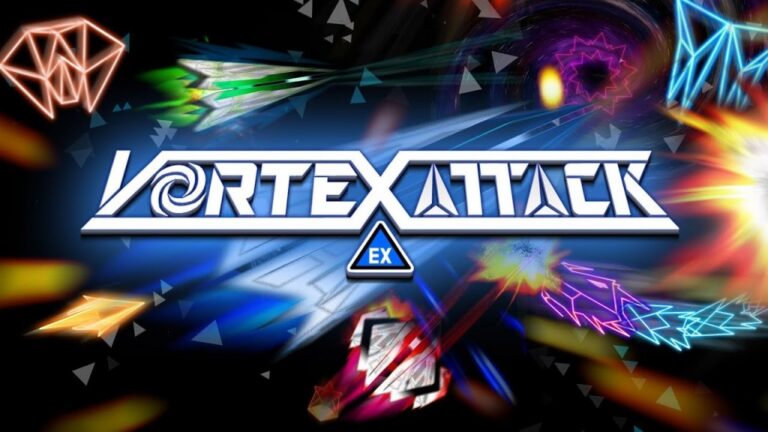
Vortex Attack EX brings back the memories of many old arcades. You are a lone ship fighting against an armada of aliens who are bent on destroying you with whatever they can. Your spaceship, which can be changed when you play and unlock others, leads your battle and takes you straight into the action.

The game presents itself in two ways. The first style is dubbed Normal, you get to see the machines in their full glory and presents a great range of visuals while you fight the enemies. The second style is Arcade, and it is beautiful. The visuals are given a neon twist and looks just like asteroids and various other space shooters in this filter. All the same ships, weapons and enemies are present in both styles. Playing with that neon setting just makes the screen pop.

Vortex Attack EX is definitely addictive. The gameplay and engaging style is impressing within seconds, but there is a catch. While the enemies can come thick and fast, there isn’t a huge variety to them. The challenge can increase, but that is purely just increasing the number of cloned enemies and raising their firepower. The boss fights are also very much the same, offering little challenge and becoming a bit tedious after the third or fourth time.

This is a fun game. Having it on the Switch means you could engage in some quick space battles at any time. Sadly, the lack of challenge just isn’t worth the time. The soundtrack is uninspiring and I actually played a lot of this while listening to Spotify. There are no other modes except just jumping in to the action. If there was a time trial, a survival mode or even online multiplayer, this game could have been a true gem for a budget price.


VERDICT

If you enjoy an arcade game with some pleasing visuals and a straightforward focus, then this is the game for you. I enjoy the game, but I can’t get over the missed opportunities. A lack of variety, no difficulty curve and little reward for your efforts make this game almost as flat as its choice of music.


Written by Jonjo Cosgrove

Flyos Games on Vampire: The Masquerade – Chapters

2020 promises to be the year of the vampire.  Don’t worry, we are not expecting a plague of blood suckers.  Neither has the Chinese zodiac started including sparkly vampires.  Instead, we will witness the classic nineties roleplaying game of personal horror; Vampire: The Masquerade dominating gaming.

Following the recent release of V5 (reviewed here), next year will see a cornucopia of Vampire: The Masquerade material.  The Vampire: The Masquerade – Heritage boardgame will be released, as well as the Vampire: The Masquerade videogames Bloodlines 2 and Coteries of New York.  There will also be further sourcebooks for V5, including The Fall of London and The Second Inquisition (chronicling the Second Inquisition and their takeover of London) and Cults of the Blood Gods, the latter by Matthew Dawkins (interviewed here).

Joining this esteemed company will be a kickstarter for Vampire: The Masquerade – Chapters by Flyos Games.  Unlike the strategic Heritage board game, Chapters is far more narrative-driven and has strong roleplaying elements.

Chapters will allow players to experience a modern-day vampire epic that will incorporate a variety of gameplay styles.  Although gamers will frequently play both board games and roleplaying games, they are rarely combined.  That is, until now.

Chapters is currently being developed by Flyos Games, with advice from White Wolf, and has writers such as Matthew Dawkins involved.  With the kickstarter for Vampire: The Masquerade – Chapters due to start early next year, I spoke to one of the developers of Chapters.

There seems to be seems to be a resurgence in Vampire: The Masquerade at the moment. Why is that?

There is a powerful fan base that has been waiting for it come out of torpor and return from the dead. Everyone was playing it and I think it’s time for a people that were playing in the 90s to actually experience it in a much bigger way, and in a modern way.

After White Wolf was acquired by Paradox, they now have everything at their disposal to work on something that is more mainstream and accessible.  I think people are now ready for this kind of RPG and lore at the moment.

Vampire in the 90s was revolutionary and redefined gaming, but now it’s much more accepted.

What was disruptive back in the day, but is now a much more available and ready to play experience. People now understand that roleplaying games are something that you can experience and help you with your personal life. They are a tool where you can discover yourself.

The theme of Vampire is you’re playing a human but also a monster. It’s also a way for people to experience a much more social game than what we are accustomed to.  It’s going back to the roots, but in a modern way.

What made you decide to make a Vampire: The masquerade game?

I’ve been playing Vampire: The Masquerade with my co-founder for eighteen years. This is how we discovered life together and is a cornerstone of our personalities. We’ve always wanted to do something like this, but we had to wait and become sufficiently experienced on making board games to be able to jump on to what will be our most exciting project. We had to be ready, so that’s why we decided to make the game after our second game (Until Daylight).

What have been your influences on making chapters?

We are tabletop gamers, but also video gamers, so there’s a lot of things. Chapters is a story-driven board game, so the main focus on the game is the story.  You have to understand that a story is what drives people. If you have a good storyteller, you can play anything.  You can play a story about cupcakes.  It’s about what you feel and we need to craft it in a very specific way.

In terms of gameplay there is so much that is roleplaying game based, and of course there is Vampire: The Masquerade at the core of the influence.

Why did you choose the Kickstarter route and will there be Kickstarter exclusive material?

We chose Kickstarter because it’s not our first dance with it. We know how it works and it gives us a more direct interaction with our backers. There is no intermediary. If there is something wrong we can know right away and that’s very useful for us. It’s a way for us to stay connected and to deliver the best experience.

There are a lot of consultants, writers, illustrators, game designers and playtests. But the more people that give their thoughts on this project, the more we can create something beautiful and amazing.

There will be Kickstarter exclusive material. I cannot say more, but we’re trying to come with a punch on this.  I think it’s going to be awesome and I think you’re all going to like it.

To what extent have White Wolf been involved in the development of Chapters?

We met them at Gen Con last year to explain what we had in mind and ended up staying for an hour after our appointment.  At the end, after we explained the foundation of our idea for Chapters, they said “Yes, let’s go.”

So now it’s on material approval, as every single thing we put out there, we cannot take it back and they have to ensure that it goes with the rest of the brand. So, they’re very involved. Everything is integration, yet they give us freedom to do what we think is best for the game, and they are available for everything that we need and help us brainstorm ideas. So yeah, it’s a perfect wedding.

What type of characters can we play in Chapters and will there be mechanics for linked-scenarios and experience points?

You can play all available characters in the Camarilla. They are their own characters, where you start with a pre-set character sheet. When you start your first scenario, there is a branching mechanism. Depending on your action in what you do, you will gain experience points.

If there is no Games Master, how are the GM aspects dictated?

We are taking into consideration everything that the player could be wanting to do in each situation. So, being a GM-free roleplaying boardgame means you won’t be able to do whatever you want, but you will have enough choices that you will feel that you’re playing a roleplaying tables up game.  You can even play it alone.

As roleplaying games are a very freeform endeavour, and tabletop gaming is much more mechanics based, how do you combine the two?

That’s the bridge we’re trying to create at the moment.  We aren’t just a board game company; we’re boardgame players and roleplayers. Most of the tabletop communities go from one point to the other, but they rarely mix. What we want to do is give an introduction to the Vampire: The Masquerade universe.  That’s why we’re wanting to have an easy-to-play but hard-to-master experience.

I think they are just mutually exclusive because they used to be. I believe they have lot in common and I believe that we can do it. The main point of the brainstorming that created Chapters was that we want to play Vampire: The Masquerade every week, but real life gets in the way.  We just realised how awesome it would be to run a campaign like Vampire: The Masquerade.

At what points in the World of Darkness meta-plot does Chapters take place and will the events be considered canonical?

It is canonical and it’s set right after the events of the Second Inquisition. Montreal used to be a Sabbat city, but the Sabbat are not very subtle or discreet about their nature.  Therefore, Montreal was one of the first cities to fall under the Second Inquisition.

After this, the Camarilla was able to get Montreal back. That doesn’t mean that there are no pockets of Sabbat here and there, or that the Camarilla has a strong hold on the city. There is much more to discover in the city. Montreal has been a city for centuries, and there are secrets still hidden in Montreal that we are eager to discover.

How will conversations influence the outcome of a board game?

We want to allow players to have different approaches to the game; to give everyone their own way of doing things. So, when they finish the game first time, they can replay it. Of course, you’re going to know the story, but you will be able to experience it in a very different way. The number of scenarios that you can play in your first play, even if you try to play as much as many scenarios as possible, you will still play only two-thirds of the game, so there is still a third of the scenarios that you haven’t experienced yet.

Given Chapters is a story-driven game. How much replayability is there?

This is a four-player game, and you have, for the moment, nine clans. Even if you change character during the campaign, because you can, there is some room for replayability and specific scenarios where you will see what would have happened if you played a different choice.  Depending on what you choose and what clan your character, it will influence the decisions and the possibilities of the next scenario as well.

Is there the possibility of expansions?

For the moment, we’re just focusing on the story. Of course, I cannot disclose it, because that’s the whole point. Expansions are like having an epilogue to a story, so we are just focussing on the story and delivering that, and making sure that we don’t need expansions because this will be our legacy.

We have announced two character expansions, the Lasombras and The Ministry, and the Banu Haqim will be offered to backers who support the Kickstarter campaign on day 1.  We will have eleven clans in total.

What stage in development is Chapters and what’s the proposed schedule for the Kickstarter?

So far, we have around ten scenarios available that we have played, and play-tested the combat and dialogue mechanisms.  The investigation mechanism is pretty much finished. We still need to make a beta test, but so far, it’s relying on the other mechanisms. So, there is a foundation on this that is very reassuring, especially since we are putting it out there on Kickstarter on 4th February 2020, probably February. After that we have at least a year production until delivery.

So far, we already have writers available and willing to work on this including people that you might be aware of. We also have people who are already working on Vampire: The Masquerade, that are helping us and giving their insights.  The story is written, but we always like to add more brains.

We’ve created a dedicated a Facebook group to talk and exchange feedback because we need help from players. We need to understand what clan do they want and how do they envision each clan.  The more committed the community, the more awesome this game will be, and that’s our promise. We don’t compromise on quality and we’re very transparent on what we do.

SFW-X: Sci-Fi Weekender 10 – Part 2

Sci Fi Weekender (SFW) is an event like no other.  Less like a convention and more of a festival, SFW is the UK’s largest geek camp and there is literally nothing else like it in the UK.

The weekend-long geek-fest officially commenced on the Friday morning, with the opening ceremony where event organiser Jonni Davis offered a brief overview of the coming events, as well as welcoming new attendees to the family.  And SFW is a family.  Fans of SFW recognise the uniqueness of the event and atmosphere that the organisers curate.  The shared community across the site that SFW kindles endures far longer than the weekend.

This year however, as a special treat, there was also the inaugural SFW Awards ceremony on the Thursday evening.  These awards were an introspective review of the past decade of SFW, recognising the achievements of previous attendees.  For example, Adrian Tchaikovsky was granted the literary award.  These awards were interspersed with performances by the chap-hop artist Mr B and the comedian John Robertson of The Dark Room fame (who also won an award).

SFW is not your typical convention.  Merchandise stalls and signing booths are present, but they are not the focus of the event.  SFW’s emphasis is on the talks and panels by the guests, such as Gil Gerrard (Buck Rogers in the 25th Century), Emily Booth (Pervirella and Evil Aliens) and David Warner (The Omen and Star Trek V: The Final Frontier).

Samantha Lee Howe, Raven Dane, Bryony Pearce and David Howe

There is also a dedicated authors track, where genre authors like Ian Whates and Zen Cho discuss their experiences of being a writer, as well as hosting workshops where budding authors can learn various writing techniques.

Alongside this was the comic-strip club; a section of SFW dedicated to comic artists.  Glenn Fabry and Simon Bisley, as well as Boo Cook and Tehani Farr, displayed and discussed their art and gave quite probably one of the most chaotically entertaining panels throughout the weekend, purely for their inability to remain on topic.

Also, unlike most conventions, SFW does not end when the sun goes down.  In fact, many would argue that is when SFW really gets going.  This SFW had to have had the most packed evening schedule yet.  Some of the acts included the chap-hop extraordinaire Professor Elemental, the surprisingly impressive post-punk/goth band Flesh Tetris (who sent me back to my goth roots), and the cosmic prog-rock band Henge.

However, the highlight of the evening’s entertainment was The Dark Room, hosted by the human dynamo that is John Robertson.  Inspired by the text-adventure games of the eighties, The Dark Room is a live-action recreation of these classic games.  This time the game is narrated by an angry Australian screaming in your face.  On paper this sounds a tad strange, but Robertson’s charisma and razor-sharp repartee made this a highpoint of SFW.

Flesh Tetris

Equally great was The Elvis Dead; a mashup of Elvis Presley and The Evil Dead.  Somehow, this actually does work; helped by the performer’s convincing Elvis vocals and his likeness to Bruce Campbell (who also played Elvis in Bubba Ho-Tep).

Area 51’s stilt walkers and performers mingled with attendees, further adding to the carnivalesque atmosphere from all the cosplayers.

With the amount of content available, often occurring in parallel, it is impossible to see everything.  Time spent bouncing around to DJ Level Up Leroy’s set on Friday night invariably meant that Professor Elemental would be missed. But having this concurrent content meant that there was always something happening for attendees to be interested in.  Furthermore, there was a retro gaming zone plus a surprisingly addictive Minecraft arena.

SFW-X was the first of these events to be held at the new venue of Vauxhall holiday park, in Great Yarmouth.  The accommodation was much closer to the events than at their previous location, as well as there being a swimming pool for guests to enjoy (which was fantastic for recovering from the night before).

Emily Booth and Ewan Macintosh talking Shed of the Dead

Some may have been concerned that the static caravans would be cold in November, but they were surprisingly comfortable and perfect for crashing in at the end of the night.

As with any event at a new venue, issues and technical challenges will arise, but for the most part these were dealt with quickly and efficiently.  Those expecting a similar layout as past events would be disappointed, but what SFW have done is to take advantage of the venue’s potential.  As further SFWs take place, it would not be surprising to see the layout evolve to ensure that the space is being used to its fullest.

The organisers of SFW have consistently refused to rest on their laurels and are known for continuously seeking to improve upon each event, by experimenting.  Some ideas are successful, some are not, yet the results always feed back into SFW’s approach of enhancing the experience for the attendees.  For this they should be applauded.

Ultimately, SFW was a weekend built on a shared love of geekery across the spectrum, and in this it ultimately succeeded, as everyone always leaves having made new friends.  Throughout the weekend, there were badges proclaiming “It’s family, baby…” and it’s true.  SFW is not a convention.  It’s a family, and one that welcomes everyone.

Cosplay finale

All photos are by Peter Gatehouse and are used with permission.

Win an Xbox one X or a PS4 Pro + a game of your choice

0

Want a chance to win an Xbox one X or PS4 Pro + a game of your choice just in time for Christmas? Course you do! Well it’s simple, check out out giveaway link and get entering! https://gleam.io/fb/oxF9j

Win an Xbox One X or PS4 Pro with a game of your choice!

T&Cs within link.

The Factions of Vampire: The Masquerade – Bloodlines 2

Bloodlines 2 is the forthcoming sequel to the classic Vampire: The Masquerade video game Bloodlines.  Continuing the story of the first game, Bloodlines 2 presents players with the opportunity to explore the vampiric underworld of Seattle.

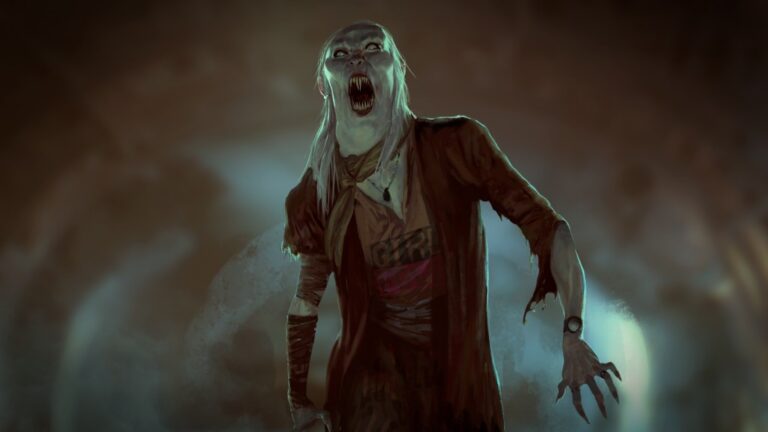
In the first Bloodlines, players had the choice of between the masquerade upholding Camarilla sect or the freedom-espousing Anarchs, as well as potentially becoming independent.  Also present were the fanatical Sabbat, primarily as antagonists, who wish to free themselves from the yoke of the antediluvians; vampires of incalculable power who founded the clans.
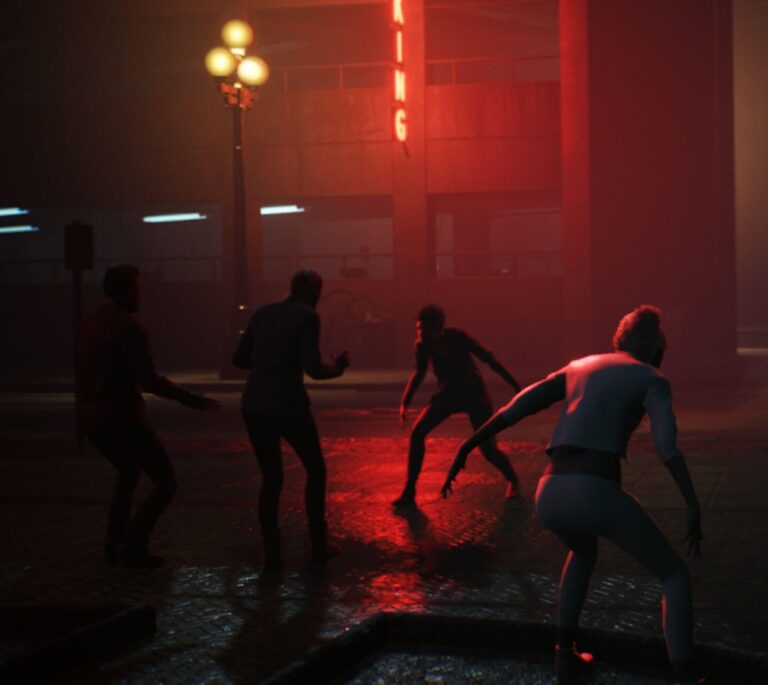
Bloodlines 2 expands upon these factions, and will present the player with the option of joining a variety of sects through the course of the game.  Unlike the original game, where the factions operated on a global scale, those in Bloodlines 2 are – generally – tightly focussed on the Seattle domain.

The following five factions have been revealed by Paradox interactive.

The Camarilla

The Camarilla are the Camarilla, representative of a global conspiracy to maintain the hidden world of vampiric society.  As Seattle is host to a lucrative technology industry, the Camarilla have benefited from this. Lead by Prince Cross, the Camarilla has fostered this community to drive the financial success of the city into the 21st century. CEOs, venture capitalists and politicians count themselves among the Camarilla’s number.

Keeping the peace is key for the Camarilla. While other Kindred communities have suffered in other cities, Prince Cross has helped vampires in Seattle to thrive. If Cross can keep this up, he just might catch the eye of his elders in the upper echelons of the Camarilla.

The Pioneers

The Pioneers were the first to settle and rule Seattle. Led by Lou Grand, the longest reigning prince of the area, their control over the city has weakened in recent years. They are a collection of individuals from different clans, unified by an idealistic notion of Seattle as the last frontier, a city without a centuries-old power structure and a place where they could shape their own future.

The Pioneers are passionate and have a strong independent spirit, but they refuse to identify with the hot-headed Anarchs (not present so far). While the Pioneers dream of ruling the city again, they have been forced to accept another’s rules. In exchange, the remaining Pioneers have been allowed to keep control over some minor parts of Seattle.

The Baron

It is unknow how many vampires swear allegiance to The Baron of Aurora. In part, that’s because very few of Seattle’s Kindred have actually met him. Acting through his lieutenants, he has taken in the city’s destitute and desperate, turning them into a disciplined force with hands in every shady deal.

Where a less prudent man might turn such capital into a bid for Princedom, The Baron has been content to stay in the shadows, hoard favours, and brutally defend his business interests.

Nobody likes the Baron and his people – until they need something done or procured quietly and quickly. Someone will play this part, in any city. Many of Seattle’s powerful tell themselves that it’s just as well to further indebt yourself to the Devil you know.

Newcomers

The Newcomers are Seattle’s most mysterious faction – no one knows where in Europe they came from, or why Prince Cross granted them exclusive access to the University District hunting ground.  Given the Camarilla’s offer, it’s likely they paid a high price to enter the city. What that price was, no one’s quite sure.

The Faction’s charismatic leader, “Professor” Viktor Goga offers any vampire who would join him safe access to blood in one of the city’s richest hunting grounds, a spot in a rising organisation, and a promise of something greater. Those with talent can rise quickly.

Already, the Baron views Goga’s operation as his most dangerous competition. Though conflict is on the horizon, the Newcomers’ star keeps rising. Confident and visionary; the Newcomers offer opportunity and risk in equal measure.

The Unseen

For as long as there has been a Seattle, there have been some that didn’t suit the Pioneers’ vision of a place made of art.  The misshapen members of clan Nosferatu never had a chance to fit in. They were encouraged to stay out of sight: In the outskirts, the shadows and its Underground.

For more than a century, the Unseen have been led by the Council of Three, or “The Speakers” to the Nosferatu. They have helped their people to survive among the homeless and loners of the city. While the rest of Seattle’s vampires took pains to ignore them, these Unseen grew into a faction and began trading secrets.

Today, the Council has left much of the Nosferatu’s operation to younger vampires more adept at gathering intelligence in modern nights. Where the Unseen were once composed of thieves, frauds and homeless, they now also include journalists, engineers and hackers. While the older Nosferatu are used to an existence of survival, the younger are looking for ways of making their mark on the city.

Vampire: The Masquerade – Bloodlines 2 will be released in late 2020.