Home Blog Page 23

Twilight Imperium 4th Edition- Review

I’ve seen one of Fantasy Flight’s oldest IPs, Twilight imperium, for years now and to say it’s the sort of game that floats my proverbial Starship is an understatement: Large box, lots of components, lots of minis and promises of a thinking man’s game that could take up to 8 hours to play! And yet, it’s only now, on its 4th edition, and a few years after its release, that I played it; I’m obviously losing my gaming spirit in my old age.

This Christmas though I finally sat down with my brother, in our annual Christmas gaming session, and played the behemoth (not once but twice) I have to say, it wasn’t what I was expecting and to be honest I wasn’t sure how I felt about that initially.  It should be noted that TI is a game for 3 – 6 players so how I and my brother played it with two is something I’ve talked about in a separate article (simple enough)

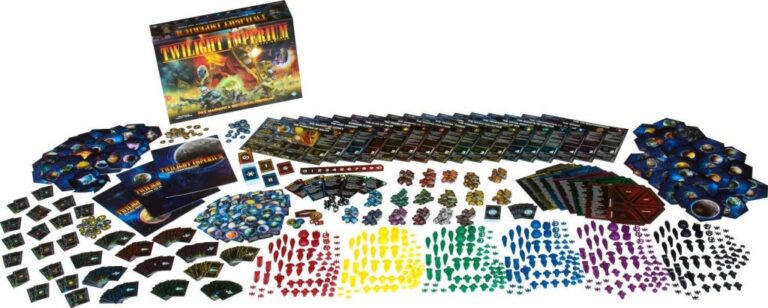
Opening the box, you are met with a proverbial raft of tokens, plastic minis, hexagonal tiles, rule books, and reference sheets. It’s glorious, quite intimidating and something I thought, having never played it before, would be suitably complex and long, or at least long for me and my brother (if it’s not 14 hours plus it’s a quick game in our household). But the thing is, after we set up the first game and started going through the rules it soon dawned on us that TI is 1. Not as complex as it looks, 2. Not as drawn out and long as it looks 3. Not as intimidating as it looks and 4. Not like any wargame we’ve ever played.. in fact, in our first game; I didn’t fire a single shot!

How many players?

First up, and I guess most importantly, you chose how many players you want to play with. Naturally supporting 3-6 this is a game designed to be better with more people involved, as a big part of the fun is how players interact and deal with each other. I and my brother therefore initially struggled to figure out how we could play the game and not take away from this experience.  At one point we were even going to can it off altogether, having felt that none of the 2 player options online were to our liking,  but we persevered and settled on a simple fix… the 3rd NPC would be controlled by both of us!

MADNESS! See the attached link on how we played with just 2 players and without changing the rules or phases.

PLAY WITH 2 PLAYERS

Factions

Having decided how many players there is going to be you now have to decide on what one of the 17 factions you want to use. Each with a data card to provide you with background lore, their demeanor (so are they warlike, mercantile or diplomatic) and obviously their starting technologies, fleets, and abilities. I, for example, played as the Federation of Sol wherein I started off with Carriers that could move 2 instead of 1, Infantry that hit on 6+’s instead of 7+s and the abilities to gain more command tokens (which are very important), make 2 actions per token instead of 1 and place infantry units on planets I control. They also have the space for 4 commodities, that can be traded for trade goods, your currency for the game and can be very important later on.

The Federation of Sol, as is generally the case with human races in games like this, is a middle ground race. Fast at expanding but with a middling fleet and middling starting technology. Conversely, races like the Jol Nar are more technologically advanced with bigger fleets but balanced out by being fragile and having a -1 to their hit rolls. Each race, therefore, plays very differently and has its own type of gameplay and character depending on how you want to play/try to win the game. If you aren’t interested in conflict then play a diplomatic or mercantile race and trade/talk your way to victory, otherwise chose one of the more warlike races, build a mighty fleet and bring the galaxy to heel by force of arms!

Board Construction

Depending on how many players there are, depends on how you set up the board, with pre-set board setups available for newbies.

Each player is handed out a number of system tiles and a number of anomaly tiles (asteroid fields, supernovas, nebulas, gravity wells, and blank space.) and they take turns placing them around the core planet, Mecatol Rex. Meaning that each time you play, you have a completely different set up than before. Whereas one game you may have easy access to planets with lots of resources, giving you ample funds to build a fleet, in others you might be surrounded by anomalies or planets that have higher influence than resources, meaning that your gameplay will have to shift and adapt; even if this is contrary to your initial factions strength.

Gameplay

Once the game is set up and everyone has mustered their starting forces its time to get down to the game.

Objectives

To start with each player is dealt a secret objective, this could be anything from taking X planet to acquire X technologies and then 2 further objectives are turned over for everyone to see. The good thing about this mechanic is that it is random and can alter the way a faction plays quite fundamentally. In the end, the game is based on victory points and if none of them, or not very many of them, relate to what you are good at, then it can be problematic.

Strategy phase

Starting with the randomly selected Speaker, players take turns choosing a strategy card, that gives benefits to both players and opponents, though the opponents generally have to spend actions to use the secondary. These can be a way to build defenses, research more technology and even become the speaker, a card that became critical when I and my brother played.

On top of this, each card has a number and this is the initiative order of play, so choose wisely.

Actions

Each player starts with 8 action token, 3 going on the Strategic section of your faction sheet, 3 going on your fleet section (this represents the size of the fleets you can sustain) and 2 going on your tactical section. For the first turn these are set for everyone but each turn, on the status phase, you can move them around to where you need them. Need a bigger fleet? Add more to the fleet section. Want to be able to take advantage of the Strategy cards? Move more into the strategy section. Have a big expansion planned? Move them to the tactical section.

Just make sure you use them sparingly, as you only gain back a limited number, dependant on your faction and technology. Don’t do what I did and move a load from your fleet section, spend them on moves and then realise you can’t support a big enough fleet to defend/intimidate people; leaving yourself vulnerable.

Taking turns, based on your initiative, players can carry out actions. These can be anything from activating a system, so they can build or move, to attacking fleets and landing ground units. On top of this players can also carry out strategic actions, which are triggered when using Strategy cards. You should note that not all actions cost you an action token. Using your own strategy card doesn’t cost you a token, though using the secondary on an opponent’s does. Moving, attacking and the building doesn’t cost a token but activating systems does and you HAVE to activate a system to do any of these; this means you flag pole your intentions to a point and other players can alter their strategy to match.

Agenda Phase

This phase won’t occur until someone has taken Mecatol Rex but when it does, the Speaker flips over 2 agenda cards and players use the influence from planets they own, as well as resources and potentially action cards to cast votes on these agendas. In some instances the agenda will just affect units, players or planets for that turn in others they will be laws that affect the entire game! It is therefore imperative that you use this phase to trade, make alliances and persuade people to vote in certain ways. Therefore if you are being a douche and running around invading people, there is a good chance you will get shafted in this phase… though each player does have action cards and in some cases, these can be agenda affecting cards.

For example, I was being ganged up on by my brother and the NPC. I had a pretty big fleet and had been hammering the NPC who had declared war on me. We decided that there was very little chance that the NPC would, therefore, see things my way when it came to the agenda phase and so he voted against me, with my brother, on an edict that forced the nominated player to lose all their action cards, of which I had a few I needed. Luckily I was able to play a card just before this happened that stated that there had been a mistake and that I was able to nominate another player to be sanctioned… I dutifully chose my brother, who lost all his cards and pretty much ended his chance of catching up to win the game.

Game flow and feel

The game actually moves pretty quickly, when you know the rules, and we found that on the second play through most of our time was used up deciding on decisions for the NPC player. The game as a whole took us about 5 hours and we figured that you could add on an extra hour for every player you had, as a rule of thumb, so a 6 player game could take upwards of 8 hours, which, in the grand scheme of things in big games like this, isn’t a massive amount of time, to be honest.

As the game is based on action turns being taken in initiative order you aren’t left twiddling your thumbs while you wait for 5 other players to make their moves, things come about quite quickly and therefore you feel like you are always included within the game; something that is added to when the agenda phase comes into play and all the back door deals and treachery are afoot.

Combat is streamlined, based on D10s and casualties are taken on both sides when hits are registered; similar to that of Axis and Allies or Conquest of Nerath. Also, combat, as much as it is enjoyable, isn’t necessary some times and in some instances better to leave. Like I said at the start I played an entire game, and only lost by 1 point, without firing a shot!

You can spend ages building up a fleet and it might just sit there because the objectives are directing you in another way. It is also important to understand that resources aren’t superabundant and so you might have the mightiest fleet in the galaxy but if you lose it, then you aren’t going to be able to recover in time and this will either mean any conquest goals will be unachievable or you will just leave your self-open to counter-attack and destruction.

You find really odd situations wherein you have big fleets sitting near planets and doing nothing, simply because the risk of losing that fleet and or what the attack could mean, renders it inert. Especially when you have a limited amount of turns, something big like losing your fleet or starting a war could be catastrophic for your game.

It’s this sense of uncertainty, coupled with a need to placate others within the Galaxy that makes for an interesting gaming experience and I can only assume that 4,5 and 6 players games can become somewhat tense at times. Everyone vying for similar objectives but in different ways and knowing that one wrong move can end a vital alliance or have the council turn against you.

General thoughts and summary

TI4 is a wargame, that isn’t a wargame and is complex without being complex.. odd I know but it’s true.  You have all the components and facets needed for your generic conquest type game but with so many avenues for success, outside of war, and with so many differing factions and faction traits, coupled with objectives, action cards, agendas, and promissory notes, that you end up with a game that could literally go any way and you could, like me, find yourself amassing a huge fleet and never fire a shot.

Now I have to admit, I was slightly miffed about this lack of war-making the first time I played (being a wargamer, through and through) and I was also not sure about the limited turns, 10 or 14, as in my mind this didn’t give me enough time to build up and then crush my enemies, It also forced me down routes I wasn’t sure I wanted to take. I, therefore, finished the first game unsure if I had enjoyed it or not. The following night though, having slept on it and having seen that my brother had thoroughly enjoyed the experience, decided to give it another go …..loved it.

I understood the rules more, I understood how the game flowed and I think overnight something had clicked in and I just got it. Granted this time round I did have some bigger fights but they were products of the NPC player we had set up turning on me to achieve his objectives.  It was great and I was able to use all aspects of the game to my advantage. From optimizing technology to better suit my goals, to using action cards and influence to impose agendas/edicts on other players.

I had gone into the first game thinking of it like it was Axis and Allies or one of those big conquest games like that and when I didn’t get what I expected it made me think I hadn’t enjoyed it, when really it wasn’t that I hadn’t enjoyed the game, I had just misunderstood what it was. So when I came back with more of an understanding and different mind-set I loved it and really wished we’d had more players to add to the experience.

All in all, TI4 is a great game (though not the cheapest), balanced, not overly complex, quicker than you might think and with a lot of replayability. If you are the long hall wargaming type then you’ll need to go into it understanding that it isn’t really a wargame, despite its look, it’s a game of diplomacy and threat… with the ability to war it out, if you must.

A must play.
Brace for impact! SFW XI announces their guest line-up

Take the greatest sci-fi convention you can think of, with great stars, authors, comic artists interactive entertainment and more. Throw in your best night out ever, including a mind-melting sci-fi cabaret, science-comedy quizzes, cosplay, and the best damn live music you can imagine. Add a few thousand like-minded people, and you’re close to what makes the Sci-Fi Weekender (SFW) so great.

It has only been four months since the dust settled from SFW’s tenth anniversary celebration in Great Yarmouth (reviewed here), but the mothership is already preparing for their next “Space Butlins” in April.

SFW XI will begin on the evening of Thursday 23rd April, with the SFW Awards celebrating the greatest of SFW’s guests – from film makers and actors, to artists and authors.  SFW kicks off fully on the Friday, with two days filled with talks, panels and entertainment that will cover every aspect of science fiction.

This year has a distinctly Star Trek theme, as Chase Masterton will be headlining the event. Chase spent five years portraying the Bajoran Dabo girl Leeta on Star Trek: Deep Space Nine. Her film roles include starring as a sultry singer in Yesterday Was a Lie and voicing Janice Em in the animated film Robotech: The Shadow Chronicles.

SFW will also have Robert Picardo, best known for his portrayals of the Emergency Medical Hologram (EMH) on Star Trek: Voyager and as Richard Woolsey in the Stargate television franchise.

Keeping us all safe will be the Enterprise’s Security Officer Tasha Yar, played by Denise Crosby.  Denise cemented her sci-fi credentials with roles on The X-Files and Lois and Clark: The New Adventures of Superman.

SFW will also have the eighth Doctor, played by Paul McGann.  Paul is best known for playing the eponymous ‘I’ in the cult classic Withnail And I. Other appearances include Alien 3, The Three Musketeers and Lesbian Vampire Killers.

For fans of a more literary persuasion, there will also be a slew of authors for you.

J R Park is a horror writer and co-founder of the Sinister Horror Company. Art house, pulp and exploitation alike influence his writing, as well as misheard conversations, partially remembered childhood terrors and cheese before sleep.

Bryony Pearce, a stalwart of SFW, is an award-winning author of young-adult thrillers and science fiction.  Her books include Angel’s Fury, Phoenix Rising, Windrunner’s Daughter and Wavefunction.

Kathryn Evans writes books that are a product of her weird reading history. Her latest book, Beauty Sleep, is a high concept with a Black Mirror twist. A Carnegie medal nominee, her debut More of Me also won the SCBWI Crystal Kite Award and the Edinburgh International Book Festival First Book Award – the only YA author ever to do so.

Matt Shaw is acclaimed for his ‘hard horror’ books and films. In 2018, Matt Shaw directed and produced his first feature film, Monster and, in 2019, he went on to produce and direct his second feature, Next Door.

As usual, David J Howe and Samantha Lee Howe, as well as the Telos Publishing team, will be running Author Central all weekend.

SFW would not be SFW without celebrating some of the greatest comic artists in the medium.

The inestimable Simon Bisley returns to SFW for his favourite weekend of the year.  Best known for his work on ABC Warriors, Lobo and Sláine, Simon has created some of the most powerful artwork ever to grace the pages of any comic – influencing a generation of artists that followed.

Simon Davis is a comics artist best known for his fully painted art work on Sinister Dexter, Black Siddha and Stone Island. More recently his talents were harnessed for the latest Sláine saga – the Brutania Chronicles – where his fine art style has found its natural home.

One of the true greats, Glenn Fabry is an Eisner Award-winning British comics artist known for his incredibly detailed, realistic work in both ink and painted colour. Fabry’s career began in 1985, drawing Sláine for 2000AD, with writer Pat Mills. He went on to paint the covers for Hellblazer and Preacher. In 2003 he drew a story in Neil Gaiman’s Sandman anthology Endless Nights, and in 2005 worked on the comics adaptation of Gaiman’s TV series/novel Neverwhere with writer Mike Carey.

Finally, Jim Burns is a science fiction illustrator with erotic overtones. As well as book and game covers, Burns briefly worked with Ridley Scott on Blade Runner, and his paintings comprise much of Harry Harrison’s Mechanismo.

However, it is not the guests that SFW is most famous for, but for the unforgettable night life and carnivalesque atmosphere.

Area 51 will be out in force with their kick-ass team in a set of choreographed set-pieces and walkabout characters. They’re planning a stage invasion or two as well.  The irrepressible Jim Credible will be doing his very best to steer the shenanigans before inevitably crashing onto the rocks on Sunday morning.

After a stunning performance at last year’s SFW X – Part 1, the Doctor and the Medics will be making a welcome return.  Formed in London in 1981, the group enjoyed success in the eighties with their smash hit singles ‘Spirit in the Sky’  and ‘Wateroo’.

Pirate-themed Jollyboat will also be making a return.  Inspired by the cult-comedy Amiga game The Secret of Monkey Island, they wrote a collection of pirate-themed parodies of pop songs.  This became an instant hit and it developed into an accidental career as comedy pirate brothers.

Notflix, The Improvised Musical, is all your favourite movies with 100% more songs. Featuring the UK’s top female improvisers and a full live band, Notflix takes your favourite films and kicks away the dramatic tension with a big, glittery stiletto of uncynical joy; defying you to leave without feeling that life is a just a little bit more wonderful.

Fronted by comic book illustrator Nick Brokenshire, Blues Harvest have built up an impressive reputation as the go-to party band for geek events, having played their blend of Star Wars parodies and other classic movie songs in conventions and cantinas across the galaxy.

Retro sci-fi eurotrash Flesh Tetris comes armed to their teeth with barbed pop hooks and weaponised synths.  So uncool they’re cool.  Last year’s set was a fantastic call-back to classic nineties goth.

There will also be the return of Just a Minute, Fiona Angwin’s Behind The Sofa, a horde of special cosplay guests and the (in)famous cosplay competition.  If all that doesn’t leave you breathless with anticipation then there’s simply no hope for you …

SFW XI takes over Vauxhall Park from Thursday 23 to Sunday 26th April 2020 and tickets can be booked here.

Vampire: The Masquerade – The Fall of London

The second inquisition’s taking of London and their purge of the city’s vampires is one of the major changes to the metaplot of the 5th edition (aka: V5) of Vampire: The Masquerade (reviewed here).  Much of what happened has been hinted at in sourcebooks, but in The Fall of London we finally learn the truth.

The Fall of London is huge; a 268-page pre-written chronicle, which charts London’s fall through the eyes of a coterie that comprises pre-generated characters, who are agents of the ancient vampire methuselah Mithras.

Describing The Fall of London as simply a chronicle is a misnomer, as there is a lot of information contained in these pages.  In many ways, The Fall of London is similar to a city sourcebook (in the style of Chicago By Night) for pre-fall London, at the time of the second inquisition.

This plethora of information in The Fall of London allows prospective storytellers to have everything to hand for running the chronicle.  That said, it can also make searching for specific information within the book challenging.  Given the breadth of information here, there is the risk of conflicting information in future releases.  In many ways it may have been better to have release this as a collection of three separate books.

However, what The Fall of London does very well is convey its information.  Despite its size, none of the content feels superfluous.  It gives as much space to hard information as it does to background lore.

As someone who lives in the UK and is a regular visitor to London, I was pleased to see the capital city being faithfully represented.  There are no “Cor blimey” cheeky cockneys or “Ello, ello, ello” bobbies.  Instead, we are presented a living and breathing city that fits well within the World of Darkness and yet is accurate for anyone who has been there.

We are also presented with a detailed background of London’s ruling vampires, as of 2012, just before the rise of the second inquisition.

It is great to finally have a detailed insight into the second inquisition.  Instead of being a singular organisation as it was before, this new second inquisition is a network of national security agencies.  These government organisations uncovered evidence of vampires’ influencing governments and deployed their combined intelligence gathering networks and special forces teams against them.

The result was the second inquisition, otherwise known as Second Light, a catch-all term that encapsulates the intelligence-sharing network. The second inquisition have been frequently referenced in V5 material, but this is the first time we have a detailed understanding of them.

What we have here is a force that is more than just hit-points and heavy-weapons.  The second inquisition are antagonists with massive intelligence gathering and force projection capabilities at their fingertips.  They were responsible for drone striking the Tremere’s prime chantry in Vienna, and the very thought of them should be a source of concern for player characters.

One aspect that I appreciated about the second inquisition is that whilst they are effective, they still do not fully understand what they are facing.  This is best exemplified by some of the misleading folklore they follow and how they refer to vampires as “blank bodies”, as their lack of body heat results in them not appearing on thermal imaging.

The final part of Fall of London is the titular chronicle, and which takes up most of the book.  The story follows the players as recently awakened agents of Mithras that are tasked with bringing back the ancient methuselah.  This is set against the rise of the second inquisition and their eventual purge of London.

The premise is excellent and allows players to experience one of the most pivotal moments in recent World of Darkness history, rather than just having it told to them.  The players are limited to playing only the pre-generated characters, whose backstories the players explore as their characters regain their memories.  These have been written to tie in with the storyteller characters  (otherwise known as non-player characters – NPCs) to further engage the players in the story.

Players have some freedom in how they approach different chapters of the chronicle, and they are able to choose what to do when they wish.  However, the final outcome of each chapter is effectively set in stone.

Unfortunately, the phrase “Whatever the players do, this happens,” occurs far more frequently than some storytellers would appreciate.  Whilst certain things may need to happen in order to meet the demands of the plot, this railroading can result in players feeling less involved than they should be.

Every chapter in the chronicle is distinctive, where each one has a specific theme and style.  These can vary from the social/political bickering of London’s Elysium through to exploring the underground tunnels that the city is riddled with.  Each chapter comes with a full roster of storyteller characters, as well as a series of possible situations that the storyteller could use for the players to encounter.

The final chapter is the exception to this, as once the players are in this position (helped due to the aforementioned railroading), the players have a lot of power.  These can vary from the expected, which follows the established World of Darkness lore, through the sensible (such as running away very fast), through to the silly, where they can join the second inquisition.

What many will appreciate is that the conclusion is determined by the players’ choice, and can widely deviate from the established lore.  This does not in any way invalidate their choice; it would simply be that the players’ version of this particular moment in the World of Darkness deviates from what was previously established.

What some may find surprising, especially given that players are using pre-generated characters, are the different possibilities for continuing the story once the chronicle has ended.

Ultimately, the Fall of London chronicle is a great introduction to running a chronicle for novice storytellers, as it demonstrates the interconnected nature of vampire politics and the different types of stories that can be told.  However, experienced storytellers will undoubtedly wish to adapt the chronicle to their own personal tastes.

Naturally, storytellers can only run the chronicle once for their players.  However, there is a lot of material here that will continue to be useful for future chronicles involving London or the second inquisition.

Ultimately, there is a lot to like about The Fall of London.  Whilst the chronicle may be considered the weakest part, the detailed information about London and the second inquisition makes it an invaluable resource for any storyteller wishing to run exciting chronicles that keep players in suspense.

Pay to win and a dark future for gaming?

In the news recently there was a piece about Sony patenting a new piece of technology. This is nothing new for Tech companies in general but where this patent seems to differ somewhat and could potentially be revolutionary to gaming is its algorithms that learn when you are struggling to defeat a part of the game or Boss and then offer you the option to buy a piece of armour, or a weapon , for a reasonable price, to progress past the point you are having issue with.

You can find out more about this on an article by Screen Rant, HERE

Now a lot of you, as a lot of my friends said when I mentioned it to them, that this means affects them not a jot.. as proper gamers the concept of paying for items is a direct insult to their gaming prowess and therefore will have no impact on them.

One of my friends, Gibson, even elaborated and said:

Where is the satisfaction indeed.

But this got me thinking. There will be gamers, like my friends above, who, on a matter of principle, will never embrace such a piece of technology but there are a lot of people who will, and this, if institutionalised / or defaulted, could open up a very concerning direction for gaming in general.

Granted, loot Boxes, buying gold, paying for items and skins etc has been a thing for a while but the difference is, it’s a game publisher’s choice and if they go too far, as was shown with Battlefront 2, people won’t put up with it. Which is great, we, as the consumer, as the gamer, shouldn’t be putting up with that. Games should be achievable / playable and complete, from their release, not this increasing trend of half finished games, DLC and loot crates, which is just brazen money grabbing off the back of gamer’s needs and addictions.

My concern, and I very much hope I’m wrong here, is that, like a live lobster, unaware that’s it is being slowly boiled alive, we gamers, are slowly being conditioned to accept micro transactions and what once was a choice, may soon just become the way of things and that to me is dangerous for many reasons.

Gaming is addictive, we all know it, more so for some, than others, but addictive all the same and when you have a captive audience, who “need” your product, well, you can do what you want really and they may moan about it, but they’ll still pay… Games Workshop fans know this oh too well.

Gaming will just start to resemble mobile gaming, pay to play and pay to progress / win. Skill might get you so far, or repetition might achieve you some small iota of success but in the end you’ll find yourself in a place where you “need” something to progress and all it takes is a small fee, you begrudgingly pay it, but it didn’t cost you that much and your gaming prowess wasn’t overly affect, after all you managed to get to this point without a save or losing a life or X, Y, Z and no one will know….

Over time you find yourself hitting more and more bottle necks, more and more areas and bosses, that just need a small item, and eventually the little red light goes on and you are pecking for food pellets. What was initially the odd game that needed some “assistance” will soon become all games and what started as a £49 purchase soon becomes £75, £100… £500.

Not everyone can afford that and no one should have to but if we enter a market where in you can actually pay to win, especially in competitive games, then you are effectively creating gamer poverty. Those with money can afford to be at the top of the game and those who cant, either cant compete, have to spend longer doing repetitive tasks for the same result (that could be outdated by the time they get it), or just straight up  have to get themselves into debt.

With technology that is on your hardware and not just part of the game, companies could do anything they like. Increase the hardness of a level maybe, alter loot drops, increase the grind, do small things that will weather the resolve of a lot of gamers and then that’s it, the new dawn has broken and gaming will never be the same again….It will have happened so slowly and so gradually that it wont bother anyone, and if it does then well.. “ok Boomer”

But Matt, I’m a PC / Xbox / proper gamer this won’t affect me, or we shall prevent this from happening if it does move to our platforms. Well I hope you are right and I hope that we are able to keep some sort of normality in gaming, an innocence if you will, but I can’t help but feel that once the trend has caught hold, especially with younger gamers who don’t know the old ways, things will change and gone will be the days of a game coming out that costs as much as it said it was; with no extras.

I fear though as Empires rose and fell, as religions came, went and were superseded by others, as new ways of life started percolating through an unsuspecting society, so to will it happen to gaming, and within a generation, people will cease to know, or care about it and articles like this will be seen as relics of a bygone era.

The sad thing is, kids will grow up never knowing how it was to play a gain from start to finish and win based on your own skill, or have a level playing field where there was no pressure to have X add on, or Y gun or Z armour set. They will live in a world where if you have the money you can afford to jump to the part of the game you want, and if you don’t, you either have to endlessly grind to get there or just not be able to enjoy the game to its fullest.

Am I worrying about nothing? What do you think is in the future of gaming?

Leave us your thoughts in the comments below.

REVIEW : Back to the Future – The Musical

Let’s just get this out of the way. Nobody likes reboots.

Nobody likes remakes, prequels or re-imaginings. Over the last decade we’ve seen films be pressed through the shiny Hollywood machine, only to tumble out the end capturing absolutely none of the original joy or spark of the source material.

Every few years a rumour emerges that someone is going to tread into that most holy of trilogies, Back to the Future. The original cast have signed on, walked away, the studio is going to remake it for modern audiences. Fans gather up pitchforks and storm the internet.

“LEAVE OUR CHILDHOOD ALONE!” they cry, ready to lay siege to the production and dump it’s remains in a truck load of manure.

However… if you’re going to remake a beloved classic, why not get the original creative team involved? Why not hold onto the original flavour? Why not make it a musical?

https://www.youtube.com/watch?v=nr4Qq_ILExQ

It’s February 20th 2020. I’m sat in the Manchester Opera House, and it’s raining outside. I know all of this because it’s projected onto a massive blue screen in front of me, ribbons of light dancing down through circuits into the stage. The house is packed to the rafters with fans, some dressed in full life preserver Marty costumes, a smattering of wild Doc Brown wigs bouncing around as we settle in. The show starts a little late due to the excitement and sheer size of the audience, but finally it’s time.

Marty himself welcomes us to the show, reminding us to turn off our phones as “Doc says they don’t exist in 1985.” The date begins to roll back, the years tumbling away as those familiar notes fill the stalls. Musical Director Jim Henson’s band effortlessly switching between the epic orchestration of the much loved BTTF themes to the guitar wailing songs of Chuck Berry and Huey Lewis, into the various tones of the originals songs created for the show – twenty of them in all!

The curtain lifts, and we’re instantly transported into Doc’s house. To say anymore would be to spoil the surprises here, but the visuals of this show are remarkable. To adapt a fast paced film onto stage cannot be without immense challenges, but the transitions are flawless. One moment we’re in Hill Valley High, the next in the smoke filled Twin Pines car park. So impressive are the scene changes that I often heard audiences gasp in shock at the magic that they had just seen.

The cast are remarkable. To step into the sneakers of Marty McFly is no small task, but Olly Dobson is an energetic bundle of joy to watch. For me, his stand out number is “Hello – Is Anybody Home”, a song filled with frustration that his father George is a spineless worm, a future that Marty can all too well see for himself but he also tears into the classics like “Johnny B. Goode” and “The Power of Love.”

Roger Bart jumps into Doc Brown’s boiler suit, and is nothing short of electric in the role. He brings enough of a tribute to the role we all love Christopher Lloyd in, but adds his own spices to make it something new. His first arrival in the DeLorean had the audience screaming and cheering in delight, steering into his first song – the energetic “It Works”, which had everyone laughing and bopping away in their seats. The second act opens with “21st Century”, a wonderfully choreographed scene involved the more realistic “hoverboards” that we ended up with in 2015. Both Dobson and Bart are an absolute delight to watch, clearly having the time of their lives up on that stage and the excitement they share is infectious.

Hugh Coles stunned with a pitch perfect George McFly, his very first line of the show receiving rapturous applause and the climactic scene in which he finally lays out Biff Tannen (a gleefully horrid Aidan Cutler) was anticipated with screams of “GO ON, GEORGE!” from several audience members. The whole cast deserves credit for taking these iconic roles, and making them their own. Rosanna Hyland is delightfully funny as the Marty obsessed Lorraine, Courtney-Mae Briggs shares one of the sweeter moments with Marty in “Wherever We’re Going”, Mark Oxtoby is the doppelganger of the original Strickland and Cedric Neal steals several scenes as (one-day-mayor) Goldie Wilson.

Finally, to another star of the show. The DeLorean. 

The sheer scale of how impressive it is cannot be described. From the first moment it swoops onstage, to the first 88mph moment, to the epic final scene which had me literally screaming with surprise – not a nut or bolt in that fine American steel disappoints. Again, to go into too much detail would be to spoiler the magic of the experience and should be seen for yourself.

For fans of the franchise, lovers of music theatre, people who want an eye opening spectacle – it’s all here for you. Do not miss this experience, as the canopy outside the theatre reads “THIS SHOW WILL CHANGE MUSICAL THEATRE HISTORY.”

Back to the Future : The Musical runs for twelve weeks at the Manchester Opera House with a move to London already rumoured.

You can get your tickets here, and I urge you to do so quickly. If you miss it, time travel hasn’t been invented yet so there’s no going back!

Hasbro release ALL the cute with their new Mandalorian toys

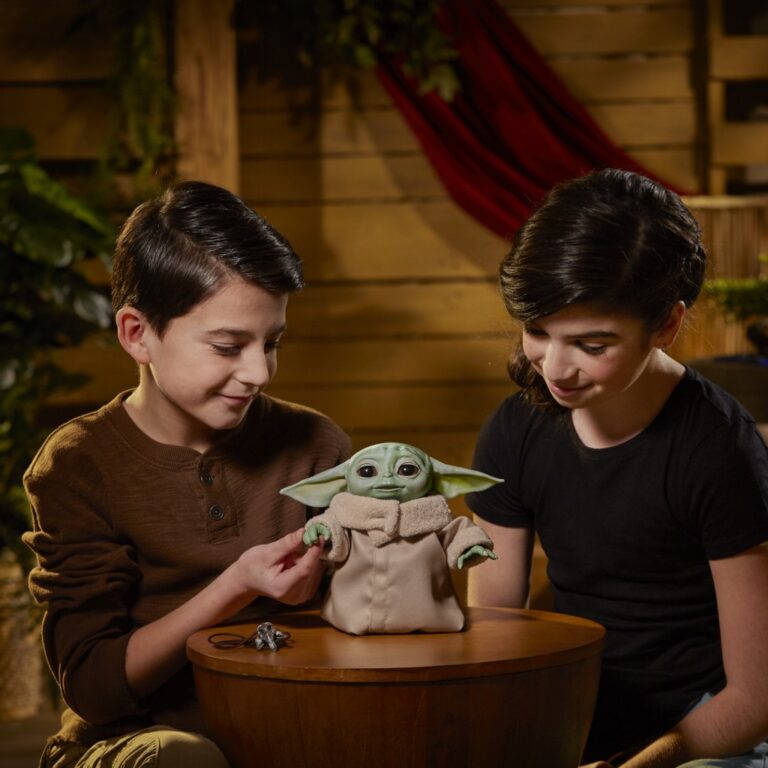
So we just got a news blast from our friends at Hasbro and it looks like we have some very cool Mandalorian, and more specific, “the Child” related toys / collectables incoming! Seriously the Animatronic Baby Yoda…. its all about the Animatronicbaby Yoda!

For all the cool and allllll the cute, check out the press release and photos below!

STAR WARS THE CHILD ANIMATRONIC EDITION Toy 

(HASBRO/Ages 4 years & up/ Suggested Retail Price: £59.99/ Available for pre-order from Zavvi)

From HASBRO’S STAR WARS Collection comes THE CHILD ANIMATRONIC EDITION toy with sounds and motorized sequences! He may look like “BABY YODA,” but this lovable creature is called THE CHILD – and now you can become his protector with this animatronic toy from STAR WARS. Touching the top of THE CHILD’S head activates over 25 sound and motion combinations, including happy and excited sounds, giggles, babbles, and more, all while the toy’s head moves up and down, ears move back and forth, and eyes open and close. Boys and girls can pretend to harness the power of the Force as THE CHILD toy closes its eyes, raises its arm, and sighs as if exerting a great amount of energy. Lay THE CHILD toy down and it will close its eyes and take a “Force nap.” Includes figure and Mandalorian pendant. Requires 2 AAA batteries, included.


STAR WARS THE CHILD TALKING PLUSH Toy (F1115)

(HASBRO/Ages 3 years & up/Suggested Retail Price: £24.99/ Available for pre-order from Smyths)

From HASBRO, the STAR WARS THE CHILD 7.5-INCH TALKING PLUSH with character sounds and accessories! Nothing in the galaxy is as cute, has taken as many naps, sipped more soup, or learned to control the Force as THE CHILD from the hit series The Mandalorian on Disney Plus! He may look like “Baby Yoda,” but this lovable creature is called The Child—and now you can become his protector with this cuddly plush toy from HASBRO Star Wars, dressed in the cutest little robe ever seen this side of Mos Eisley. Posable arms let kids pretend the Force is within their reach, while a squeeze of the toy’s soft plush body activates character sounds! Includes talking plush toy, bone broth bowl, and Sorgan frog.

STAR WARS THE CHILD 6.5-INCH Figure 

(HASBRO/Ages 4 years & up/Suggested Retail Price: £19.99/Available for pre-order from Forbidden Planet)

From HASBRO is the STAR WARS THE CHILD 6.5-inch figure inspired by the itty bitty bounty from the hit Disney Plus series The Mandalorian! THE CHILD is taking the world by storm, and now kids and fans can take one home! Add huge fun to any STAR WARScollection with this big STAR WARS THE CHILD 6.5-INCH Figure. Imagine every bounty hunter in the galaxy is chasing The Child (because, let’s face it, they are) and protect this adorable creature from them all! Featuring design inspired by the live-action series and several points of articulation for big posable fun, kids and fans of all ages will love imagining favorite moments from the STAR WARS galaxy! Available at most major retailers.


STAR WARS THE BOUNTY COLLECTION, THE CHILD 2.2-inch Collectibles

(HASBRO/Ages 4 years & up/Suggested Retail Price: £14.99/2 Packs Available for pre-order from Amazon)

From HASBRO is the STAR WARS THE BOUNTY COLLECTION, THE CHILD 2.2-INCH Collectible figures, inspired by the super-cute character from the hit Disney Plus series The Mandalorian! He may look like a “Baby Yoda,” but this 50-year-old adorable creature is called The Child and is many things: cute, curious, hungry, sleepy, Force-sensitive, and one of the galaxy’s most wanted! Fans can start their own collection of this adorable character in poses inspired by iconic scenes from the live-action series! With 6 figures to choose from, kids and fans can collect figures featuring fun poses such as sipping soup and blanket wrapped, hold me and ball toy, and froggy snack and force moment. These 2.25-inch collectible figures are an awesome way to start a collection, swap with friends, give as gifts, or display in any STAR WARS collection! These items will be offered as 2 packs. Available at Amazon

STAR WARS: THE BLACK SERIES THE CHILD Figure 

(HASBRO/Ages 4 years & up/Suggested Retail Price: £10.99/Available for pre-order from In Demand Toys)

From STAR WARS: THE BLACK SERIES is THE CHILD 1.12-inch collectible action figure based on the so-cute-it-hurts character from the Disney Plus hit series The Mandalorian! THE CHILD is the most adorable mystery from here to the Outer Rim! Now fans can add the pint-sized galactic sensation to their STAR WARS: THE BLACK SERIES collections! The 1.12-inch figure is styled to look like The Child, with premium detail and multiple points of articulation. Includes figure, bone broth bowl, toy knob and Sorgan frog. Available at most major retailers.


STAR WARS: THE VINTAGE COLLECTION IMPERIAL TROOP TRANSPORT Vehicle 

(HASBRO/Ages 4 years & up/ Suggested Retail Price: £69.99/Available for pre-order from Star Action Figures)

The IMPERIAL TROOP TRANSPORT was used to move the Empire’s soldiers from location to location. This STAR WARS: THE VINTAGE COLLECTION IMPERIAL TROOP TRANSPORT vehicle is inspired by the vehicles seen in THE MANDALORIAN live-action TV series on Disney Plus. With realistic detail including a removable roof, opening doors, fold-down seating, swiveling turret, and blaster storage, this vehicle can be displayed in action figure and vehicle collections.

Sonic The Hedgehog Review : Family Fun Speeds in for a Win!

Its not often a Production studio listens to the fans, in fact I don’t think it ever happens…. but Paramount Pictures did and it look like their faith in the fans has paid off!

Going to see Sonic

On Sunday I was invited to the media screening of SEGA’s Number one Speedster and I brought my son, as a bit of a surprise. Basically telling him we were going out for the day just me and him. I purposely wore my “Sonic” red trainers and dropped in hints now and again  but alas he never caught on until we rocked up to the Cineworld at Leicester square where the amazing guys from Paramount Pictures UK were waiting for us in their awesome T-shirts.

Lets just say the penny dropped and I had a very excited 9 year old after that. We therefore partook of the games and food on offer and then took our seats, ready for the magic only a cinema experience can provide.

Now before I go into my review lets wind it back a little, tell the tale of a studio…..who listened to the fans over the design of their beloved game character, retooled, redesigned and even pushed the release date back until Valentines day 2020.

On the 30th of April 2019 the Sonic the Hedgehog trailer was released to the world….and in one instance the world replied with a cry of shear horror and disappointment. Sonic, just didn’t look like, well, Sonic and everyone, this writer included, was not happy about it. But what was to be done? Power ahead or listen to the fans, re-shoot, redesign and push the release back?

Initially scheduled to be released in the United States on November 8, 2019, Paramount went with the latter choice and delayed the film to redesign Sonic.  Director Jeff Fowler even took to twitter with a tweet saying “We hear you loud and clear, you’re not happy ok, we’re going back to the drawing board”, This one tweet restored peoples faith in the project and the the redesign was shown in a new trailer, which thankfully received high praise.


So, whats it about?

*****SPOILERS AHEAD*******TURN BACK NOW********

Film Synopsis / run through

Sonic (Voice Ben Schwartz) is a blue hedgehog from the plant Mobius who can run at supersonic speeds since his birth. His “Obi-wan” Longclaw the Owl encourages him to hide his powers, the ole “with great power” spiel and those who seek power.

The two are attacked by a tribe of Echidnas (yes Knuckles people), who severely wound Longclaw. To protect Sonic, she gives him a bag of rings he can use to travel to other planets, using one to send him to Earth while she holds off the advancing enemy.

Ten years later, Sonic lives in secret in the town of Green Hills, Montana (great call back to the Green Hill Zone from the game) and idolises the local sheriff Tom Wachowski (James Marsden) and his veterinarian wife Maddie (Tika Sumpter). Tom has recently been hired by the San Francisco Police Department and is preparing to move.

Although he enjoys his life, Sonic longs for real friends. One night, he plays baseball by himself and after realising his loneliness, he gets upset and starts running around the field. The energy Sonic emits creates an electromagnetic pulse that knocks out power across the county. Baffled, the US Government enlists the scientific genius (little psychotic) Doctor Robotnik (Jim Carrey) to help discover the cause of the outage.

Robotnik discovers and tracks Sonic “little bigfoot”, who escapes to Toms Garage, startling the Sheriff, Tom tranquillises Sonic but not before he drops a ring opening a portal to San Francisco and losing the bag containing the precious rings left to him by Longclaw. After he awakens, Tom reluctantly agrees to help Sonic recover the rings. Robotnik invades the house, but Sonic and Tom escape. Robotnik comes across one of Sonic’s quills and Tom is declared a domestic terrorist.

Tom and Sonic then embark on an “Eastbound and Down” road-trip, stopping at Biker Bars (Yes he eats Chili dogs) and discovering Sonic’s upset about leaving Earth and completing his “BucketList” before he leaves. Sonic learns of Tom’s decision to leave Green Hills and becomes truly upset, arguing that he is leaving his true friends.

We discover that Sonic’s power is triggered by his emotions and starts to spark his blue energy just before they are attacked by Robotnik. Sonic is injured in an explosion and Tom hurries to get to San Francisco where he knows his only hope lies with Maddie.

Now a revived Sonic with brand new shoes, thanks to Maddie’s Niece, the three travel to the Trans america Pyramid, where Sonic’s bag of rings landed. Robotnik and his robots attack them at the top, but Sonic uses the rings to teleport Tom and Maddie back to Green Hills. Using the power of Sonic’s quill, Robotnik achieves supersonic speed himself, and he pursues Sonic across the world.

The Battle eventually makes it back to Green Hills, where Robotnik defeats Sonic. However, Tom intervenes by admitting that Sonic is his friend and he will fight for him. Sonic hearing this, and with his emotions running high, regains his strength, reclaims the energy that Robotnik was using and in an echo of Super Sonic ‘spin attacks’ Robotnik straight out of the video game and sends him to a planet made of mushrooms.

With the “Boss” fight over, Tom and Maddie decide to stay in Green Hills and let Sonic live in their house with them. The US government also erases all evidence of the incident, including records of Robotnik’s existence. However, the good Doctor survives his teleportation and still in possession of Sonic’s quill is going insane…plotting his revenge.

After Credit scene?

there is a mid credit scene, where in Tails, a two-tailed fox from Mobius, and Sonic’s best friend, emerges from a ring portal searching for him!

Review 

First things first, when reviewing a film such as this, especially with such nostalgic heritage, you have to understand that, as an adult, there will be stupid things that you don’t find funny, you might even find odd but as much as this is a film based on a childhood hero for you growing up, it isn’t really a film for you. It’s a film for them, my son, the kids of this generation and so I have to say I’m not overly accepting of some of the criticism it has been getting from some main stream critics.

Sonic the Hedgehog is great fun, fast, family fuelled and over the top. Its a Computer game film that actually does a good job for once and despite the demographic angle has enough nostalgia and Easter eggs to keep the old hand, Sega boys, happy. It also seems to have brought back another old classic… 90’s Jim Carrey.. The Ace Venture, Mask, Cable Guy era Carrey is back and he fully lifts this film to a level of enjoyment that very few computer game films have ever done; it was good to see him back on form.

Sonic wont win any Oscars, is somewhat predictable in parts and you can tell where the redesigns are, as the eye level is off slightly but it will put a smile on your kids face and that’s whats it’s all about really isn’t it?

My son was grinning from ear to ear during and after. The sheer excitement on his little face and his repetitive nagging to play Sonic after showed the effect it had on him and that for me was great to see in itself. Reminding me of how I felt when I first played the games and watched the cartoons.

Not a film without its faults but one that passes the baton of nostalgia from one generation to another with the help of people power and a studio that listened for once; Bravo Paramount, Bravo.

A great watch for the whole family.


Kickstarting Vampire: The Masquerade – Chapters

Vampire: The Masquerade – Chapters is the forthcoming game by Flyos Games.  Intended to translate the White Wolf roleplaying game Vampire: The Masquerade into a board game, Chapters will be a story-driven game where players take on the role of a coterie of vampires, tasked with investigating the former Sabbat territory of Montreal.

It would be fair to say that the World of Darkness is becoming a shared world, as Chapters will feature Mr Damp, one of the main protagonists from Vampire: The Masquerade – Bloodlines 2, with players able to take on role of this powerful vampire during a specific scenario in Chapters.

With the Kickstarter for their board game due to launch on Tuesday 4th February 2020, I spoke to Flyos Games about how they adapted the roleplaying game and what is so appealing about Vampire: The Masquerade.

There seems to be a lot of love for Vampire: The Masquerade at the moment.

It’s amazing to see how much the community cares about this. It’s kind of crazy. We already have over 3,000 people subscribed to our newsletter, just to be aware and reminded when the game is on Kickstarter.

As you will see on the Kickstarter, the game is expensive, because it’s 250,000 words. There are eight writers and four illustrators. There are a lot of funds that we need to raise to be able to pay these experts in illustration and writing rules.

We think it’s going to be able to raise the amount that we need to make sure that we can give the quality we want with no compromise.

Has Chapters changed from how you initially conceived it?

The idea has remained the same. I think that’s why there’s so many people backing this project.  We are Vampire: The Masquerade fans.  It’s a game we’ve been playing for more than fifteen years.  The idea was that we want to play more, but we can’t, because of kids, jobs, sickness or snow.

Every single week, we were supposed to get together to play Vampire: The Masquerade, but we couldn’t, because life gets in the way.  So, we had this crazy idea…  Imagine you if could play an RPG with no games master – an RPG in a box, that you can play alone or with up to three friends – to create a Vampire: The Masquerade RPG experience, but in a board game setting.  You have the freedom of choice and role playing of the tabletop RPG that we love, but with the mechanisms of a board game.

As we’ve already made two board games, we knew how to make this happen. We have experience in translation, production, crowdfunding, pledge management and deliveries. We have the network of support that we need to make this project happen.

There will be more than forty scenarios and every step of the way we have involved the community. For example, in our Facebook group we asked what our next Ministry character should look like and we made a contest out of it. We had a lucky winner and made a playable character based on their feedback.  What was really surprising is how much support and trust we had on this.  It’s mesmerising and humbling.

Chapters reminds me of Mansions of Madness. Did you ever consider using an app?

We already had an experience with apps, with Until Daylight, our second game.  It is something we want to do.  We like them, it is just the cost of developing an app is tremendous. There was confusion when we launched Until Daylight, as people thought it was video game, or that the app was mandatory.

If an app happens, it is going to be a stretch goal. We’ll see we what the community really wants and we will consider it.

People sometimes play board games just to unplug. Technology is everywhere and sometimes you just want to shut it off.

It’s nice to have an option, if we can afford it.  It is in our plan, but it is definitely not our main focus.

So, you are focusing on getting the main game done?

The game needs $250,000 to be successful.  This will be going into just creating the game. There is a team of fifteen people behind it, and there is still a lot of work. The stretch goals are here to actually enhance the overall experience. For example, we have already eleven playable characters in the game, but there’s also three exclusive miniatures coming when you back on Kickstarter.

There is this market, in Kickstarters, for people that want miniatures all the time. That makes sense because it’s so much fun to paint them and use them, especially in something like Chapters.

With these miniatures, what we want is a cinematic experience, where you can close your eyes and you’re in a specific place you’re doing a specific move, and you have this miniature that is actually something genuine and realistic.

As for the stretch goals, what we want to do before anything else, is make the game we want to make – the core that we need and that we not going to compromise on.  This stretch goals are the wiggle room.  We do not want you know to give a skeleton version of the game and fake stretch goals that was the game we wanted to create all along.

What about side-quests?

Stretch goals are basically side quests and are not part of the main storyline, but they’re nice to have. For example, there is trouble in the sewers, where you can investigate what’s happening after a specific event with a Werewolf; that is a Kickstarter exclusive.

There are also important non player characters (NPCs) that we can miniaturise, such as the Prince or Sheriff, you will encounter as standees, but we can make them as miniatures for the stretch goal.

It is an expensive game, but it is going to weigh close to twenty pounds. It’s a huge box and it’s going to take a year to play it.  Since the setup takes 10 minutes, you can play a quick scenario alone for 30 minutes.

You can play different scenarios that you have unlocked differently to the first time and you can finish the scenario in a different way and can finish the campaign in a different way as well. The replayability of it is amazing.

How long does it take to play a typical scenario?

That will depend upon the number of players you have.  What we say is basically one scenario is 30 minutes per player.  If you’re rushing through, it’s going take less time than if you’re playing with other players.

Do you have any kind of sort of an ideal situation for playing chapters?

The base idea of the game was; “I want to play more and whenever I want.”

You can play solo, that’s definitely one of the best things. You are playing coterie of vampires. You can tag along and bring someone from your coterie to help you out in specific situation. Imagine you like playing a Toreador, who is very good with presence, but then something happens and you want to have someone who uses their fists, so you can bring along your Brujah or Gangrel.

Two or three players are the average in the board game industry and that’s why we went to four players maximum, as the difficulty level is going to scale with the number of players.  Four people is the maximum you can play and you can have so much strategy.

The character sheet is pre-set and the tutorials will explain how to play it.  After each scenario, you’re going to receive some experience points. You will be able to change them over the course of the game.  It’s a roleplaying game and you can do whatever you want.

With four players you’re going to be able to make the combat and the dialogue situation as good as anyone can get and rely on other players’ skills and expertise, so it’s really up to you.

As Chapters is a co-op game, do the individual characters have specific goals that they need to achieve?

There are no goals for specific vampires. The thing is, it’s a Vampire: The Masquerade game, so there will be some opportunities to do something dirty.  Ultimately, you are a coterie investigating something very dark in Montreal.

Montreal is a city that has been under Sabbat influence for a hundred years. They’re gone, having been killed by the second Inquisition, but it doesn’t mean that their presence and influence is completely gone.  There are a lot of things going on and there’s a lot of secrets and lore to discover.
You are functioning as a coterie, not just as a Ventrue or a Toreador. In specific combat or dialogue situation, there will sometime be options only available to specific clans, or if they have certain skills, they can unlock other options.

We want to encourage people to go and play the roleplay part of it.

How easy was it to translate the disciplines into Chapters?

It was one of the most exhilarating moments, because we were able to make it as part of a gameplay mechanism into our game.  It was making so much sense, that from the beginning we were thinking of renaming every single point of the disciplines, as it was not exactly adapted from a specific edition, it was just adapted to the board game aspect of it.

When Paradox Interactive saw everything, they said let’s just put the real name on it, because all the fans will be so thrilled to see that. We’ve looked at it and it was like making so much sense that we uploaded it to our Facebook group so everyone could see.

One thing that stood out to me was the setup time is only 10 minutes. How did you cut down that time?

When we created Until Daylight, we’d made a lot of add-ons.  One of the backers asked if we can put all the add-ons inside the core box.  As the play mats were a little bit bigger and the card holder was too high, we had to change the size of the box so everything could be put in the core box. We loved it; it was way easier for transportation.

People do not like to have a core box on their shelf of board games, and then some add-ons here and there. They want to have everything at once. That was such a user-friendly experience that we’ve decided to make it happen in Chapters.

Everything is already lined up and organised.  For example; every scenario is going to have a number on it, so you don’t need to get all the cards with that number. It’s a booklet and its done. It’s one tile, sometimes two, but you set it up, you use your miniatures and then you put it back, and that’s pretty much it.

As we’ve made the organisation of the box already included, it is going to be so much easier to set and put back.

What’s the timeline afterwards?

After it has successfully kickstarted, we start the writing of it.  We have more than eight writers, including some guests of honour.  We have Matthew Dawkins, as well as a writer from Succubus Publishing to write on the game.  We have a lot of writers that are ready to jump on this and what we need is the funds to make it special

It’s amazing how close we are to making this work. We’re working sixteen-hour days, six days a week.  It’s nonstop. Sometimes we receive emails at 4.00am, and we cannot stop because it’s such good news. We’re endorsed by Modiphius, Onyx Path and Bloodlines 2.  Everyone is behind us.

At the end of the day, we’re fans of Vampire: The Masquerade and we have the chance to see its rebirth.

When is the expected release date for Chapters?

It’s going to be in 2021. There’s going to be six months writing. We also want to translate it as much as possible to other languages, as translation roughly costs $20,000.

We discovered that Brazil has an amazing community, who are very close to Vampire and the World of Darkness, they have a Facebook group with more than 15,000 members. There are a lot of Italians that want it, as well Germans. If we can afford it, for every single 1500 backers, we will start the translation.

Even if we had more languages, it’s not going to slow the production or delivery. We’re thinking close to July 2021.  That is a conservative deadline.  We were two months late on Until Daylight, and we were very transparent on this.

We’re going to be very transparent and include the community in every step of the process.

Finally, why did you call it Chapters?

Vampire: The Masquerade – Chapters is a chapter.  The first chapter is Montreal.  What we want from Montreal is a bridge between the roleplaying and board games community, it has to be easy to play, but hard to master.  Later on, we’re going to have Chapters 2…

So there will be a sequel?

Of course there’s going to be a sequel, because the second chapter in a book comes after the first one, right?

Chapters 2 is way down the line. It’s in five years, but yes, that is our plan. We want to take our time, as we do not want to rush things because we are excited. Storyline is very important for us, as good storytelling makes a whole difference, especially in a story-driven board game. We want to make it right.

The Kickstarter for Vampire: The Masquerade – Chapters can be found here.

Why I’ll never be a top table player in 40k and 5 ways you can be.

With the LVO nearly upon us and the tournament calendar beginning again I thought i’d explain my down falls as a tournament player and how I think, you could do better.

I’ve been playing tournaments in 40k for about 4 years now and despite a 2nd in a one dayer, a 6th and a lucky 10th In a GT I’m generally mid table/ top 30. My armies are competitive but just never competitive enough and I doubt this will ever change. The thing is, I know exactly why I am in the position I am and I know how I could be better….but due to, well, me being me and the restrictions I place upon myself I doubt I’ll ever reach the lofty heights of the top table…. but you could.

In a game of dice luck will always play a part, so the following steps are not fool proof. In the end the dice gods can be fickle masters and even the mightiest 40k players fall to their curses, so the best you can do is prepare and hope your preparations are able to weather any displeasure they might send your way.

Now, first up, tournaments can be intimidating experiences and if you are just there for a bit of fun and end up getting destroyed in many of your games, you can come away with a bit of a bad taste in your mouth BUT before I tell what you need to do to be a top table player, first off I would very much suggest you read my article on 40k tournament players, and the types you will find within HERE. It will give you a breakdown on who you might play and that it isn’t as bad as it is made out to be, as long as you are playing with the right mind set.


Versatility / The Meta.

To be a top table player you need to be versatile with army choice and list creation. If like me, you have a favourite faction that you just can’t not use and units you just can’t do without, then there is a very good chance, unless they are inherently META, and have been for a while, you’ll end up with a fair few losses under your belt.

Now this is all well and good if you are happy just to play and win now and again ( and there are many like this) but if you have entered a tournament to do well and aim high then you’re going to have to check your faves at the Emperors Palace gate and accept that if you want to run with the big boys, meta tracking and assimilation is key.

You need to be able keep up with what’s winning, the best units and the best abilities. Then either accept that you’ll have to fund this constant flux as new rules and units come out ( which is expensive) or be willing, like many top table players, to swap or eBay your army when it has past it’s sell by date; this I can’t do.

I have been Space Wolves for as long as I can remember, back to Rogue Trader days in fact, and as much as I have dabbled with mixed forces and on a couple of occasion went pure Custodies, I have red lines I won’t cross. I’m always Imperium and I pretty much always use Space Wolves in my army composition; despite the fact that they haven’t been truly competitive, to a high level, since the glory days of The Thunderwolf Cavalry / Wulfen Death Stars of 7th edition .

Now some SW list are “competitive” and can do well enough but they are not Meta, quite lack lustre and don’t have the firepower, or buffs necessary to win tournaments very often. I love them and their lore though and that’s why I use them. Also, as much as I’m not the best painter I do enjoy it and I have a theme for my Wolves that I can’t just bring myself to get rid of just because of the Meta; so I play with what I have and hope I can find a competitive combo.

You will note that a lot of top table players ( not all) lack well painted armies. That’s because the game comes before the hobby for them and so painting is just a necessary evil on their road to victory and if you are swapping out armies every 3-6 months, painting them might turn from a hobby to a chore, so the main 3 colours are added and that’s it.

Rules.

Rules are key to success in a 40k tournament. Many games have been won or lost ( and I should know) because one player ( generally me) has gotten a rule wrong and so made a big mistake that is hard to come back from.

A good example of this is the charge phase, not charging, piling in and consolidating properly. Here you have the chance to move your charge roll + an additional 3” pile in and “3 consolidation, which when playing certain armies is vital, especially if you want to shut down their firing phase.

On top of this, and again something I am quite prone to, is forgetting rules and abilities that could have been vital to how I played. It also leaves me open to other players who are like me, making mistakes, stating a rule is X, believing them, then finding out later it wasn’t the case; by which time it is too late.

Additionally it is all but essential to know most of the rules of your opponent. This is a bit of a challenge and I doubt even top table players know everything but they will at least know the main thrust of what your units do and the knowledge is key to how the battle goes.

A good example of not knowing your opponent occurred on 3 occasions against me when 3 separate knight players didn’t understand how my Wulfen worked and proceeded to charge them, instead of shooting them from a distance. ( in my defence I always tell people how they work and you really should never get in combat with Wulfen) The charge works, the Wulfen soak up a fair few stomp attacks on storm shields and Feel No Pains, the models that are killed hit back, doing a lot of damage and then the unit itself hits back and kills the knight, leaving another round to advance and charge the next knight, which, Invariably will die too.

Finally, rules aren’t just confined to the rule book and codices, no, tournament rules / rulings are also very important to understand and bear in mind pre game. Because nothing will ruin your day more than turning up only to find out you can’t use certain relics and warlord traits because you didn’t have them added on your list… I’ve been there, it’s very upsetting.

Pre game planning.

I have to say I’m not too bad at pre game planning, and quite enjoy it. Understanding how you will deal with specific lists and how your units interact with the missions can be just as important as list creation. In some cases you’ll be aware of the missions in advance, in others, you won’t but you’ll need to think out what your plan is for different deployments, game types and enemies.

For me, I draw out tables and break them into sections then think about different mission types and how I can best deal with different factions and situations. It’s not fool proof by any stretch of the imagination but it at least prepares you a bit so you have some idea on what to do.


Playing to the mission.

Basically the above but when you actually find out what the missions are.. You have to play to the mission. Sounds like a given but there are so many players, myself included, who will play to kill units at the expense of winning points and that is where you / I fail. It’s only now, after years of not learning from this mistake that I’m getting out of the habit and just thinking about how to maximise my points. If that means you have to lose an expensive unit so be it, if that means you might get tabled, then it’s a price you have to pay. In tournaments it’s about victory points and you need to do anything you can to achieve them, even if this means losing units.

It seems counter intuitive sometimes, that if you don’t save X HQ he’ll get taken out but is X HQ, on an objective, and getting you points? If so then he’s better there, racking up points than not there and safe.

Obviously you can’t just throw away units willy nilly but you have to accept and understand that the game is the mission and even if you table someone on turn 4, if they have racked up enough points, you’ll still lose; so fight against your base wargamer urges and play the mission.

Having to be ‘that guy’ some times.

This is something I can do but very much dislike. I’m competitive, to the point that I’ll challenge rules and ask questions on rules I’m not sure on, I’ve even had a protracted debate about victory points at the end of a game but in general I hate having to be “that guy” and I hate punishing players for simple mistakes. 9/10, unless it’s super close, or they are being a douche bag, I’ll always let someone take something back, roll out of sequence, take additional relics etc if it’s not on their written list ( as long as I know pre game) BUT, as much as there are a lot of players who are like this, they like me, are bottom and mid table.

If you truly covet the top table positions then sadly you have to understand that this is a tournament after all and if you give people leeway then it just puts you at a disadvantage. In a game where maximising on people’s mistakes is key, you can understand why some players aren’t overly keen on letting you fix mistakes, especially if it is at the expense of their game.

This obviously doesn’t mean you have to be a dick about it, because invariably you’ll make a mistake yourself and need to throw yourself at the mercy of your oppo but a tournament is just that, you enter to compete and like any sport, mistakes are part of the advantage given to the other player.

So there you go, 5 reasons I fall down on when playing tournaments and 5 ways you can up your game.. if you think there are more, if you have any advice; then by all means leave us a comment below.


Scion: Hero PhonePDF

As much as we love Scion, this is not a review of the game itself (which was reviewed here), but of the medium in which it is presented.

PDFs of roleplaying games have – in some ways – helped save the roleplaying industry.  PDFs are making roleplaying games more accessible by making them more easily available through downloads.  Also, when they are properly formatted (not just image scans of pages), they can be indexed, hyperlinked and searched, all of which can make referencing a particular rule much easier.

The proliferation of digital tablets has also made PDFs of RPGs easier to use.  Rather than risking their new tablets getting damaged, many people take their older tablets, loaded with the RPG PDFs, out with them for gaming.

Although we have been able to view PDFs on our smartphones for some time, it has frequently been a frustrating experience.  This is especially the case when viewing A4-sized PDFs on the smartphone’s small screen, as it frequently involves zooming in on each page in order to read the text.  Despite this, smart phones have their own advantages, as they are far more portable than tablets.

PhonePDFs are a relatively new invention, designed to take all that was great with standard PDFs on a tablet and augmented them for the smart phone.  Using a smart phone’s standard PDF reader app, PhonePDFs are just as indexed and searchable as standard PDFs, but the page and font size has been optimised for the screen of a smart phone.

This makes them ideal for quickly searching for specific rules.  However, it does not fully resolve the challenges of reading text on the small screen of a smart phone.  Attempting to read a PhonePDF in full becomes a frustrating experience of constantly scrolling through the document.

That said, this does not invalidate the usefulness of PhonePDFs.  Of the two, reading PDFs on a tablet (on the sofa with a warm drink) remains the better way of fully reading an RPG to learn the rules.  Of course, some people prefer a good old paper copy for this purpose. However, for players wanting to quickly reference their abilities of the statistics for specific item, then a PhonePDF is an ideal choice.