Home Blog Page 17

Remembering Mira Furlan, 7th Sept 1955- 20th Jan 2021

We’ve learnt today that Mira Furlan, a talented Croatian actress and singer best known in the geek world as Delenn in Babylon 5 and also as Danielle Rosseau in Lost, has passed beyond the rim at the age of 65.

Mira Furlan

I was never lucky enough to meet her, or see her live at a convention, but the world of the internet makes it possible to see the appearance of actors long after the fact, or when you can’t attend a convention in person.

Mira had long been a talented and passionate actor in theatre, and was known in her home countries because she, and others insisted on continuing touring during the breakup of Yugoslavia. She travelled back and forth across the border in spite of death threats from both sides. In the words of J. Michael Straczynski, she once said to him “What’s the worst that could have happened? Yes, they could have killed me. So what? Art should have no borders.” Eventually, the ongoing threats and other problems forced them to leave for New York in 1991, but they returned to Croatia in

No cause of death has been confirmed at this time, but apparently the remaining Babylon 5 family had been aware for some time that she was unwell. “We kept hoping that she would improve,” JMS wrote, “In a group email sent to the cast a while back, I heard that she might be improving.”

Unfortunately, Straczynski confirmed he recently got a call from Peter Jurasik that Furlan’s husband, director Goran Gajić, was “bringing her home.” “Do you mean, he’s bringing her home as in she’s better now, or is he bringing her home as in he’s bringing her home?” JMS asked. “He’s bringing her home, Joe,” Peter said, with a catch in his voice.

Mira had continued to act until as recently as last year, and leaves a long legacy of work, as an actress, a singer, and as a writer, in addition to her husband Goran and her son, Marko Lav Gajić.

I was never a Lost fan, but I was, and continue to be, a passionate fan of Babylon 5. As such, there are many moments where Mira’s performance and the words of JMS made a lasting impression – Delenn was strong and passionate, tender yet unyielding.

It’s often remarked upon how impressive the cast of the programme was, but they all had a chance to shine, and so often they made each other better for their interactions. The most remembered individual moments tend to be her fiery speech in the Series 3 episode “Severed Dreams”, and her speech breaking the Grey Council in the same episode, but I tend to also value her more nuanced and anguished performance against the inquisitor, Sebastian in “Come the Inquisitor“, and her measured, performance showing sadness and grieving in the final episode “Sleeping in Light“, an episode that still moves me to tears so many years later. Others fondly remember her performance for the little moments, such as the difficulties of hair care when Delenn transitions to a Human/Minbari hybrid.

So many of the Babylon 5 cast have been lost to us now, but each we lose still hurts – especially those that go before their time because they were part of something special, ‘lightning in a bottle’. Each fan has their own private memories and favourites, but we can still agree that even where we aren’t familiar with the other work of  Mira, she left a lasting impression on us even where we hadn’t personally met her.

And so we at Geek Pride offer our sympathies to her family, and her friends, that she leaves behind, the richer for having been a part of her life. And we know that she, like so many others, will continue to live as we remember her, and enjoy her performances.

“I will go with you beyond the Rim… and we will see again all those who went ahead of us, all those who we have missed for so long.”

Walker – a new beginning

I watched it, so you don’t have to.

What is Walker?

A new CW series, and I use new lightly, since it is a reboot, has premiered yesterday to a relatively lukewarm reception. Not one to be deterred by what others think, I made the executive decision to see for myself what the fuss is all about.

I used to like the old Chuck Norris show, since it was a relatively light, camp affair with a moral of the week format. This new Walker is… not that.

Why? You might ask?

Well, because all reboots have to be darker and much more dramatic. And how do you achieve drama quickly? You kill a spouse or more specifically, you fridge a wife. It seems Jared Padaleck is cursed to lose the woman he loves in all shows he’s in. Preferably before they get any kind of backstory or personality.


I can say that halfway through the episode we are still in the exposition stage and one thing I hate about exposition is when it is clunky. I mean, people can be awkward after a long period of no contact, but hardly anyone talks like the Walker family. They are like a walking narration. Heh, Walkers walking…

While I understand that the first episode sets the stage, cramming so much information in a single 42 minute streak seems counterintuitive. Maybe because I have higher expectations after watching actually good shows? I might be a little unfair, but Walker Justified is not.

I mean… there was an actual scene, that I saw with my own two eyes, in which a random guy taunted Walker about his dead wife, like it is something people actually do, in that particular way. And Walker beats him up, because that is what cops do, I guess? Excuse me, rangers.

The whole scene felt like I was watching a PSA where everyone is overacting to get the point across. You know those videos that pop up on Facebook every two seconds? Yeah, those.

The show that goes on and on and on…

Forty minutes into the episode and I can definitely say that the show does not know what it wants to be yet. Drama? Crime show? A very bizzarely set-up dark comedy?

It might find it’s pace, however for now it might be the show you watch when you are actually doing something else. None of the characters are compelling enough or original enough to hold your attention for too long. Cordell’s sole raison d’etre is his quest for the murderer and for now that is the whole of his personality.

I kept thinking this is reminding me of something, but I only now got it. It is almost Lethal Weapon (the TV series reboot, of course), but with less intriguing acting. That show also had a dead wife, murdered in mysterious circumstances that obsessed the main character, to the detriment of his sanity and family relations.

Cordell Walker seems a little more adjusted, though to be honest hearing Jared Padalecki struggle with calling his on-screen father ‘Daddy’ was making me question said adjustment levels. That and the fact that Walker, a grown-ass man, is being mothered from all sides and not a single person suggested therapy, for him to work over his obsession with his wife’s death.  I am sure he will have a point, in the end, but still.

Will I watch it again?

Despite all of the above, chances are I will watch episode two, as well, if only because Lindsey Morgan is in the show. She is actually trying her best, while having to say the worst lines. I only fear she will be somehow turned into the keeper of Walker. Why? Because he is apparently a god amongst men, but has the emotional development of a toddler.

Here’s next week’s trailer, if somehow you are still interested:


Phoenix Point – one year on

Coming out of the Epic Games 12-month’s exclusive deal, Phoenix Point (originally reviewed here) has been released onto Steam with the Year One Edition.  This is essentially the same as the game that was originally released, but with all of the past year’s patches and downloadable content (DLC) built into it.

Phoenix Point is the latest game from Julian Gollop, who created of the turn-based strategy genre with the games Chaos: The Battle of Wizards and Rebelstar.  The latter spawned UFO: Enemy Unknown (AKA X-COM) games, which have recently been rebooted as XCOM.

Gollop took everything that he has learnt over the past 35+ years in game development and created Phoenix Point: the quintessential unit-level turn-based tactical video game.

It would be fair to say that Phoenix Point was a flawed gem when it was first released.  The game tended to drop players in at the deep end, with a minimal introduction, whilst the difficulty curve was steep.

Gollop and his developers have taken this feedback onboard, essentially treating Phoenix Point’s first year as a form of live beta testing.  The Year One Edition is not a “whole new game”, as other companies would call such updates.  Instead, it is a refinement, building upon the original to make an even better game.

One of the first major updates has been the new introductory missions.  Not only do these better explain the different unit types and actions that they have available, it is also gives the units more character.  The cut scenes and missions introduce the player to Sophia Brown and her squad as they reactivate the Phoenix Point initiative.  Rather than a single introductory mission as before, we are now presented with a series escalating missions that introduce the player to Phoenix Point.  These missions excellently explain the game, as well as being a great story.

There is also a lot more content, in terms of plotlines and factions in the Year One Edition, with the Blood & Titanium and Legacy of the Ancients DLC, as well as the Living Weapons pack.  For example, we are introduced to new enemies, such as the cybernetic horde The Pure.

There are a lot of game-balance improvements in the Year One Edition. Whilst it is still possible to have an entire team wiped out during a mission, Phoenix Point is not as insanely difficult as it once was.  Instead, the game rewards players who take the time to prepare for the task.

One of the key points of Phoenix Point was how the Pandoran enemies evolve in response to player tactics, such as growing chitinous shields to guard against weapons fire.  Now, the enemies evolve at a slower pace, giving players time to change their tactics.  These also come with intelligence reports about their weaknesses.
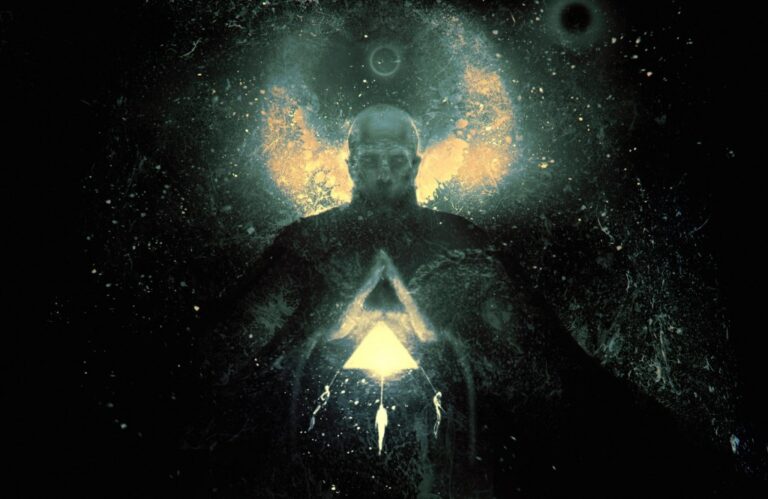
The factions have also become less volatile.  Whilst the Pandorans can and will frequently attack the bases, often when players are sending troops on a mission and have to divert troops, the factions are less gung-ho in assaulting each other.  Previously, players often found themselves in the midst of three-way war between the factions.  Now, their aggression has been reduced, giving players time to attempt to diplomatically resolve the growing divide.

Overall, the Year One Edition unlocks the untapped potential of Phoenix Point.  It builds upon the existing game, refining the game balance and introducing new content.  Overall, there is no better time to get into Phoenix Point, as the new content offers enormous and varied playability.

Coriolis: The Third Horizon – The Last Cyclade

The Last Cyclade continues the story of the three-part Mercy of the Icons campaign for the Coriolis: The Third Horizon roleplaying game (reviewed here).  As such, it is recommended that Emissary Lost (reviewed here) has been played.  Although it is entirely possible to follow The Last Cyclade without prior experience of the storyline, some of the references to the previous instalment will be lost.

Coriolis: The Third Horizon has been frequently compared to Firefly, but with an Arabian Nights twist.  Just as Firefly has the Alliance of core worlds and independent outlying planets vying for power, so too does the game have factions vying for power.

The shifting politics of the various factions, broadly defined as being either Firstcome or Zenithian, are core to The Last Cyclade.  One of the greatest strengths of Coriolis: The Third Horizon is the shades of grey in their factional-politics.  Other than the spiritual force known as the Dark Between the Stars, there are no stereotypical ‘bad guys’, such as the Empire in Star Wars or the Borg in Star Trek.

Unfortunately, in The Last Cyclade, one faction takes extreme measures to acquire power.  Whilst this only occurs through external influences, and is somewhat resolved by the end, they essentially become the antagonist for the campaign.  As such, Coriolis: The Third Horizon loses much of the carefully-crafted ambiguity.

The Last Cyclade has an incredible scope and scale, giving an expansive view of The Third Horizon.  Prior to this, Emissary Lost had centred on the Coriolis station and the planet Kua, which it orbits.  In The Last Cyclade, player characters get to explore more of the setting, with the opportunity to visit some of the faction strongholds.

Every major non-player character (NPC) has a detailed character sheet in the margins.  All of the minor NPCs have the appropriate stat block from the Coriolis: The Third Horizon core rulebook.  Similarly, any particular rules and equipment mentioned in the campaign are given with the page number of where they can be found in the core rulebook.  This leaves the games master (GM) to focus on running the game, rather than hunting for a particular rule or item listing.

The Last Cyclade’s expansive approach necessitates a more free-form approach in structuring the campaign sourcebook.  Readers are presented with a broad understanding of what needs to happen over a series of adventures, rather than a definite path.  This allows GMs to tailor the campaign to their own version of the setting.  The Last Cyclade also includes four detailed scenarios that can be used either as examples of how the necessary events can be played out, or run as they are.

That said, The Last Cyclade is not completely freeform.  The first scenario in the book includes some railroading of the characters.  This is in order to establish the characters for playing the freeform adventures that follow.

The final act of the last scenario can leave the player characters feeling like spectators in their own scenario.  The reason for this is understandable, as the scenario builds towards a particular event, which would result in character death if they were directly involved.  However, experienced GMs could mitigate this particular challenge.

If Emissary Lost left a significant impact on The Third Horizon setting, then The Last Cyclade completely turns it over.  The consequences of The Last Cyclade utterly redefines the structure of The Third Horizon, so much so that the two-page summary afterwards barely scratches the surface.  In many ways, a completely new setting sourcebook could be written on how The Third Horizon has changed.

Ultimately, The Last Cyclade continues the epic Mercy of the Icons campaign and builds to a satisfying conclusion for this second act.  The ending opens new storylines and possible scenarios that the player characters will explore, before culminating in the final chapter.

Axis & Allies: Zombies – Review

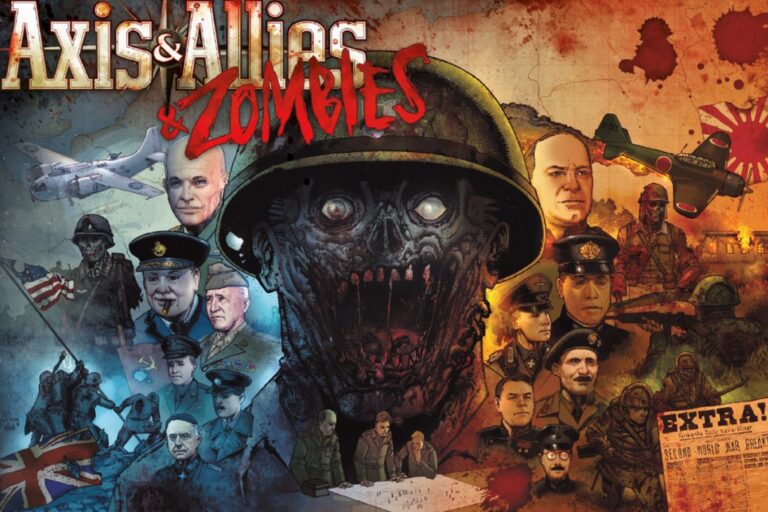
Axis & Allies by Avalon Hill has been a staple war game in my family for nearly 20 years now. From the basic game all the way up to the behemoth, 14 hour + global version, and bar a few alterations in scale and a few units, it has stayed pretty much constant, game mechanic wise, since the 80s; if it’s not broken, don’t fix it and all that.

I, therefore, have to admit, when I first found out about a new version of Axis & Allies, with Zombies, I wasn’t overly interested. The Zombie trope is used everywhere these days and it being added to a game I felt needed no additions seemed to me like a cash-in, on an ageing, but classic, franchise. I, therefore, happy with my yearly global slog, had no inclination to pick it up and only did because Fan Boy 3 had a sale on… Boy am I’m glad I did.

Like in all A&A games you have Axis vs Allied powers and its each alliances job to capture their opponent’s capitals and destroy their armies using infantry, tanks, artillery, fighters, bombers, aircraft carriers, battleships and more.

Each area captured provides your nation with additional IPCs ( money) to spend on forces. You then can place those units on areas with factories ready to defend or build-up for attacks.. and that, for your vanilla A&A game is about it.

Combat is straight forward enough, each unit attacks on a number and defends on a number. Infantry attack on 1s ( unless supported by artillery, then its 2s) and defend on 2s. Fighters attack on 3s and defend on 4s; with successful rolls in combat being equal to or lower than. Hits (both attacking and defending) cause casualties; with no modifiers or saves just dead units.

The strategy comes in with what sort of units you buy, where you spread your forces, when you attack and where. It’s like A more complicated game of Risk, coupled with chess and set in WW2. It couldn’t get any better than this… or could it?

Well apparently it can and that’s where the Zombies come in. Whereas in a standard game of A&A you know where you stand, with set “fronts” to attack or defend on and these all succeeding or failing based on dice rolls and or army composition ( for the most part), A&A: Zombies adds in a “Z” factor in the form of random cards, infection and zombie attacks and it really works!

How The zombies work

First up, you know the way, when you play the normal version of Axis and Allies that you use loads of Infantry to soak up casualties? If Russia, spam infantry to defend against early German attacks… win the game, right? Wrong, you don’t overly want to do that now. Every dead infantry unit turns into a zombie and zombies don’t care that they used to fight for mother Russia they will attack anyone and you’ll go from holding the thin red line to suddenly being overrun by zombies that you can’t deal with.

Secondly, as well as infantry turning when killed, each time a nation takes a turn, a card is drawn*, causing an outbreak in a random place on the map. You might be turtled up in Britain, or readying an attack from Japan, only to have a card drop on you stating that a zombie infection has started in your midst.

*You get 2 sets of cards, one for the base game and one to add to the bigger 1942 vanilla game.

Initially, it might not seem overly problematic, it’s only 1 Zombie after all.. but they might attack and kill another infantry unit, making 2, or destroy a tank or artillery piece that you need. You leave it and focus on the real enemy only to come back and realise that 2 zombie stack has turned into 3… 4.. 10. And you lost control of your industrial heartland, rendering you impotent and defenceless.

Thirdly, the Zombie cards can work for you as well as against you. Granted they might drop a zombie somewhere you don’t want but they give you the chance to develop Anti Zombie tech, like chainsaw tanks or zombie mind control rays and they also let you gain IPCs, move zombies around ( generally towards your enemy ) and some times even recruit them.

Fourthly, zombies attack at the start of a round, everywhere they are in contact with your forces and then again at the start of every nation’s turn and then again when combat is occurring and zombies are present. Now granted their attack dice have a 1:6 chance of killing a unit but with all the attacks they get, it adds up and what started off as a small issue, turns into a major problem.

You can of course fight back. Attacking zombies is like attacking normal units. You also get collateral zombie kills in normal combat if you get a 6 ( or a 5 or 6) with certain tech. But you suddenly realise that if you take casualties you either have to give up expensive units like tanks or artillery or give up infantry and make more zombies. #WeirdWW2problems

Finally, Zombies can take areas and even stop production. If you don’t have a unit in an area and a zombie is in there it becomes Zombie territory and they have a marker on the victory point board. Once they hit 25 points the Zombie Apocalypse occurs and you only have 1 more round to win as many points as possible before the game ends.

Why it’s a game-changer.

In vanilla Axis & Allies you know where you stand and as much as unexpected breakthroughs and ridged defences occur you generally have a good hold on where you are going to place units and where you are going to attack. A&A: Zombies takes this comfort away from you and throws in brain-eating randomness that gets worse as time goes on.

You initially ignore it, in the end, you need those units to breakthrough in China, or Europe but as soon as you start ignoring internal threats the sooner you start to lose areas and your front lines can’t sustain themselves. You suddenly start building more expensive tanks and artillery because you don’t want to lose infantry who turn into zombies, but then you lose those expensive units to relentless zombie attacks and the area becomes a wasteland occupied by the undead…. it’s bloody amazing.

You not only have to think about the outward enemy but also the potential enemy within and you soon start using it to your advantage. Zombie areas can be used as buffer zones, stalling attacks, sending in forlorn hopes to attack enemy areas can help spread the infection and cause issues for your foes. The strategy soon shifts from conquest to survival and end game points and I’ve got to admit, it works brilliantly.

Conclusion

What was a pretty unchanged game over 4 decades has now, ironically, been given a new lease of life with the addition of Zombies. A 3rd dimension that really creates a sense of tension and uncertainty within a game that already is quite tense at times.

The randomness and additional strategic effect Zombies cause create a completely different, if somewhat familiar feeling, game and it really impressed me and my brother. We went into it with one mindset on how to win and ended with a completely different one. Victory did not come to the power that was the strongest or had won the most battles but to the one that could mange its outbreaks, all the while staving off attacks.

A zombies game that really adds to its progenitor and even builds upon it. I don’t think I could go back to vanilla A&A anymore and just want them to bring out an expansion so I can play it with the Global game!

What to watch? What to watch?

We all know this year was ‘special’, don’t we? From a new virus that held the world hostage in their homes, to all the randomness that occurred, it will definitely go down in history.

Now, there were some things that kept me sane during the past 9 months, notably books and TV shows. In case you haven’t managed to go through the whole library of your preferrerd streaming services yet, here are some recommendations:

Mind you, these will all be non-English speaking shows, because I am 100% positive you have heard of the American/British ones already

Dark

This will definitely bend your mind. I mean that in the best way. A German production, Dark came to Netflix and made us all question our sanity for a good three seasons. It was not the easiest of watches, mostly because it involves a healthy dose of time travel and a lot of characters that you have to keep track of. Having a notepad handy will help.

But it is a definite 9/10 from me and hey, it is not harder to explain than 2020 to a toddler, so a perk right there. You can watch the trailer here.

La casa de papel

Or Money Heist (a name I am seriously rolling my eyes at). This Spanish export really blew up when the first season was released. If you have not watched it yet, what are you waiting for? Great acting, great action and some improbable events? Not to be missed unless you hate all of the above. The show also managed to bring back the anti-fascist anthem Bella Ciao which is now sang by people who might be missing this particular historical connection.

Still, a definite 10/10 for La casa de papel.

Beau Sejour

This flemish language Belgian series is one of my favourite shows, to be honest. Initially thought up as an anthology, it tells the story of Kato, a young girl that wakes up in a hotel room, with no idea how she got there. One little catch? Kato is actually dead. Don’t worry, this is not a spoiler.

The whole series she tries to figure out who killed her and why. It is as a much murder mistery as it is a supernatural show and it is amazingly well done.

Another 10/10 recommendation from me. You can catch the trailer here.

Au service de la France

After so much darkness, let’s lighten up a little with a French show about a very new secret agent who has to deal with everything this new position entails. It is funny, it is witty and it has Hugo Becker as the lead. Yes, I can be shallow and enjoy the show at the same time.

10/10 and you get to practice your long forgotten 6th grade French at the same time as watching a very good show. Added perk? It has two season and is complete, no cliffhangers, no need to imagine an alternate ending. Trailer here.

Hashoter Hatov

Moving away from Europe for a brief moment, definitely try out ‘The Good cop‘, a comedy about one competent police officer that has the misfortune of being surrounded by a bunch of challenging colleagues and family members.

Danny Confino just cannot catch a break. The first 15 episodes are available on Netflix with english subtitles and it is perfect if you have been watching something depressing prior. Like the news.

Hackerville

This German/Romanian collaboration was one of my favourite things to watch, mostly because it was filmed in my hometown and I finally got to laugh at the inconsistencies in geography. But it is truly a good show that portrays the reality of the moment and not what people might think Romanian society is like, from the outside.

You can catch the show on HBO Europe and the trailer right here.

When heroes fly

Another Israeli export, this show kept me glue to my tv, despite my firm belief prior to watchin it that I will pace myself and only watch one episode per day. Ha.

Each episode ends on a cliffhanger and until the very last moment I ended up on the edge of my seat, worried about how it will all resolve. It addresses themes like PTSD, its spreading effects over the years, religiousness and disease, friendship and duty… Basically it has it all. It also won best series at Cannes, so you know, it has a good pedigree.

You can check the trailer here and the show on Netflix.

Fauda

Last Israeli/Palestinian recommendation of the day, this is definitely a show not to miss. It shows a lot of the issues surrounding the Palestinian/Israeli conflict from both sides of the arbitrary line drawn between the two and it (unsurprisingly) gained approval from Israelis and Palestinians. The show is in both arabic and hebrew and I could not praise it enough.

Please be ready to binge the three available seasons in pretty much one sitting, because it is very hard not to. The show is also on Netflix and its trailer can be seen here.

Filinta

This Turkish show presents the story of an Ottoman detective that struggles to clear his name after being accused of a crime he did not commit. The show has two seasons and presents a side of the Ottoman empire that is hardly ever spoken about. I mean, when they pop up in international productions they are usually the bad invaders.

It will open your eyes to a whole new part of history (if you never had an interest for it before, of course) and it is also fun to watch.

Curon

Last but not least, this Italian production will definitely catch your eye. It features a small town with a dramatic past, well hidden from outsiders and obviously a bunch of kids that somehow manage to scratch the old wounds open and release the Krakken! I am kidding, something does pop up, except it’s not a sea monster.

I guess you will have to check it out yourselves.

Now, I did mention that I watched a lot of shows in the past 9 months, alas there is no time to give them all a center piece in this list. They do get honorary mentions, though: The Valhalla Murders, Bordertown, Trapped, Deadwind, The Break and Undercover should definitely make your list of things to watch. I do have a deep love for good mysteries and who does it better than the Nordics? The French and Flemish shows lost among the above list are also worth a watch.

What have you been catching up with during the lovely 2020? Please leave us your recommendations, we would love to hear them!

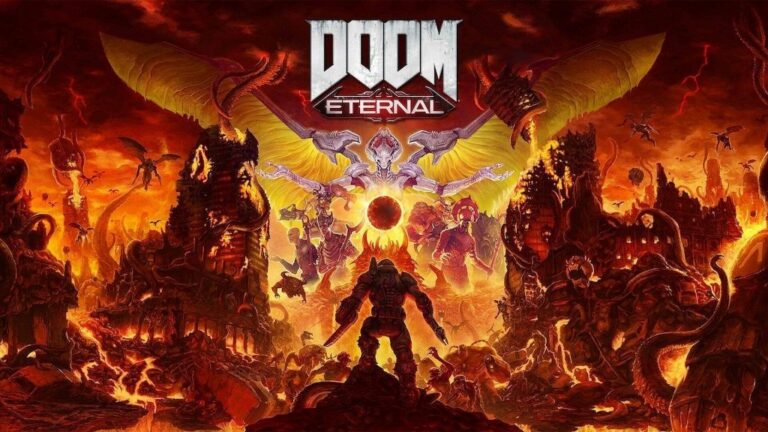
Doom Eternal

PRELUDE TO THE ONSLAUGHT

Doom Eternal was released for consoles back in March, but it wasn’t until the 30th of November that it was confirmed that the Nintendo Switch owners would get to add the further adventures of the Doom Slayer on the 8th of December. This announcement was also accompanied by the news that the developers had decided that game would only be available digitally, available through the Nintendo eShop as well as through digital codes available from retailers.

Now, going into this I knew from experience that the team responsible for fitting the gloriously glory experience onto the handheld – Panic Button – were no strangers to porting big titles to the Nintendo Switch. They were responsible for handling the Doom 2016 game to the console, and from then on had a healthy relationship with Bethesda bringing over the Wolfenstein II titles as well as Doom 3: BFG Edition.

THE STORY: ONE MAN’S CRUSADE AGAINS THE SWARMS OF HELL

Now, when you think of the Doom series, plot isn’t exactly the first thing that comes to mind. Hell, one of the iconic scenes in Doom 2016 is when the Slayer is starts receiving exposition at the start of the game after donning their iconic armour…and before Samuel Hayden can take his first breath after introducing himself, the Slayer pushes away the communicating screen in front of him to make his way to the nearest door so he can start ripping and tearing through the hordes of demonic entities which have taken over the base.

Doom Slayer has no time for plot. He cares only to rip and tear until it is done.

However, Doom Eternal is surprisingly plot-heavy considering the game that came before it. Immediately, you are dropped into a worst-case scenario; Earth has lost and demonic forces have taken over the planet, scarring the very face of the Earth with runes embedded into the very surface. The Slayer is momentarily resting above the carnage in his own station, establishing coordinates and gearing up before embodying the principle of ‘push forward combat’ id Software associate with the series by throwing himself into a citadel to take on wave after wave of enemy before finally tearing off the head of someone in a crown who you gather was someone pretty important.

“There is only one dominant life form in this universe and it carries a steel-barrelled sword of vengeance.”

All explanations for what on Earth is going on can be found in the collectible codex entries scattered around the levels, and bursts of ARC Broadcasts can be heard to give you an idea of just how damned humanity is. However, there’s enough given in the story taking place around you to fill out enough the gaps to get a grasp on what exactly is going on. The cutscenes seem remarkably slow-paced considering the fast, action driven gameplay that Doom is known for. The codex entries thankfully give a wealth of lore for you to dig into whilst you explore your personal command centre in-between levels, which itself has a wealth of lore and easter eggs of its own for you to unlock and discover as you plan your next move. Will you revisit a level to unlock more secrets, or plough ahead into the next chapter of this epic? Will you experiment with that new weapon you just discovered, or will you show off that new shiny armour you unlocked?

This Doom Slayer still has no time for plot, but that still doesn’t stand in the way of this chronicle id Software appear to have scripted for this entry.

GAMEPLAY: ONE HELL OF A GOOD TIME

Like I mentioned before, the principle to the id Software entries to the Doom franchise have revolved around ‘push forward combat’. Despite the renewed emphasis on telling a dimension-spanning story which takes you from ruined hellscapes to abandoned citadels, mechanised factories to celestial establishments, you can still be damned sure that at the heart of it all is going to be the adrenaline-fuelled combat that the series is known for.

You start your crusade against the demonic tide with your trusty Combat Shotgun, and as you delve into the depths of the campaign you uncover a plethora of new and familiar items to add to your arsenal. Each new addition provides a new way to rip and teat through the stages and various combat arenas scattered throughout the levels, and ammo can be found scattering the ground or by running a chainsaw through lesser demons. Glory Kills are a returning feature, allowing you to finish off minions in almost darkly comedic manners – never have I felt such satisfaction from bopping a demonic mook so hard on the head it moves down to where the lungs should be. A new addition is shoulder mounted weaponry, allowing you to add a grenade launcher, to take care of groups of inconveniences, or the Flame Belch, which you’re encouraged to unload on groups of demons to spew out armour for you.

Weapons are also provided with modifications which can be upgraded as you proceed through the campaign. Do you prefer your shotgun to come with a cache of sticky bombs, or have the ability to run through your supply of ammunition without pausing to reload? Do you want your machine gun to come equipped with a sniper scope for precise shots, or unload a barrage of micro-missiles to stagger demon groups? It all depends on your playstyle, and how you want to tackle the variety of demons that stand in your way.

To help space out the collectibles and the gameplay, there are a fair few areas which contain elements of platforming to make the world feel expansive an this can be both a benefit and a hinderance to players. By giving you mobility through horizontal bars you can leap from, as well as a double jump and chargeable dash for manoeuvrability, the environments are now rife with opportunities for secrets to be hidden in every corner of the map. However getting these secrets can be slightly frustrating, especially if you are sure that you’re just simply missing the timing of a vital manoeuvre over a chasm and not missing an important step.

Additionally, a little to it’s detriment, the Nintendo Switch is not built for such a reliance of pressing in the Right Stick (R3) for those critical Glory Kills or Wall Clambering. It was suggested that I might find it easier on a Switch Pro Controller, but if you’re without you may find yourself frustrated as your thumb mis-hits the stick and you’re sent spiralling down into the flaming pit for the third time.

It should be noted that much like other Doom games you can link your experiences to your Bethesda.net account. Whilst it thankfully isn’t mandatory (like it was until a patch came in for Doom, Doom II and Doom III), it does open up the opportunity for customising your home screen experience.  They have weekly challenges to encourage replayability, allowing you to unlock more and more small pieces of content to decorate your avatar and Doom Eternal homescreen. Whilst it may seem a little inconvenient, it’s nice to note that the interaction here isn’t locked behind a Nintendo Online subscription.

THE PERFORMANCE: A REAL DEAL WITH THE DEVIL

(Credit for the comparison between the PS4 Pro and Nintendo Switch versions goes to GameXplain)

To my mind, what has been achieved joins the port of The Witcher 3 in standing as a testament to the sheer technological wizardry which must be undertaken to fit such ambitious third-party games onto such a compact piece of hardware.

Playing through the opening of Doom Eternal on the Switch is a smooth experience, with the framerate locked at 30 frames per second, making use of much lower graphical settings and dynamic 720p resolution scaling. Locking the game to 30 fps does help tremendously as there’s no chugging and stuttering as you traverse through the levels, and the loading screens are noticeably faster than the port of its predecessor. As you wade your way through hell and tear through the various environments, you can see the damage your weapons do to the demonic forces that stand in your way – every shotgun blast which takes out a chunks out of a Zombie, every spray of gore as you slice through an Imp with a chainsaw, you still see every moment as they reel from the impact.

However, you can’t gush about how smoothly it runs and not talk about how it looks. Some of the scenic views look downright awe-inspiring (from the distant colossal figures you will never interact with, their dead corpses part of the environment, to the Titans actively lumbering through the destroyed cities as you scurry beneath their notice)…but there are times when you look a little too closely, and notice that it definitely looks a little rougher around the edges. It is a significant downgrade from the PC, PS4 and Xbox One versions, and very noticable once you stand still and examine the environment around you. That being said, it is still one of the smoothest games I have played in a very long while, and the ‘push forward combat’ principle actually goes a long way to disguise this graphical change. As you find yourself constantly on the move to avoid incoming fire, moving fluidly from one enemy to the next as you empty your ammo supplies, you don’t really pay attention to how many polygons are on the screen.

Plus, with the heavy metal from Mick Gordon and Chad Mossholder for blood-pumping soundtrack that puts you in exactly the right mood to rip and tear everything in front of you, you don’t exactly want to stop to analyse every little thing.

(Credit for the frame rate test video goes to VG Tech )

IN THE END

Doom Eternal is a fantastic addition to the Switch’s library, and at 18 GB it isn’t exactly a huge drain on your Switch’s memory banks either. Whilst I do prefer my collections to be physical, I have no qualms in having this particular bad boy sitting in my digital library. If you haven’t purchased a copy already and only own a Switch, I thoroughly recommend giving this latest instalment a go. With The Ancient Gods DLC still to come, and tons of multiplayer action to keep you entertained outside of the main campaign, there’s a lot more slaying to be had on the horizon…

It’s that time of the year…again!

Whether you celebrate Christmas, Yule or anything else, be it religious or not, this particular time of the year is perfect to sit around on the couch (hot chocolate optional) and enjoy some holiday movies. We couldn’t let the ocassion pass us by and not recommend some good watches (and maybe even some bad ones):

10. Christmas with the Kranks

Not the best movie by a long shot, but it does point out to the way our overcapitalistic society views Christmas. Heaven forbid you try to escape the clutches of decorating your house and setting up parties for people you do not like. Everyhting that can go wrong for you, most definitely will.

And the Spirit of Christmas will be there to save you in the end, just to rub it in that you can never be truly free of it…

 9. Love Actually

Now, you know this movie. You probably are sick of it. It always comes around at Christmas like an inescapable virus and you have to watch it, because once you hit play there is no going back.

It is sweet, it is cute… and it is so star studded that I am surprised they had the budget to make it. Maybe it was before everyone truly made it big? Still, if you are in the mood for something funny and cute and really saccharine, this is the movie for you. You have already seen it 20 times, but one more cannot hurt, right?

8. The Nightmare Before Christmas

Today is the last day you can watch this in 2020… and have it be fitting to the title.

So you better get to it.

7. A Christmas Horror Story

If all the sugar and spice and everything nice has made you adverse to the holidays, then this is the right choice for you. A nice little twist on the classic stories, where a less kind supernatural creature pops up to visit… unannounced.

6. Die Hard

For some reason, the debate on whether this is a Christmas movie or not is still ongoing. I vote that it is… and I do not take criticism at this time:

5. Bad Santa

And one more for those that are not into the Christmas spirit… Hey, it is fun to watch and really, the ‘good Santa’ is around all the time. He deserves a break.

4. Klaus

Yes, this is one of my favourite Christmas movies from recent years. It was fun, it was cute and it was just what the doctor ordered. If you have not seen it yet, what are you waiting for?

3. A Serious Man

A bit of a different note, on this one, but I did say holiday movies, not Christmas ones (despite this being the token non-Christian movie).

2. How the Grinch stole the Christmas

Need I say more?

1. It’s a wonderful life

Now this is my favourite Christmas movie. Old as it might be, it was about what presumably Christmas is always about. Hope, kindness and second chances. And mistakes…many mistakes.

I think it does a wonderful job in giving hope to those that feel like the world would be a better place without them. So it gets number 1 on any list, any time.


What movies made your list this year? Any of the above? Please feel free to share!

Vampire: The Masquerade – Companion

Vampire: The Masquerade – Companion is a free sourcebook for the fifth edition of Vampire: The Masquerade, AKA V5 (reviewed here) and feels akin to the player guides from previous editions.

The first section of Vampire: The Masquerade – Companion introduces the final three, of the original thirteen, clans that had so far been missing in V5.  These are the trickster Ravnos, the redemptive Salubri and the possessive Tzimisce.

The thing to remember with V5 is that it is just as much a reboot as it is a new edition.  V5 has always been all about returning everything to the street level, as was the original edition of Vampire: The Masquerade.  Here, the character concepts are no longer continent hopping vampires, but street level creatures feeding on the edges of humanity.

The Ravnos is the first of the clans to be introduced and is possibly one of the best representation of the clan so far.  Previous portrayals of clan Ravnos have been potted to say the least, but V5’s Companion returns to the core concept of tricksters.  Here, we are presented with Ravnos as they should be played; con artists and manipulators, that have parallels with Anansi and similar spirits.  References are made to previous events (as in the Week of Nightmares), but the focus is on what means to be a Ravnos.

Their bane is to be ‘Doomed’, which forces them to be always on the move.  Their previouus clan weakness, of always having a particular vice, has been replaced with being a daredevil and wanting to push their luck.  Whilst this ties in with their Doomed bane (“We may burn tomorrow, but tonight we are on fire,” is the quote used as justification), it could argued that this new bane does not fit the trickster archtype.

The core concept of the Salubri remains relatively unchanged.  They continue to have a third eye and the clan are still vilified.  However, the clan stereotypes for the Salubri has been updated with a more modern setting.

The Tzimisce remain the metaphorical posessive dragons that they once were, but they have also been brought kicking and screeching into the modern nights.  They have shifted from being anachronistic creatures, inhabiting crumbling castles, to landlords and gang leaders.  Again the clan has been updated whilst remaining true to the core concept of the original.

Just as the previous clans in V5 have had their unique disciplines replaced by more generic abilities, so too is the case here.  The Ravnos’s illusionary discipline of Chimestry is now an amalgamation of the Obfuscate and Prescence disciplines.  Likewise, the Tzimisce’s flesh crafting discipline of Vicissitude is now a part of in Protean discipine, whilst Salubri’s healing discipline of Obeah is now found in the Auspex discipline.

Each of the clan’s core abilities continue to be represented.  The Ravnos continue to cast illusions, Salubri heal and the Tzimisce can still take body modification to the extremes.  All that has changed is that the system and rules have been consolidated.  That said, whilst the Ravnos can only gain two Chimestrical abilities, the Tzimisce can have over double that number of abilities for the Vicissitude, which feels somewhat unbalanced.

What was surprising is that Ravnos lost the Fortitude discipline, to have it replaced with Presence.  Whilst the lack of any physical disciplines can make the clan seem vulnerable, giving a clan of tricksters the ability to control minds makes a lot of sense.

The second section explores each clan’s approach to coteries.  This includes explanations of why they would want to join them and what a coterie can gain from having someone of each clan.  This is an excellent section, which has not been seen for some time (if at all) and breaks down how each clan contributes to the group dynamics.  Alongside this are new type of character merits, called Clan Merits, which is a merit that benefits the coterie and not thet character, further reinforcing how the group can work together.

The third section covers rules for humans and ghouls in V5, and this is possibly the weakest section.  Where before entire books (both source books and core rulebooks like Hunter: The Reckoning) have been dedicated to the rules for humans in Vampire: The Masquerade, here the information is covered in a scant fifteen pages.  That is not to say that what we have is insufficient, but it seems somewhat shallow.  We are no closer to playing the Second Inquisition in the style of Ultraviolet, but there are now options for playing humans as a prelude to a chronicle, or ghouls alongside vampiric characters.

The final couple of pages are dedicated to errata, which clarifies and revises the rules for the rousing of blood, from how they were originally printed in the V5 core rulebook.  These errata will be corrected in the rulebook, but to have these here and now is useful and means that people do not need to necessarily download or repurchase a physical copy of the core rulebooks to gain the updated rules.

The artwork continues V5’s trend of excellence, but some of the photo manipulation artwork can be hit and miss.  The front cover and Tzimisce photos look amazing but the Salubri photo was not the best.  Far better are the illustrations, such as the excellent image of a Ravnos midnight courier and the utterly disturbing Tzimisce flesh-crafting.

Overall, Vampire: The Masquerade – Companion is an excellent addition to the V5 collection and can be downloaded completely free by registering with the World of Darkness website.

Tales from the Loop

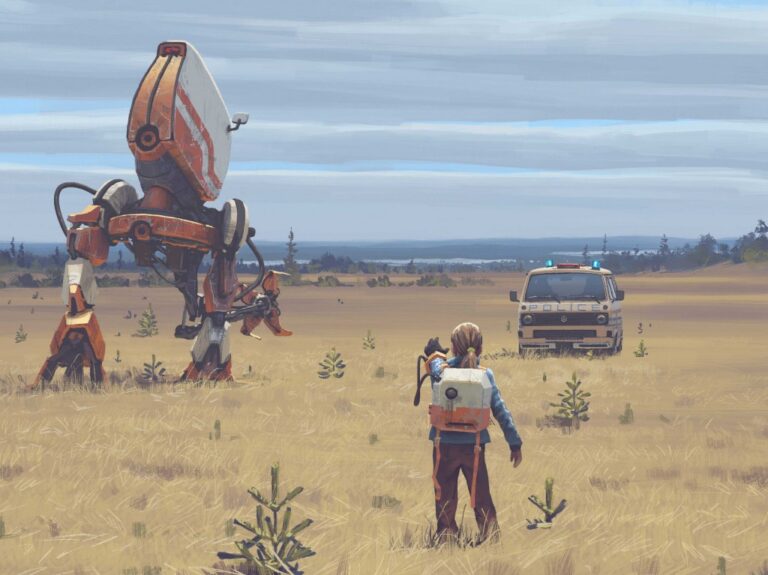
Based upon Simon Stålenhag’s iconic artbook of a Swedish retro futuristic suburbia, the tabletop roleplaying game Tales from the Loop recreates an eighties that never was.

In many ways, Tales from the Loop feels a lot like a cross between ET: the Extra-terrestrial and Stand By Me.  Other, and more recent, comparisons would be Stranger Things or the forthcoming Ghostbusters: Afterlife.

In Tales from the Flood, every player character is a child.  The ‘kids’, as the player characters are known in the game, live near the Loop, an advanced research institute.  It is a setting where wonderous technologies have become ubiquitous and familiar.

Its unique blend of themes allows players to explore the intersection between childhood, technology and modern life.  As such, it has a very specific narrative tone that is unlike any other.

Tales from the Loop has a heavy emphasis on narrative.  This is exemplified by the combat system, which is distinctly fluid and less structured than most other roleplaying games.  Unlike the typical combat system, where everyone takes it in turn, here it is up to the players to determine what happens next and who goes first.

Likewise, the game makes a point of saying that none of the kids should ever die in combat.  They can become frightened, panicked, injured or scared (all of which have negative connotations) and can lead to the kid leaving the game, but they will never die.  Likewise, the game actively encourages games masters (GMs) to avoid giving the enemies any guns.  Their argument is that players will naturally want to even the metaphorical playing field by giving characters their own guns, and kids with guns is not what this game advocates.

What Tales from the Flood does encourage is collaborative problem solving.  Rather than a typical “adventure”, the ‘kids’ solve what the game calls ‘mysteries’ and presents two different approaches of game styles.  The first, more traditional, style of game is the plot-led sessions, where the characters have a specific mystery to solve.  The alternative is the setting-led style, where there are multiple mysteries for the player characters to discover and explore.  Naturally, the latter style requires more preparation on the behalf of the GM, but can be more rewarding to play.

Tales from the Flood has already performed some of the preparatory work for a setting-led game, as the rulebook includes background on the Loop and has two detailed settings.  There are the Swedish Mälaren Islands, with the Loop buried underneath them, or Boulder City near America’s own version of the Loop.  Whist they shared many thematic similarities, they are vastly different, especially in terms of their seasons and the impact it has upon the inhabitants.

It could be argued that the American setting feels almost redundant, in that both settings are the stereotypical county towns.  Boulder City is just like the Mälaren Islands but warmer.  However, for those who live in colder climates – like Sweden – playing in somewhere like Boulder City might be different and therefore appealing.

As can be expected from such a storytelling-style game, the rules system has a similarly narrative-led approach.  Using Free League Publishing’s core D6 system, skill checks are resolved by rolling a series of six-sided dice equal to a character’s skill and attribute, with every six indicating a success.  The number of dice can be increased – or decreased – subject to the environmental and situational factors.

Character creation is equally streamlined and narrative-led, centred around the different stereotypical children that are seen in fiction.  These can range from the bookworm to the troublemaker, and each comes with a set of skills to match.  Most importantly, each player can also choose a unique item for their character, such as an older brother’s hat.  Not only can this offer situational benefits, but it can make them feel unique and add further depth to the character.  This rules-light approach for character creation means it is also relatively simple for players to create new archetypes to play.

Tales from the Flood also comes with a campaign of four interlinked mysteries.  Not only are these fun to play, but they demonstrate the style of games that the designers had in mind when they were creating Tales from the Flood.  These mysteries are not dependent upon a specific setting and come with reference points for both the Mälaren Islands and Boulder City.