Home Blog Page 16

Godzilla vs. Kong review

So I’ve decided to make this a spoiler free review, crazy I know, but why? Well, if you’re a monster movie fan or a Toho fan, then you should go and see this. With everything that’s been thrown at the cinematic experience these last couple of years, thanks to the beer plague (corona, get it), the ideas of a blockbuster release has been downgraded to, if you’re lucky, a 25” screen, instead of the now fabled “Silver Screen” or “IMAX” Experience.

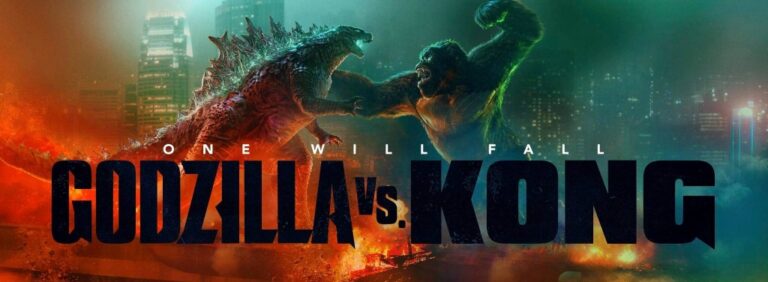
Godzilla vs. Kong is a blockbuster film.  Is it The Godfather of films as some reviewers have expected it to be? Far from it. However, it is a fun monster mash smackdown of a kaiju film, which deserves to be seen in the cinema for the blockbuster it is.

Godzilla vs. Kong has exceeded expectations at the international box office, generating the biggest debut since the pandemic began. Just to put it out there as of now, that’s $123.1M from 38 markets.  The top markets are China with $69.2m, Mexico with $6.5m, Australia with $6.3m, Russia with $5.9m, Taiwan with $5.3m and India with $4.9m. The titans are ruling!

Godzilla VS Kong has dominated the box office, even before its release in U.S. theatre’s and on HBO Max this week and on UK streaming Amazon Prime tomorrow. The film is currently rated 81% fresh score on Rotten Tomatoes after 85 reviews, with an average rating of 6.4 out of 10. The site’s reviews stand with, “Delivering squarely on its title, Godzilla vs. Kong swats away character development and human drama to deliver all the spectacle you’d expect from giant monsters slugging it out.” And to be honest, that’s a fair consensus.

Directed by Adam Wingard (of Netflix Death Note fame) and written by Eric Pearson and Max Borenstein, Godzilla vs. Kong stars Alexander Skarsgard, Millie Bobby Brown, Rebecca Hall and Brian Tyree Henry. The story in itself is incredibly simple, with the journey finish sometimes feeling rushed, but ultimately arrives at where it needs to, without too many unaswered questions questions.

Kong and his protectors undertake a perilous journey to find his true home. Along for the ride is Jia played by Kaylee Hottle, an orphaned girl who seemingly has a powerful bond with the god of Skull Island. However, they soon find themselves in the path of Godzilla, who’s been acting a bit off, as he carves a path of destruction across the globe. The initial confrontation between the two titans is only the beginning of the mystery that lies deep within the core of the planet and the unknown presence of Apex Cybernetics.

Toho Easter eggs are plentiful, a Kaiju Wrestlemania of sorts takes place, humans talk and generally scatter about the place panicking while trying to solve the mysteries of the hollow earth.  All the while a mechanized bigger bad is being powered up to cause trouble for our two favourite titans. The main question everyone seems to be asking is “Will there be a clear victor?” Yes! But, go see the film!

As a fan of the genre, and Toho in general, I can see why Legendary wanted this film to be shown in the cinemas.  To go from Godzilla, Kong: Skull Island, Godzilla: King of the Monsters, to Godzilla Vs Kong, the Monsterverse is a locomotive and the train hasn’t stopped.

The Music alone in these types of films always sets the stage and Tom Holkenborg has done fantastic work in evoking wonder, action, suspense and sometimes terror to this film with a breathtaking score. There were moment where I thought Daft Punk had been brought in to help, as it had a synth feel, especially with the fight in Hong Kong’s neon glow.

Godzilla vs Kong is a monster mash rollercoaster delivering exactly what it says on the tin.  You’ll start the film with a “Let’s get it on,” and before the final confrontation you’ll be screaming “Let’s get ready to rumble!” I cannot wait to see what Legendary has in store for the King of the Monsters and the God of Skull Island.

Until next time! This is your resident King of geeks reminding you to stay safe and Be Excellent to each other!
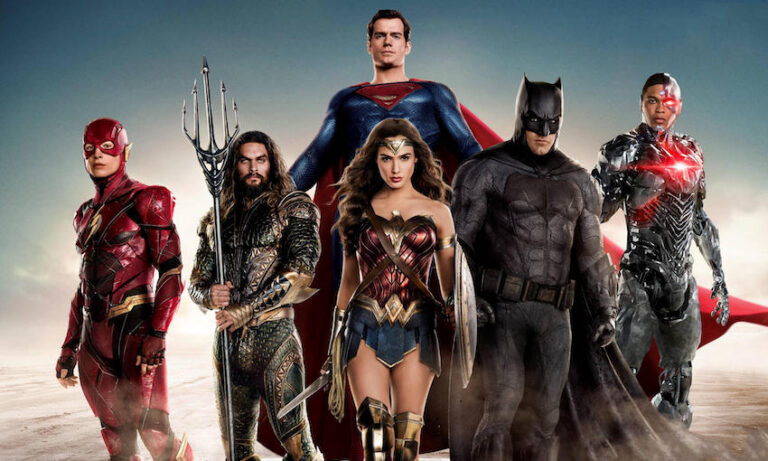
Zack Snyder’s Justice League

It is a well-regarded, and oft quoted opinion that one simply can’t always get what one wants. But, as the legend goes, if one tries sometimes, one gets what one needs.  Such appears to be the case with the recent release of Zack Snyder’s epic 4-and-some-change hour cut of Justice League. While the model of “complain about it on the internet until you get it” sets a worrying precedent, (the buzz being that companies like Netflix are adopting a similar practice by cancelling your favourite shows at season 2, waiting for the inevitable online kick off, then swiftly announcing the season 3 they had already planned), the Snyder Cut feels like something that was worth fighting for. 

The original cut of Justice League felt rushed, stymied, and ultimately ineffectual in conveying almost anything that makes not only the Justice League a compelling experience, but truly anything that DC has to offer. We know that those geniuses at Warner Bros were desperate to ride the coattails of the successful Marvel franchise with their own take on the tights and fights genre. This has led to a bevy of films that are tonally inconsistent and edited to within an inch of their lives- I’m still adamant that there is a great flick in Batman V Superman… somewhere. 

Shhh. He’s huntin’ wabbits.

What baffles me is that WB hired Zack Snyder, of all people, to bring that vision to life. Snyder is well known for his grimdark tone, slo-mo fights, and generally being a bit of an emo. With this in mind, it is astonishing to me that WB continued interfering with Snyder’s vision of what he wanted the DCEU to look like. When Christopher Nolan was allowed to free reign, we got the Dark Knight Trilogy. If Snyder was left alone, I can only imagine the 12-some hours of dark brilliance we may have access to. We can see a glimpse of this with the Snyder cut. 

Instead of the haphazard eyesore of its previous iteration, we are treated to a well-paced exploration of the League, their motives, their characters, and the interpersonal dynamics. The 1001 plot holes are reduced to just a few dozen, Steppenwolf feels like an actual danger instead of a computer game boss, and we actually get a glimpse of Darkseid (the better DC equivalent of Thanos – YEAH I SAID IT). The film feels like it has stakes, there is an ever-present sense that this is a group of individuals learning how to become a team. Affleck especially  stands out as arguably the best Batman we have ever seen on screen, with his portrayal a mix of determination and deep-rooted sadness that is an understanding of the character few have been able to represent. 

Darkseid is… wondering if he’ll get a Josh Brolin glow up in subsequent films.

Also worth mentioning is Ray Fisher finally getting the justice that Cyborg deserved. The previous cut was overseen by notorious dirtbag Joss Whedon, who seemed to have a personal issue with Fisher, resulting in all his best scenes remaining on the cutting room floor. The Snyder cut restores these scenes, giving Cyborg the emotional arc that should have been there from the start. Cyborg’s personal story is an allegory to that of the film: disparate forces learning how to come together for the betterment of mankind.

Is he okay, though?

The rest of the eensembles do great work to give life to the characters, too. Gadot’s Wonder Woman is consistently brilliant, Mamoa’s Aquaman is topless a lot which is great, and even Jeremy Iron’s Alfred is measured and humourous. A sticking point for me, however, is Miller’s Flash. I can see what both versions of the film were trying to do with the youngest member of the team, but it is so flat and annoying that Flash feels out of place in this film. Oh, and why can’t he run? What is going on with Miller’s limbs during the running sequences? Is he okay?

The only real downside would be that of the epilogue. In this we get a frankly baffling scene: One of Batman’s “Visions” , the “knightmare” as some are calling it. We seen a broken team, consisting of a few “replacements” for previous members, on the edge of the broken world we glimpsed in BVS. We are then subjected to the worst interaction with Batman and The Joker my eyes have ever been forced to watch, in which Batman loses his temper and the Joker, no word of a lie, offers him a reach around. Which then turns out to be dream that Bruce Wayne is having…

This aside, the Snyder cut is a treat for the eyes and ears, and it pains me to think that we won’t get to see where Snyder’s twisted mind was going to take the DCEU. This cut makes the film truly an epic, and it is a disappointment that this will be a one off. Or, maybe it won’t. Keep complaining on the internet, see what happens.

Symbaroum

Symbaroum is the fantasy roleplaying game (RPG) from Free League Publishing.  Unlike the high fantasy of Dungeons & Dragons, Symbaroum takes a grounded approach, with a darker tone to the setting.

Following a great battle against corruption, during which most of their land was decimated, humanity (the Ambrians) migrated to a new region.  This land is dominated by the forest of Davokar, which is filled with the ruins of an ancient civilisation.

What stands out most with the Symbaroum RPG is the fantastic setting, which has a wealth of material.  The first hundred pages of the core rulebook are dedicated to the setting; covering the history, culture and politics of the Ambria and the surrounding region.   Rather than overloading the reader with information, Symbaroum offers a general overview of the setting, before incrementally digging further into the details underpinning this world.

The recent presence of Ambrians in the region drives much of the tension within Symbaroum.  Instead of relying on the underlyingly racist connotations of “evil races”, we are presented with the corruption, which has an equal-opportunities approach to its recruitment campaigns.  This malevolent force underpins many of the darker elements within the game and acts as the overarching, if ephemeral, nemesis for the setting.

Whilst Symbaroum utilises tropes common to the fantasy genre, such as the dark forest and the ancient ruins, they are utilised and combined in a new and innovative way.  Rather than having dungeons conveniently waiting for players to explore at their leisure, there are the Symbaroum ruins, hidden deep within the forest of Davokar.

The dangers of the dark forest means that few people venture into them seeking treasures in the ruins.  Not only does this add credence that these ruins would still be filled with valuable artifacts, but just getting there becomes an adventure unto itself.

Balancing this is Thistlehold, the final bastion of civilisation before the dark forest.  Here we are presented with the various guilds and factions that compete with each other.  This urban setting acts as a start contrast to the dense wildlife of Davokar, offering players diverse environments to explore.

Symbaroum has distinct elements of exploration and dark fantasy, but it also has post-apocalyptic influences.  The Ambrians are fleeing a devastating war that annihilated much of their civilisation and are struggling to establish themselves in this new region.

Whilst the focus is understandably on Ambria, there is also extensive coverage of the other races and tribes in this region.  Although it is assumed that most will play humans in the game, the Core Rulebook does include rules for playing some of the other races, which is further expanded in the Advanced Player’s Guide.

Rather than playing a generic fighter or wizard, the career options are split into three distinct archetypes; Warrior, Mystic and Rouge.  These are broken down further into a series of templates that players choose from.  As an example of this, the Rogue archetype includes Ranger, Treasure Hunter and Witchfinder.  The streamlined approach means that is relatively simple to modify an existing template or to create an entirely new one.

Mystic is the more complex template, as the character’s background determines the type of magic they wield.  Although the core mechanics remain the same, the mystical powers of a theurge (a mystic within the priestly order) will be quite different to those wielded by the academically-minded Wizards.

The D20-based rules system is exceptionally elegant, with a streamlined skill resolution.  Those seeking an in-depth combat system will be disappointed, but Symbaroum is not that kind of game.  Instead, the focus is on exploration and investigation.

The corruption mechanics are a particular highlight of Symbaroum, as it reflects the underlying nature of magic coming at a cost and ties into the setting of Symbaroum.  As magic in Symbaroum goes against the laws of nature, it engenders a backlash in the user, which manifests itself as them becoming increasingly corrupt.  This corruption taints their very essence, with certain beings and places – particularly in Davokar – eventually becoming utterly subsumed by it.

The Symbaroum books are Peppered with amazing artwork.  Artistic license means that the image can occasionally differ from what is written, however it reinforces the mood and feel of what a game of Symbaroum is like.  The use of perspective in the artwork evokes a sense of wonder, underscored by an unrelenting sense of menace that permeates the setting.

Sybaroum is comprised of an essential trinity of rulebooks.  Central to this is the comprehensive Core Rulebook, which contains the necessities for playing and running the game.  It is beautifully written, with stunning visuals complementing the writing.  It is intuitively organised and includes a comprehensive index for seeking a particular rule.

The Advanced Player’s Guide offers players further options for character creation, with new playable races and templates to play.  There is expanded skills and weapons list, as well as the optional boons and burdens rules.  The latter is akin to the merit and flaws mechanics in other RPG, providing greater texture to the character creation process.

As the title suggests, the Game Master’s Guide is intended for games masters.  This provides expanded rules and material for running Symbaroum games, such as running domains, large scale battles and new traps, as well as expanded rewards, including further artifacts. Of particular note were the chapters dedicated to running Symbaroum adventures, which explored more of the mystical aspects of the setting.

There is also the Symbaroum Starter Set: Treasure Hunts in Davokar, which offers new players – and those unfamiliar with RPGs – a fantastic introduction to the world of Symbaroum.  This is through a stripped-down version of the rules and an introductory adventure.  Having the core rulebook could make the Starter Set feel unnecessary, and from a rules perspective that is true, as the Starter Set rulebook is a quarter of the size of the core rulebook.  However, the Starter Set’s accessories, especially the maps, make this an invaluable addition for anyone wanting to run the game.

Symbaroum has achieved that rare balance in an RPG, with lightweight game mechanics that are accessible for new players, with sufficient depth to intrigue even the most jaded players.  Although Symbaroum does not offer anything genuinely original, what it does do, it does incredibly well, and there are few games where their design has felt so interconnected with the setting.

Time Shards, by Dana Fredsti and David Fitzgerald

Time Shards is the first novel in a new trilogy by Dana Fredsti and David Fitzgerald.  The series follows Amber as time shatters around her and is forced to explore this new version of Earth that has been seemingly divided into a series of different time zones, or shards.

From conversations with Dana Fredsti on the Geek Pride podcast (here), Time Shards was originally intended as the setting for a roleplaying game.  Instead, Fredsti and Fitzgerald took the idea and created a epic science fiction that has the fate of the Earth, and reality itself, at stake.

Fredsti is most famous for the Ashley Parker and the Lilith novels, which utilise strong female protagonists and have a strong undercurrent of geekery running through them.  Time Shards is no different, as Amber is delightfully geeky and experiences ‘the shattering’ whilst in cosplay.  This makes for a wonderfully unique predicament, which Fredsti and Fitzgerald fully explore.

What stands out most about Time Shards is the original take on time travel and how it impacts the setting.  Having time shattered – akin to mosaic been put together in the wrong order – allows the authors to essentially explore time-travel without the usual headaches of paradoxes, predeterminism and inadvertently becoming your own parent.

Amber is predominantly the viewpoint character.  As she is a typical 21st century person, Amber is a wonderfully relatable character.  She becomes a proxy for the reader, acknowledging that not everyone has expert survivalist skills and combat training.  Yet, Amber is not completely helpless, as she swiftly becomes a resourceful and competent individual, whose growth is a joy to follow.

Time Shards is resplendent with a diverse cast of characters, from Cam, a young warrior from Roman Brittania, to Cromwellian soldiers and their witchfinder.  It was particularly refreshing (and amusing) to see the language barrier explored, with Amber struggling to communicate with Cam.  There are no universal translators here.

Through much of this first book, Amber is struggling to discover what happened and find safety, whilst running away from rampaging dinosaurs (a side effect of time being shattered), whilst forming a group with a series of individuals in similar predicaments.

The introduction sets up a neat twist towards the end.  For once, this was a genuine surprise and can leave readers reassessing everything they had read to that point (a good sign of a strong twist).  The story ends with a nail-biting stand-off and resolves many of the book’s story arcs, whilst establishing where the trilogy will go from here.

It would have been good to see a greater variety in the different time shards, as there only seemed to be a few different time zones interlinked.  What was encountered is nonetheless thrilling, but can leave the reader wanting to see more shards of time.

Nonetheless, Time Shards is fantastic first book in a new science fiction epic that is populated with some excellent characters and has a genuinely original take on the time-travel genre.

Shadow and Bone – Netflix trailer

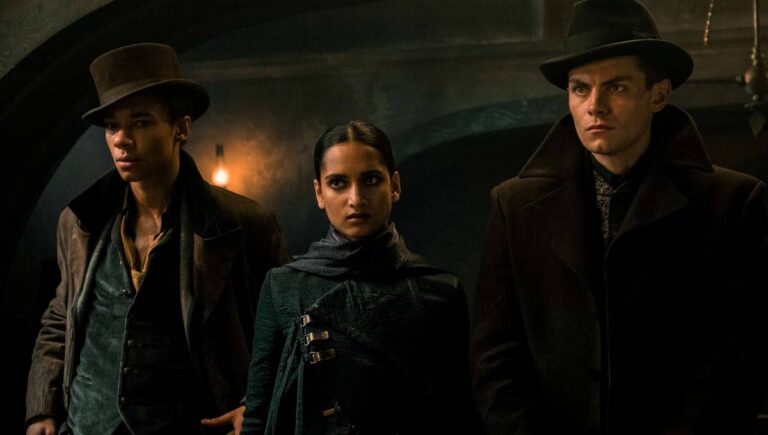
For those of you who do not know, the newest Netflix hype is surrounding the Shadow and Bone tv series adaptation, based on The Grisha trilogy and the Six of Crows duology by Leigh Bardugo.

The two series take place some years apart and the characters are different, the setting is different (though there are elements that cross from one book seris to the other) so when the show was initially announced, I got a little worried. How will the two blend in together?

I admit I never liked the initial trilogy as much as I liked Six of Crows, which has better rounded characters, better backstories and a better narrative style overall, however I still read it and kept up with it through the years, because I had already started.

Based on the trailer, I feel like the focus will fall on characters belonging to the Grisha trilogy more than on the Six of Crows gang and, if I am right, that will be a little disappointing. I will still watch it, because the cast is quite well chosen and the trailer does look great.

Have a look and let us know if this might fill the fantasy world shaped hole in your heart:

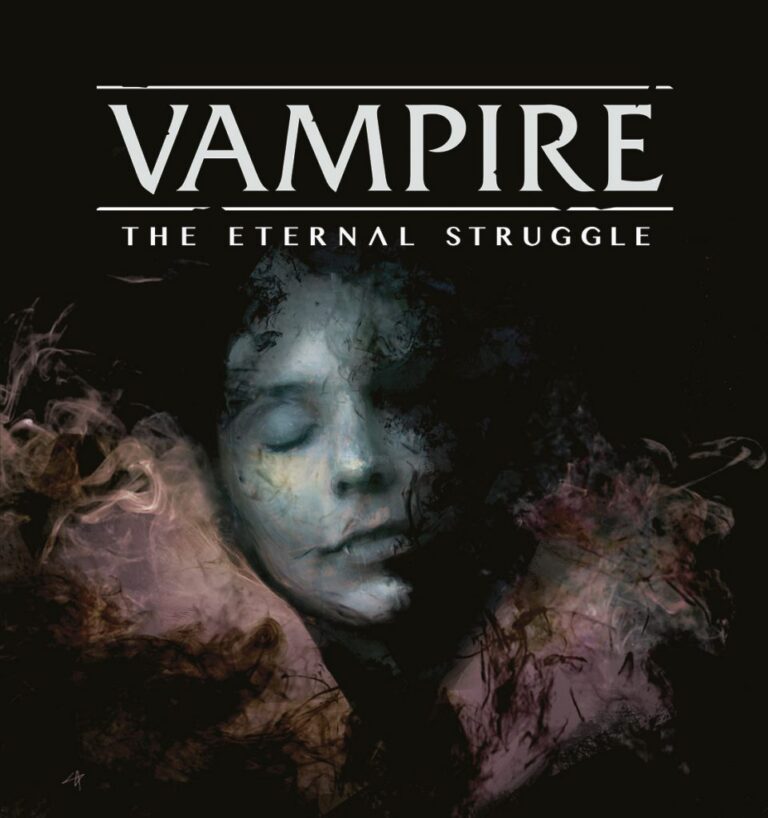
Vampire: The Eternal Struggle – Fifth Edition

Vampire: The Eternal Struggle, the collectible card game based on Vampire: The Masquerade, was created by Richard Garfield (of Magic: The Gathering fame).  It was first released in 1992 under the name of Jyhad.  Several editions later, along with a significant rebranding, the fifth edition of Vampire: The Eternal Struggle was released by Black Chantry in 2019, designed to align with V5 (the latest edition of Vampire: The Masquerade, reviewed here).

Vampire: The Eternal Struggle reflects the ancient war between vampire elders, called Methuselahs, as they seek to dominate and drain their opponents in an ongoing conflict spanning millennia.  The game recreates this conflict with each player taking on the role of a Methuselah, where they use their influence and minions to manipulate events in their favour.

The core aim of the game is focussed on reducing the blood pool of each player’s prey (the person on the left), whilst ensuring their predator (the person to their right) does not do the same to them.  As such, the game is best played with four or five players.  It is possible to play the game with only two or three players, but it can be a clumsy experience, due to the nature of the predator/prey mechanic.

This starter set comes complete with everything needed to play Vampire: The Eternal Struggle.  Included in the box are five starter decks, each reflecting a particular clan from Vampire: The Masquerade (Malkavian, Nosferatu, Toreador, Tremere and Venture).

Each clan has their own particular strengths and weakness, thus requiring a different strategy in order to be played effectively.  The accompanying strategy primer for each clan/deck helps new players to understand the game.

Instead of randomised card packs, we now have pre-configured starter decks.  Each deck comes in its own box for easy storage (although sleaving the cards will mean they no longer fit).

Rules wise, little has changed with the fifth edition of Vampire: The Eternal Struggle, thus cards from previous editions can be easily incorporated.  What Black Chantry have done is to clarify the rules, making the rulebook clearer and easier to read.

This is exemplified in how the rulebook has been laid out.  The basic rules form the core structure of Vampire: The Eternal Struggle, allowing the advanced rules in the sidebars to be included later.  Nonetheless, this remains a complex game, even at its most basic level.  Although Black Chantry have done their utmost to simplify the rules, it is helpful to watching videos explaining the game.  That said, the rules gradually become intuitive, evolving the game into a much more fluid experience.

Each round of Vampire: The Eternal Struggle is broken down into a series of phases: Unlock, Master (AKA Methelusah), Minion, Influence and Discard.  What was refreshing is that there is no draw phase, as a player draws new card each time they use or discard one.  This ensures players are always able to play their cards and prevents them from being starved of options.

It was great to see that the incorporation social interaction into Vampire: The Eternal Struggle with the voting mechanics.  Winning the game is not reliant on having the best cards, but on being able to negotiate with all the other players.

However, the predator/prey mechanics can be restrictive. A player’s prey will only ever be the person to their left, whilst the predator is always to their right.  Experienced players may wish to choose their seats careful.  With the focus of Vampire: The Eternal Struggle being on draining the blood pools, player elimination can lead to players sitting out the rest of the game and twiddling their thumbs.

The cards are densely packed with information, with symbols and a lot of text relevant to the game (as well as some background).  This can slow the game at times, especially for those unfamiliar with the cards.

Overall, Vampire: The Eternal Struggle is incredibly atmospheric, which is reflected in the fantastic gothic artwork.  The starter set is particularly excellent, as it functions just as much as a standalone box set, as it does a starter set.  The price may be more than similar starter sets, but there is a lot in this set and it includes enough for five players.

Ultimately, Vampire: The Eternal Struggle seems to be designed for the intersection between fans of fans Vampire: The Masquerade and collectible card games.

Cidade Invisível – The invisible city

There is something to be said about Netflix and it’s ‘originals’. There is a lot of hit and miss when it comes to those, but Cidade Invisível or The invisible city, the newest Brazilian production to hit the streaming service is a definite hit.

What is it about?

The show’s focus is the Brazilian folklore, with the characters that have been a part of everyone’s childhood stories taking center stage. However, modern world has mostly turned them into stories that no one truly believes in anymore. Until they are forced to face the reality that skepticism only takes you so far.

Eric (Marco Pigossi) loses his wife in a strange forrest fire and is not quite the same after. Nor is his child, Luna (Manu Dieguez). Both of them are trying to find their footing in a world where the mother is no longer between them as a buffer, not to mention a world where suddenly Curupira, Cuca and Saci, to name a few are real.

If you are not familiar with these names, fear not, the show does take it’s time to showcase what each of them does and what they represent in the Brazilian lore, in a way that I have to admit I loved. It was a lot of show don’t tell that was done really, really well.

Setting aside the fact that a woman had to die to further her husband’s development as a father and to ensure his entrance into this world of ancient magic, the show actually managed to keep me glued to my screen from the first to the last episode.

Bingeability factor?

Definitely 10 out of 10. The show has only 7 episodes that are on average about 33 minutes long, including credits. It is quick to watch, though you might need to take a moment to understand what just happened, precisely because the show will not spoon-feed you anything. So, pay attention.

Storyline

The invisible city could have easily devolved into a classic copy of American shows, with superpowered beings that were basically untouchable and almighty, but it did not. It could have turned the leading character into an unpleasant, horrible person, with the arrogance that is typical of such characters (admit it, you know the type), but it didn’t.

The focus, after all is about protecting the world where there is more than meets the eye, protecting the world in which we live and that we sell for too little money, only to have it destroyed. There is a strong enviromental message as well, with Eric being a cop in a department that focuses on protecting the environment and there being a corporation eager to buy the land where these legendary creatures used to dwell a long time ago.


Trying to figure out what killed his wife puts Eric on the path of meeting all the spirits that his wife believed in, but he always thought nothing of, just stories to tell around a campfire or when parents wanted to scare their children into submission. In doing so, he learns a lot about his own past, his own life and shows that he is exactly the kind of father his daughter needs, while also fighitng a Corpo-seco – a type of spirit that neither hell nor heaven wanted, cause he was just that horrible in life.

As I mentioned before the story’s focus is Brazilian lore and it manages to both humanize these powerful being and to show how different they are from us, while looking virtually the same. The tension is constant and it kept me glued to my seat for the whole show’s run, as self-sacrifice was something that so many characters seem fond of, to the point I was worried they might run out of characters by the end.

That is not to say it is perfect, but if you are a fan of shows like Ragnarok, Grimm and  anything that focuses on myths and legends, this might be the series for you.

It does come to a satisfying conclusion, but there are still a lot of open-ended situations that could definitely be explored in a second season, pandemic permitting (I sure hope there will be a time when we won’t have to think about that anymore).

Is it worth your time?

If the above did not convince you, try the trailer below and get watching:

The Falcon and The Winter Soldier – Official trailer

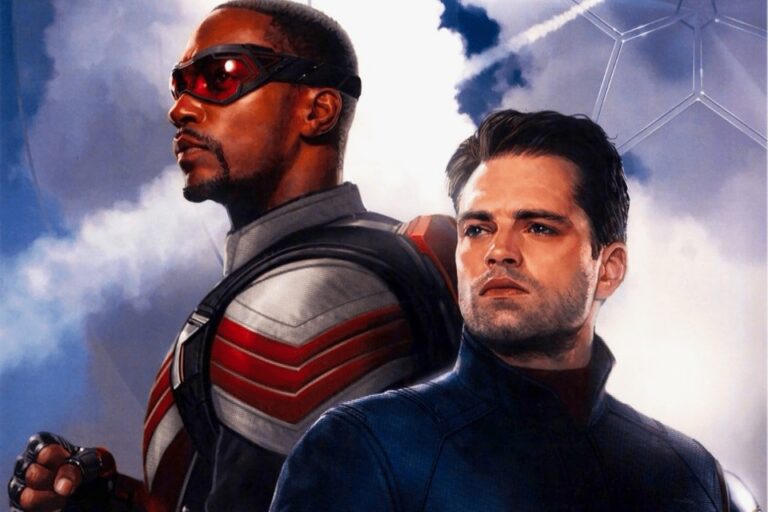
Now, it is a little over a month until we get to see the first episode of the adventures of Sam Wilson and Bucky Barnes and I am cautiously optimistic that it will be good.

I was very let down by how Endgame…well…ended, so I am a little worried this might be equally disappointing, even though the trailer does look good.

Sebastian Stan and Anthony Mackie have crazy chemistry and there is Daniel Bruhl too, in the mix, so it has to be at least passable, right? Emily VanCamp is also back, so that is an added bonus for the fans of Sharon Carter.

See you all back here on March 19th, to rant or rave. In the meantime, what did you think of the trailer? Is it enough to remove the bitter taste left by Endgame or not?

Good bye, Christopher Plummer!

It has been a week since the news of Christopher Plummer’s death hit and I admit, my heart has been heavy since.

With a career spanning seven decades, there is something in his filmography for everyone, but to me, his most memorable role will forever be in The Sound of Music (1965). Funny enough, it was maybe the movie he least liked, out of all the ones he starred in. Still, this one particular scene from the film has been making the rounds after his demise, to remind us just why Captain Von Trapp was the best:


That being said, he has starred in numerous movies, such as Ordeal by Innocence, The Last Station, 12 Monkeys, Malcom X, Star Trek VI: The Undiscovered Country and Knives Out, to name a few. Regardless of what your favourite movie that he starred in is, whether it is recent or from 70 years ago, the truth remains the same. A true gentleman and star has gone out of this world.

In Julie Andrews’ words:

The world has lost a consummate actor today and I have lost a cherished friend. I treasure the memories of our work together and all the humor and fun we shared through the years.

There are not a lot of things that can be said when someone passes away, that do not sound hollow, but I will try anyway. Actors shape our lives, through their characters that we emulate, that we identify with, that we grow to love. Christopher Plummer built a library of characters, on screen and on stage, in which we could all find a piece of ourselves and, while he will be missed, his legacy will endure.


Blood Ink by Dana Fredsti

Blood Ink is the second novel in Dana Fredsti’s latest urban-fantasy/horror Lilith series (the first book, Spawn of Lilith, can be reviewed here).  We continue to follow the exploits of Lee Striga, as she navigates the challenges of being a stuntwoman in Hollywood.

This version of Hollywood is even stranger than the real thing.  It is the home for an assortment of supernatural creatures, from zombies to banshees, or “supes” as they are known.   Rather than preying on humanity, these creatures are jobbing actors and stunt people, using their supernatural abilities for special effects.

In the first book, Lee had assumed she was a normal stuntwoman, it is revealed that she is a daughter of the biblical entity known as Lilith.  This revelation brought with it numerous challenges, to say the least.  Following the climactic events of the previous novel, Lee is struggling to find work.  Apparently, few people want to hire a stuntwoman who once killed a film producer, even if they were trying to summon shadow demons.

The events surrounding Lee as she struggled to find work were instantly engaging and made her a sympathetic character for the reader.  Everyone can relate to issues of trying to remain financially independent.

Eventually, Lee finds some work, but in New Orleans, following which hijinks ensue.  Blood Ink immediately immerses the reader in the city, without bogging them down in overly descriptive prose.  Fredsti’s writing is vivid and evocative, whilst never sacrificing pacing.

Just as in her previous series (The “Buffy-with-zombies-but-different” Ashley Parker novels), Dana Fredsti’s writing brims with her take on girl power.  This is not saccharine tawdriness, but being powerfully female without being overly feminine.  It is this grounded view of girl power that makes Lee Striga such an engaging character.

What stands out the most in Blood Ink is that the characters are fantastically written.  Each person has their own unique voice and moment to shine in the novel.  Reading the interactions of each character becomes an absolute joy, as they bounce off each other and continue to propel the story forward.

As the title implies, tattoos form a key part of the antagonist’s deadly ritual.  A lesser author might find themselves inadvertently portraying all tattoos as being evil, but Dana Fredsti carefully balances the ritualistic tattoo magic of Blood Ink with the benignly beneficial tattoos.

Blood Ink builds to an apocalyptic climax that is gruesomely Lovecraftian.  Rather than relying on a festishistic number of tentacles, Fredsti relishes in repulsing her reader by evoking the sheer alienness of the creatures.

This being the second book in a series, there are a significant number of plot threads left unresolved.  Some of the character’s arcs are unfinished and several questions remain unanswered.  It is expected that many, if not all, will be concluded in the forthcoming sequel Hollywood Monsters (due for release next year).  There is a wonderful sense of a deeper mystery at play, simmering below the surface throughout Blood Ink, and Fredsti has said that she already has plans for more books in the series