Home Blog Page 15

Gunpowder Milkshake

Gunpowder Milkshake is a high-octane action-thriller by Navot Papushado in the style of John Wick.  In fact, Gunpowder Milkshake could be easily described as a female version of John Wick, as there are distinct similarities between the societies of assassins in each film.

Gunpowder Milkshake takes a distinctly girl-power approach.  The film stars Karen Gillan as Sam, a professional assassin, and Lena Headey as Scarlet, Sam’s estranged mother and also a professional assassin.

What stands out though is the supporting cast of the ‘librarians’, played brilliantly by Carla Gugino, Angela Bassett and Michelle Yeoh – the latter being the only people to ever out-do Jackie Chan.

Joining this stellar cast is Chloe Coleman, playing the 8 ¾ Emily, who becomes Sam’s ward. The writers find an inventive reason for Sam not otherwise abandoning Emily, and thus it feels natural for the two to stay together.

Gillan is fine as Sam and gives a very restrained performance as someone struggling with their emotions.  Balancing this is Headey’s performance, which is far more emotive.  However, Gunpowder Milkshake truly shines when the librarians are on screen.  Little is given as to their backstory, but each actor brings a depth to the role that would be otherwise missing with a less experienced.

This highlight’s Gunpowder Milkshake’s key flaw.  The film is an incredibly kinetic and visual experience, but there is distinct lack of depth to the script.  For all of Sam’s doubts and concerns, the character is too locked down for viewers to feel any of the tension.  In John Wick, we feel his pain and anguish, but in Gunpowder Milkshake it is insufficiently relatable.

What does stand out is the distinct vein of humour running throughout Gunpowder Milkshake.  There are some great visual puns and quips that counter the scenes of carnage.

The direction and lighting (of all things) are excellent.  There is a fantastic use of neon that never obscures what is happening on screen.  No matter what is happening, the film is always visually fascinating.

Gunpowder Milkshake is, at its heart, a popcorn film, which is a shame.  There are a lot of great ideas within Popcorn Milkshake, although they are perhaps not all entirely original, but they are never fully explored or explained.  We never learn how this world operates. For example, the library and the diner are just there, we never learn how they relate to each other.  Likewise, we never dig deep into the themes.  This ultimately becomes a shallow experience, but an entertaining one nevertheless.

It is difficult to discern what the title means and where it comes from.  It could be construed that it is the name of the diner or the milkshake, but that is purely conjecture.  The Geek Pride team tried researching what the name meant – it did not end well…

If you are looking for a popcorn thriller in the style of John Wick, then you will not be disappointed with Gunpowder Milkshake.  If, however, you are looking for something with a bit more depth, then watch The Long Kiss Goodnight instead.

Loki – Season 1

Warning: Mild spoilers ahead

Let’s start off with a not so secret but extremely pleasant surprise; LOKI will return for season two on Disney+. Announced back in July 2019, the series is part of Phase Four of the MCU, with ties to Doctor Strange: In the Multiverse of Madness. Two years later and we are now seeing the pieces fall into place.

(L-R): Loki (Tom Hiddleston) and Sophia Di Martino in Loki. Photo by Chuck Zlotnick. ©Marvel Studios 2021. All Rights Reserved.

What is it all about?

The series begins with Loki (Tom Hiddleston) following his defeat to The Avengers in 2012. In Avengers: Endgame the god of mischief steals the tesseract to escape from his imminent imprisonment on Asgard. Following this action, which was new to the established events, Loki finds himself being arrested by a mysterious group called the Time Variance Authority (TVA). Throughout the series, we learn that the TVA are tasked with maintaining the “one true” timeline and eliminate any “variants” who may cause damage to the recognised course.

Shortly into the first episode, there are introductions for Judge Renslayer (Gugu Mbatha-Raw) who looks to sentence the “variant” god to death and Agent Mobius (Owen Wilson) who takes the task of looking after Loki to take down a bigger threat. Who would that bigger threat be? Another Loki! This isn’t the same Laufeyson we know, but another variant with a female appearance and a grudge against the TVA. Sylvie (Sophia Di Martino) proves to be a worthy foe and intrigues Loki to find out more about his counterpart. From here on out, the journey truly begins.

There is much more to the Time Keepers and the motives to the TVA as the show goes on. Some major revelations affect the whole MCU and not just the show. With episode three, we do get possibly one of the best-looking TV episodes ever. With most of the action taking place on a vast alien planet with more than a fair few Doctor Who vibes in the runtime. Also, if you have seen the last episode, yes that person really does appear as that character and their introduction is truly well presented.

My Thoughts

As a whole, Loki is big, loud and truly spectacular. Hiddleston really shines with the extended screen time and earns redemption once again as the anti-hero of this story. Sophia Di Martino is also another highlight as her version of Lady Loki shares some similarities with the Enchantress (not the DC version that Cara Delevingne played in Suicide Squad) and can even outdo the established Hiddleston whenever they share the screen. Also, Tara Strong as Miss Minutes is another character coming to life with one of the best voice actors today. Also, many cameos that will delight. Writer Michael Waldron and director Kate Herron prove to be a winning duo. Hopefully they will team up again for the second season. Waldron’s scripts are exceptional and his additions reward to MCU and comic fans.

I should also mention how it looks. For a highly advanced setting, the TVA looks beautiful. The technology shines, but also looks dated in areas with a Fallout-esque aesthetic. The offices ground this place in a reality not seen before. We see libraries and typewriters alongside time travel devices and advanced screen technology. There are instructional videos as if they are from the 1950s-60s, but the video character Miss Minutes is alive and sentient. The planets and time periods really do outshine a certain BBC time-travelling alien in their scale and depth.

Loki is essential to the future of the MCU. The pacing in earlier episodes can be inconsistent, but the rewards outweigh this by far. If you loved WandaVision you will enjoy the crazy moments in time and space and surreal interactions. If you loved The Falcon and the Winter Soldier, you will enjoy the epic scale that is on display throughout the six episodes with the best CGI and effects that money can buy.


Black Widow
Black Widow is the 24th film in the Marvel Cinematic Universe (MCU) and their first film since the pandemic began, which had caused it to be delayed several times.  It was also, for many, their first time at a cinema since lockdowns began, so expectations were high.

The film follows Black Widow, otherwise known as Natasha Romanoff (played by Scarlett Johansson), and is set shortly after Captain America: Civil War.  Watching the aforementioned film is not necessary, but will add greater understanding some of the events driving the plot forward.

Rather than just acting as an origin story for the character, it explores some of the complex motivations behind her.  We learn the events in Budapest, an oft mentioned mission shared with Hawkeye, as well as the ‘red room’ project that created her.

There are many underlying themes within this film, but at its core it is all about family; the family that we come from and the family that we make.  It is these moments where the film truly shines, as many of the characters share natural chemistry with each other and have some fantastic dialogue.

Naturally, Scarlett Johansson was the big name draw for Black Widow.  However, it was Florence Pugh’s character Yelena who stood out, as she was incredibly well written.  Having a film set before the events of another means viewers know that certain characters will survive.  Thus, the presence of Yelena brought some much-needed tension to the film and hope that we will see more of her in the future.

David Harbour was also on fantastic form as the aging Russian super soldier Alexei.  His character offered an alternative view of what could have happened to Natasha and presented a different perspective compared to the more idealistic characters.

Ray Winstone, although perfectly sinister in the role of Dreykov, did not feel convincingly Russian.  Winstone is usually incredibly menacing, but here it just felt unconvincing.  That said, his interaction with Johannsen was brilliantly directed and built to a fantastic climax.

Of course, this is a Marvel film, where dialogue and characterisation only go so far.  The action here is brilliantly choreographed.  It is swift and brutal, as one would expect due to the characters involved.  These are not superheroes, but spies… genetically enhanced spies, but spies all the same.

The film comes alive when the action and dialogue come together to create some truly scintillating scenes.  Of special note are the scenes with Yelena and Natasha in Budapest.  The film builds from a slow burn to a satisfying conclusion that sees much of the plot resolved.  Naturally, there is an end-credits scene, that also acts as a passing of the baton.

Although the films are quite different, Black Widow and Captain Marvel will be compared.  Captain Marvel was a more clearly superhero origin story, whilst Black Widow feels more like a classic James Bond film set in the MCU, similar to Captain America: Winter Soldier.  In many ways Black Widow has the emotional depth and resonance that was lacking in Captain Marvel.

The only disappointment is that Black Widow should have been released five years ago.

Alien: Colonial Marines Operations Manual

Alien: The Roleplaying Game (reviewed here) was the game that many of us had been waiting (decades) for; a roleplaying game that recreated the experience and world of Alien.  For some, however, their favourite was the sequel Aliens, central to which was the iconic military force of the colonial marines corp.  There had been previous, less than successful, attempts to create an RPG based around the colonial marines.  That is, until now.

The Colonial Marines Operations Manual for Alien: The Roleplaying Game includes everything players and games masters, or ‘games mother’ as they are called in this game, will need for a colonial marines’ campaign.

This is a colossal tome, coming in at over 350 pages but looks amazing.  The artwork on the front cover encapsulates the mood and themes of the setting and the stories that can be told.  Inside there is some gorgeous artwork that complements the individual chapters.  More than just making the book look pretty, the interior artwork evokes the epic mood and feel of what players can expect when playing colonial marines

The book is split into two sections.  The first half incorporates new material for players and the second contains material for people running the game.  It is ordered in a logical manner, with warnings for players ahead of the GM section.  As an inherent aspect of Alien: The Roleplaying Game is the sense of mystery, thus ensuring players avoid spoilers is key.

The book opens with background on the history, organisation and structure of the colonial marine.  Not only does this offer insight into where the players will fit into the overall structure of the United States Colonial Marine (USCM) corps, it also demonstrates the size and scale of this force, as well as the massive area of operations.  The opening segment also explained how corporations are able to influence military operations.

This section includes more skills and background material for creating a variety of colonial marine characters.  Previously in Alien: The Roleplaying Game, the colonial marine career was the ‘grunt with the gun’.  Here, the background is fleshed out with a variety of specialism on offer.  These specialisms take the form of ‘Military Occupational Speciality, which can vary from Assault and ComTech to Medic and Rifleman.

There is also a ton of new hardware, from guns to attack cruisers, all of which is essential material for a military-SF campaign.  Each item is accompanied with the necessary statistics, as well as background on each item and a drawing.  The latter is especially useful for vehicles, as rather than telling players what they see, the GM can show a picture.  Characters will not always instantly recognise a particular vehicle or ship, so having an image can be incredibly useful

The second section is for only GMs eyes only, as it offers further background information on the setting and the various armed services within the Aliens universe.  There are also details on the different types of missions that colonial marine squads can be assigned.  These vary from rescue missions to ‘bug hunts’.

Although this book is focused on the USCM, there is sufficient information about the armed force in the Three Worlds Empire and the Union of Progressive Peoples.  With some planning, it could be quite easy to play marines within these other factions.

The background information in this section includes the various black projects undertaken by both the USMC and the other factions in the setting.  These are not just the expected bioweapon projects involving xenomorphs, but the more ‘conventional’ secret military projects.  Some players may have heard already about, such as through reading the Aliens comics, but others will come as a complete surprise.

The GM section also includes the epic seven-mission campaign The Frontier War, which acts as a sequel to the cinematic scenario Destroyer of Worlds (reviewed here).  Whilst having played Destroyer of Worlds is not essential, it does provide greater context for events leading up to the campaign.  The ongoing story also continues to expand the world of Alien.

This campaign could be played as a seven-part campaign, or form part of a much larger ongoing campaign.  Its structure is deliberately freeform, as the six missions can be played in any order.  Each mission establishes the scenario’s parameters, by explaining the player characters’ orders and describing the location.  It is then up to the player characters to decide how they resolve the situation.  There are some suggested approaches for each mission, through the onboard AI, but it is ultimately player-led.

Given the structure of the colonial marine corps and the ‘buddy system’ it uses, this campaign would be ideal for four or five players.  This would allow two two-men teams, and a sergeant if need be.  Running the campaign for two to three players is possible, as a single two-men team (and a sergeant), but it would lack the necessary squad mentality that a campaign focused on colonial marines would need.

The role of sergeants are handled well, as the book makes a point of stating that they are not the leaders of the squad.  Instead, it reinforces the need for the player characters to collaborate and work together to defeat their opponents.  The sergeant acts as a liaison between the commanding officer and the squad.

It was great to see the necessary maps and schematics for every mission, which incorporated a wide variety of goals and environment for the players to explore.  The maps continue the retro-futuristic style of the Alien: The Roleplaying Game books and echo visuals seen in the films.  The only downside is that they are not provided as a separate map pack for handing out to the players, such as those in the cinematic scenarios.

I especially liked all the references to the expanded universe of the Aliens comics.  Characters, like Billie and Wilks from the revised editions of the first Alien comics, as well as elements from the expanded Aliens universe are mentioned.  These neat little references make this book a joy to read for fans of the series.

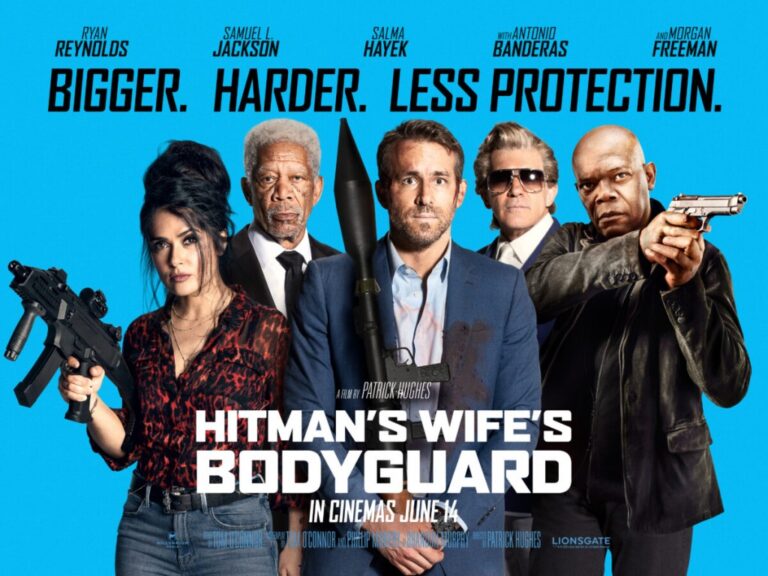
The Hitman’s Wife’s Bodyguard

The hitman’s wife’s bodyguard is action-packed star studded and completely bombastic buuuut seems to be either trying too hard or conversely not trying at all and I’m not sure which one.
It’s not unenjoyable to be fair, with classic Ryan Reynolds moments throughout but it’s not a film you’ll go to watch again any time soon and seems somewhat forced and over the top.
Yes, I know it’s Ryan Reynolds, I know all he does is over the top but there is just something about this film that seems even more over the top, even for him; to the point of being a parody of a Ryan Reynolds film.
Like it’s just a group of set pieces explosions and gunfights with no real thought for story direction interspersed with as much bad language and cameos as possible… like they were playing action-comedy trope trumps or something.
Watchable, funny at times but not overly memorable, and not a scratch on its forebear.

Shatter War, by Dana Fredsti and David Fitzgerald

This is the second novel in the time ongoing Time Shards series by Dana Fredsti and David Fitzgerald, which opened with the excellent Time Shards (reviewed here).  We continue to follow the exploits of Amber and her friends as they seek to discover the cause of the ‘Shattering’, where time became fragmented, and whether there is some way it can be stopped.

Amber and Cam remain as the main characters, but Shatter War dedicates more time to some of the supporting characters like Nellie and Winston.  Whilst Winston comes across as somewhat two-dimensional, Nellie feels much more rounded, as Time Shards offers more insight into her character.

Rather than just being more of the same, Fredsti and Fitzgerald build upon the existing premise and increase the ante by introducing new science-fiction elements to the mix.  Parallel lives may seem like pure fantasy, but it is interesting to consider the science of infinitely branching time-lines for every decision that is made.

Never fear though; dinosaurs continue to remain an excellent threat, not just for the principal characters, but for the setting as whole.  However, rather than being the typical dinosaurs we all know from TV and film, Fredsti and Fitzgerald delve into history to unearth some truly monstrous dinosaurs, whose epic descriptions give the reader pause for thought.  They become the modern sea monster, in that they are an implacable force of nature that cannot be reasoned with or stopped.

There is even an army of Nazis – Germany’s Afrika Corps from World War 2 – to deal with, so what isn’t love?  It could only have even been better if the dinosaurs attacked the Nazis!

Time Shards ended on a high note for Amber and her friends.  A situation that could have overwhelmed the story if they the situation was not handled properly.  Fredsti and Fitzgerald are able to deftly negate the domineering elements of the situation without resorting to deus ex machina.

There are lots of neat little segments throughout this novel that offer deeper insight to the world of Time Shards.  There is a fantastic moment where, due to the nature of the shattering, the characters encounter multiple versions of the same person at the same time without causing a paradox.

Nellie is a fantastic supporting character, for what she lacks in modern education, her grit and determination more than compensate for it.  Likewise, whereas previously Winston’s blustering was unsympathetically portrayed, we now learn far more about his character and he comes across in a more positive light.

There is also an interesting discussion about the nature of language and how it has evolved.  People from the same geographical region, but from different time periods, still struggle to communicate with each other, as language has changed over time.

Overall, Shatter War explores and expands the premise of Time Shards to create a far more epic tale of time-travel and parallel, but still focusing on the human elements of the story.  It is a rollercoaster of a ride that escalates to a satisfying conclusion, whilst setting the foundations for the forthcoming sequel Tempus Fury.

A Quiet Place Part II

It’s a rare thing when a sequel tops the original. Empire Strikes Back, Terminator 2, and The Dark Knight are the oft quoted examples of this idea, usually by hobbyist film bloggers, and one time in a very fun sketch by Aunty Donna. A Quiet Place Part II, however, cannot join these often venerated ranks.

When we look at the great sequels of cinema, you can break down their success to three things: The film continues the premise of the original, will likely escalate the core challenges the protagonist(s) face, and will (in a broad sense) re-capture the essence that made the original something worth watching. A Quiet Place Part II does this in droves. With the death of John Krasinski’s character in the last film, in conjunction with the earth-shattering revelation of Millicent Simmond’s ability to stop the creatures in their tracks, the main plot of the film follows the Abbot family almost directly after these events.

Before this, however, there’s a delightful injection of lore by way of a flashback. Writer, producer and director Krasinski manages to capture the indomitable heart beating at the center of the inter-personal relationships of the Abbots, allowing each member sufficient time to shine. We are also introduced to their neighbour, played by Cillian Murphy, his relationship with his own family becoming an unsettling foreshadowing.

The new characters are woven seamlessly into the world, and the characters we know and love are pushed beyond their limits to put them in situations even the first film couldn’tve predicted. Each set piece is a study in slowly ramping up the creeping horror of the hunting creatures, bound to make the hairs on even the closest shaven necks stand up in anticipation.

In mentioning performances, it would be a crime not to mention the breathtaking performance by Millicent Simmonds. Her transformation of borderline-liability to absolute heroine is one that never feels ridiculous or inauthentic. It will be a crime if her masterclass in acting does not take the Oscars by storm.

The cinematography is another boon to an a beautiful story. There is a venerable dilapidation to the set design and establishing shots that would be pride of place in any photography buff’s Instagram account. The camera work perfectly portrays the emotional weight to all scenes, while never being predictable and boring.

A Quiet Place Part II does an incredible job of reinforcing the very specific tension the first film had. There are countless moments that have you at the edge of your seat, gripping you until the credits role. Aside from one shocking plot oversight, this release should have pride of place next to the previous film. It’s another dollop of your favorite ice cream.  It is seconds when you’re still hungry. It is a bit of what you fancy, exactly when you fancy it.

So why can’t A Quiet Place Part II ascend to the hallowed halls of “sequels that were better”? Simply put, it is just more of the same. This may sound like an insult, but the intention could not be further from the truth. The first film was an masterpiece in tension and heart, and this film joins it on exactly the same level that will leave you mercilessly impatient for the third part. Here’s hoping that release will live up to its predecessors’ well-deserved praise.

SNAKE EYES, Eight New Character Posters and Origin Featurette

EIGHT NEW SNAKE EYES CHARACTER POSTERS AND THE
‘ORIGIN STORY’ FEATURETTE ARE AVAILABLE NOW!

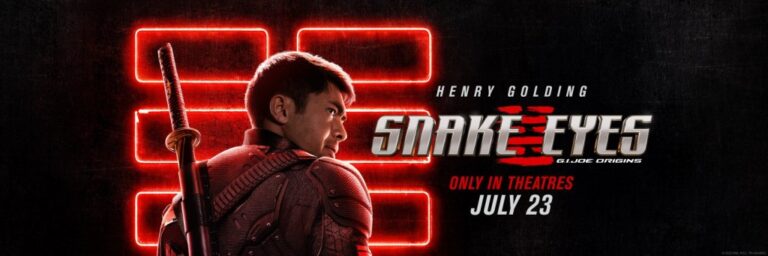
Snake Eyes: G.I. Joe Origins stars Henry Golding as Snake Eyes, a tenacious loner who is welcomed into an ancient Japanese clan called the Arashikage after saving the life of their heir apparent. Upon arrival in Japan, the Arashikage teach Snake Eyes the ways of the ninja warrior while also providing something he’s been longing for: a home. But, when secrets from his past are revealed, Snake Eyes’ honor and allegiance will be tested – even if that means losing the trust of those closest to him. Based on the iconic G.I. Joe character, Snake Eyes: G.I. Joe Origins also stars Andrew Koji as Storm Shadow, Úrsula Corberó as Baroness, Samara Weaving as Scarlett, Haruka Abe as Akiko, Tahehiro Hira as Kenta and Iko Uwais as Hard Master.

VIEW THE ‘ORIGIN STORY’ FEATURETTE HERE:
https://youtu.be/1rB_KUVLkDg

SNAKE EYES IS EXCLUSIVELY IN CINEMAS FROM 18TH AUGUST

Eight Character posters INCLUDE HENRY GOLDING AS SNAKE EYES,
ANDREW KOJI AS STORM SHADOW, ÚRSULA CORBERÓ AS BARONESS,
SAMARA WEAVING AS SCARLETT, HARUKA ABE AS AKIKO,
TAKEHIRO HIRA AS KENTA, PETER MENSAH AS BLIND MASTER,
AND IKO UWAIS AS HARD MASTER

*CREDITS ARE NOT FINAL AND ARE SUBJECT TO CHANGE*

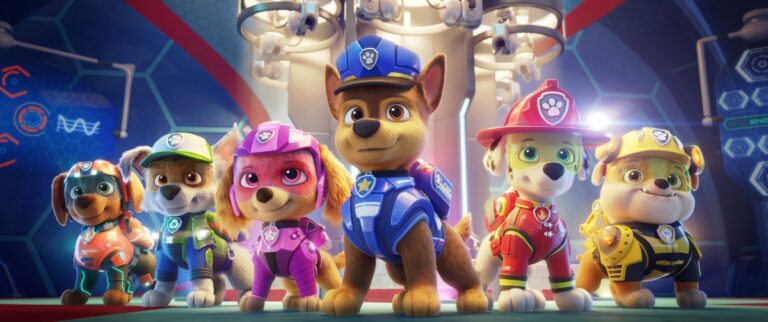
PAW PATROL: THE MOVIE, Help is on a roll.

PAW PATROL: THE MOVIE OPENS IN UK CINEMAS
13th AUGUST, 2021

After nearly 8 years of this canine group fighting bad guys on your TV screen, Paramount Pictures and Nickelodeon Movies are finally bringing the show to the big screen with the soon to released feature film directed by Cal Brunker. 

The PAW Patrol is on a roll!

Synopsis : When their biggest rival, Humdinger, becomes Mayor of nearby Adventure City and starts wreaking havoc, Ryder and everyone’s favorite heroic pups kick into high gear to face the challenge head on.  While one pup must face his past in Adventure City, the team finds help from a new ally, the savvy dachshund Liberty.  Together, armed with exciting new gadgets and gear, the PAW Patrol fights to save the citizens of Adventure City! Joining the PAW Patrol in their thrilling first big screen adventure are the UK cast members from the original series’ along with Marsai Martin, Yara Shahidi, Kim Kardashian West, Randall Park, Dax Shepard, with Tyler Perry and Jimmy Kimmel.

 With a summer release date, this is definitely one you can be safe to take the kids to see when it hits cinemas (hopefully) on 13th of August this year!  TRAILER DEBUTS NEXT WEEK!

Mortal Kombat 2021 – Review

Spoiler free

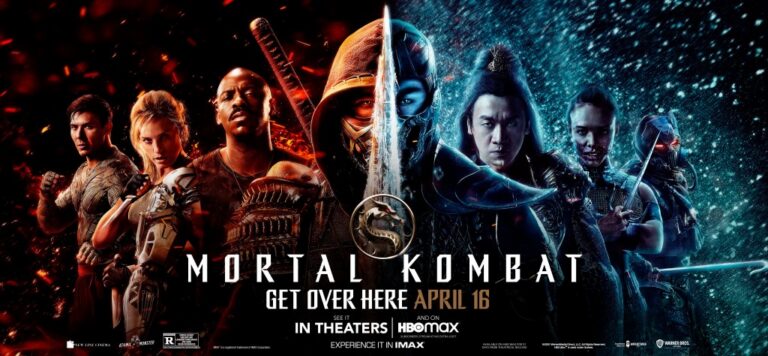
Video game films are generally pretty hit and miss and in some cases just downright bad. A lot of the time the source material is used liberally and the more fantastical stuff is just ignored, or in the case of Mortal Kombat: Annihilation, so over the top that it’s badly comical. Not the case in the new Mortal Kombat, it’s true to the games, fantastical in part but grounded and it’s a bloody romp ( literally)

I’m not going to spend a load of time telling you the plot because, well, if you’ve played the games you kinda know how it works, BUT, just so you know, this isn’t a film about the tournament itself. It’s a meet and fight for some established characters and the new guy, Cole, who has been dropped in the middle of the oncoming shit storm that is Earth Realm defending itself against Outworlds advances to win the final tournament and enslave and assimilate It; it’s basically a prelude film.

You won’t find anything overly deep about the story, albeit there is a hint of depth at the start when we are introduced to Hanzo Hasashi aka Scorpion; which is potentially a missed trick. Some of the acting, especially Liu Kang, is questionable BUT whereas a lot of computer game films give you slight nods to their pixelated progenitors or ham it up so much it becomes stilton incarnate, MK keeps a good balance of 90s style action, powers, gore and comedy ( mainly Kano, who is a one-man punchline) without tipping the balance to make it overly cheesy.

It is of course not without its flaws but no action film of this type is really and to be fair if you’re watching Mortal Kombat you aren’t watching it for a deep and meaningful storyline or even the Oscar-winning performances you’re watching it for the computer game nods, the fighting and the inevitable, will they, won’t they “FINISH HIM!”; they do by the way….there’s even a “Flawless victory” in there!

An enjoyable romp that harkens back to the more R rated action films of the late 80’s 90s. Looking forward to watching the next installment and seeing what other characters they bring in.