Home Blog Page 155

Tales of Xillia 2 Review – Welcome back to Elympios

0

Tales-of-Xillia-2

The Tales series, originating back in 1995 for the SNES, is a series that has continued to provide beautiful worlds, an exciting and extravagant cast of characters, and mesmerising stories. The franchise first presented itself to me in the latter part of 2004, with the Tales of Symphonia Gamecube title and, since then, has personally continued to stand at the forefront of JRPG’s whilst others have faltered (I’m looking at you, Final Fantasy). Xillia 2 is no different in this regard, once again offering a hugely enjoyable experience from start to end… For the most part.

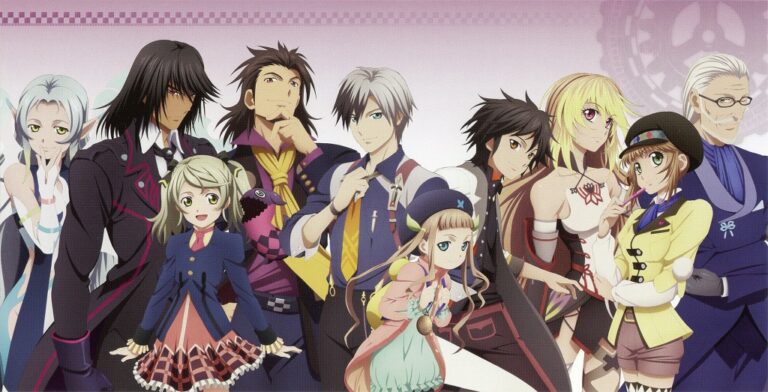
Featuring both new and old characters alike, Xillia 2 starts a year after the events of the original Xillia concluded and, therefore, it’s best if you come into this game with knowledge of the previous events. Regardless, there is still enough context in all actions throughout game for you to have a decent level of understanding for what has been, and what is happening at any given time.

The story follows the events of both Ludger Kresnik and Elle Marta and, joining them on this journey, as previously mentioned, is the cast of Xillia, specifically Jude Mathis. The introduction of Jude Mathis is a double-edged sword however; Whilst it brings in a familiar and instantly likeable member into the party and forefront of the story, it also shows how dull a character Ludger actually is.

This is noticeable from the start of the game, with Ludger’s not-a-silent-character-but-might-as-well-be act. Giving the odd line every now and then, he’s constantly overshadowed by his fellow cast that quickly renders him to a tool to further the plot. Elle, on the other hand, is a very interesting character. Having such a young character as a main story focus can often be detriment to the game, but Elle’s charm and screen presence only helps the story further. Often giving much needed innocence and simplicity in a complex story, every moment with Elle on screen is a delight.

The visuals of the game are, as you’d expect from a Tales game, superb. Character design it at an all time high, featuring beautifully anime-stylised garbs and weapons alike. The game reuses a vast majority of assets from the original Xillia, and whilst it will indeed frustrate some players, more will appreciate being able to revisit previously known locations and witness how the year gap in between your last time here has changed things around, akin to the feeling of experiencing the world of Final Fantasy X again in X-2. Music is, likewise, incredible. Featuring memorable tracks throughout the entirety of your time with Ludger & co, you’ll be humming the battle theme for weeks after you’ve put the controller down. Melancholy when it needs to be, and adventurous and grand when you witness vast landscapes before your very eyes, the music compliments your experience with Xillia 2 fully.

The combat is also typical of what the Tales series offers. Fast, fluid, tactical and ever so mesmerising to both control and watch, you’ll always want to go take down that enemy mob just to experience everything once more. The JRPG genre has always been one of continuous grinding to achieve higher levels, but you’ll enjoy every slash, hit, shot and explosion. Ludger has multiple weapons to switch between during combat, being dual swords, a hammer and dual pistols, each existing to serve a unique purpose. Whilst they are introduced early on and, at the time, seem redundant, they’ll soon become integral to every battle’s natural flow. The characters you perform linked-artes with will also change mid-flow, as different team members react to different initiated artes and equipped weapons. Whilst this may sound too much to think about during battle, all the mechanics are introduced slowly and thoughtfully, never quite overwhelming you but never leaving you for a long period of time without furthering your battle prowess.

7f60097f-s
It wouldn’t be a Tales game if high-quality anime sections weren’t included either.

Tales of Xillia 2 is not only a hugely enjoyable game, but a JRPG masterpiece. The story is gripping from the jovial, yet intriguing, start, right up until the climactic, unforgettable ending. Featuring possibly the best array of characters seen within a JRPG for quite some time, the game features enough customisation and dialogue trees to make this journey feel like yours. The ending is sublime, and immediately makes you reminisce about the journey that took place before you.
#WatchDogsIV brings hacking and a familiar face to Liberty City

0

1409251924_mpchc642014082809363569

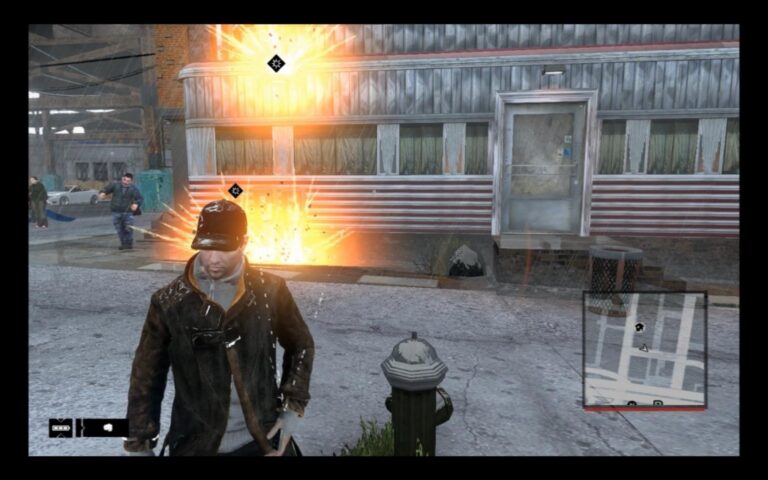
Some of the pure genius in today’s game modding community never ceases to amaze me. Through sheer passion alone, they have brought My Little Pony and Zoidberg to Skyrim, groteseque zombiefied Teletubbies to Left4Dead and now Aiden Pearce to GTA IV.

Despite bringing in the kind of cash that could solve the economic woes of a small country, Watch Dogs didn’t exactly set the critical world alight when it was finally released earlier this year. In my review here, I mentioned that a lack of identity and a dull, one dimensional protagonist prevented it being the game that most of us hoped that it would be. The technical issues with the PC version also didn’t go unnoticed although many of those have since been fixed by the usual combination of official and community updates.

Still, the ability to hack Liberty City and create the kind of mayhem that formed some of Watch Dogs more enjoyable moments within a GTA setting really does look awesome. Despite a few technical glitches, the sheer attention to detail is incredible and needless to say that I will definitely be checking this just as soon as GTA IV returns to a Steam sale.

Living at home with your parents

0

This vid is seriously wrong but freaking hilarious!

#alltheboss

​

Living at home with your parents you’re not the boss. After all it is their house, to do, well, whatever they want to do. Something Dean here knows all too well. So to restore a little boss-like-status in your life, mobile network giffgaff let all their members boss their phones. With no contracts and no fixed plans, you can come and go as you please, and change your plan whenever you need. Unfortunately they can’t help you boss your parents, sorry Dean, but they can help to boss your phone.

UPDATE! Fantastic Four Set Photos Leaked!

0

***UPDATE***

Sadly, but rather cooly (in a weird we got noticed sort of way) we got sent the following CoD from 20th Century Fox and so the two photos we had here have had to be taken down. Only thing left is the Meme we made.. Enjoy!

ffcnd1 ffcnd2


Behold, Geek Pride people! I have acquired, from a source who wishes to remain both employed and anonymous, photos from the set of the Fantastic Four reboot. Enjoy the following:

PHOTOS DELETED ON REQUEST FROM 20th CENTURY FOX 

sad batman and doc doom

It should also be noted that I was told Sue and Johnny Storm are adopted in this version, thus accounting for their different racial backgrounds. I’m not sure if that makes anyone feel better about the decision, which turned heads when announced, but at least it’s a logical explanation.

What do you guys think? Are you looking forward to the new Fantastic Four? Let us know in the comments below.

Havok & Hijinks

Designer – Adam Ferrel Trzonkowski
Publisher – Epic Slant Press
Number of players – 2 to 4

Everyone knows dragons like a hoard of treasure. Smaug had one, Fafnir had one, even Puff the Magic Dragon probably had a few gold coins and a goblet or two stashed away. But what happens when a dragon has kids? Do the grown-ups share with the little’uns? Well, Havok & Hijinks is the game to give you the answer!

Box contentsII
Game box contents

H&H places the players in control of a young dragon who’s been booted out of the family nest for giving mummy’s hoard the eye. The aim of the game is to accumulate treasure worth 15 gold; the kicker is that all the other players are also young dragons, and they’ll do anything to get their hoard together first!

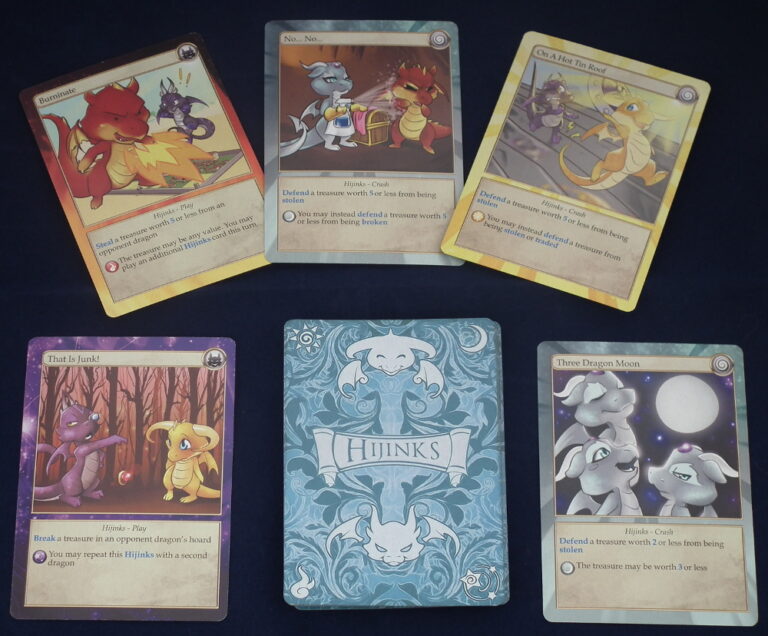
At the start of the game, each player is given one of four possible dragon cards and a hand of three Hijinks cards (see below). Each dragon has a unique pair of special abilities which the player can use during the course of the game and a unique affinity that affects how some of the Event and Hijinks card work (more on that later).

The dragons are very cute!

Gameplay is pretty simple. At the start of each player’s turn, a card from the Havok deck is turned over. The Havok deck is split into two different card types, Treasure and Events. If the card is a Treasure, the active player immediately adds it to their hoard. If it’s an Event, the active player performs what ever activity is written on the card. These can be breaking treasure in an opponent’s hoard, drawing more Hijinks cards or even stealing treasure.

The Havok Deck
The Havok Deck

A player may also play a Hijinks card; these represent the dragons causing mischief as they attempt to steal, break or defend their own treasure hoards. These again come in two flavours, Plays and Crashes. A Play card can only be used during the active player’s turn. A Crash on the other hand can be played during any player’s turn (think of Instant Speed in Magic the Gathering), and generally works to counteract the activities of the other players. Whenever a player plays a Hijinks card, they immediately draw a new one, meaning players always have at least three in hand.

If left unchecked, this system of mechanics would lead to stalemate after stalemate as players draw numerous answers to what everyone else is trying to accomplish. Fortunately, the designer has spotted this; players are only able to play one card in any given turn. This helps to keep the game within its predicted play time, plus demonstrates that plenty of playtesting has been done to keep the game smooth and flowing.

Hijinks cardssecond
The Hijinks Deck

Remember those dragon abilities I mentioned earlier? Well, these are split into a Play and a Crash, and work the same as the Hijinks cards except that, once used, they cause your dragon to be flipped to Tired, losing it’s abilities. However, each Tired side has a way for the dragon to be ‘woken up’. For example, the Obsidian Dragon wakes up when you break a treasure in another dragon’s hoard. The dragons therefore add a touch of uniqueness to each playthrough, giving the game replay value.

Another element that adds a wrinkle to proceedings is the Affinities. Some Events, Treasures and Hijinks will have additional effects if the active player or the Hijink’s owner match the Affinity of the effect. For example, the Hijink card ‘Hot Foot’ lets you steal a Treasure worth two or less, but if you’re the Ruby Dragon it can be worth up to three instead. What I loved about the Affinities is that each has its own gameplay aspect, so the Amber abilities tend to be about trading treasures and defending your hoard, whilst Obsidians tend towards breaking and recovering treasures. This pulls the game’s theme together beautifully, which is definitely one of the strongest elements of H&H.

Definitely my favourite card in the game!

So how does it play? Well, this is definitely a ‘gotcha’ game. With random Events, players having a secret hand of Hijinks cards and the dragon abilities, this is definitely a game where strategy is light. Now I’m not generally a fan of this style of game; Munchkin puts me in a rage no end! But H&H never purports to be anything else, and I love it for this. The box itself calls it “fast-paced, light strategy” and this is exactly what you get. H&H makes no bones about what it’s trying to be. The gameplay is light, fun and simple and the playtime is short enough that you can play several games in a evening if you fancy getting revenge on another player for some jammy play!

Unfortunately, with only 40 cards in each of the Havok and Hijinks decks, the game’s replay value could be compromised. Despite the randomness of the cards, and the four different starting dragons you can play as, H&H isn’t a game to base an evening’s gaming. But I don’t think that’s what it’s for; this is a game that’s been designed to fill the gap between games, or play in the background as you chat to friends. In this role, H&H is perfectly suited.

The rule book is fairly well written, being clear to follow and explaining each of the basic mechanics logically. However, about half way through the Turn order is repeated in more detail; I can’t help but feel this should have been called ‘An example of play’ instead, as the Turn order is pretty clear from the details on the first page of the rulebook. The text is also very small, however this is more a symptom of the small box, and each page isn’t overloaded with text so it’s still fairly easy to read.

Artistically and physically is where H&H really stands out. The artwork is cute and fun, with a complexity that matches perfectly with the theme. The colour palette is bright and engaging without being garish and cluttered. The cardstock is wonderfully thick, feeling solid in the hand yet shuffling with ease. The box itself is so solid you could probably hammer nails in with it. Altogether, the look is professional and thematic.

TOP 5 classic hex based War games

0

A lot of younger PC wargamers will look at the following with a mixture of confusion and amusement. Hex based wargames… on the PC, turn based, bitmap graphics?! Are you having a bloody Giraffe?! That’s right ladies and gents, these are the games of my childhood and games I will still happily play now.

It wasn’t about spamming units and attacking as soon as possible to win, it was about set piece battles, where you had to out think, out smart and out general someone, not just tank rush them and call them a ‘noob’ on the in game Chat. In a lot of ways it was like playing chess and, if you were anything like me and my father, would spend entire evenings (until the small hours of the morning) doing battle; some have football, others cars, for me and my dad it was Wargames.

Here are my top 5 Hex based, PC, Wargames :

1. Panzer General  – Strategic Simulations Inc. (1994)


Panzer_General_Coverart
Possibly the best Hex based Wargame on the PC, ever made; bar none.

With numerous spin offs and sequels :  Allied general, Pacific General, Star General,  Panzer General II,  Panzer General 3D and  Panzer General III.  Panzer General was at the forefront of PC wargaming and still holds its own today, with companies like Slitherine making reboots like Panzer Corp.

Game play was simple enough to master. You worked your way through different campaigns and aimed to get certain strategic points. In doing so you earned ‘prestige’ which could be spent, as the game went on, to buy and upgrade units.

lgeneral

It was this upgrading that was critical (especially as units were carried over to the next mission) as elite units had a better chance of overwhelming the enemy or defending crucial towns and cities.  The added depth to this game was also in the fact that you couldn’t just pile in with a frontal assault on a town or city, as units would have been entrenched. You had to suppress them with artillery or bombers  first then send specific units in to counter the threat.

Simple, Effective and with great replay-ability, especially against other players.

History Line 1914-18  – Blue Byte  (1992)

79450_front
A lesser known game by Blue Byte software, depicting, as the title suggests, WW1. Playing through different battles in the ‘Great War’ you are given different historical facts and pictures of different events as the campaign proceeds; learn while you play.

It was this game that got me interested in WW1 in the first place and for some reason, even though I wouldn’t count it as the best of these 5 hex based games, was  the one I have the most fond memories of playing with my dad; hot seating. Remember that? Having to get off you seat so someone else could sit down and make their move… crazy right?

the-great-war-1914-1918_19
G
ame play was similar to that of Panzer General but each mission had a base / supply depot where you built units and instead of playing on a grander scale it was on a more tactical level. Only down side was the AI was rather Poor and the main fun you got from it was when you, as I stated before, played someone else; never beat my dad at this game… how annoying.

Battleground 3 :Waterloo  – Talonsoft (1996)

61kEzgcg+NL._SL500_SY300_

Created by Talonsoft,  the battleground series  had a huge run (going up to 11.. “but it goes up to 11”) and focused mainly on Napoleonic wars, American Civil War and WW2.

The main difference, and the edge it held over its competitors, was how it added a hint of 3D to your typical hex based gaming experience. Coupled with some great music, sound effects and video clips of units firing weapons and you got, arguable, one of the best series of war games around and a big threat to SSIs Panzer General franchise .

BG Waterloo came about at the time when I was reading the Sharpe novels, and my interest in the Napoleonic era was at its height; unsurprising why it was my favourite. This being said, and being fair to the other installments, there was not a huge difference in style of play from one game to another, other than the obvious formations you could use in Napolenoic and ACW games (Line, column and Skirmishers for example)  that you couldn’t / wouldn’t use in WW2 ones.

Image760
Other than that, your units could move a limited amount of spaces (depending on formation), certain ground gave them modifiers and if you didn’t like the 3Dness of it all you could simply zoom out and have it look like any other hex game.

AI wasn’t totally Inept, but like all these titles you were a lot better Hot Seating (there is that word again.. madness) with other humans and really challenging yourself.

Age of rifles  – Strategic Simulations Inc.(1996)

986631103-00

Made by the same company as Panzer General, (SSI), Age of Rifles spans numerous engagements from 1846 to 1905 and allows you to take command of some of the greatest battles in history, as well as some of the less well known ones, ie the Boxer rebellion and the Russo-Japanese war.

Game mechanics were similar to that of its predecessor  but being more infantry and cavalry based, formations (of which there were a lot), play a larger roll. I cant help but think this was SSIs roll to try and counter Battleground; A more tactical game and as much as it wasn’t quite the same, it definitely had its charm.

age_of_rifles_isandlwana_web
The main pull for me, and the reason it I played it so much, was the customisation. Something that was distinctly lacking in its competator.

The scenario / campaign builder and the fact that you could literally build and dress an army, give them horses, camels, rifles, muskets, different heads, different uniforms and names was stupidly addictive. After completing the campaigns I spend months just building different units and engaging them in campaigns of my own design.

images

The Operation art of war  1939-1955 – Talonsoft (1998)

1326830829-00

The most basic looking of our top 5, with maps looking like the oldschool board games you use to play with your dad, or even, you dad played with his dad.

20110213115929

Not that this detoured any hardcore wargaming fans, so much so that Talonsoft created four more and Matrix games a 5th (TOAW3), in 2006.

Due to the minimalist look you could get amazing scale in these games, with counters representing Companies, battalions, brigades and some times, in the huge games,  Corp. On top of this you could have up to, if you built your own scenarios, 2000 units, PER SIDE! (now that is a freaking War game) The main pull for me and mainly my father, who I remember playing none stop, was the modern angle to them. You could play battles from WW2 all the way up to modern times and despite its simplistic look really had a way of keeping your attention.

Review – Dark Souls 2: Crown of the Old Iron King

1

Dark Souls 2. What can one say about the incredibly popular sequel to one of the greatest games ever, aside from, ‘Arrggh, I hate you’. Well, you could say, ‘Hey, there’s more?’ because the second instalment of the game’s Lost Crowns DLC was released this week, to the furious howls of delight/fury of fans such as myself.

This place couldn’t be less wheelchair accessible.

For those who aren’t aware, From Software are fleshing out the lore and story of the vanilla game by providing new adventures in ruined kingdoms other than Drangleic. In Crown of the Sunken King, players delved into the poisonous depths of Shulva, a heavily-Mayan inspired city of ziggurats and poison. And in Crown of the Iron King, we visit the world of the Old Iron King – a figure who anyone who played Dark Souls 2 will probably know as the lava Balrog – which is a realm of three huge towers that creak and crumble into the heavens.

Dark Souls was known for its intricate level design, with unlocked shortcuts being the tangible rewards for progress, something which some felt was lacking in the design of Dark Souls 2’s levels. Those disappointed fellows and fellettes would have been delighted with the first batch of DLC, with its hidden switches and traps, and they will be crying with joy at Crown of the Iron King.

At first, it is a journey down, following the crenulations of an ash-covered waste reminiscent of the Kiln of the First Flame from Dark Souls – something which should surprise no-one who has completed Dark Souls 2 in New Game+. You face aggressive hollowed soldiers, possessed armour, and men who have a bit too much affection for barrels, all of which are bolstered by whispering Ashen Idols. But it is when you find a certain item that the level comes to life: stationary platforms raise and lower, and new paths are opened up, meaning that I’m still finding items and shortcuts in my third playthrough.

Oh God, oh God, oh God!

One unique aspect which Crown of the Old Iron King brings to Dark Souls 2 is scarcity, in the form of a consumable item called the Smelter Wedge. These shards of a popular/incredibly cruel boss are the only way to kill the Ashen Idols, and you only get six from the beginning, whereas there are eleven Idols to trouble you. This puts an interesting tactical spin on your journey, and also adds another level of terror, as you never know which turn will cause a healing horror to leap from the ash.

The bosses, of which there are three, are for the most part interesting and varied. Yahtzee of Zero Punctuation’s criticism of ‘A Dude In Armour’ still stands, but two of the three bosses provide varied and kidney-bustingly tough experiences. I attempted the bosses solo and managed to do two out of three in this fashion, eventually giving up and summoning NPCs for the third boss whose glorious Nippon steel cut my poor character to pieces every time.

Can you call this bullet time when bullets haven’t been invented yet?

The NPCs are another way in which this DLC stands out: there are multiple invaders who all have some of the best AI I’ve seen, being far more clever than many players I’ve fought. The standout moment was when one NPC invader ran behind some enemies, healed, and then waited until I thought they weren’t going to attack to run up and one-shot backstab me. The icing on the cake was that they mocked my failure. It was brutal, and glorious.

Fans of the original Dark Souls will find plenty to love in both of the DLC episodes so far, but will love Crown of the Old Iron King more, particularly with a famous Greatsword making an appearance. Fans of Dark Souls 2 will find an expanded lore, interesting enemies, and a different way to slowly go Hollow as you die over and over and over and over…

10/10, would Die again.

New DLC for Mario Kart 8

0

Nintendo have announced some rather snazzy new DLC coming to Mario Kart 8 over the coming months featuring courses and characters from The Legend of Zelda, Animal Crossing and more. Two DLC packs have been listed on Nintendo’s website, with the first being released in November. Both will bring three new characters, four vehicles and eight courses to the ever popular game.

November’s goody bag will feature Link, Cat Peach and Tanooki Mario. A Blue Falcon Kart representing the F-Zero franchise will be featured in this pack, with the full details of the additional vehicles and courses included yet to be disclosed. However, Nintendo have promised courses from the world of The Legend of Zelda and a themed vehicle, which will surely join Link in the first pack. The second of the DLC packs will be released in May 2015; the additional content will feature Isabelle, Dry Bowser and a Villager from Animal Crossing, along with courses from the game.

Each of the DLC packs will feature two new cups, increasing the total playable courses by 50%. Customers that purchase both packs will be rewarded with eight different coloured Yoshis and Shy Guys as playable characters right away.

I’m not currently an owner of a Wii U, but I plan to rectify this in the coming months in preparation for Super Smash Bros and Hyrule Warriors. I’ve always been a fan of Mario Kart and the prospect of playing as Link and driving a little Zelda themed kart around has certainly peaked my interest. Roll on November.

szufda8gt4evauulfspw

The Golf Club Review: A Massive Drive Forward for Golf Games?

0

One of the big things that was announced at the unveiling of the latest generation of consoles was “social gaming”. The idea of course is that games will more deeply integrate multiplayer features so that you can play against friends without necessarily being in the same room or even playing at the same time. The humble game of Golf, being a turn-based sport with a rather relaxed pace is probably one of the most perfect platforms for this and newcomers HB Studios aim to take full advantage with their first self-published outing, simply called The Golf Club.

Compared to the last Tiger Woods game (or really any of the last decade of PGA licensed games) where the focus is on having the right courses, the right staging and the right roster of golfing greats, The Golf Club feels incredibly minimalist, aurally and visually. The interface is very simple and uncluttered, the soundtrack limited to the sounds of nature and some very pleasing ambient music.

2014-08-21_00018
The crisp level of detail is rather impressive

There are a few things to customise, but otherwise it is very easy and quick to get a game going. The load times after the title screen are basically nonexistent, even when quickly shifting through all the different courses and settings, which in an age of gaming where even the attempts to mask loading have loading times is a very welcome feature.

The sense of simplicity and minimalism continues through to the interface and gameplay, which uses the “slingshot” system popularised by later Tiger Woods’ PGA Tour games. You aim your shot with the left stick, pull back on the right stick and flick it forward to shoot, and then curse at the screen as you accidentally put too much slice on the shot and watch it elegantly fly into a bunker. Most of the core mechanics of golf are fairly self explanatory. Hit the ball with the club to make it go in the whole. One thing that can be criticised though is the lack of any sort of comprehensive tutorial, although seemingly to replace that you have John.

John is a nice voice in your golfer’s head who very politely talks about your golfing game while you play, discussing things that may affect particular holes, how you are progressing and so on. What makes this a bit more interesting is that occasionally the system will predict things wrong, such as where shots will lie, but rather than just ignore it, as most other canned commentary would, John will correct himself, apologise and joke about his own fallibility, which I found really endearing.

2014-08-21_00001
The minimalist interface can lead to some issues as to exactly where your shot will end up.

Graphically, the game looks very crisp, with some very lovely details. The green stuff looks great, with some particularly photogenic backgrounds on occasion. The reflections and water effects in particular need to be praised for managing to nail that soft watercolour of the reflections. The game also runs very smoothly, staying at a constant 60 FPS, not that it really matters all that much for a golf game.

The title alone really sums up the focus on the more social aspect of golfing, which is of course bragging about your handicap and comparing your round with pretty much everyone else with a bag o’ sticks slung over their caddy’s shoulder. The game has four player multiplayer in both local and online flavours, which works absolutely fine, as well as an interesting leaderboard/ghost mechanic. When playing certain more popular courses you will often have the ghost 3 other players of roughly comparable ability teeing off with you, which can get really interesting as you see different approaches to certain shots. It works in the same way a similar system worked in the Trackmania series and allows competition without necessarily having to work out schedules.

Depicted: The social ghost system, and my fearsome golfing ability.

The other big part of this is that every course in the game is procedurally generated from a series of parts. Not only does this cut on load times but also allows for the most central feature of the game (figuratively and literally); an easy to use versatile course editor. The Greg Norman course designer is very easy to use, allowing for a course to be made in minutes based on various criteria, but also allows for some customisation in case you want a bit of madness in your golf game.

The course designer adds a huge amount of replayability to the game beyond the 12 official courses, with all sorts of community courses, tours and tournaments. Given the simplicity of the design tools there are astonishingly few terrible designs, since you really need to try to make anything completely ridiculous. The simple ranking, rating and favourite marking systems at the end of a round probably also help to avoid a lot of the issues community content has in other games.

The start of my realistic golf course.

Technically, for all this to be made in the Unity engine is amazing, however there are a few glitches in the initial release of the game. This mostly focuses on the screenshot feature, which can occasionally get stuck and force a restart. Some swing animations can get caught as well, which sometimes need to be messed with in order to be able to aim again. That a few issues with flickering shadows are the only technical issues with the game, but with some needing a restart, they ought to be patched sooner rather than later.

For a first time publishing attempt, there is little more that can be asked of HB Studios. In terms of content, gameplay and replayability, The Golf Club has a lot to offer. It is a great game to quickly sink a few hours sinking a few difficult putts. What it does lack however is a sense of progression. There is no tutorial, only a few official courses (most of which are rated “Hardest”), and a minimalist interface which really doesn’t help to explain some of the nuances of golfing. Like a lot of games that rely on custom content, the game really expects the player to make their own goals for the most part. For those of you needing a taste of the fairway in the absence of an EA golf game this year, this will give you what you need. For everyone else, it is at least worth a quick putt-around.

The Dragon Keep: Good or Bad for The Dragon Age Saga?

0

blog-keep

One of the most appealing aspects of Bioware’s RPG games has to be the ability to carry multiple saves (and with it, the choices you may make throughout the narrative) on to the latest chapter of a particular saga. To many, a particular game that has prided itself on such a trait has been the Dragon Age series; with the latest instalment, Dragon Age: Inquisition being released on 20th November. However, given the age in which we live, where new systems will understandably be used to play such releases, the question is just how will fan’s beloved saved choices be imported? Whether it be on a simply upgraded Xbox 360 to Xbox One, or going on a PS3 from PC, this is exactly where Bioware’s online Importation tool, The Dragon Age Keep, plays its part.

Similarly following in the footsteps of the Mass Effect: Genesis DLC, The Dragon Age Keep will be a heavily ungraded web-based interactive tool that will allow gamers to remake (or correct) the choices that they may have made previously in Dragon Age: Origins and Dragon Age 2. Subsequently, they will save such choices to be imported on to any system they desire, in order for them to continue/shape their version of Thedas as they see fit. At the other end of the spectrum, newcomers to the franchise are allowed to customise what would have been their actions in the previous games, instead of having to make do with the vanilla reality that they would otherwise receive from simply purchasing Inquisition. While this is currently in its Beta format, Bioware seem to have designed a fairly fantastical solution to what would otherwise be a massive problem for their narrative-driven titles; especially with such titles as Mass Effect confirmed to be having new instalments in the future. With the release of Dragon Age: Inquisition being imminent, and countless demo videos being shown at what feels like every possible gaming conference there is; it is understandable that speculation of what will actually be included in The Dragon Age Keep has gained momentum in recent months. So I hear you say, what exactly is it that Bioware has confirmed for this seemingly perfect importation tool?

dragon_age_inquisition_keep_leaked_4


dragon_age_inquisition_keep_leaked_6

According to the developers and what has very recently been leaked online (naughty, naughty!) of the Beta version so far, the Dragon Keep will be questionnaire-based in its overall format and will even grant fans the opportunity to make decisions from DLCs that they may or may not have purchased previously. While this may feel slightly like a slap in the face to those who invested time and money in the previous additions to the saga through game-play, the idea behind it is to simply to give the player full reign and enrich the chosen world-state; and is clearly not something that Bioware has considered lightly. Looking at it from a newcomer’s prospective, surely knowing as much about the lore of Thedas and the Dragon Age would make later gameplay in Inquisition that much more enjoyable? Or even those who have played the franchise previously and wish to brush-up their knowledge will all now be able to do so. This is probably due to Bioware wanting to make sure that all players, new or old, have an equal starting point, which will obviously be prone to change depending on their ‘in-keep’ decisions.

As this will be more of a re-creation of a player’s previous save file than a straightforward import, it also means that the character customisation of both the Warden and Hawke, Dragon Age’s existing heroes, will be kept to a minimum. With this being the case, it has been confirmed that merely the character’s class and race will be subject to change based on the player’s preferences, resulting in there being no way to personalise how they may look. Simply because there is no data in which a wide range of consoles could read character appearance through a cloud-like tool like the Dragon Age Keep. While the idea of this may not be a particularly big problem, however, as  has just been confirmed through Inquisition’s latest ‘The Enemy of Thedas’ trailer (featured) shown at Gamescom last week, Dragon Age 2’s Hawke will make an appearance to some degree in this chapter to the saga. Whilst this is fantastic news for any die-hard Dragon Age fan, as we have pleaded with Bioware for months that a previous Thedas champion be included in Inquisition, using Hawke’s default appearance in the latter may not bother many fans as it is still not clear just how important they will be to this game. In reality it hinders not only a fan’s view of Hawke (quite literally), but also their very own experience inside Dragon Age and furthermore takes a step back from the saga’s mantra of bespoke storytelling. What we can only hope is that Bioware will give the option to change their appearance in Inquisition, rather than in the Dragon Age Keep itself.

dragon-age-inquisition

Whatever your opinion of Bioware’s upcoming solution to those pesky importation problems may be, there are definitely many on either end of the spectrum. Ultimately The Dragon Age Keep is the closest fans will come to reconstructing their chosen world-state of Thedas. The Keep itself is still being heavily altered and in Beta testing at the moment and will no doubt be subject to change before its release one month ahead of Dragon Age: Inquisition. For now however, fans both die-hard and casual may have a chance of experiencing this in-progress version by invitation only through the Keep website.

Dragon Age: Inquisition will be released on 20th November in Europe, with The Dragon Age Keep being released due to be a month before.