It appears that another DC Comics superhero is set to join the CW Network according to Deadline’s TV Editor, Nellie Andreeva, who broke the exclusive earlier today. The network are apparently fast tracking Flash, a drama project based on the Flash, by Arrow co-creators Greg Berlanti and Andrew Kreisberg.
Berlanti and Kreisberg will write the series alongside Geoff Johns of DC Entertainment, and it is expected that David Nutter, who did such a sterling job on the Arrow pilot, will be brought in to direct any potential pilot for Flash.
This would be a great addition to the CW lineup, and I’m personally hoping that it leads to an expanded DC Television Universe continuity. The idea at the moment is for the Flash to appear in an episode of Arrow next season before spinning off in to his own series. With that being the case it seems my lofty hopes may be entirely plausible.
It’s not all good news though. Whilst the future is bright for one superhero, it would seem that news on the Wonder Woman project is not so positive. CW had been lining up a pilot for Amazon, an origin story for Wonder Woman, and even commissioned a new script for it in May. Sadly the project is currently on hold.
Long time listeners to the NerdVsWorld show will know that I am of the opinion that any future Justice League plans should be focussed on the small screen, an area which DC and CW know tremendously well. Crossovers between Arrow and a future Flash series are excellent steps in the right direction, but any small screen Justice League plan HAS to include Wonder Woman.
Time will tell if Flash will open the gates for more superheroes to hit the small screen, or whether it will only be used to support the big screen outing of the Flash in 2016. I personally hope for the former.
The 80s. The golden age of music, gaming and fabulously awful cinematic cheese. The birth of electropop, Mario and Zelda and some seriously spectacular movie gold. From Blade Runner to Back to the Future, The Terminator to Top Gun and of course the all time classic that was Ghostbusters, the 1980s was a huge decade for cinema.
It was also a notable era for plenty of children’s fantasy films, which have stood the test of time as cult classics. It’s not all leg warmers and flux capacitors though, some of these movies targeted at kids were rather dark – more Pan’s Labyrinth than Kung-Fu Panda.
It’s no news that 80s kids movies were a little disturbing, but after recently watching one of my all-time favourites (which takes pride as number one) I realised how dark they had been. Don’t get me wrong, we still get some rather creepy releases for little ones in modern cinema. Coraline’s in danger of getting her eyes replaced with buttons, and don’t even get me started on Bridge to Terabithia. Even Disney have always been a little iffy, what with their love for casual sexism disguised as female empowerment.
So, here’s a lovely little compilation of the Top 5 most disturbing cult kids classics of the 80s.
5. The Dark Crystal (1982, Jim Henson)
I was never really a fan of this unusual offering from Jim Henson, but it definitely deserves a mention in disturbing kids’ films. Much darker than what we associate with Henson and involving some very creepy animatronics in the from of the Skeksis and Mystics. Worth a mention for it’s ground breaking use of animatronics in cinema alone, The Dark Crystal kicks off the compilation.
4. Alice (1988, Jan Svankmajer)
It’s debatable whether this surrealist adaptation of Lewis Carroll’s classic from Czech director Svankmajer can actually even be classed as a kids movie, but I had to add it to my list. Starring one young girl working with a host of terrifying stop-motion creations, this adaptation is seriously creepy. The creatures really are unsettling, in particular the white rabbit who eats his own sawdust innards whilst patching himself up with scissors.
Full of creepy mechanical stop-motion characters and animated raw meat, it really does fit the bill as disturbing. If you’re into obscure movies, it’s definitely one to watch, but I warn you, nightmares might be on the agenda. As I said, it’s not quite targeted at just children, so Alice has missed a top three spot.
3. The NeverEnding Story (1984, Wolfgang Petersen)
This was my all-time favourite film when I was younger, despite being born five years after its release. I was obsessed with Fantasia and the adventures of Bastian, loving the idea that you could read a book and physically be drawn into its world. It’s not all sunshine and rainbows in Fantasia though, in fact its far from it. The first film sees Fantasia threatened by ‘The Nothing’ which will consume the magical world. The idea of being consumed by nothingness is pretty darn dark, let alone everything else that goes on in the movie. As much as I adore Falkor, he’s a pretty weird creation, much like the other characters in the film.
Every time I watch the film I’m still mortified by Atreyu losing Artax, a scene made more dramatic by the actor actually getting stuck in the swamp during the filming process. So, The NeverEnding Story sneaks its way into the top three, but isn’t quite at the top.
2. Labyrinth (1986, Jim Henson)
David Bowie’s crotch. Need I say more? Jim Henson makes another appearance on the list, for one of the most memorable movies of the 80s. A huge cult classic, Labyrinth is another film that utilizes puppets. A goblin king that wants to steal a human baby and David Bowie’s entire character give this film its position as number two in the list. Having Bowie’s bulge thrust at you is enough to disturb anyone for life.
1. Legend (1985, Ridley Scott)
Cue Zelda ‘get item’ tune in my head, it’s time for my number one disturbing 80s movie for kids. The movie that inspired this creepy compilation is another one of my favourite movies from when I was younger, despite starring Tom Cruise. For those not familiar with this fairytale fantasy from director Ridley Scott, it really is worth a watch. The film follows Princess Lily and Jack, the young man trying to win her heart. Unicorns, elves and a terrifying portrayal of the The Lord of Darkness by Tim Curry, this film has it all.
The Lord’s minions’ comments towards Lily are enough to earn Legend‘s number one place on my list, with them wanting to ‘eat her brains like jam’ and ‘suck her bones’. Then there’s Lily’s outfit when she’s in the Lord of Darkness’ lair- talk about inappropriate. Fabulous, but still, a little much for a kids film. Tim Curry’s character is also rather scary, as well as the innuendos and rather unsubtle sexual nature.
I’m not quite sure why Legend was one of my favourite films when I was younger. It was a good few years before my time, but I was hooked. I loved everything about it, particularly the unicorns, and seemed to have forgotten until recently that it starred Tom Cruise, who I really can’t stand at all. In fact, one of my favourite scenes was always him diving into the lake to retrieve Lily’s ring after her declaring she would marry whoever found it. Still, when watching it again the other day for the first time in years, I found that scene special. It’s very cheesy, but I loved the idea of him trying so hard to win her hand, whilst the world around them both turned to darkness as he was searching for it. Eurgh, mush. However, we then have the complete opposite of mush and romance in the extremely dark nature of the scenes when Lily is with The Lord of Darkness, who plans to kill the last unicorn.
Well, there we have it. The 80s might have been a rather messed-up decade for kids movies, but is what we have nowadays really better? As hard as Disney try to shake the stereotypes they’ve always stuck so strongly to, it doesn’t work. Kids films today can be fun, with recent hits like Despicable Me 2 and Monsters University, but I miss the good old days. Don’t get me wrong, I love my Disney like society has taught me to, but there’s nothing quite like the obscure fantasy films of the 80s. Now for a NeverEnding Story marathon…
It would seem for the most part being a superhero can be costly, in the USA you have to pay for the medical attention you receive not to mention the cost of insurance for the damage you do whilst saving the city. I know seems unfair but someone has to pay.
If you are Tony Stark then it isn’t an issue, but what about poor old Bruce Banner? His education didn’t come free and with him being constantly on the run and having to pay for those clothes that keep getting all torn up, the cost quickly adds up. So here is a visual look at the cost of being the Hulk in 1962 compared to the now.
Sexy cosplay, battle lingerie and the rush to be offended
Disclaimer
While I don’t think it’s that important, for the sake of completeness, I, the author, have a background in media analysis through feminist, Marxist and psychoanalytic methods, though I do not completely agree with any of them. I am male-bodied and genderqueer-minded; I have experienced violence, hatred and unwanted sexual advances from both sexes. The views herein are my own, and shouldn’t be understood to be those of Geek Pride itself as it is an apolitical, chaotic assortment of authors united only in their love of geekdom.
—
This article expresses some opinions that will hopefully stir up some debate, help people consider different viewpoints and prompt some heretical thought. I like cosplay. I like sexy artwork. On a fundamental, biological, natural level, I enjoy looking at human bodies and I like mine looked at with a similar appreciation. I also think all people should be allowed to dress as they wish so long as they’re not endangering anyone, and shouldn’t be made to feel inferior because they are/are not dressed in a sexy, visually arresting manner. People shouldn’t be the subjects of contempt, violence or mistreatment for dressing in a sexualised manner; frankly, society should learn to get that stick out of its collective bum.
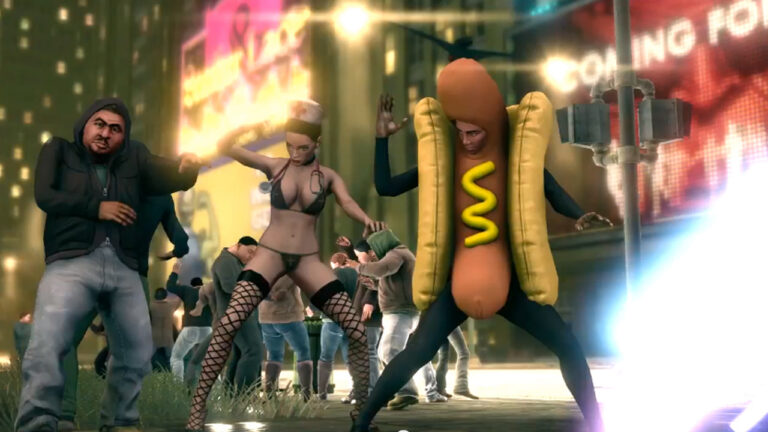
There’s a lot of press build up for GTA V, however there’s another sandbox title that’s been creating quite a bit of controversy in the media lately – Saint’s Row IV is due to hit our shores this August, and there’s been a plethora of information hitting recently regarding several facets of the title.
Before our impending review, you’ll see a Saint’s Row retrospective looking at the series as a whole, but for now here are some tidbits to wet your appetite.
Firstoff the game’s general insane and rather close-to-the knuckle themes have caused the title to again not receive a classification in Australia.
The Australian Classification Board re-reviewed the title, and a three-person panel all unanimously agreed that the ban on the game’s release should stay in place. The reason? Drug use. Specifically the incentivised usage of them in the game’s mechanic. The official quote is: “drug use related to incentives and rewards is not permitted.”
So it looks like the Steam Australia “low violence version” of the title is still up in the air, which is making the 23rd August release date looking less and less likely.
On a lighter note, the second news piece is about the proposed “Game Of The Generation” edition of the game, which has some deliciously mental goodies that come with it:
The title includes the following: A replica dubstep gun with laser sight, an 8-inch Johnny Gat Memorial Statue, a Dubstep Doomsday Button (I’m sensing a theme here…), a light-up rotating display case for the game, and a velvet pouch to keep everything in… oh, and not forgetting some pretty spiffy in-game items like “The Screaming Eagle VTOL”, “The ‘Merica Gun” and an Uncle Sam Uniform.
This is a pretty impressive haul, and all only setting you back $130 – unfortunately no release price has been confirmed for the UK, however the “Super Dangerous Wub Edition” though $99 is currently £89 on Amazon.
Finally, publisher Deep Silver have confirmed that the game will feature a season pass for £7.99 (working out to about €9.99 / $9.99), and will provide access to two mission packs, including a director’s cut of the ” Enter the Dominatrix” DLC, which will be “a tongue-in-cheek vision of what this content was originally going to be like.”.
Now another part of the season pass needs a little explaining. Remember in Saint’s Row 3 where you could weild a 4-foot purple sex toy called “The Penetrator”? (for those that aren’t aware, I shit you not) Well the season pass will include a new weapon called “The Rectifier”… can you guess what it is?
Well… if you guessed the weapon as an anal probe, you’d be correct.
It looks like Saint’s Row IV is aiming to up the ante when it comes to the fun factor, and if the preceding games are anything to go by, I can’t wait for the lunacy to start.
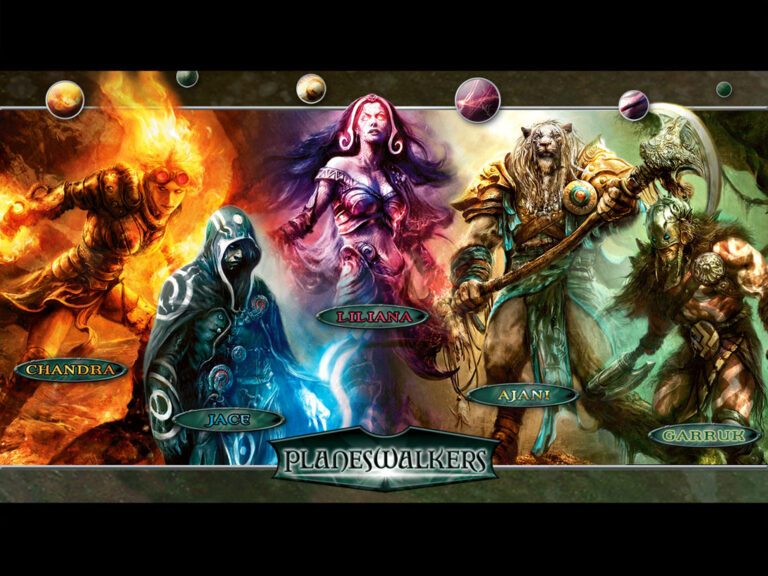
I look forward to the annual iteration of this game. Many of us end up moving from place to place throughout the course of our studies, careers, and life transitions. We often leave friends and gaming groups behind. My group of friends were avid Magic players when the first version of Duel of the Planeswalkers was released. Through Xbox Live we were able to keep in touch and maintain the feeling of playing games around the dinner table. None of us were MTG pros. We played Magic as a social activity where not a little bit of intoxication was involved.
Stainless Games has always attempted to capture the essence of the casual Magic play experience. I feel DotP is distinct from the Magic Online experience in this way. It’s a game for new and casual Magic players to have a good time. The community surrounding the game has consistently suggested improvements and the developers have listened. I have played every edition of this game and this is certainly the best one.
I think it’s really all about the little things. Simple and elegant changes have significantly improved the play experience. Including a graveyard count being one of my favorites. Some conditions require this knowledge and the slightly annoying activity of counting each of the cards in an opponents graveyard interrupts the gameplay. The ‘attack with all’ option during combat is extremely convenient. Even if you want to attack with n-x creatures it’s still a great feature. You simply click on the creatures you want to stay at your wizard’s tower and let the rest march off to victory.
The deck editor has also been revamped and with great effect. Being able to tailor the exact amount of land while preserving the choice for an automatic 40% breakdown is really nice. So if you wanted to keep only one- and two-drops and seriously reduce your land, that can be done now. One of the few gripes I have is the 60 card minimum. I think a 40 card minimum would be in order but I suppose they are saving something for 2015. I’d also like to see a common pool of cards between all decks so that you can design your own deck from scratch (though that might be asking too much).
A new addition is the sealed deck format. It’s a great introduction to limited-play for new Magic players. However, it is only an introduction unless you want to hand over some cash for new packs. The campaign section is really great and will introduce new players to some of Magic’s most loved blocks. The design of each block-level teaches magic strategy without being condescending. In fact, one part of the game that most impressed me was the quality of the tutorial. It really does a wonderful job of teaching Magic to noobs with a very clear, concise voice over. I would also recommend working through the challenges to a new player especially after the basic mechanics are mastered. It’s a good exercise in the type of opportunities you need to train your eyes to see. When playing against people these are the types of strategies one would need to employ.
If you are an experienced Magic player, then you will likely find these challenges to be beyond easy. I would have to say these were some of the easiest challenges in the series so far.
Another small improvement is the AI option for 2HG and the random deck select. Sometimes you just want to play a pick-up and don’t care much for the deck. Especially if you’re a completionist like me and you have to unlock all the cards (without buying unlocks). I haven’t played too much PvP but when I did things seemed to run very smoothly. It should also be noted that my experience is with the Steam version of the game and not the XBL version. Below are some preliminary strategy suggestions for playing Magic: DotP 2014.
One of the best encounters to grind on is Skirsdag Cultists in the Innistrad block. There’s virtually an answer to every kind of threat for each of the decks. All you need to do is get an opening hand with a creature answer and hold on to it to take care of the demon creature. After that, all you have to deal with are 1/1s. You can grind for card unlocks, personas, titles, and achievements. I would recommend that you not play through the entire game with one deck until you unlock the personas that relate to favourite colour.
I figured out that the favourite colour data is determined by the number of spells you cast of that colour. If you play with only one colour then you’ll be stuck playing the other colours for a longer time before you can get them favourited. So once you get one colour favourited, move on to the next.
One of the best decks overall is the white weenie soldier-ball. It’s fast, reliable, and solidly performs in all of the formats available. A really fun deck is the Sliver deck. This might just be a matter of pure nostalgia for me (I’ve been playing since Revised). I haven’t unlocked all the cards for it yet but it’s going to be interesting to see what other decks will foat up my favourites list.
I did notice that most/all of the decks were very creature heavy. This requires the preservation of mana-ramps during deck-editing so be mindful of that. In multi-coloured decks there are no dual or multi-lands – there are tutor-lands, however. I’m guessing there’s something difficult on the game design side of including these lands. You do get to choose which combination of lands you tap when you play spells though. Also, the default is always to allow you to play the maximum number of spells in your hand.
All in all, I really enjoyed the game and I’m still enjoying it. The pricing is a steal for any version you get. Stainless has really succeeded in pulling out another solid iteration of this game. Their commitment to the fanbase is praiseworthy and the fruits of the forum discussions really show in the finished product. If you are a brand noob looking to get into MTG or a seasoned Timmy , then I would strongly recommend Magic: Duel of the Planeswalkers 2014 to you.
Shadowrun Returns is a distinctly old-school styled RPG based on the pen and paper role-playing game. The setting for Shadowrun is essentially a mixture of cyberpunk and the fantasy trappings normally associated with Lord of the Rings.
The year is 2054 and due to an event referred to as ‘The Awakening’ there has been a resurgence of magic, awakening long dormant creatures and the appearance of other races: dwarves, elves, orcs, trolls, all referred to as ‘metahumans’. In this world technology and magic collide, with mega-corporations vying for more control and influence and trampling over those beneath them.
You play the part of a shadowrunner, a mercenary living in the shadows of this new world taking on jobs from anyone who will pay. When the powerful or the desperate need a job done, you get it done… by any means necessary.
After choosing your race from the several available, with different bonuses being available for various races -trolls are tougher, elves are more charismatic- it’s time to pick an archetype, of which there are several, but these are only a starting point.
Some of these will be familiar, but they are also somewhat different due to the world of Shadowrun, so while a mage may specialise in spellcasting they also carry a gun. Other classes include Deckers (hackers) who specialise in tech, hacking computers and jacking into the Matrix, Riggers who utilise drones for scouting and combat and can control machines, Shamans who use fetishes to summon spirits, Street Samurai warriors with cybernetics, firearms and melee weapons and Physical Adepts who use magic to boost their impressive close combat skills to survive.
Character creation is refreshingly streamlined.
These archetypes distinguish a player’s initial skill set, these skills can then be boosted by earning Karma- the game’s experience points. Each of the several attributes has a corresponding skill set, and these attributes will have to be increased to gain access to higher level skills. This prevents characters maxing out one particular skill early on. Etiquette determines the demeanour in which your character talks and can open up otherwise unavailable options when talking to certain characters.
The setting is a rich world which has been crafted over two decades. As well as guns and magic there are also cybernetics which provide different boosts at a cost of both credit and Essence- life energy. Characters start with 6 Essence and different cybernetics will cost a different amount of Essence with characters being unable to go below 1.
The world of Shadowrun Returns is presented in an endearingly-painted 2D isometric view; whilst this isn’t the most intricately detailed or visually stunning game, the environments of future Seattle are atmospheric and it doesn’t take long to get sucked into the story, titled ‘Deadman’s Switch’, which has you investigating a friend’s death at the hands of a serial killer referred to as ‘The Ripper’ as you walk the rainswept streets.
From the start it’s obvious that Shadowrun creator Jordan Weisman and the rest of the Harebrained Schemes team have been more focussed on making an authentic Shadowrun game than making something flashy, in part as an apology for the awful FPS released a few years back.
Interacting with characters brings up dialogue options.
The music composed by Marshall Parker and Sam Powell -who worked on the SNES and Sega Megadrive game- adds a further dimension to the atmosphere.
This is a text-based game- new locations are introduced with evocative descriptions and talking to citizens, vendors and others on the streets will bring up an impressively rendered portrait along with dialogue options which can lead to clues or other interesting information.
There are occasional side quests and different approaches to certain events but the story is essentially linear in nature and those expecting an epic 50+ hour adventure will be disappointed as the story here will only last you 10 or so hours.
Moving through the world is real time, combat is turn based. Your character, and any others with you, take it in turns to use their action points to perform actions whether this is movement, casting a spell, using an ability, etc, before the enemy take their turn.
As for those wondering about Deckers, the world of the Matrix couldn’t be created in the same scale as would really be necessary, but to their credit Harebrained Schemes have managed to fit in some cool stuff for Deckers to do. There aren’t loads of opportunities to jack in, but when a player does the alternate world of the Matrix manifests with an avatar representing the player’s character as they enter the realm of cyberspace, where they’ll encounter Intruder Countermeasures (IC) which attack the player, and have to use programs with various effects and deploy Expert System Programmes (ESP) which are in essence creatures summoned within the Matrix to fight on the player’s behalf. Players have to be wary of overstaying their welcome though, as this may set off alarms both within the Matrix and the ‘meat world’.
Deckers’ abilities within The Matrix are determined by their decking skill and ESP subskill, along with their equipped cyberdeck, much the same as skills affect combat in the ‘meat world’. Action within the Matrix shifts back and forth with the ‘meat world’ so players can protect their Decker’s body from real world threats.
The world of the Deckers
There’s little in the way of looting, which may seem odd for an RPG, but characters are expected to find gear via dealing with shady merchants or using contacts rather than stealing from the dead.
Whilst combat itself is engrossing, especially when facing several enemies, there’s an anonymity to the other shadowrunners you can hire as you progress into the game. Aside from a few exceptions like Jake Armitage (who long time fans will recognise from the SNES game back in the day) and a few other characters, you don’t really interact with the hired guns who make up your party so there’s little reason to waste resources on them if they bleed out on a run.
Another problem is the game has no any time save function, only autosaving at the start of a new mission/chapter. This -whilst in keeping with the game’s oldschool approach- does lead to frustration and prevents re-doing missions a different way and experimenting with combat approaches.
The etiquette dialogue system doesn’t come in to play often but when it does, it does give you an empowering feeling when you manage to talk your way out of a potentially volatile situation or convince someone that they should give you something for free.
Cybernetics are available for a price
Shadowrun Returns also comes with a pretty extensive editor package, which allows techhead fans to create their own missions and campaigns which others can then play. It’s this aspect which really does lend the game essentially endless appeal. There’s already a large online community for Shadowrun, and with editor tutorials already popping up all over- Shadowrun Identity is just one site- fans can contribute to an epic campaign based on stories from the sourcebooks and novels and there’s already people working on the SNES and Megadrive games being recreated in the editor.
It’s this aspect that really taps into the idea of what Shadowrun has always been about: crafting your own story within the established world.
The only reason this game exists is because passionate fans paid for it, and the world of Shadowrun quickly becomes absorbing as you find yourself talking to intimidating and impatient trolls, who also happen to be detectives looking into your friend’s death, and dealing with elvish BTL (Better Than Life) dealers and various other characters.
Gamers oblivious to Shadowrun won’t be completely lost as the world is introduced in stages, although this game -quite literally in this case- wasn’t made for them, it was made for the people who already know these streets, and the few niggling problems are easily outweighed by the continuation of the Shadowrun world on a modern gaming platform and the best digital version of a pen and paper role playing game yet.
Don’t trust anybody, watch your back and never, ever, cut a deal with a dragon. Welcome to the sprawl.
My younger sister (25) introduced me to the show Adventure Time last year while my kids were visiting. At first I was hesitant to allow them to watch it, as it came across with a Family Guy feel to it. However, after watching a few episodes myself, I was more than happy to allow full access to the series. While it appears to be a very strange cartoon, Adventure Time actually teaches empathy and sends a message that science is cool. To quote a fellow comrade at Geek Pride, “All hail science!”
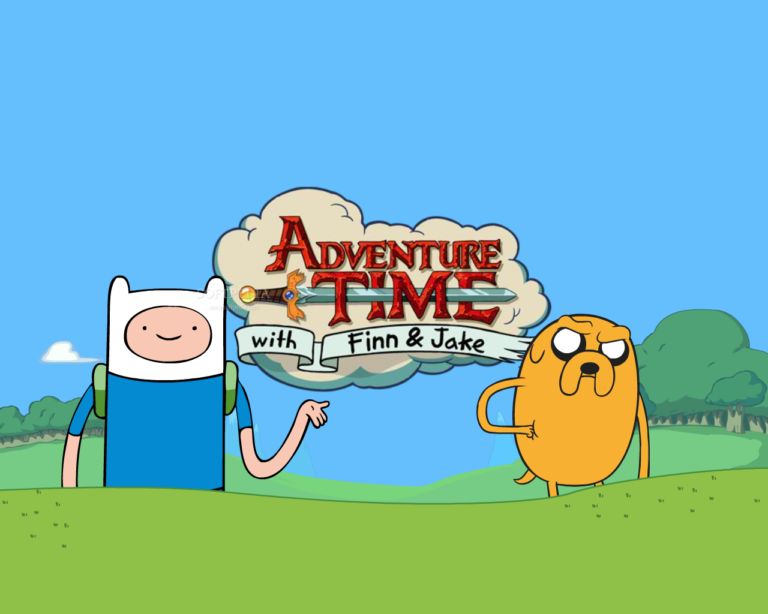
Adventure Time follows a young boy named Finn and his shapeshifting dog, Jake in a post apocalyptic world called Ooo. OK, that does not sound very appealing, but bear with me. With Finn’s unwavering morals, him and Jake are always traveling through dungeons or through Ooo, completing quests to help others in need, with Jake’s sense of humor adding a delightful level of laughter for people of all ages.
There is a character named Princess Bubblegum, who is constantly trying to teach scientific values to the people in Ooo- usually failing epically due to their obsession with magic. However Princess Bubblegum is an amazing role model for young ones since she tries her best to expose the truth.
Adventure Time is by far one of the best shows for all ages to watch. Where adults find humor, children find a lesson learned about being a decent human being. Adventure Time teaches our next generation of geeks to be good people and have empathy for others in need. It is a great spin on “treat others as you would like to be treated” rule.
While I could get into a long tangent about certain episodes, I will bow out now and encourage that you watch it and judge for yourself.
It’s 7am. You’ve got a cup of coffee in hand, and are staring mournfully at your wardrobe, trying to decide what to wear. Do you choose the red shirt today, or the blue? Will one choice somehow shape the course of your da – for better or for worse? It may seem like a silly way to start an article, but regardless of how much we try to deny it, fashion is always going to be something that plays a big part in our lives. Do you dress to appease yourself, or to gain the approval of your peers? Do you opt for comfort or for style? And if you choose the latter, precisely whose style are you trying to identify with- someone else’s or your own?
Trends come and go; fashion will always work on a cyclical basis and in effect history is almost certainly going to repeat. In the last few years we’ve seen all sorts of fashionable trends resurface, from the bold neons of the 80s, through to the revival of 20s flapper dresses and copious amounts of beads. In certain circles, especially with things like steampunk becoming more prevalent, there’s been an increasing lean towards Victorian era fashion too. But how far back are we willing to go, exactly, in our quest to keep recycling old concepts and trends? In a few years, should I expect to see Tudor ruffs on show, or perhaps the powdered and pampered splendour of Georgian and Rococo offerings? Or will it be something new and exciting altogether? Will we actually be able to break this cycle of resurrecting old ways of dressing in the future, or will we find new and unique ways to incorporate history into our futuristic depiction of what’s fashionable? As we evolve as people, so too, will our trends?
In cinema, this question is one that’s often addressed, albeit indirectly, in the costume choices and set design as a way of enveloping viewers into the brave new world of a futuristic setting. It’s a true opportunity for designers to throw caution to the wind and run with the limits of their own imagination. It’s freedom, plain and simple, and it does throw a few interesting possibilities into light.
Take Mad Max for example, the dystopian action movie franchise. Set in the not-too distant future, and suffering from the depletion of the world’s oil supply, there’s a greater depth of realism to the costume and scenario taking place. It’s a far more plausible future than some of the other science fiction offerings we’ve been given over the years- and in terms of fashion, Mel Gibson’s leather-clad self is practically iconic. While it could be argued that it is so quintessentially 80s, there’s a timeless quality to it too. Leather ages well, it’s creating something from nothing, and the punk vibe that sits with the other characters really does enforce the take-no-prisoners attitude to survival. What could be more fitting for the motorcycle gangs and MFPs than leather, studs and armour, synonymous with the rebellious attitude of those that are wearing it?
Or how about the mishmash of styles seen in Cloud Nine’s television series The Tribe? In a post-apocalyptic scenario in which the adults of the world have abandoned their children, the series focuses on the trials and tribulations of one particular gang known as the Mall Rats. Much like Mad Max, it has more of an air of realism to it, especially that in this case, the clothes utilised are constructed from anything that could’ve been found in the mall at the time. You’ve got shower curtain skirts, and paper clip necklaces; tie-dye and feathers are two staples, along with, once again, oodles of leather. It’s futuristically present, and while perhaps a little on the kooky side, it’s not so jaw-droppingly unthinkable to entertain the idea of running into someone on today’s streets that’s taken a similar approach to developing their own personal style.
But how about looking further afield instead? Let’s jump a couple of hundred years into the future and dabble in the space orientated styles of films such as Starship Troopers, Alien, and Star Trek. The former two are relatively well grounded in reality. The uniforms of the Rough Necks, in Troopers, really do have an overwhelming military feel reminiscent of old German SS officers, which considering the cyclic nature of fashion mentioned earlier, wouldn’t actually be all that implausible to imagine. It’s sticking in line with common practices regarding the reemergence of certain styles.
Again, a similar principal can also apply to Alien. The original costume worn by Ripley was a GB-4 flight suit. It’s nothing spectacular or out of the ordinary, and yet it hasn’t dated in the slightest since the film was released back in ’79. It’s a simplistic basic, and I think in part that’s why it worked so well. There’s nothing age identifiable about it, no fleeting trend, or rounded off bit of bizarre style, it’s just a practical, and apparently timeless bit of clothing, suited to the purpose of her career choice. So does that mean in the future, we’ll be favouring practicality over style?
Franchises such as Star Trek would argue the opposite, as style is arguably a very big part of the costuming choices involved. Take a look at the original series for example, from bright colours to mod-length dresses, there’s a clear indication of the 60s birth place going on, but it’s not so overt it doesn’t carry over into the later centuries in which the series is set. And that’s just looking at Starfleet alone; the alien races are another point of unique and often perplexing fashion choices. Whereas mankind is portrayed as being a singular beacon of style, in which various outfits are utilised to give a proper depiction of personal style, other species and races in the series seem to have a very secular colour palette and cut of clothing. From an aesthetic point of view, I can understand the need for being able to make people easily identifiable, but it does sort of seem to cheapen the concept of fashion entirely. Are humans the only species to have ever revolved their lives around the concept of style and fashion?
Jean-Paul Gaultier didn’t seem to think so, when he designed the stunning and original creations worn by the cast of The Fifth Element. Rather than playing on age old trends, or recycling something, he opted for something new and unparalleled, and I think that’s one of the reasons that the film worked so well. Rather than just throwing together some eclectic outfits, he managed to build his entire world around them.
This is especially true in the crowd scenes of the film, when his famous tailoring really does come to life. Every person in those scenes, is the embodiment of free fashion, and I think that in itself shows the evolution of style. Whether it’s the stewardesses in their low cut, but quintessentially smart uniforms, Ruby Rhod’s skintight, flamboyant jumpsuits, or Leeloo’s orange rubber suspenders and gold leggings, there’s definitely something otherworldly yet pleasantly real about the originality of what’s on show. It’s very new age, and almost like living the entirety of your day to day life in rave club gear.
So what about something halfway between the two? As much as I might like to think we’re ready for the fashionable stylings of a Fifth Element-esque style revolution, perhaps it’s a bit too overt a change from what we’re used to. Maybe something akin to the recycled garb of Blade Runner would be more fitting. The fusion of Pris’ 80s punk rock look with Rachael’s 40s classic tailoring really does hammer home the adaptability of fashion. Who’s to say these two distinct looks couldn’t run hand in hand with each other? Once again, the movie showcases the cyclical nature of fashion, with both characters having opted for a different era on which to base their respective styles. It’s an amalgamation of contemporary thinking, with preordained style. There’s new elements of evolved fashion playing into the staples of classic design, and I think that if I’m truly being honest, that’s where I’d like the future of fashion to end up.
I want us to keep reinventing what we’ve already experienced, I want us to keep seeking ways to incorporate past designs, by breathing new and fresh life into them. I want to see what other designers come up with when presented with the challenge of predicting the future in their cinematic endeavours while still maintaining the smorgasbord of cultures and races present within the world. And hey, from this writer’s perspective, I definitely wouldn’t say no to a bit more Gaultier in my life.
Guerilla Tea, the Dundee based developer have joined forces with Cancer Research UK to create ‘GeneGame‘, a mobile title that will allow gamers to analyse gene data and contribute to the fight against cancer.
Guerilla Tea CEO Mark Hastings
Guerilla Tea CEOMark Hastings said, ‘We’ve always believed games technology has the potential to provide huge benefits to other sectors and this project will be a wonderful example of that. We’re very excited to get started and through our work look forward to helping speed up discoveries that one day might lead to new cancer treatments.‘
Earlier this year in March Cancer Research UK held a ‘gamejam’ in association with Amazon Web Services, Facebook and Google, where academics, scientists, gamers and designers created 12 gaming prototypes based on the needs of the charity’s gene research. ‘GeneGame’ will build on those foundations, and is due to be completed later this year.
Due to this particular brand of research which involves, ‘terabytes upon petabyters‘ of data that can only be accurately analysed by the human eye. Gamers free time would be an effective way of speeding up the process.
Amy Carton: Citizen Science Project Manager for Cancer Research UK
‘We’re right at the start of a world-first initiative that will result in a game that we hope hundreds of thousands of people across the globe will want to play over and over again and, at the same time, generate robust scientific data analysis,” added Amy Carton, citizen science lead for Cancer Research UK.
We use cookies on our website to give you the most relevant experience by remembering your preferences and repeat visits. By clicking “Accept All”, you consent to the use of ALL the cookies. However, you may visit "Cookie Settings" to provide a controlled consent.
This website uses cookies to improve your experience while you navigate through the website. Out of these, the cookies that are categorized as necessary are stored on your browser as they are essential for the working of basic functionalities of the website. We also use third-party cookies that help us analyze and understand how you use this website. These cookies will be stored in your browser only with your consent. You also have the option to opt-out of these cookies. But opting out of some of these cookies may affect your browsing experience.
Necessary cookies are absolutely essential for the website to function properly. These cookies ensure basic functionalities and security features of the website, anonymously.
Cookie
Duration
Description
cookielawinfo-checkbox-analytics
11 months
This cookie is set by GDPR Cookie Consent plugin. The cookie is used to store the user consent for the cookies in the category "Analytics".
cookielawinfo-checkbox-functional
11 months
The cookie is set by GDPR cookie consent to record the user consent for the cookies in the category "Functional".
cookielawinfo-checkbox-necessary
11 months
This cookie is set by GDPR Cookie Consent plugin. The cookies is used to store the user consent for the cookies in the category "Necessary".
cookielawinfo-checkbox-others
11 months
This cookie is set by GDPR Cookie Consent plugin. The cookie is used to store the user consent for the cookies in the category "Other.
cookielawinfo-checkbox-performance
11 months
This cookie is set by GDPR Cookie Consent plugin. The cookie is used to store the user consent for the cookies in the category "Performance".
viewed_cookie_policy
11 months
The cookie is set by the GDPR Cookie Consent plugin and is used to store whether or not user has consented to the use of cookies. It does not store any personal data.
Functional cookies help to perform certain functionalities like sharing the content of the website on social media platforms, collect feedbacks, and other third-party features.
Performance cookies are used to understand and analyze the key performance indexes of the website which helps in delivering a better user experience for the visitors.
Analytical cookies are used to understand how visitors interact with the website. These cookies help provide information on metrics the number of visitors, bounce rate, traffic source, etc.
Advertisement cookies are used to provide visitors with relevant ads and marketing campaigns. These cookies track visitors across websites and collect information to provide customized ads.


 Berlanti and Kreisberg will write the series alongside Geoff Johns of DC Entertainment, and it is expected that David Nutter, who did such a sterling job on the Arrow pilot, will be brought in to direct any potential pilot for Flash.