It would be fair to say that I’m a big Ace Attorney fan. I own all five of the games which have been released in the UK. I have watched the film modelled on the first game. I have bought a DS system only to play the game I’m about to review.
This review should perhaps be viewed in that vein. Some of the things I’m about to say, I say because I have played 5 of the series’ games. I know it well. I love it.
And that’s why I was a little disappointed with Phoenix Wright: Ace Attorney – Dual Destinies.
PP:AC-DD (which seems like a pharmaceutical sorting code now that I’ve typed it out) opens with the murder of a police detective killed in an explosion at the courthouse, a very dramatic opening. We find that, after the events of Apollo Justice: Ace Attorney, Phoenix has sought, and been allowed to regain, his status as an Attorney. This is immediately called into use when an innocent young friend of new Attorney Athena Cykes is accused of the bombing.
From there, more innocent people are blamed for ridiculous reasons, and alternately Phoenix, Apollo and Athena must defend them using their unique powers, whether it be the Psyche Lock, Apollo’s wristband or Athena’s ‘Analytical Psychology’, where one must point out unusual emotions in a witness’ testimony.
Aside from that new addition, the gameplay is much as in previous games. Your experience is split into two phases: an ‘Investigation’ phase where you gather evidence and a ‘Court’ phase, where you press witnesses and point out inconsistencies in their testimony. The investigations have a 3D aspect now, seeing as this is the 3DS, whereby some evidence can only be found or inspected properly at a certain angle.
The new visuals are excellent. The character models are now 3D, and some of the backdrops are as well, which really makes the game jump from the screen. It also provides the opportunity for visual gags. The 3D also allows multiple camera angles, which lets us feel more like we’re actually in the court with Phoenix et al. In addition, many of the cut scenes are animated, which allows us to hear how ridiculously badass the Judge’s voice is. Seriously, it’s over the top for the character.
Another added feature is a sort of Attorney bullet time which comes up at the critical moment in a case. This is essentially a multiple-choice quiz about the case, but it’s presented in a pretty badass way. I like that the player is now involved in the most critical deductions of the case. This is a good step forward.
In addition, some of the writing really pops. I laughed regularly at the situations, quips and puns. Athena was interesting enough to breathe new life into the game, and her introduction allowed funny dialogue to unfold between the three Attorneys and Trucy, Phoenix’s adopted daughter, and with Detective Fulbright, the new Gumshoe stand-in.
Sadly, the game is predictable. Maybe the writers and producers knew that they would likely be hitting a new audience with the 3DS, a new generation of gamers, and so they felt they should stick with some trusted tropes. Or maybe they have just run out of ideas. But the harsh and over-the-top prosecutor, the blameless female defendants, the case from years ago which now becomes important, the limited number of suspects… all of this has been seen before. We’re investigating murders mostly, with the matters of the bombings – an opportunity for real expansion – mostly overlooked.
On top of this, the ‘kooky’ case is another pastiche on Japanese culture, which is kind of the series’ thing but is a little tired by this point. That said, the defendant in that case is one of the funniest, so perhaps I shall let it slide.
Another poor aspect of the writing is the decision to hang three of the Turnabouts on one connected case. To do this, the case needs to be really strong and interesting. But this connected case is pretty shallow and a bit dull. It doesn’t require much that hasn’t been done before in that game, let alone previous ones.
Not only that, but the gameplay is quite lacking. Much of Dual Destinies is reading, with the Attorneys and Prosecutors arguing back and forth. And whilst this makes sense – Phoenix is an Attorney with decades of experience at this point – it doesn’t make for a brilliant game. There are points where I expected the player to be involved – like rebuilding a statue, which is something we have done in prior games – but these just skipped away.
Like with many games recently, I got the feeling Dual Destinies would rather not involve the player altogether.
This feeling was enhanced by how easy Dual Destinies is. In the previous games, particularly towards the end, I’ve torn my hair out trying to work through which evidence to present. In Dual Destinies, you get more evidence, and it’s more varied, but the pertinent details are just too obvious. You can often connect everything well before the trial, something helped not only how few people are involved in each case but the decision to have opening scenes flat-out tell you who the killer is in the first two cases. It was only in the 3rd – and towards the end of the 5th – case that I really experienced any difficulty, or any real surprise at how the case unfolded.
I’d still recommend that people pick up Dual Destinies. Those who haven’t played the series before will find an interesting and amusing game available for quite cheap (it’s £20 from Nintendo’s 3DS eShop). Those who have, will find just enough in the game to enjoy it overall, but too little to really think it hits the heights of either the first game or Trials and Tribulations.
In news that sent waves through the Horror community, Clive Barker recently announced he’s been in talks with Dimension pictures to remake Hellraiser. Whilst news of another remake of a classic film will no doubt make you want to run into the street and shake your fists at the sky, this time things look distinctly different.
Barker said,
The idea of my coming back to the original film and telling the story with a fresh intensity – honoring the structure and the designs from the first incarnation but hopefully creating an even darker and richer film – was attractive to Dimension.
Hellraiser is still highly regarded for its impressive practical make-up effects from Bob Keen. On that subject, Barker had this to say,
… it will not be a film awash with CGI. I remain as passionate about the power of practical make-up effects as I was when I wrote and directed the first Hellraiser
As for who will be playing Pinhead, the iconic and enigmatic antagonist and servant of Leviathan?
Of course, the best make-up in the world loses force if not inhabited by a first-rate actor. I told the Dimension team that in my opinion there could never be a Pinhead without Doug Bradley, and much to my delight Bob Weinstein agreed.
In my opinion, all Hellraiser films besides Hellraiser and Hellbound are a travesty. As Barker’s presence has been sorely missed in the world of Horror cinema, his return has the potential to rejuvenate the Hellraiser name in film much like he has in comics.
Halloween is HOW MANY days away? EEEEEK! And I don’t even have a costume! So many parties and not one costume, OH THE HUMANITY!
Sound familiar? Need to put a costume together in less than a week and with next to no money? Panic not, geeklings, I have some ideas…
The Endless
Not all of the Endless at once, that would be silly- and maybe not Despair unless you have access to a grey sumo suit and a pair of fangs. The others, however, are surprisingly simple to do: Death just needs you to goth up and add an ankh (top hat optional), Delirium works if you just throw everything odd you own n together (and have crazy hair of course) and Desire can work for the more androgynous among you, who just need to don a snappy suit. The gentlemen have options too, in this: Destiny is simply a grey cloak and a bigass book, Dream is a black cloak (or anything black, really) and messy black hair, and Destruction works if you tuck a shirt into plain trousers and carry a bindle stick.
Doctor and Companion
For the geek couples out there, this is a tried-and-true costume. Gents can channel the doctor of their choice, whether it be Four’s infamous scarf or Ten’s suit and converse combo, and ladies can chav it up for Rose or sass it up for River. If you happen to have a sexy policewoman costume and a Roman centurion outfit already, you can go as Doctor Who’s ultimate power couple, the Ponds.
Plain-Clothes Heroes
In my research for this article (and by “research” I mean “bimbling about on the internet”) I have discovered a surprising amount of heroes who wear things that you’d find in your average wardrobe. Take Emma Frost- white underwear, white boots, white cape, sorted. John Constantine? Try a suit that’s seen better days under a grubby overcoat with a cigarette permanently in your mouth. Even superheroes with big and complex costumes have distinctive looks even when out of costume- Clark Kent’s blue suit and glasses, anyone?
Superhero WAGs
Gwen Stacy, MJ Watson, Lois Lane… they all have distinctive looks that are easy to copy for Halloween. Gwen’s got her blue dress and headband combo (which can also double up as an Alice in Wonderland costume), MJ has the torn jeans and Spider-Man T-shirt (accessorised with a mug of coffee and a ridiculous pose) and Lois Lane has the suit and dictaphone thing going on- but maybe print off a press pass with her name on it so people know for sure. This one doesn’t really have a male counterpart, unless you have a military uniform about the house and want to go as Steve Trevor.
Archer
Suits for the guys, in varying degrees of coolness depending on who is Archer and who drew the short straw and has to be Cyril- and a lab coat for Dr Krieger, of course! For the ladies, just a jumper, skirt and brooch or pearls will do, with a donut for Pam and a pot of glue for Cheryl.
Arthur Dent
Pyjamas, dressing gown- and don’t forget the towel!
A few years ago Veronica Roth wrote Divergent, winning over thousands of fans with a story that, while not unique, was gripping and interesting enough to keep everyone happy and eager for more. Insurgent continued the trend, the story drawing in the fans with the promise of more adventures from the lead character Tris Prior, her former instructor and boyfriend Tobias Eaton and all the other characters that, while mostly secondary, were developed carefully enough to keep us all interested in them as well.
Allegiant is the last book in the series, the trilogy ending with the publishing of the final novel just a few days ago. Much anticipated, Allegiant had a lot of expectations to meet- and in my opinion it succeeded in doing just that.
**SPOILERS AHEAD**
Veronica Roth has made choices that not a lot of authors would’ve made, but in my opinion they served the exact purpose they were intended for. They forced people to break out of their own patterns when reading, they forced them to accept that there isn’t always a happy ending, not even between the pages of a book.
As the story of Allegiant advances, the point of view switches between Tris Prior and Tobias Eaton, something that’s different from the first two books where we could only rely on Tris to learn about the world of the Faction-divided Chicago. The second point of view was a little difficult to adjust to at first, mostly because Tobias’s voice was so different from Tris’s, his own ideas being formulated in a completely different manner. It’s something that a lot of authors fail to achieve when switching between narrators, making the speakers sound like bad copies of one another. You can see a lot more maturity in Tobias’s part of the book, but you can also see his self-loathing, his flaws, all splayed out for our reading pleasure. The almost perfect man that we had seen through Tris’s eyes up until now becomes suddenly fleshed out, layered and complex, more so than I think we had seen in Divergent and Insurgent.
We also see Tris in a different way, since she tended to have a different view of herself than he does. We’re not limited anymore in our assessment of her by her own ideas of who or how she is, we see her through the eyes of an impartial (at least from time to time) outsider, Tobias, who points out her wrongs and her qualities, once again adding more to her than our own imagination could provide.
The setting has also changed, with the characters escaping their lives and Evelyn Johnson’s new regime, giving us the opportunity to see them in an unfamiliar setting, one that forces each of them to become different, to act and react according to a set of unfamiliar rules.
To be honest, I wasn’t particularly taken with the explanation of what Divergents are or why they are so needed, the new war between the GP (genetically pure/Divergents) and the GD (genetically damaged/the rest of the world) seemed a little forced, though in a world where all the information is so tightly controlled that whole cities, filled with thousands or millions of people, are unaware of what’s behind their own fences, it could actually occur. The whole Truman Show scenario was interesting, an allusion to the big brother, maybe? Given the way our own society is heading, it could be just that. I’ll go a little subjective and say I actually wanted them to remain in their own little world and continue their adventures there. While the end justified the change, finally bringing some form of peace to this broken, dystopian world, it was still mildly jarring, given how attached I became to their old world, their old rules. I think we, as readers, will have the same reaction when turning the pages as the characters did when met with this fascinating “outside” that they had never even imagined, and Veronica Roth truly succeeded in bringing that same feeling of being unsettled to us that the characters seemed to experience.
Just to clarify something important, I am not upset the main character was killed. Once she died I realised the switch of perspective had a deeper meaning, with her gone the book would’ve ended mid-sentence. I think it was a bold choice and a justified one, even though thousands of fans are upset about it. Tris had become something of a miracle girl: immune to everything, hurt only to mildly incapacitate her, the voice of reason against all sort of odds. I might sound harsh, but it was becoming a little too much for me. If she had stayed alive she would’ve ended up a character that would’ve been trapped in the same cycle as all the “villains” before her, since in her mind, at least from my perspective, she seemed unable to do any wrong. Her dialogue was peppered with her belief that she was somehow better, because she had been, statistically, right more often than she had been wrong, something that was proving to be, at least to me, a little hard to stomach. She was still a girl and her views were skewed by her own experiences, personality and temperament. Her forgetting a lot of her own wrongdoings when condemning others of the very same deeds was grating, and while I doubt Veronica Roth chose to end Tris’s life to keep her from becoming obnoxious and annoying, I am still glad it happened.
She died a heroine instead of leading a life that would’ve changed and destroyed her. The epilogue had a bit of a Harry Potter vibe to it, only because I compared Veronica Roth’s high death toll to that of J.K. Rowling’s in Deathly Hallows. The epilogue served no real purpose, other than to tell us that at long last the world is mending, that the ones that have survived are living well and moving on. In a way it’s actually a good way to remind people to let go of things, because only then will they actually be able to put the past behind them, as the characters have proved that it could happen.
All in all? A great read, I finished the book in about four and a half hours, mostly because I just couldn’t put it down. Make sure you give it a fair chance before you decide to treat Veronica Roth like she’s a leper for killing your favourite characters (though seriously, Veronica: Uriah?) because in John Green’s words: “As a reader, I don’t feel a story has an obligation to make me happy. I want stories to show me a bigger world than the one I know.”
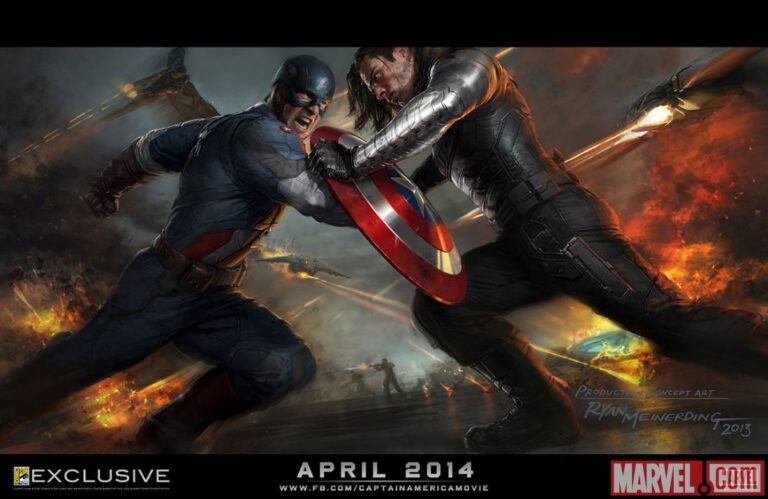
Well on their way to securing their position as top superhero film makers, Marvel have released the first trailer for sequel Captain America: The Winter Soldier. We get a glimpse of Chris Evans returning as the all american Steve Rogers debuting his new costume, Black Widow (Scarlett Johansson) is back and we are introduced to Falcon played by Anthony Mackie. Slap my wrist, I nearly forgot to mention the awesome that is Samuel L Jackson’s Fury, I love that guy.
Here it is for your enjoyment (I’ve also included the first official film poster further down):
Captain America: Winter Soldier is released in UK cinemas on the 26th of March 2014.
I noticed, amongst the Geek Pride writers, that no-one had baggsied reviewing The Walking Dead, even though the series was two episodes deep on Sunday. Seeing my opportunity, I jumped and took the responsibility. I have missed my weekly reviews of Game of Thrones, and relished the thought of doing more, even for TWD.
The lack of excitement for the series’ return seems to have been mirrored online: I have not seen anyone saying how excited they were for TWD to return on Twitter, nor on Facebook. There have been some comments during or after episodes but they have not been… glowing, shall we say. Like an actual rotting corpse in your living room, it seems like people are pushing the series away and out of their homes, then trying to forget it exists.
Sadly, the first episode doesn’t provide much reason not to drop the series. Main character Rick has relinquished his Ricktatorship and has now become a farmer, forcing Carl to accept this simpler life as well. A bunch of new characters are floating around – people who might as well all have been wearing redshirts and asking to go on away missions – and everyone’s favourite character Daryl has become something of a hero. There is a bunch of talk. Too much talk.
This is one of the main problems with The Walking Dead, for me. The character building and scene-setting is quite ham-fisted. It feels mechanical, as though the writers and actors know they need to do this stuff so they allow a machine to churn through the scenes. There is rarely much of interest in these scenes, perhaps because the characters themselves are not brilliant.
After some talk, there actually is an away mission for the redshirts, along with Daryl, Michonne and others. Rick also goes out on his own to check the animal traps for… animals. They each find different crumbling structures.
The first is a supermarket which the Army had quarantined, but which had since been overrun by Walkers. After clearing out the herd, the group head inside, searching for supplies. What they don’t know / didn’t think to check for / should have been able to hear by all rights is that the roof is covered in Walkers and exploded helicopter. When inside, we get a really ridiculous scene where one of the redshirts battles with smuggling some alcohol back to the Prison but decides not to, and somehow putting a bottle of wine down not only breaks the shelf it was on but brings the whole damn shelving unit down onto him. It was stupid.
Stupid is not good in TV shows. It just isn’t.
Meanwhile, Rick finds an Irish woman who begs for help. She says that she has someone with her – Eddy – and that they are not doing very well. Rick agrees to follow her back to her camp, where he will ask three questions to confirm whether she and Eddy will be allowed to join the Prison. Along the way, we get some interesting examination and comparison between the two characters: the woman who has struggled to cope with the new world and Rick, who is now struggling to cope after having done so for so long. It wasn’t stupid.
Back in the supermarket, a visually-interesting but ridiculous scene unfolded when the Walkers walk across the roof and fall through damp patches and onto the redshirts and interesting people. A fight breaks out which was actually alright, and then a redshirt who was going out with the blonde farmgirl died. I doubt anyone cared. The farmgirl certainly didn’t.
Rick, however, follows the immigrant to her camp, where is seems she has been living alone. She points to Eddy, who is interestingly obscured, never shown, and goes to check on him. Rick looks around before she attacks, using a machete, trying to kill him: she then admits that Eddy is a Walker, that she brought Rick back to feed him to her partner, that she needs him. The realisation of what she has become seems to break her, as she uses a knife Rick gave her to kill herself. We then hear the 3 questions anyway, because of reasons.
At the Prison, Carl has children his own age to annoy. He does so. Afterwards, he follows them to ‘Storytime’, which turns out to really be ‘Carol’s Badass Lessons for Kids’. One of his friends is excused with an illness. Carl is then noticed skulking around the library, where Carol asks him not to tell anyone about the secret lessons.
There’s a little fallout from the mission and then Carl’s friend, bleeding and coughing, dies in the shower. We all know what that means!
The next episode, there is some ultimately boring character ‘building’. This is eminently skippable, which is not a good thing for a TV show. Alongside it, though, are two interesting threads: someone we don’t see feeds live rats to the Walkers on the fences, who have been gradually becoming a problem, and Carl’s young friend rising from the grave and goes after the living. The zombie nearly eats the redshirt Tyreese is in love with but instead goes after Unnamed Redshirt #13, who for some reason makes no noise as he is eaten. This meal goes on all night, which means no-one hears the zombie chewing, swallowing or moaning which would follow such a meal.
Rick and Carl are out farming, talking about pigs who seem to be ill. They also discuss how the Walkers are grouping up again. Michonne leaves to continue to hunt The Governor. But then there are gunshots inside the prison, and people come screaming out about Walkers. Rick goes inside to deal with them. Carl, who has been banned from gun ownership like any tween should, helps to rescue Michonne when she inexplicably returns to the prison and fails to fight two Walkers.
Inside the prison, it’s chaos. Redshirts are now Walkers, and they’re attacking everyone. Rick, Daryl and the Important Characters kill all the Walkers, then make sure the redshirts who fell are properly dead. When this is done, they realise that Carl’s young friend died of a disease, one some of the Walkers have exhibited. There is an plague, one which would absolutely love a Prison environment.
If I may take an aside for a moment, a slow-building infection which eventually explodes in bloody gore is a great metaphor for TWD as a whole. The only cure, unlike for real people, is more gore. Metaphorically, that is: you couldn’t get much more actual gore.
The council of Important Characters who now run the prison decide that those potentially infected with this plague must be kept as separate from the others as possible. Those already exhibiting symptoms should be quarantined in case they turn suddenly. Tyreese’s lover and someone else are taken to Death Row, in the hope they’ll recover.
Meanwhile, outside, the Walkers have gathered in such great numbers that they are bending the chain fence which protects the prison. Rick, Darryl and the other Important Characters go to try and alleviate the pressure with stabbing, but stabbing proves ineffective with the pile of rat corpses driving the Walkers on. In a well-done scene, they struggle to keep the fence secure until Rick, against his wishes, takes charge of the situation.
During the first attack, Father of Two redshirt was bitten, leading Carol to have to kill him. For some reason, his two daughters wanted to be in there when this happened. The eldest actually wanted to do the killing, but couldn’t. Carol did it instead, and, having promised to look after the girls, she tries to explain the way of the world and why their Dad had to be killed. The eldest daughter, though, seems more concerned about one of the Walkers she named, who was killed during the routine Stabbings which the cast engage in.
Carol also has to deal with Carl, who knows her secret. It’s a tedious scene which only really serves to set up stuff for Rick. In fact, the problem seems to be at the moment that too much of the plot is Rick-centred, and he doesn’t want to do anything but farm. Basing a plot on someone who wants to do nothing does not make for good TV.
There is a little pay-off though when Rick enacts his plan to protect the prison: he gathers his pigs and slaughters them outside the fences, which pulls the Walkers away long enough to allow the fence to be shored up. It’s actually a great metaphor for a man having to shrug off his wishes and do what’s best for the group, which is something he resents doing. He literally has blood on his hands, is covered with it, and must sacrifice Farmer Rick to protect his people. It wasn’t worth, though, the half an hour of boredom which supported it.
This notion of Rick taking control back continues when Carl comes to him after the sacrifice. He is burning down the pig pen, and his farmer clothes, when Carl presents him the dilemma of Carol’s Secret Kickass School. Rick must make a decision then, must take charge again, and he barely hesitates to agree with Carol’s decision as he prepare to burn his Farmer self. To cement this new position, he gives Carl his gun back, reverting almost. It again works quite well.
Then, in a final scene, Tyreese takes some flowers to his redshirt lover… and finds her cell empty. There are bloody dragmarks out from her cell, and the cell besides hers. He follows them out into the open, where we see two corpses smouldering next to a petrol can much like the one Rick used to burn his pig pen…
This mystery of who the killer is keeps The Walking Dead on the right side of watchable, I feel. As does the increased intelligence in the use of visual metaphor: ants covering a dead beetle, Walkers pressing in on defences, a shower draining away as someone dies. There is some spark to the directing, if not the writing, which was not present before. Hopefully, Season 4 of The Walking Dead will be like Season 3 of Game of Thrones was: a poor episode to open but an improving series. And not like Season 2, where almost nothing happened.
According to Nintendo, 2013 is the Year of Luigi. It has been 30 years since he emerged into the public eye and captured the imaginations of children (and adults) everywhere with his shorter, fatter brother. The Mario Brothers have stood the test of time, only very slightly changing in appearance over the years (unlike Stevey the meth-hog, Sonic’s weird dystopian future self). It would seem to be a time of great celebration for all nintendoheads everywhere, and finally! Luigi’s getting the recognition his smaller brother has been garnering for almost three decades!
Well I’m not happy.
Far from it.
Pissed off, if I’m being candid.
The thing is this; it is my belief that this celebration is a shallow recompense, considering the buggerton of horrible things Nintendo have done to Luigi as a character over the past 30 years. It’s a cover up, a booby prize, a home edition board game instead of a brand new car.
Shit just got real.
Don’t believe me? Think this is the over-reaction of a mid twenties hairy manchild? Probably. Nonetheless, below is a timeline of Nintendo’s Luigi dickery, AKA The Five Stages Of Decline
Stage 1: The Anonymous (1983- 1987)
all together now : da da da do do da, do
After fighting off the advances of a giant gorilla for his girlfriend Pauline, Jumpman decided that the monotony was too much. So he fucked her off and took a life-affirming trip to the Mushroom Kingdom, where he changed his name to Mario and became acquanted with a lovely princess by the name of Peach. She (inevitably) becomes captured and Mario sets about taking up the old hero schtick once again. But this time he brings his brother. This first appearance of Luigi was rather uninspiring- purely a pallette-swapped version of Mario. No extra powers, no real identity, No one cared. Bad start, Nintendo. Things improved a little in 1986, in the Japan-only sequel to SMB, entitled The Lost Levels. Luigi gained a few defining fetaures and could also jump higher than his brother. Getting there…
Stage 2: LBB (little big brother) (1989- 1996)
“And don’t do drugs kids, unless they are spotted mushrooms or flowers that make everything seem on fire”
The 90’s is where things began to pick up for Wigi. He gained a face and height – more better defined than in The Lost Levels. In Mario Bros 2 (fun fact- that was never supposed to be a Mario game, hence the trippin’ ballz aspects ) our intrepid brother could jump higher, longer and throw turnips a little bit further than his rotund sibling. This stage also birthed the wildly successful cartoon series, in which Luigi really came into his own. He was charismatic, funny, and had a better relationship to Yoshi than Mario did. He called Mario his “little big brother” and would deride him on occasion. Luigi was slick amd charming, taking as much of the limelight as Mario. We also discovered that Luigi and Mario’s surname was Mario, meaning that they had cruel parents. The original trilogy of Mario games were also given the 90’s equivalent of a HD remake,in which Luigi’s characteristics became retroactively applied.
3: TES (The Eternal Shadow) (1997- 2001)
Prepare for armageddon. Wigi’s in town.
The end of the 90’s were a dark time for L.Mario esq. His exclusion from games became more frequent, being sidelined into racing franchises and other sports. He was excluded in Super Mario RPG and Super Mario 64 (Notice that they removed the “bros”?) This was the begining of sidelining the poor plumber for the next decade. While Mario lapped it up, Luigi was left alone, bereft of all personality, with just a host of catchphrases replacing it.
Towards the end of the 90’s Luigi was done with this shit. As one of the secret characters of Super Smash Bros he unleashed a rage upon the unlucky opponents of the smash arenas, the likes of which other characters couldn’t compete with. He was, hands down, unstoppable in the right hands. His anti-gravity fireballs and punshing smash move were a terrible force to be reckoned with. This was Luigi’s final roar; a warcry that symbolised The last ounce of fire and passion left as Nintendo continued with project Dick On Wigi (giggidy).
Giggidy indeed
Stage 4: SC (Scaredy Cat) (2002-2004)
Pictured: Luigi running from the ghosts of the good games he was in.
Things went from bad to worse. A new console generation meant brand new shiny games. Nintendo promised a new take on Luigi; he was going to get his own game, and in it HE would be saving Mario. Anticipation was at fever pitch after fans saw what the GameCube could achive graphcally, with the Zelda/Ganon and Mario 128 tech demos.
Then they gave us Luigi’s Mansion.
Before I begin, a disclaimer: I think Luigi’s Mansion was a great game; the mechanics of the game were clever, the style was awesome, and it had a sinister edge (like the whole hanging man thing – look it up). The problem I have is the characters used. This could have been a lucrative opportunity to introduce an entirely new character to the franchise but instead Nintendo decided in their infinite wisdom to turn a much loved Mario brother into a simpering coward, terrified of creatures you can defeat with a vacuum cleaner. Yeah. This game completely ironcast the semiotics of Luigi being the tag along, even in his own game. Case in point: there is a button solely dedicated to making Luigi call out Mario’s name in a whimpery high voice. Add this to his complete lack of appearance in Super Mario Sunshine DESPITE everyone else holidaying to Delfino island (what is he, the maid?) and one can only deduce that Wigi must’ve done something terrible for Nintendo to treat him this way. Sunshine would have been the actual tits if Luigi had come bowling in at the last boss, completely ruining Bowser like the scaly bitch he is, a la’ Falco at the end of Starfox Adventures (it’s a good game, fight me). Even his second appearance in Smash bros melee was lackluster in comparison to his previous outing . But hey, it can’t get worse, right?
Right?
Stage 5: BFI (Bumbling Fucking Idiot) (2006-2013)
What have they done to you?!
Now we lovingly arrive at the stage in which Nintendo drop more balls over this character than quadraplegic juggler. This stage has seen the worst abuse of Luigi’s character. Gone is the slick taller brother, replaced with a damn fool. Mario Party portrays him as a stumbling idiot, dropping coins all over the wazoo, his SSBB iteration plays like utter clown shoes and then there’s Mario Galaxy.
Feminists, please stop burning your bras for one second and re-read the next statement before you throw pants at my house. The worst/weakest thing you can be in the Mario universe is a Princess. This is because you are constantly getting captured, and having to be rescued, causing problems for the strong characters that don’t need to be saved on the constant. In Mario Galaxy, You play as Mario searching for stars. Luigi offers him help, being the helpful sort of chap. But this new Luigi ends up GETTING. CAPTURED. EVERY. TIME. this means that in game you are actually hindered by your brother’s presence. It’s like they are saying “Jeez, wouldn’t it be better if HE wasn’t around, eh?”
He has been stripped of his prowess in The New Super Mario Brothers WII, only being able to jump as high or far as Mario. So at best, AT.BEST. Luigi has been reverted back to stage 1. Just a palette swapped Mario. We can take stock at least, in the fact that they won’t make another Luigi’s Mansion though…
I don’t know why Nintendo have done this , I don’t know if people like Luigi being more of a clumsy bafoon than Wario, and there are a million other factors I probably haven’t touched upon, but as someone who fell in love with the Brothers at a very young age (3) It is a travesty that affects me every time I see poor Wigi’s face.
Luigi year? Every year is Luigi year to me.
Damn straight.
Do you feel this way about any of your favourite characters? drop a comment below and let’s get discussy!
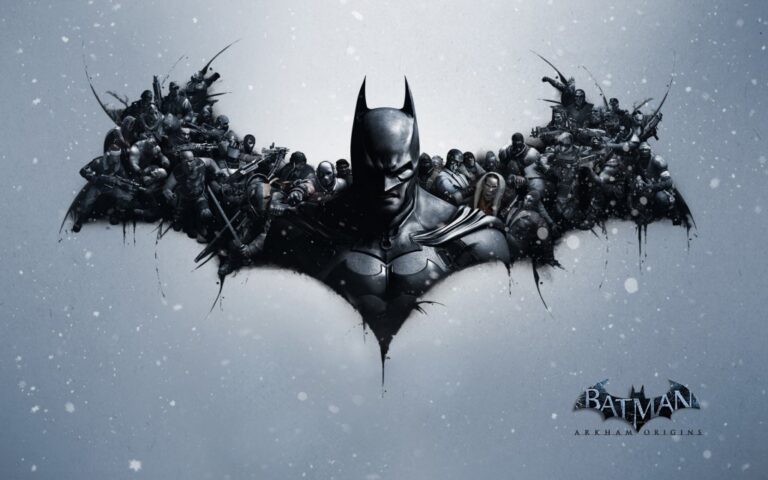
The Arkham series of games are some of my favourite out there and, on the 25th of October, they’re about to add a brand new stallion to the stable. Arkham Origins is possibly my most anticipated game of the year and all signs so far indicate it being insanely awesome. As both a videogame fan and a borderline Batman obsessive, the Arkham franchise is one that has firmly ensconced itself as a favourite of mine. As if Arkham Asylum wasn’t great enough, Rocksteady Studios then escalated things with Arkham City, a game so epic and full of brilliance that it’s enough to make a grown man cry. And now comes Origins.
Guess who?
Development has moved to Warner Bros. Montreal for Arkham Origins while Rocksteady works on a suspected sequel to Arkham City. The game will also be written by a new team and feature different voice talents. The groundwork is laid for disaster. New writing team, new developers, new voice talent as opposed to the much loved classics and a story that wildly diverts from the previous games. Why am I not hating the very thought of Arkham Origins?
The answers are simple: the previous Arkham games have both been so brilliant, and everything that I’ve seen so far of the upcoming Arkham Origins has impressed. These me to believe the franchise won’t suddenly fall apart on this one game. Especially as, while it may not be the same talent, there is still a lot of awesome being brought to this game.
Namely in the form of one Troy Baker. Troy Baker is known for such roles as Joel in The Last Of Us and Booker DeWitt in Bioshock Infinite, and is a truly phenomenal voice actor. He’s going to bloody have to be as well as, following Mark Hamill’s retirement from the role, Troy is stepping into the shoes of the Joker. The infamous villain has been voiced by Hamill for year. The erstwhile Luke Skywalker is, in many ways, the definitive voice of the Joker. No pressure then.
The same can be said on the more heroic side of things as Roger Craig Smith is stepping up to take on the role previously played by the fantastic Kevin Conroy. No stranger to voice acting, he’s already played Chris Redfield in the Resident Evil series and Ezio in the Assassin’s Creed games. Nevertheless, he is going to be under a lot of scrutiny for this performance.
Troy and previous role, the insanely awesome Joel in The Last Of Us
The writing team may be new but they’ve come up with a truly epic proposition. Early years Batman, pre-supervillain encounters, has a $50 million bounty put on him by the crime lord Black Mask. 8 of the top assassins in the DC universe turn up to collect and, along the way to discovering what’s going on and surviving the assassins, Batman will encounter classic villains, such as the Joker. So far we know that Deadshot, Deathstroke, a revamped Copperhead, Firefly and Bane are on the assassins roster.
That means there are still 3 unaccounted for. Let the speculation begin! A more recent trailer, which provided more Black Mask footage, has shown off a rather distinct female assassin. It would appear that the one and only Lady Shiva is coming to Gotham. This is why I love the Arkham franchise! Every time you think the games can’t improve, the developers throw in another cool twist. For those who don’t know, Shiva is the ultimate assassin out there and has gone up against various members of DC’s hero community. In the, what can only be described as immense, Knightfall storyline she even retrained Batman.
Batman has always been my favourite hero but it’s his universe that really makes him so interesting. And while Asylum gave us the source of the insanity and City touched on the possibilities of Gotham, Origins looks set to firmly expand and establish the Batman universe. It’s hugely ambitious but, if carried off to the extent it looks like it will be, it will be one of the most awesome games out there. The Arkham games are masterclasses in craft, and Origins looks set to be no exception. It’s bold move to expand on the previous Arkham games while simultaneously bringing in the groundwork previously implied is set to either make or break the Arkham universe in a big way.
*Insert Joker Laugh here*
My lack of concern really comes down to is the very simple fact that Batman is just so damn cool. Add in that the Arkham games have such a strong pedigree, despite there only currently being 2 others, and it’s hard not to feel positive about Origins. And when you release a trailer that features Batman going toe-to-toe with Deathstroke while Deadshot snipes at the pair of them only to then reveal Black Mask is behind it all. Well, consider me hyped. Needless to say, my Batballs are blue thinking about the 25th.
Simon Bestwick is a modern horror author residing in the North of England. Hailed as one of “the most important writers of contemporary British horror” by Ramsey Campbell, his works include; Tide of Souls, The Faceless, A Hazy Shade Of Winter, Pictures Of The Dark, Let’s Drink To The Dead, Angels of the Silences, short stories, and more recently, the Condemned and Thin Men with Yellow Faces. He also writes for Thisishorror and radio.
It would be fair to say his work is imaginative, fun and unnerving, working that golden zone between pulp and genuine insight into multifaceted humane characters. His stories are usually set in my homeland – the North of England. His stories are like our cities; full of satanic mills and ancient shifting moors; packed with decay, death, life and ghastly histories.
Plus he’s a nice guy, with only a few hints of possession by non-human entities.
Our hero.
As a published horror author, could you tell us a bit about what draws you to horror as your preferred arena?
I loved that kind of thing as a boy – I was part of the generation that was terrified by the monsters in Tom Baker-era Doctor Who, and I read anything remotely horror-ish, from children’s books to more grown-up stuff. I devoured reams of the pulpy, shlocky horror novels that you got in the 70s and 80s, but I was also lucky enough to encounter writers like Edgar Allan Poe, Algernon Blackwood, and Ambrose Bierce at an early age, not to mention Ray Bradbury, Richard Matheson and Robert Bloch. In my late teens and early twenties I went through a very precious ‘literary’ phase where I threw out all my genre stuff, but later on I realised that it was the kind of fiction that suited me down to the bones – at least if you have a broad definition of the genre, which I do. To me, Kafka’s The Trial or Metamorphosis are horror, as are films like Threads or Eraserhead. And the great Greek tragedies – Oedipus Rex, Antigone, The Bacchae – come under that definition to me as well.
As a writer, I find that horror gives me a lot of freedom – I can rope in elements of crime, science fiction, fantasy or anything else I please at will. I think each genre gives you a different set of tools, so when you can pick and choose in that way, you can do a lot more,
“The stories in this one tend to cover a wider range of styles and ideas, edging into science fiction and crime. From my first short story, ‘Once’ (1997) through to ‘The Proving Ground’ (2007,) it’s a retrospective collection of my first ten years as a writer. “
What’s the story of your first work being published?
I graduated from college in 1996 and went straight into a dead-end office job. Up until then, I’d always said I was a writer, but was writing very little – just as and when the muse struck, which wasn’t that often. Once I was working, though, I felt I had to write in earnest now, if I actually wanted to call myself a writer. The last half of 1996 was a pretty miserable time – nothing I tried seemed to gel. And then I rediscovered horror, first of all through through Nicholas Royle’s brilliant Darklands anthologies (which I highly recommend to anyone who’s not read them – they’re an excellent showcase of what good, intelligent horror fiction can be.) That didn’t change things overnight, but it pointed me in the right direction. Finally, on Boxing Day 1996, I wrote my first real short story – ‘Once’, which appears in my collection Pictures of the Dark. After that, I wrote a short story every week.
Meanwhile, I’d written to a couple of the authors from the Darklands anthologies for advice on getting into print. One of them, Simon Clark,made me aware of the small press magazines which at that time were very widespread in Britain. And as luck would have it, there was a new one called Unreal Dreams whose editor was based in Wythenshawe, very near to where I was living at the time. I sent him my first four short stories, and he accepted three of them within the week.
What do you face in real life that never fails to give you the creeps? We both live in Salford, so I’m wondering if a healthy fear of chavs is in there…
Depends what you mean by chavs, of course – but if you mean vicious, wilfully pig-ignorant, abusive violent scum I’m with you there. Though what I fear is often also what I hate and rage at – e.g. the Conservative Party. I’m fairly certain that most of us would struggle to concoct a monster as evil, cruel and callous as Iain Duncan Smith.
As a fiction writer (and if I’m not out of line for mentioning it, atheist liberal), do you think your ideology to some extent creeps into your work? Do you feel that there’s any controversial “messages” to any of your works?
Yes and no. That is, I try not to shoe-horn messages or polemics into what I write, but if the way I see the world didn’t inform or shape the fictional worlds of my stories in some way then I think there’d be something very wrong! My values are humanistic and, broadly speaking, socialist; I think the biggest change that’s happened over the years is trying to paint the world less in terms of goodies and baddies and in slightly more nuanced terms. There are people in my stories and novels who are unutterable bastards, of course, but they’re still human and in many cases will believe they’re doing the right thing. Which is partly why the ghost of Gideon Dace appears to one of the characters in The Faceless to guide them around Ash Fell – I wanted him to put his side of the story across, even though the things he’s done are unconscionable. Although, that said, my work does have its share of human monsters – because, sadly, they exist.
Proof that [Bestwick] is one of the best writers- of any genre- currently plying their trade…a perfect combination of style and substance. The book is beautifully written, yes. It has a great plot, yes. Most importantly though, it’s scary as hell.’ -Dark Musings.
Related to the last question, is there anything you really do not want to write about and why? E.g. a sympathetic paedophile or rapist that the narrative makes you root for and would get away with their crimes?
I’m not sure I could pull that one off, although now that feels like a challenge! I think it’s possible to evoke sympathy for a character no matter what they’ve done, because – as I said above – they’re still human, but unless there’s something badly wrong with you you’d sympathise with the rapist or paedophile in spite of, not because of, their actions. And first and foremost, your sympathy should be with the victims of such assaults. Horror, though, is the genre most concerned with making monstrous figures sympathetic. At the moment, I can’t imagine any subject matter being off limits in and of itself.
Do you subscribe to the notepad method for little ideas, or are you more a Stephen King sort who leaves ideas to percolate so good ones will stick around?
A little of both, to be honest. I always try to have a notepad with me, but there are times when I hardly use it and just sit around mulling silently. I do tend to use it a lot when I’m working on something, especially a longer piece, because ideas will usually start coming thick and fast once I’m underway – like a pebble starting off an avalanche.
Describe to us your creative process – do you start with a character, a question, a monster, a setting, a feel? What moulds your creative vision in the early stages of coming up with a new novel or short story? What’s your opinion on the most effective out of first person, third person, present or past tense?
It can start off with any of those things. Sometimes an idea for a character or a setting will float around waiting for a story to include it. But there’ll be something, and eventually I’ll make some tentative notes. As I said above, the very act of writing often brings up some new ideas, so I’ll get them down too. At first, it’s a person instinctive process, basically feeling my way. Eventually, something starts to take shape. I usually outline before writing anything – even short stories – these days. I try to think about what I’m working on in terms of scenes, like a film script or a play. Once I’ve got that, I’m good to go. After that, I have a very workmanlike approach, which is to write 2500 words a day until it’s finished. Now and again I’ll have to stop and backtrack – if the words aren’t coming easily, it’s usually because I’ve taken a wrong turn somewhere, so it’s a matter of finding that point and fixing it – and I’ll make notes about stuff that needs changing or developing in the rewrite. The subsequent drafts involve trimming the word-count and fixing the various problems. If possible, I’ll read through the work aloud with pen in hand – that’s a very good wayof catching what works or doesn’t.
As for the tense and which person you use – there is no right answer. It depends entirely on the individual story and what it needs in order to work. All rules are ultimately ad hoc and provisional, other than the following: a) Write a set amount every day until you’ve finished; b) find out what’s wrong with the piece; and c) fix it.
‘Funny, beautifully written and poignant, Angels of the Silences is a fantastic chapbook that demonstrates Bestwick’s skill as a writer.’ -Terror Tree
Related to the above, do you think it’s easier or harder to write a horror story from an omniscient narrator POV and keep it scary?
Harder, I suspect. Subjectivity is a very powerful factor in the best horror fiction. Not least because so much of it revolves around the idea that we don’t know as much as we think. Encountering something that’s so far outside what we know, the first impulse is to rationalise it, fit it into the view of the world we already have. The shock of recognising that reality doesn’t make sense in the terms of reference you’ve lived by is recurring in so much horror, from Machen to Lovecraft – it’s there in a number of M.R. James’ stories too, most notably ‘Oh Whistle And I’ll Come To You, My Lad.’ And of course if you want to build suspense it’s much easier to do that
When it comes to “keep writing” clichés, do you think “write what you know” or “write what you want to read” resonate more, emotionally?
The second one, definitely. As with acting, you’ll ultimately mine your own experiences, memories and emotions for material as you work anyway. If I confined myself to writing what I know, I’d never be able to tell the stories I want to tell.
What’s your favourite work of your own to date?
That’s a really difficult one – I’m rubbish at picking favourites. And to be honest, I always think my best work is the one I haven’t done yet. Out of my published novels, I’d probably say The Faceless; I worked long and hard over that, and I hope I got it almost completely right. When it comes to short stories it’s much more of a struggle, but two recent stories that I’m very proud of and think stand among my best stuff are ‘Lex Draconis’, which is something a bit different for me, a sort of fantasy tale written for an anthology called Tales of the Nun and Dragon, and ‘The Children of Moloch’, which was written for the Gray Frair Press anthology Death Rattles and is quite definitely horror!
‘A Wicker Man for the urban underclass, Thin Men With Yellow Faces contains some jaw-dropping moments (pun intended.) I defy you to find any monsters from the genre in recent years as awful and as compelling as the Carnificiers. Fast-paced, powerful and creepy as hell.’ -Conrad Williams, author of One and Loss Of Separation.
What do you have in the pipeline?
I’ve completed two new novels since The Faceless, both quite different from what I’ve done before- Hell’s Ditch, which is a mix of post-nuclear dystopian SF, thriller and Lovecraftian horror, and Riders on the Storm, which is more SF/Fantasy, with a bit of historical fiction thrown into the mix. It has airships in it too, but I don’t think it’s steampunk. There’s also a horror novel called The Song Of The Sibyl – which reads like a modern-day version of The Seventh Seal, transposed to Northern England and directed by David Lynch – at draft stage, a half-finished crime novel called Reaper, and plans for a new horror novel. Now all I need is a publisher…
Which of your novels would you least like to wake up in and why?
Tide of Souls, because the world of that story is the most fucked and hopeless of the lot.
Kickstarter is now the major way to raise funding for new projects, particularly for creatives. Geek Pride has a history of raising the profile of Kickstarter projects, which we are doing today with the graphic novel Journey to the Middle Kingdom.
So, Jonathan, tell us a little about Journey to the Middle Kingdom.
Journey to the Middle Kingdom is an action adventure graphic novel where three American high schoolers are selected by the Jade Emperor, King of Chinese heaven, to go back through time to save Chinese history. All through the Middle Kingdom there are heroes of Chinese legend and fantasy who are missing, and without them, world history is in peril. To help the children defend themselves, the Jade Emperor sends a phoenix as their guide, and also three magical calligraphy brushes. With the brushes, whenever you write a Chinese character in the air, whatever you write, becomes real.
I’m raising funds on Kickstarter for the first in what I hope to be a series of novels. The main characters will try to find out what mysterious force is trying to undo Chinese history and then return home. In each book, they’ll take part in one classic Chinese fairy tale after another. The first legend they take part in is “Legend of the White Snake Maiden.” The original story is that a white snake maiden, a demon, falls in love with a mortal man. Their love is forbidden by the laws of nature, but they fall in love regardless. A Buddhist priest, Fa Hai, wants to rid the world of all demons and targets the white snake maiden. Fa Hai is successful in defeating her and traps her in a pagoda for all eternity. That is, until the white snake maiden’s friend, the green snake maiden, comes to her rescue and defeats Fa Hai. That’s the classic tale, but in my universe, the green snake maiden is nowhere to be found. That’s where the three high schoolers come in. I know many Americans aren’t very familiar with Chinese stories, but the main characters aren’t either, so that’ll be the fun of the series.
Tell us about yourself as a writer. Is this your first graphic novel?
This will be my first graphic novel yes. I’ve self published five books, four of which are about the Chinese strategy game of “Go” and the other is about my time as an ESL teacher in South Korea. I’m really beyond excited to do a graphic novel, not just because it’s a new medium of expression, but also because Journey to the Middle Kingdom is going to have really great illustrations to go along with the excitement of the story.
What first made you interested in Japanese and Chinese cultures?
I started studying Japanese in high school. I liked the challenge of learning the writing system, and I wanted to be able to read manga and understand anime. When I got to college, I took both Japanese and Chinese because the opportunity was finally available. I’ve always been big into foreign languages. I studied seven while I was at college. In order to learn the languages better, I became interested in fairy tales and legends, and as time went on, I just read a ton of them. I even translated a lot of manga and anime from Chinese and Japanese into English, which was a lot of fun.
Do you watch anime or read manga? If so, what are your favourite series?
Both. My two favorite animes are Slayers Next (yeah, I’m old school) and 12 Kingdoms. 12 Kingdoms is a beautifully written masterpiece of human psychology and Slayers Next is pretty and I like any series with a thought out magic system. My favorite manga is Death Note. I actually don’t like the anime for Death Note because it doesn’t do enough justice to my favorite character in the series, Mello. I also have a soft spot in my heart for Yugioh and Soul Eater, because they were the first anime’s I ever got the chance to translate.
Which Western comics have influenced the writing of Journey to the Middle Kingdom?
I’d have to say I pull a little of everything in. I was a Spiderman/X-Men. I watched Batman the animated series like everyone else and I was glued to the set Saturday morning when the X-Men theme came on. I read DC and Marvel comics and when I was older I got into all kinds of manga, good and bad. I wanted to have my own unique style, so I tried to put a lot of thought into the characters and the setting so that it would come out with something I could stamp my name on.
How did you meet Gabriel Santiago? And what has he brought to the project?
We met online through forums. He is nothing short of amazing. We’re totally in sync on many aspects of the characters, and he has this fusion style of old Chinese art with a modern flair that leaps off the page. It’s interesting to teach Gabriel about Chinese culture and these characters who he had never known before, and see how he interprets them.
How have you found fundraising through Kickstarter?
It’s a third job (smile). I’ve done a lot of work to get the word out. I’m not well known as a graphic novel writer so I knew going in it would take a lot of work to get my message out to an audience. Kickstarter is in and of itself a platform, but you have to take your work and get out there and let it be known to people. Kickstarter is a really an excellent platform for artists of all kinds to get their message out there.
Do you consider yourself a geek? If so, what are you most geeky about?
Definitely a geek. Guilty as charged. I’m a science, math, anime, manga, RPG, and language geek all rolled into one.
Where can people go to find out more about Journey to the Middle Kingdom?
You can visit my Kickstarter page at http://kck.st/18MDa35 or just mosey on over to www.journeytothemiddlekingdom.com. I’ve got sample pages, character drawings, artwork, all sorts of stuff for people to see what I’ve got in mind.
We use cookies on our website to give you the most relevant experience by remembering your preferences and repeat visits. By clicking “Accept All”, you consent to the use of ALL the cookies. However, you may visit "Cookie Settings" to provide a controlled consent.
This website uses cookies to improve your experience while you navigate through the website. Out of these, the cookies that are categorized as necessary are stored on your browser as they are essential for the working of basic functionalities of the website. We also use third-party cookies that help us analyze and understand how you use this website. These cookies will be stored in your browser only with your consent. You also have the option to opt-out of these cookies. But opting out of some of these cookies may affect your browsing experience.
Necessary cookies are absolutely essential for the website to function properly. These cookies ensure basic functionalities and security features of the website, anonymously.
Cookie
Duration
Description
cookielawinfo-checkbox-analytics
11 months
This cookie is set by GDPR Cookie Consent plugin. The cookie is used to store the user consent for the cookies in the category "Analytics".
cookielawinfo-checkbox-functional
11 months
The cookie is set by GDPR cookie consent to record the user consent for the cookies in the category "Functional".
cookielawinfo-checkbox-necessary
11 months
This cookie is set by GDPR Cookie Consent plugin. The cookies is used to store the user consent for the cookies in the category "Necessary".
cookielawinfo-checkbox-others
11 months
This cookie is set by GDPR Cookie Consent plugin. The cookie is used to store the user consent for the cookies in the category "Other.
cookielawinfo-checkbox-performance
11 months
This cookie is set by GDPR Cookie Consent plugin. The cookie is used to store the user consent for the cookies in the category "Performance".
viewed_cookie_policy
11 months
The cookie is set by the GDPR Cookie Consent plugin and is used to store whether or not user has consented to the use of cookies. It does not store any personal data.
Functional cookies help to perform certain functionalities like sharing the content of the website on social media platforms, collect feedbacks, and other third-party features.
Performance cookies are used to understand and analyze the key performance indexes of the website which helps in delivering a better user experience for the visitors.
Analytical cookies are used to understand how visitors interact with the website. These cookies help provide information on metrics the number of visitors, bounce rate, traffic source, etc.
Advertisement cookies are used to provide visitors with relevant ads and marketing campaigns. These cookies track visitors across websites and collect information to provide customized ads.


 PP:AC-DD (which seems like a pharmaceutical sorting code now that I’ve typed it out) opens with the murder of a police detective killed in an explosion at the courthouse, a very dramatic opening. We find that, after the events of Apollo Justice: Ace Attorney, Phoenix has sought, and been allowed to regain, his status as an Attorney. This is immediately called into use when an innocent young friend of new Attorney Athena Cykes is accused of the bombing.
 The new visuals are excellent. The character models are now 3D, and some of the backdrops are as well, which really makes the game jump from the screen. It also provides the opportunity for visual gags. The 3D also allows multiple camera angles, which lets us feel more like we’re actually in the court with Phoenix et al. In addition, many of the cut scenes are animated, which allows us to hear how ridiculously badass the Judge’s voice is. Seriously, it’s over the top for the character.
 Another poor aspect of the writing is the decision to hang three of the Turnabouts on one connected case. To do this, the case needs to be really strong and interesting. But this connected case is pretty shallow and a bit dull. It doesn’t require much that hasn’t been done before in that game, let alone previous ones.




 Carol also has to deal with Carl, who knows her secret. It’s a tedious scene which only really serves to set up stuff for Rick. In fact, the problem seems to be at the moment that too much of the plot is Rick-centred, and he doesn’t want to do anything but farm. Basing a plot on someone who wants to do nothing does not make for good TV.