Home Blog Page 19

Lunch-A-Palooza Review

Reviewed by Chris Pattison 

Over the past few months, there have been a lot of easy to pick up, hard to master games that have either been released or come to public notice due to the Lockdown’s we have all been experiencing recently. One of these such games, looking to join the likes of Among Us, and Fall Guys in the annals of 2020 gaming history is called Lunch-A-Palooza; here’s what I thought.

Starting off quite brightly the designs and backgrounds have a great look to them, with a very vibrant colour scheme and a cartoony feel that lets you know straight away this isn’t a serious game you’ll be playing.

The whole game is set on different food characters willing to battle in different culinary settings, all for our pleasure. You have characters such as the Corn on the Cob, the Jelly or the Burger, all of them topped off with facial features to give them that feel of an actual character rather than an inanimate object, who will then run around landscapes based on things such as your Kitchen worktop or a picnic table trying to force their opponents to fall off.

Split into 4 separate types of play, with the standard deathmatch, a free for all, king of the hill and one where every time you die you resurrect as a different character,  the variety of modes is clearly there, and with a bit of tweaking would really help with the longevity of the game.

The multiplayer is where the real fun appears to be, however there is no online matchmaking, just local play, which whilst good requires everyone to be in the same room, with their consoles, and in all honesty, this reviewer only got to experience that a couple of times before Lockdown again leaving the bulk of my play to be single-player, and whilst the games AI puts up a good fight, it’s no match for getting your mates together and launching them off the table.

The gameplay itself is where I feel a game can stand up or be let down, and unfortunately, in the case of Lunch-A-Palooza, it is fun, to a point but is let down somewhat.

When playing, each character has their own attacks that can be accessed by either a quick tap of a button, or holding down the button for something a bit stronger. There’s also regular power-ups dropped around the gameplay area which can bulk up your characters attacks immensely. This isn’t a traditional fighter where you have to drain your opponents of energy to beat them, all you have to do is knock them off the table to earn points, and once the timer goes to zero, whomever has the most points wins.

Sadly, however this all feels more a game of luck rather than skill, although each character has their own move-sets specially tailored to them, you never really get a feel of if you’re playing well or not, and each match ends up being a bit of a button-bash hoping you’ll be able to take out your edible enemies whilst never being sure if that’s a possibility or not. The gameplay itself is not helped in the slightest by the way the cameras show the action, many a time you’ll be hopping around a table and not realise that you can’t move because you’re stuck behind a piece of cutlery that you just don’t see, and with 3 other characters hopping around what can only be described as a confined space, its all too often that you can find yourself being knocked off the table without even knowing what happened.

In a bid to increase playability and what seems to be the standard fare in modern day video games, is a variety of different unlocks you can obtain through playing, from different characters to alternative costumes, though they seem to be held behind a heavy grind that would take a long time to earn. As much as I understand why they are there, sadly the will to get these just wasn’t there for me.

Overall the game has a good idea behind it, with some promising aspects but it just doesn’t play out the way I think the developers were hoping, and just leaves you wanting a bit more variety. Granted games like Among us are pretty simple with onl 3 maps but they are customisable without the grind and don’t seem to fall foul of the issues I mentioned earlier within this game.  Unfortunately, it just doesn’t feel fun, and at times is more of a chore than anything else.
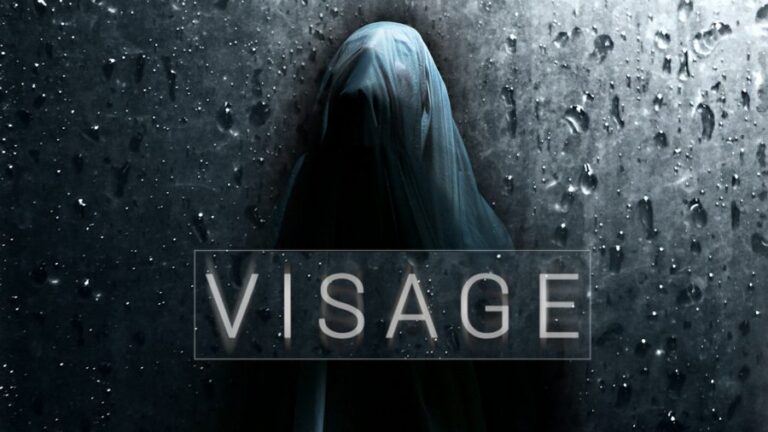
VISAGE. Review

Played On: XBOX ONE

Wow, this game has been a long time coming. Having been 2 years ago when I saw some real gameplay on this title and about 4 years since the Kickstarter campaign came live. Inspired by the brilliant genre-defining P.T. (a game originally meant to be a teaser for Silent Hill) we have VISAGE but does this horror title have what it takes to stand up and become a hit?

WHAT IT IS AND WHAT WORKS

The game begins with a short cutscene, which I won’t spoil here, but the first few minutes are hard to watch. You start off in a house, as a character called Dwayne, and straight from the beginning, you feel the atmosphere of P.T. by exploring, interacting with items, and experience paranormal events; tense is an understatement!

You need to literally keep a grip on your character’s sanity, as time goes on, the house begins to come to life, the lights flicker, strange noises occur and I admittedly jumped when I saw a shadow behind a curtain. I have to admit, just seeing the house in this weird light is enough to creep you out. I was perpetually on edge and throughout my first half-hour, I felt beyond tense just waiting for something to come get me.

The game creatively changes things around when you are exploring, even using a camera to find clues and help ward off spirits (at least it worked for me). It is exhilarating, heart-pounding good and every step I took was made with caution and care. Not since Alien: Isolation have I felt so much stress and apprehension with every movement I made. I love the horror elements and the fact I had to keep the light on in my bedroom as I played further into the game shows how creepy visage can get. I don’t want to spoil it, but the game really does go to some unexpected places.

WHAT DIDN’T WORK

Is there an issue with this game? Not really. The only minor quibbles I would have are more like nit-picking. The length of the game isn’t too long, it is enough to take in the environment around you though. The slow burn makes you wonder how much there is to the game, but the initial calm quickly ramps up.

Graphically, I accept the limitations on what is a more limited budget compared to an entry in the Resident Evil or Silent Hill series. There are a few cut corners in what you see and interact with, but nothing that takes you away from the experience.

THE BOTTOM LINE

I really enjoy Visage and being an indie title really shows the creative juices are flowing. The game looks spectacular and in ways makes many other horror titles inferior. The atmosphere genuinely freaked me out and I have not felt such dread playing a game in years, but I loved it. It may not be perfect, but that only adds to the appeal of this gem. I will definitely be playing this again soon.

FUSER. Review

Reviewed on: Nintendo Switch

Also Available on: PS4, XBOX ONE, PC

I have recently played the latest rhythm-based video game from Harmonix. The Boston developers have had huge success in the past with Guitar Hero, Rock Band and the Dance Central series. But now, looking for a new challenge, the team bring us FUSER. Breaking down songs to four distinct parts, this allows the player to mix tunes to create countless playlists and become the superstar DJ of their dreams.

WHAT HAPPENS AND WHAT WORKS WELL

First off, the selection of tunes is incredible. Fancy a classic track from A-Ha or Dolly Parton? Done. Want The Weeknd or Ava Max for a more current mix? Go for it. The base game does come with over 100 songs. You can also get an additional number of tunes if you opt for the VIP edition (which I did). Not only do the mixes stay interesting throughout, the changing of tempo and adding of additional sounds help you pull off some truly fantastic sets.

You will notice that all the songs in this game are fully licenced and original recordings. A deal was made to help with the potential online sharing of these mixes and should stop YouTube from flagging the videos for copyright. You don’t know how much I really wanted Rick Astley in a video game, and now I can and share to the world my creations with him.

When you start up the game, you can get into the campaign immediately with your customised character. Slowly, you are introduced to the FUSER world. You begin with practicing your timings and blending the songs in your initially limited list. As the setlist grows, so does your list of challenges. You have to keep the crowd happy and learn to evolve your work to keep it exciting. Once you have risen in the career mode, why not have a go on freestyle. Freestyle may not have any real awards, but what is to stop you from perfecting your skills?

Then there is the capture mode. What’s better than making yourself a super Disc Jockey? Sharing it with your friends. Let those you know see what you can do and create a piece that others will love. A snapshot of your efforts for all to see is nice, but I think this does begin to show a problem with this idea.

WHAT DIDN’T WORK

There are a few factors that really mean this game is held back from greatness. First off, the capture mode barely gives you one minute of time to create a mix. This restricted capture mode means your true efforts remain only in the moment as you play at home. Surely recording a 10-15 minute set would have been much better?

Also, this could just be a Switch thing, but the framerate does drop on a few occasions. This takes you out of the moment and can mean a perfect mix results in a miss. Also, a change to the settings for the handheld players would have helped with the more intricate drops. It is hard to see the colour markers in the timeline as they are already quite small when played on the big screen.

If I had one other negative, it would be the progression needed to earn the rest of your playlist. It takes some time to unlock all the songs, which means the tracks you want may not appear in your selection for a long time. But on the other hand, this does give you a reason to continue through the campaign and the challenges.

THE BOTTOM LINE

FUSER is a lot of fun. There are a few issues, many I think are a common theme when the Switch is given a game that is made for more powerful machines. The selection of songs is fantastic and the feeling of creating a setlist for a crowd is exhilarating. With 2020 shutting down many shows, playing your own festival definitely livened up my spirits. If the capture setting could be extended, this game would be really well recommended. The idea of playing a game like this is to show off, please let us do that Harmonix. Fix the capture system and the bugs, and this could be an internet sensation.

All change for World of Darkness

World of Darkness, the horror roleplaying franchise that includes Vampire: The Masquerade (reviewed here) and Werewolf: The Apocalypse, has announced that Renegade Game Studios is now the publishing partner for its tabletop roleplaying games (TTRPG).

“Renegade and World of Darkness worked closely together on Vampire: The Masquerade – Rivals and the team proved their passion for our brands and alignment with our values in that collaboration,” said Sean Greaney, brand manager for World of Darkness at Paradox Interactive. “Our joint goal is to ensure that there will be no disruption of service for fans looking to get their hands-on Vampire: The Masquerade 5th Edition books.”

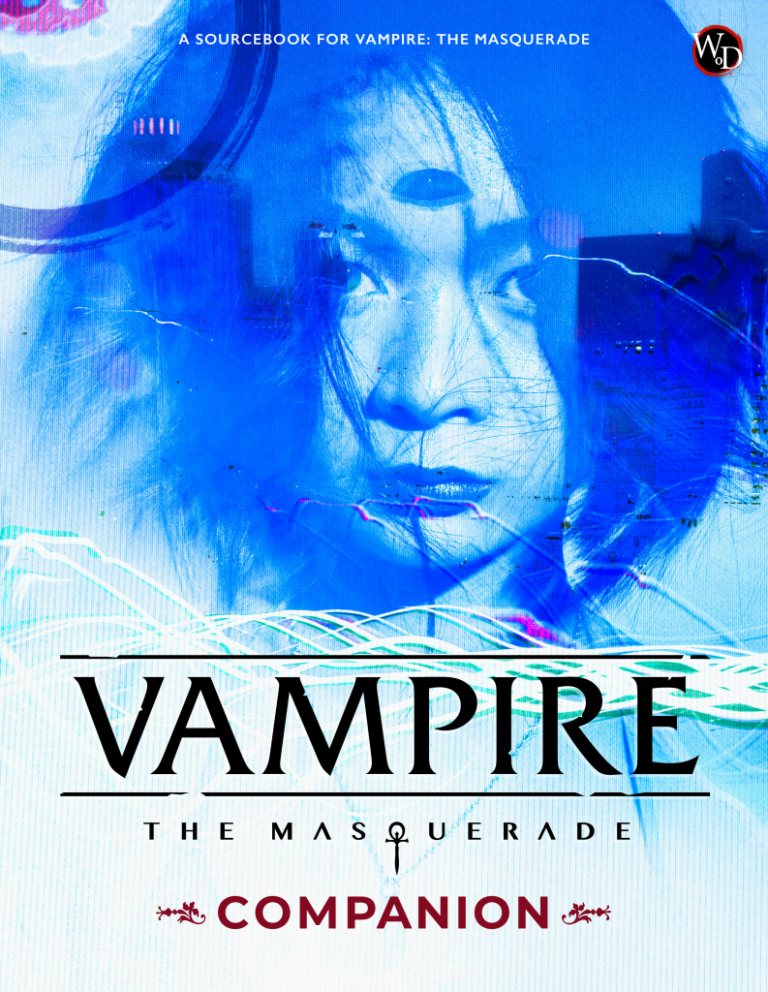
As part of this, World of Darkness has also revealed it is bringing development of its story universes in-house.  Kicking off this change is the Vampire: The Masquerade Companion, a free digital supplement that will be available next month.

Vampire: The Masquerade Companion sees the return of classic vampire clans and gives Storytellers more tools to enhance their narratives. To download, fans will need to visit the World of Darkness website (https://worldofdarkness.com) and log in using a Paradox account.

Key features for the Vampire: The Masquerade Companion include:
– Three vampire clans: Tzimisce, Ravnos, Salubri
– Discipline powers for each of the new clans
– Rules for playing ghouls and mortals
– Details on each clan’s view on vampire coteries
– Additional Merits for player characters
– Updates to Vampire: The Masquerade 5th Edition core rulebook

World of Darkness is taking over development of its story universes, including Vampire: The Masquerade and Werewolf: The Apocalypse. Led by Justin Achilli, they will create the foundational material – including core RPG books – for all stories set within the World of Darkness, including video games, comics, and other forms of media.

Renegade Game Studios will broaden the offering with additional TTRPG products. Additionally, all World of Darkness books will now include sensitivity reviews as part of the development process to ensure the text remains respectful.

“Bringing IP development in-house is one of the many reasons why the World of Darkness team hired me. I’ll be working with handpicked teams to set the lore, atmosphere, and tone that players have come to expect,” says World of Darkness creative lead Justin Achilli.

While World of Darkness will take over development of its core TTRPG books. Everything that falls outside of the core story setting (as determined by World of Darkness), will be developed and published by Renegade Game Studios.

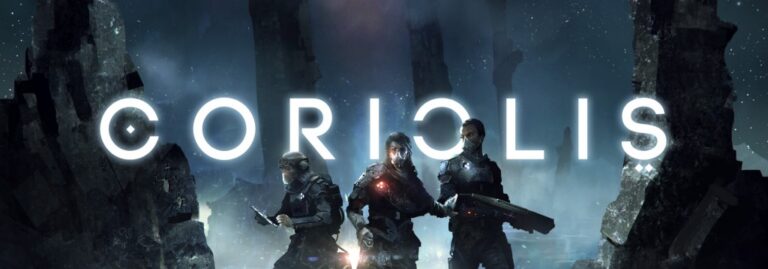
Coriolis: The Third Horizon

Coriolis: The Third Horizon is Free League Publishing’s science fiction roleplaying game, heavily inspired by middle-eastern mythology.  Essentially, Coriolis is what happens when you combine Firefly with Arabian Nights, along with a dash of Fifth Element and Mass Effect.

What stands out the most in Coriolis is that the setting is refreshingly original.  This is a far cry from the typical American and western-European inspired far-future settings, which have become a staple of modern science fiction.  Coriolis embraces the mysticism and aesthetics of the middle east to create a boldly unique and vibrant universe that simmers with stories to be told.

The rules system for Coriolis: The Third Horizon is a derivative of the D6 mechanics used in Mutant: Year Zero, but one that has been optimised for this setting.  The core mechanic involves adding a skill and attribute together and rolling that number of six-sided dice (D6).  If a six is rolled, then it is considered as a success, with additional successes improving the results of the roll.

Coriolis: The Third Horizon has taken a streamlined approach to combat.  Every turn, each player has three action points (APs) that their characters can spend.  Every action is defined as being slow, normal, fast or free, and comes with an associated AP cost.  Slow actions are 3APs, normal are 2APS, fast are 1AP and free actions cost nothing.  This simple, yet elegant, approach allows for greater fluidity in the action signs, freeing up players from the simplistic move-and-shoot mechanics of conventional roleplaying games.

The designers of Coriolis have incorporated the mystical nature of the game, by players having the option of their characters praying to their respective icons.  These are spiritual callings within the game, which reflect different aspects of life within The Third Horizon.  This allows players to reroll a skill check, but also means that the games master (GM) gains a darkness point.

Darkness points are a reflection of the so-called “Dark between the stars”, a spiritual force within the game that spreads entropy and destruction.  GMs can use these darkness points for major non-player characters (NPCs) to reroll skill checks and to allow for detrimental environmental effects to occur within the game.  This system is similar to the force-dice mechanics from the Star Wars roleplaying games by Fantasy Flight Games, but one that is in keeping with the setting.

Rather than character creation typically being a series of one-on-one affairs between each player and the GM, Coriolis: The Third Horizon advocates a collaborative approach.  Each character will be unique, but the creation process involves defining relationships within the group, choosing the group’s unique ability and determining who the “best buddy” will be for each character.

Likewise, as each team requires their own ship, players will need to collaborate on the design of their ship and decide what each character’s position will be onboard.  Not only will this determine their character’s role in space combat, but will also influence their choice of skills.  Ideally; the pilot should at least know how to fly the ship, for example.

Players have the choice of a variety of characters that can be typically found within science-fiction settings, such as mercenaries, scouts and pilots.  However, there are also options for courtesans and preachers.  Character backgrounds include mystics (people with psychic abilities) and Humanites (genetically enhanced people that are faced with prejudice).

Player characters within the setting of Coriolis will typically be freelance agents and independent mercenaries, but over time there is the possibility of aligning with one of the many factions.  These factions are broadly defined as being within the more spiritual Firstcome (descendants of the initial settlers) and utilitarian Zenithians (descendants of a colonists from a ship that arrived later).

The Third Horizon essentially covers the region of spaces that was humanity’s third era of colonisation, from the First and Second Horizons, access to which having now been severed following the portal wars.  This leaves humanity in a broadly alien universe that has been colonised but not yet fully explored, with remnants left by the portal builders (those who built the portals between star systems) still waiting to be found.

These legacies of portal builders take the form of the aforementioned interstellar portals and epic monoliths (which humanity now inhabits), without truly understanding what they were originally built for.  These remnants represent one of the game’s core themes – mystery and exploring the unknown.

The sense of mystery is both a strength and a weakness for the game: it evokes a sense of wonder for the players, but can be a source of frustration for the GM.  This is due to much of the underlying mystery not being defined, in part to give the GM freedom in how their take on the setting develops.

Some of this has since been outlined in the Coriolis Atlas Compendium, which gives some insight into the mystery of the setting, whilst expanding on some of the many systems that comprise The Third Horizon.  The Atlas Compendium also provides rules on designing other systems within the setting and guidelines on designing missions for the characters.

In many ways Coriolis: The Third Horizon has an almost Lovecraftian approach to the wonder and majesty of the setting, as it borders on cosmic horror.  This is represented fundamentally by the Darkness Between the Stars, which exerts a corrupting influence upon The Third Horizon to varying degrees.  This can vary from things just going wrong, to creatures that have been corrupted or created by the Darkness.

Despite Coriolis: The Third Horizon being a comparatively rules-light system, the core rulebook for is huge, running at nearly 400 pages.  Over half of the core rulebook is dedicated to background information as well as GM advice and a short campaign.  There is a wealth of information, which could be overwhelming to some GMs.

Given the Arabian flavour that peppers the text, which adds to the cultural richness of the setting, a lexicon of common words in The Third Horizon would have been useful.

Undoubtedly, GMs will want to reread the core rulebook several times in order to fully understand the setting, but this is not as much of a chore as it might have been.  The writing is great, but the art is fantastic and incredibly evocative of the setting.  As well as the character designs and dioramas, there are also a series of layouts of star ships and space stations that GMs can use in their campaigns.

Free League have published abundant supplementary material for Coriolis: The Third Horizon, including a plethora of sourcebooks.  Alongside the core rulebook and the aforementioned Atlas Compendium (purely for the background information), the GM Screen is recommended.  Made from thick laminated card, the screen has a fantastic image spread across the entire length of the player-facing side of the screen.  Not only will this prevent players from seeing GM’s notes, it also has an array of tables and reference charts, reducing the time GM’s spend search for the relevant table.

Alien: The Destroyer of Worlds

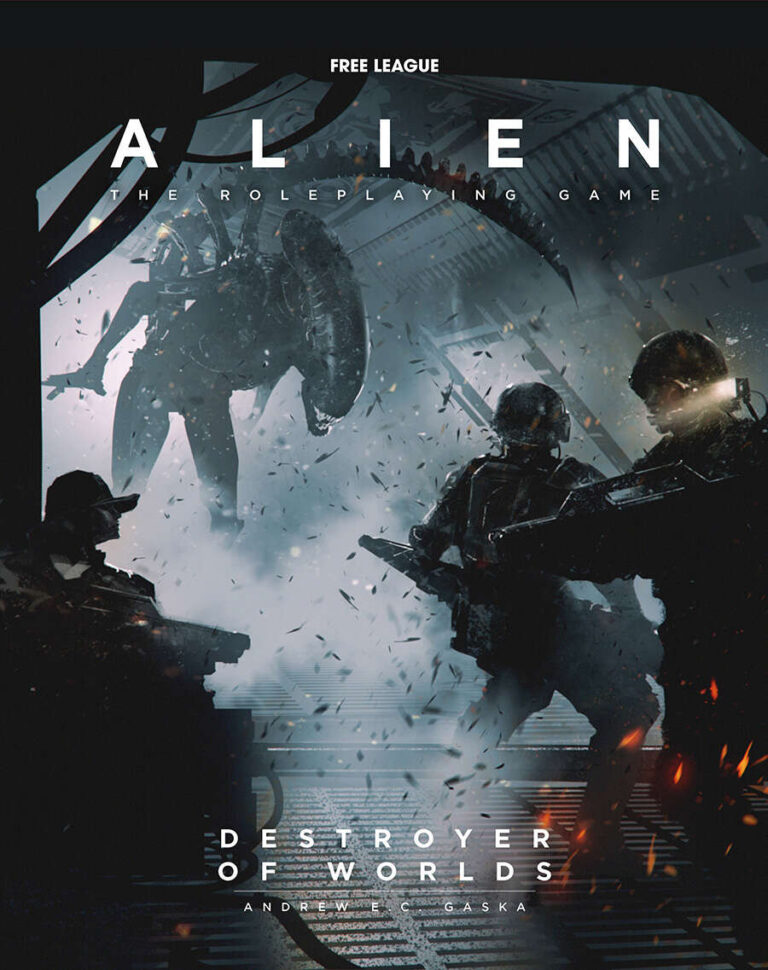
Following their tightly-written Chariot of the Gods cinematic module for the Alien roleplaying game (reviewed here), Free League Publishing have released their next standalone module; Destroyer of Worlds.

Ever wanted to be a colonial marine?  This is the game for you.  If the Chariots of the Gods cinematic module delivered the Alien experience, then The Destroyer of Worlds is their love letter to Aliens.  This boxed module includes everything that GMs need to run the module, including maps of the settings, pregenerated character sheets and new character motive cards.

The story of The Destroyer of Worlds follows a squad of colonial marines as they are assigned to capture four soldiers that are absent without leave (AWOL).  However, as with all things Alien, things soon go from the bad, to worse, and then even worse.  In this regard, The Destroyer of Worlds delivers the full Aliens experience.

The module builds to a fantastic climax that is so evocative of Aliens.  As with all cinematic modules for the Alien roleplaying game, players should not expect all of the characters to survive.  The module states “If anyone survived,” which indicates the challenge that players will be facing.

As with all of the other Alien: The Roleplaying Game releases, the art is fantastic and the art editor should be justifiably praised for their attention to detail.  The box art is particularly atmospheric and the module gives room to appreciate the internal illustrations.  It never feels crammed or too small to make out the details.

What I particularly liked about The Destroyer of Worlds is that it includes everything that the GM needs to run the game.  Statistics for each of the antagonists are all there, along with pregenerated character sheets,  The page numbers referencing where certain rules can be found are given for the both Core rulebook and Starter Set rulebook.

The maps are also fantastically designed, harkening back to the wireframe neon of the layouts from Aliens.  These neat little touches further add to the mood and impressiveness of the game.  The maps are so well designed that they could be easily transferred by enterprising GMs in to other Alien storylines.

That said, The Destroyer of Worlds is a huge module and not for the faint hearted, as it is a sprawling storyline set over three arcs in multiple locations.  The structure of the module does not help matters, as it sets out the locations before explaining the proposed three arcs of the storyline.  It would have made easier reading if the intended story arcs were presented first, giving GMs an understanding of what is expected to happen.

Structure aside, The Destroyer of Worlds is gorgeous to look at, as the format and internal layout is incredibly evocative of the mood.  Character statistics and GM narration each have their own formatting, making for easy reading when the GM needs to find a particular role

The two-page spreads of artwork within the module were particularly impressive.  There was no need for them to be there, but they sold the mood of what was happening in the game and could be easily be shown to players in a “this is what you see” moment.

Aside from minor complaints about the structure of the module, The Destroyer of Worlds is a fantastic addition to an already excellent roleplaying game that GMs can run as a one-off “event” game.  To quote Aliens; “This time it’s war,” and The Destroyer of Worlds completely delivers in that regard.

Alien: The Roleplaying Game – Starter Set

The critically acclaimed Alien roleplaying game has been out for nearly a year, and if there were one criticism, then it would be that the nearly 400-page tome (reviewed here) can be off-putting.  Enter the Alien starter set, which offers players everything they need to play the cinematic modules, whilst giving them a taste of what the game can offer.

What strikes you first is the stunning box artwork.  A blue-collar worker is poised with the iconic flamethrower from Aliens, whilst a xenomorph’s tail curls behind them.  It is incredibly evocative of the unique feel that is Alien and Aliens.  Unlike some starter sets, the cardboard box is solidly made and can easily be used for storing your Alien RPG material in one convenient receptacle.

Inside, the box contains the Alien starter set rules, along with all the dice, cards, handouts, maps and tokens to play the included Chariot of the Gods module.  If the latter sounds familiar; this is the cinematic module that was released alongside the core rulebook at the end of last year.

Cinematic modules are complete adventures that are designed to reflect the Alien experience and come with pre-generated characters tailored for that story.  These are different to the typical campaign play, where characters grow and advance over time, as character death in a cinematic module is highly probable, much like in the films.

The starter rulebook clocks in at an impressive 100+ pages.  This is an in-depth representation of the Alien roleplaying game.  It literally contains everything needed to run any of the cinematic modules that have been or will be released.  Mechanically, the starter set is exactly the same as the core rulebook.  Given the starter set’s focus on cinematic modules, it excludes character creation/experience, campaign play, background setting information and a GM section – players have more than Xenomorphs to worry about in the wider Alien universe.

In many ways the Starter Set rulebook is an ideal tool for players, especially those who balk at reading a 400-page rulebook.  The added advantage is that it also means that players will not inadvertently read any of the GM-specific information.

The accompanying module Chariot of the Gods is – without giving away the plot – a satisfyingly undiluted Alien experience.  It comes with excellent pre-generated character sheets for the players and accompanying character cards for running the game.

Chariot of the Gods is a perfect module for introducing players to the Alien universe.  It should last two game sessions, although this is dependent upon the number of players and how well they work together.

The fantastic artwork from the core rulebook is carried over to this starter set and remains at an outstanding level.  Likewise, the design and layout of the maps and character sheets mimic the iconic retro-futuristic aesthetic that is Alien and Aliens.

The only source of frustration is that the previously released GM screen is slightly too big to fit inside the starter set box.  This may seem a petty, especially as this is an otherwise excellent starter set, but it is rather frustrating.

Ultimately, this is a must-have purchase for anyone who is interested in the Alien RPG.  Even if you already have the core rulebook, having the starter set is still value for money.  Given the Starter Set comes with all the dice and counters needed to play the game, and includes an excellent cinematic module, the fact that there is some repetition is balanced by the amount of content that is included.

Icewind Dale: Rime of the Frostmaiden

The latest release from Wizards of the Coast returns to the iconic region of Icewind Dale, in the Forgotten Realms setting.  Just as much a setting book as it is an adventure module, Icewind Dale: Rime of the Frostmaiden brings together the very best elements of Dungeons and Dragons (D&D).

The Rime of the Frostmaiden campaign is designed for four to six characters, charting their progress from level 1 all the way to level 11.  Unlike conventional games, where levels are gained through acquiring experience points (XP), here levels are gained through completing missions and achieving objectives.  Ergo, it becomes inherently rewarding for players to take the time to explore the setting to uncover new missions for them to undertake.  Not only will this make their characters better prepared for what is to come, but it discourages players from wanting to rush the storyline.

Before detailing the adventure, Rime of the Frostmaiden takes the time to describe the setting of Icewind Dale.  Unlike the stereotypical western European inspired fantasy settings, Icewind Dale stands out for its land of snow and ice.  The first hundred pages of Rime of the Frostmaiden is dedicated to the Ten-Town settlements and the wider region of Icewind Dale.  In many ways, the setting feels just as much a character as it is a location, as the land and people will react differently as the character’s progress.

Rime of the Frostmaiden also addresses the manifold challenges of living in such a region and what it means for travel.  Here, a simple trek between one of the towns of Ten-Town can become a fight for survival due to an ill-timed blizzard or a sudden avalanche.  It also discusses the necessity for winter clothing and the ramifications, such as everyone looking the same when wrapped in furs.

Horror is very much a part of this particular module, going from folk horror (similar to The Wickerman) through to the cosmic horror akin to H. P. Lovecraft’s Cthulhu mythos.  However, Rime of the Frostmaiden remains a fantasy adventure and the horror elements are balanced by moments of wonder and majesty, creating a narrative rollercoaster for the players to experience.  This ensures that the story never feels overwhelmingly horrific or uninhabitable.  We find out why people choose to travel to Icewind Dale and how they thrive.

Rime of the Frostmaiden is a huge module, clocking in at over 300 pages, giving dungeon masters (DMs) everything they need to run the adventures and beyond.  The book opens with setting and background information, ensuring that everything that happens has context within the wider world of Forgotten Realms.  We are then presented with a detailed overview of Ten-Towns – the ten settlements of Icewind Dale – and their inhabitants, including maps of every location and portraits of each of the principal characters, before delving into the adventures themselves.  The final fifty pages of appendices include statistics for all of the characters, creatures and items that are introduced in the book.

The structure of this module is exceptional, clearly explaining to the Dungeon Master the varying narrative paths that the players can take in the story, and the consequences of each of their decisions.  The size of this book means that notes will need to be taken, but Christopher Perkins’ writing and structure has done much of the heavy lifting that DMs would have otherwise needed to do.

Throughout the book are some truly stunning character portraits and illustrations, evoking the horror and majesty of the setting, as well as presenting a series of uniquely identifiable characters that the players can meet.

However, whilst combining character portraits with their background and character sheet looks great, it is challenging to show the portraits to the players, without inadvertently revealing information.  As a detachable double-sided map of Icewind Dale, and each of the Ten-Towns settlements, is included, a similar series of handouts for character portraits would have been useful.

Thought has also gone into the formatting of the text and pages, with different types of information (such as game statistics or text to be read out) being presented differently.  This allows DMs to quickly skim through a page to find the information they require at a glance.

Previously, when people have thought of adventure modules for D&D, they have often been dungeon delves with elaborate traps.  However, Rime of the Frostmaiden is vastly different in that regard.  We are presented with different types of quests for players to follow, from bounty hunting to investigating the local wildlife, before potentially confronting a god.  This ensures that every player has their chance to shine, whatever the type of character the players choose to play.  That is not to say that there are no dungeons to explore in Rime of the Frostmaiden, but rather that their presence is justified.

The ending of Rime of the Frostmaiden is suitably epic for all players, and potentially has huge implications for the future of the characters and the wider setting of Icewind Dale, that could possibly create an entirely new campaign.

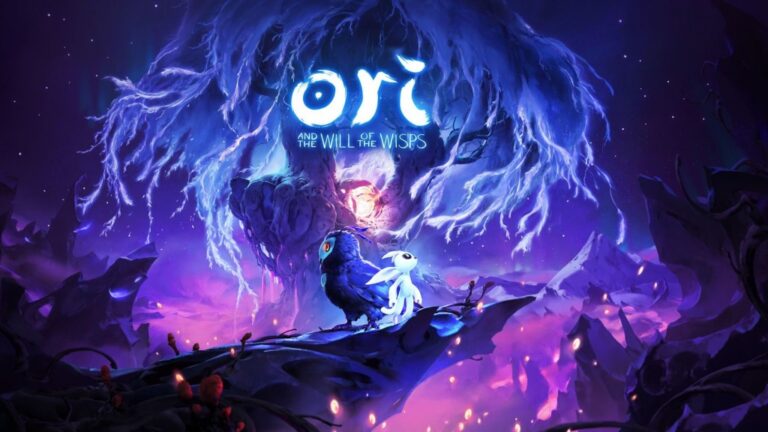
Ori and the Will of the Wisps Switch Review

The word “charming” is bandied about whenever a platformer starring some sort of soft creature is released. It’s oft misused, being a lazy way to paper over the idea that the protagonist is cute and/or the NPCs make funny noises. There is rarely a game that comes along and actually earns this title. The Ori series (is two a series?) of games equivocally earns its “charm” stripes, however. Our protagonist is a living embodiment of good natural energy, and our NPCs are a vast array of furry, fluffy, and otherwise quite cute forest denizens.

Building a sequel to an already well-loved game is a challenge, but Moon Studios have taken it in their stride. When questioned about the direction of the new game, Lead Developer Thomas Mahler stated “The idea is that Will of the Wisps should be to Blind Forest what Super Mario Bros 3 was to Super Mario Bros“. Having not played the previous iteration, I went into Will of the Wisps blind (pun intended). The player instantly feels at home in the forest world, witnessing the birth of an incredibly cute owl we later come to know as Ku. Ori and Ku become separated, and the game sees us first trying to reunite, then moving on to the meat of the story.

The visuals are practically painted on, with enemies taking on an early Rayman Legends-esque quality to them. The world and its inhabitants are expressive, emotive, and (yeah, I said it) “Charming”. Coupled with a gorgeous soundtrack, WOTW gives you a world to get lost in. A world that is a veritable parkour playground for Ori, whose varying abilities allow you to flow through the levels and challenges seamlessly. I draw comparisons to the last Spider-Man game, in that you will not mind back-tracking due to how fun traversal is in-game.

WOTW is a wonderful ride, but there are a smattering of criticisms to an otherwise lovely game. The difficulty, for example, is random at times. although there is a clear difficulty curve, there are a few inconsistent spikes that left me feeling perplexed for a few minutes at a time. The biggest of these is a stealth section with a giant owl boss that doesn’t do a great job of making it obvious what foreground I could and couldn’t hide in. It’s also worth mentioning that the introduction of powers early on comes thick and fast, which may overwhelm a first-time player. Another slight issue is only one that Switch users may fall foul of: when in portable mode, there is no option to zoom into an already small Ori, which may prove difficult to view at times.

The port to the Switch appears to be something that only adds to the experience of playing WOTW. In my vast hours in the game, I experienced none of the console’s infamous slowdown or frame rate issues. Ori is absolutely lush on any screen size, and the ability to take the game portably is only a boon.

This aside, the inclusion of this on the Nintendo Switch roster is indeed a welcome one. WOTW is an instant classic and should be in the library of anyone who loves a family-friendly platforming experience. At the time of writing, there are no hints towards a sequel. Regardless of this, I think Ori will undoubtedly go on to be a fondly remembered series, and I can only hope for more things to come from Moon Studios.

The Witcher – first stills of Season 2

Unless you have lived under a rock for a while (or have been busy tearing through the Witcher books like me), you probably know that The Witcher was released last year on Netflix, to the great happiness of Andrzej Sapkowski loyal fans. I admit, to my shame, I have only read the first one, but I can see the appeal of a character like Geralt of Rivia. And with Henry Cavill playing him my interest is doubled. Yes, I am shallow, sue me.

Netflix has released the first images of season 2 and some changes are already obvious when it comes to Geralt’s armour, but most importantly when it comes to Cirillia of Cintra (Freya Allan). Seeing her costume has given rise to speculation that the 2nd season will adapt Andrzej Sapkowski’s Blood of Elves – at least partially – which portrays Ciri’s training at Kaer Morhen.

Geralt’s new look was shared by Henry Cavill himself, on his instagram page, but I have to wonder – we know he has a six pack – did it need to be sown into his armour? A question for the ages. Let’s be happy he doesn’t have nipples on the outside of it, I say.

According to Netflix, teasing their viewers as always, the next stills to be releases should be of Yennefer of Vengerberg (Anya Chalotra), another one of the major players in The Witcher series. Hopefully to be followed by Jaskier (Joey Batey), who happens to be one of my all time favourites of the show.

While the release date is still up in the air, we do have the promise of stills to tide us over until then. Presumably, bar any other interruptions, filming should wrap up in February 2021, following a long break due to Covid-19.