Home Blog Page 112

Wes Craven (1939 – 2015)

0


Wes Craven: The most influential horror director of the late 20
th Century – in memoriam.

still-of-wes-craven-in-shocker-(1989)-large-picture

Monday brought the sad news that American horror auteur Wes Craven had died at the age of 76, after a battle with brain cancer. The man responsible for two of the longest lasting and financially successful franchises in the horror genre, A Nightmare on Elm Street and Scream, he was a visionary pioneer in the field of exploitation cinema in the late 20th Century.

After initially working as a college professor teaching humanities in the late 1960s, his love of the film industry reared its head when he began to work part-time as a sound editor in Manhattan – working primarily within the ‘hippy’ independent film scene springing up post-Woodstock. Craven quickly realised that it was in cinema, rather than academia, that he saw his future and he began to look for a way in which he could support himself financially while trying to raise the capital to make films of his own.

Craven found the most unlikely of places to begin his directing career – the burgeoning, and extremely lucrative hardcore pornography genre. Under various pseudonyms he directed a number of x-rated movies, including a rumoured role re-editing and shooting new scenes for the infamous hardcore smash Deep Throat. But this was just a means-to-an-end, as Craven along with friend and collaborator (and future Friday The 13th creator) Sean S. Cunningham had already written and planned their first full-length feature – and when released, the movie would be like a sledgehammer to the face of US indie cinema.

Released in 1972, Last House On The Left took the rape/revenge motif of the more mainstream thrillers Straw Dogs (1971) and A Clockwork Orange (1971) and installed his story with the grit and grime of rural America, while almost single-handedly creating the blueprint for the 70’s US exploitation-horror boom in the process. An extremely difficult-to-watch movie (even today), Craven purposely removed all trace of sensualism from the infamous sex scenes (the film was actually intended to be a standard hardcore porno movie at first, before Craven decided to move towards horror), so that the plight of the teenage victims could be all the more horrific, and the audience’s joy when the perpetrator’s get their comeuppance would be heightened. It certainly worked, and was a big box office success, going on to spawn such imitators (and genre classics!) as I Spit On Your Grave (1978) and Fight For Your Life (1978). Its influence can also be seen in modern horror successes such as Funny Games (1997) and Henry: Portrait of a Serial Killer (1986).

Craven’s next movie was equally as influential. Wanting to take Tobe Hooper’s Texas Chainsaw Massacre (1974) to the next extreme, The Hills Have Eyes (1977) was Craven’s statement on the ‘forgotten America’ – those left behind living in squalor and desperately trying to scrape a meagre existence as the rest of the US flourished in the post-Depression industrial boom. He imagined the film as an inevitable meeting of the two worlds, and the conflict that would ensue between the stereotypical 1970s nuclear family of the Carters and the incestuous cannibals of Papa Jupiter and his kin.

What follows is one of the original ‘home invasion’ horror movies, as the initially docile and submissive Carter family, driven to despair by the homicidal torture of their attackers, turn-the-tables and become even more effective predators than the Jupiters themselves. While not as big a success commercially than Last House, it was much better received critically, and has gone on to be a cult classic. While Craven later made a deeply inferior sequel (under pressure from the studio) which he himself later disowned, the original had a lasting effect on mainstream horror, still witnessed today with the likes of You’re Next! (2011) and Alexandre Aja’s incredibly good 2006 remake.

Despite two relatively successful, but clearly still exploitation, movies under his belt, Craven struggled to find financing to make movies for the next few years – instead concentrating on the odd TV movie (the stand-out being the amazingly faithful DC-comics adaption Swamp Thing (1982), which was found to be so much fun that Embassy Pictures decided to give it a limited and very unsuccessful theatrical release) and the largely forgettable transition piece Deadly Blessing (1981) – notable only for the shift from exploitation towards a supernatural horror tone, and that it was one of Sharon Stone’s early starring roles.

But Craven’s big break was just about to come. In 1984, Craven wrote and directed A Nightmare on Elm Street. While not a true pioneer of the slasher genre (Black Christmas was released in 1974, Halloween in 1978), it was by far the most original, incorporating some of the supernatural elements that Craven had used previously in Deadly Blessing and also tapping into an area of everyday horror that not many movies had explored, but that almost every single person would have had some level of experience of: nightmares.

x wes-cravenIt was a highly personal film for Craven, taking inspiration from various aspects from his own childhood: the close-knit suburban community and its neighbourhood watch on the hunt for predators, the notion of being fearful of a bogeyman who would stalk children as they slept, and even the villain of the movie (sadistic child-murderer, Freddy Krueger) baring the same name as Craven’s own childhood bully.

Another infamous story which will be forever bound to the film is the Craven’s discovery of a number of articles in the 1970s concerning the phenomenon of Asian Death Syndrome. These articles detailed a score of cases in which refugees from America’s bombing of Cambodia, in most ways normal healthy men, were suffering disturbing nightmares that in most cases would result in death during sleep.

When released, ‘…Elm Street’ reinvented the teen horror genre – moving away from the silent masked hulking mass-murderers of Michael Myers and Jason Voorhees, and introducing a villain with a face, a voice and most importantly a personality. Freddy didn’t just want to kill you, he wanted to taunt you and make you suffer to your last breath. And even though he was some sort of supernatural demon who would plague you in your dreams, he was almost a more believable menace than a random body-building stuntman in a hockey mask.

The movie was met with rave reviews and a fantastic box-office return from a meagre budget, and went on to spawn an uber-successful franchise of sequels. While Craven became less and less involved in the production of these sequels (he had a writing credit on Elm Street 3: Dream Warriors), the character of Freddy Krueger somehow entered the public consciousness – and the once brutal villain (he was a child rapist and murderer, for god sake!) became more and more like a comedy-quip dealing anti-hero with every movie. The franchise went on to include a TV show, and NES video game, and a box-office smash crossover with Friday The 13th, and in-turn allowed New Line Cinema to transition itself into one of the most profitable independent movie studios in Hollywood (the Lord Of The Rings trilogy would later cement this). Craven later said that while he loved his original film, and the original concept for the lead character, in his opinion Krueger has become nothing but a cruel obnoxious parody by the last film of the franchise, the universally hated Freddy’s Dead: The Final Nightmare (1991).

After various other forays into the horror genre – such as the killer android girlfriend movie Deadly Friend (1986), the voodoo zombie epic The Serpent and the Rainbow (1988), the fun serial killer romp Shocker (1989), and the absolute madness of The People Under The Stairs (1991) (again a pseudo commentary of the hidden horrors and paranoia of American suburbia, but this time introducing the interesting concept of having a protagonist who was ethnic and from the ‘hood’, while the antagonists where a supposed ‘normal’ white family – a switch on what the black gang-violence obsessed media would be portraying at that time) – it would take a revisit to an old franchise that would bring Craven back into the public conscience.

When Freddy’s Dead bombed catastrophically at the box office, New Line desperately looked for a way of resurrecting not only the franchise, but also the recently killed-off character of Krueger. Craven was approached and given a blank slate to re-envisage the Elm Street universe as he saw fit. Wanting to return to a more cerebral movie with less of a comedic tone, Craven chose to remove his new film from previous franchise continuity – instead having an actual demon version of the Krueger character invade the ‘real world’ and torment those involved in the creation of the Elm Street movies.

While the concept of ‘metacinema’ was certainly not a new one (Mel Brooks famously featured this in the majority of his movies), Wes Craven’s New Nightmare (1994) was certainly one of the first modern horror movies to feature this type of storyline. While the film was not a success financially (it was actually the lowest grossing of the franchise), it’s critical reception was almost entirely positive – with critics praising its originality, it’s tone and it’s notion of a horror movie breaking the fourth wall.tumblr_ntxe7lzhqV1utt7pzo1_500

Searching for his next project, Craven stumbled across a script by the then-unknown Kevin Williamson (who later gained fame for creating the smash-hit teen drama TV series Dawson’s Creek) entitled ‘Scary Movie’. While he initially dismissed the script as yet another teen slasher movie, there was something about how witty and self-aware the dialogue was that kept his interest. And when he was finally offered the opportunity to direct the project, now retitled ‘Scream’, he knew that it would give him the perfect opportunity to riff on the very genre that he helped to popularise a decade earlier.

Scream (1986) was at its core a wonderfully fresh and playful movie – not only providing the standard jump-scares that horror fans had come to expect, but it included the types of inventive plot-twists that had become lost in the monotony of early 90s Hollywood (the unexpected killing off of Drew Barrymore in the opening scene, the reveal of Ghostface’s identity, etc…), and it wasn’t afraid to do it with an acknowledging nod and wink to the audience – essentially saying to the viewer “we know that you know as much as the characters do, or even more, about horror movies and what their usual tropes are”.

It was a massive success critically and commercially, almost single-handedly resurrecting horror as a bankable genre in Hollywood – spawning three successful Craven-directed sequels (a franchise that has grossed over $300m (£195m) in the US alone) and a host of imitators including I Know What You Did Last Summer (1997), Urban Legend (1998) and updated sequels to other long-running franchises such as Halloween, Friday The 13th and Childs Play – which tried to match Scream’s comedic tone in order to capitalise on its success. Its legacy can also be seen in the recent cult horror hit Cabin In The Woods (2012).

While his film projects during his later years failed to match the mainstream success of the Scream franchise, Craven kept himself busy helping to develop television programmes (including a recent TV re-imagining of Scream for MTV), writing for video games and graphic horror novels.

Craven was known as an extremely warm, personable and yet understated man. He regularly shunned the limelight and his celebrity status – a perfect indication of this was his passion for the decidedly un-Hollywood hobby of birdwatching. Reflecting on his own career, Craven once said that “I always tried to make movies where I can honestly say I haven’t seen that before – the key was always following my deepest intuitions and in some cases, literally my dreams.”

Horror, and modern cinema as a whole, has lost a true icon.

MGSV PC Disc Reportedly Contains… A Steam Installer. And That’s All.

0

I’m not as big of a PC gamer as I used to be since my graphics cards both quietly died, but I still love the medium. It offers flexibility and competition that the console market doesn’t offer, and we have the joys of Steam, GoG, and other brilliant services to offer competition.

However, PC gamers have to put up with some incredible bullshit, and Konami – the ‘drunken fratboy at a wake’ of the video games world – have decided to ply us with a unique kind of horror. An early copy of the game seems to have gotten into the hands of twitter user @Graphure, who reports the following:

That’s right. Metal Gear Solid V: The Phantom Pain for the PC contains nothing but a Steam installation file. If you, being the fool that you are, bought the game on a physical medium because you have sporadic internet connection, for example, then it sucks to be you as owning a physical copy of the game gets you the same amount of content as going to steam.com.

Anyone who buys a PC version of MGSV is getting only a key for Steam, nothing more. People buy the discs so, for example, they can play the game immediately on purchase, not waiting the 8+ hours for a 28Gb set of files to be downloaded on a decent connection. They buy it to play should they not have any internet connection for that weekend, say because they’re moving house or changing providers. I actually can’t believe this needs to be stated, but owning a copy of the game should mean owning a copy of the game. Perhaps an outdated one that needs to be patched, sure, but you still own the files capable of running MGSV, not the key which allows you access to download it.

Whilst it should be noted that this is an unsubstantiated report for now, this has been picked up by multiple gaming outlets, and seems to broadly be legitimate. If true, this is another example, though, of Konami being arses. It shouldn’t be surprising, but it is. Seriously, #FucKonami.

Sir Terry’s “The Witches” – Discworld Arkham

0

The late, great Sir Terry Pratchett wrote some of my favourite reading material, supplying me with fantastic stories of stoic watchmen and bumbling wizards from my pre-teens right through to adulthood. If you clicked on this article, you probably already know who he is, so I’ll spare you the bio-recap (though this first paragraph is a minefield of links). If you somehow got to this page without knowing who Sir Terry Pratchett is, then all I can say is…go read Wee Free Men. It’s a light, entertaining, young adult work and it’ll give you ample background for reading the rest of this article. Plus it’s got kleptomaniac faeries in it – who doesn’t love that?

%20Terry%20Pratchett%20portrait

Moving onto the topic – The Witches boardgame, released in 2013 by Martin Wallace, who you may remember from such titles as…uh…Discworld: Ankh Morpork. Guess he’s a fan of the world. Joking aside though, his career has spanned a goodly number of titles, but apart from Age of Steam, I haven’t heard of that many. More’s to my detriment perhaps, because The Witches is a pretty damn good beginner-friendly boardgame for 1-4 players. That’s right, ONE to four. You can play this on your own if Skyrim keeps crashing or all your friends disowned you after playing Game of Thrones.

witches-cover

I can’t speak to the entertainment value of trying to play it on your own, because I feel that boardgames should be something enjoyed in a group. But I can say that having played this game with two and four players, it’s definitely something I’d recommend, especially if you’re a fan of Arkham Horror…as weird as that sounds. You’re a small group of colleagues working co-operatively to solve impending crisis before they get out of control, you collect items and powers, you travel around the map by broomstick…okay, maybe not that last part, but it’s not always brooms and you could get that motorcycle in Arkham.

Mechanically, The Witches and Arkham Horror play very similarly – using dice rolls to defeat problems/enemies, with failure to do so resulting in cackling/insanity. Every turn, new threats are popping up all over the board, with threats left over occasionally becoming more difficult because you left them too long, or ending the game all together because your cadre of trainee witches/hapless gumshoes couldn’t get their act together in time. Replace the Dimensional Shamblers for Sick Pigs and Cthulhu with The Wintersmith and you’re pretty much there.

the-witches-strategy-games-games-and-hobbies-new-zealand-nz

What it has over Arkham however, is simple usability. The rulebook does not require two points of sanity damage to understand, everything is simply laid out, and if for some reason you had to ditch the box, the entire game could probably fit in your coat pocket – including the board if you’ve got a jacket like mine. Simple, approachable, and if you wanted to play Arkham with your kids but were worried that they’d become Hastur Cultists, then this game has been tailor made for you.

The only really disappointing element is the lack of diversity between the four playable Witches – Tiffany Aching, Petulia Gristle, Dimity Hubbub and Annagramma Hawkins – each have their own single-shot power, giving them just enough diversity to differentiate them from just being four coloured Witch-hats, but not giving them much of a strategy besides “I can cure one Sick Pig for free”, whereas in Arkham, your choice of character effects how you approach the entire game. I also consider the lack of an “I ATEN’T DED” power card to be a gross injustice, but all your other series references are in there, from Borrowing to giving Turpentine to a sheep.

I mentioned earlier that it was a co-op game, and while that’s true, it’s also a bit of Headology, which makes for one of the subtlest meta-games I’ve ever had at the table. Each Witch must go to face her problems alone, there’s no teaming up – just coordination of whose going where and whether or not you need to Have Tea with another Witch to get rid of some of your Cackle (Insanity). When a Witch rolls badly against her challenge, everyone pitches in with suggestions on how to get around it – “Use your reroll, spend that power, you’ve got an Escape if you need it…” – but at the end of the game, when the Witch Trials are over and the people of Lancre are gossiping about who the best young Witch is…the scores are counted. Victory Points amassed from Sick Pigs cured, Broken Limbs set or Elves banished. So you have to weigh up exactly how much you need to help your fellow Witches just to keep the game going, and how badly you need the Victory Points that are out on the board.

Which I think is rather clever, and rather like Pratchett’s Witches. I bet he was chuffed with this game. I certainly was.


Tabletopia – the future of tabletop gaming?

Some exciting news from the world of tabletop gaming. A new digital board game client has come onto the scene, boasting all manner of features and a slick 3D presentation as of yet unseen in the industry.

This is stirring news for both gamers and designers, as the Tabletopia system will allow people to play game currently available on the market (we’re talking big names here including the hotness of Imperial Settlers and Nations) but with a designer subscription you’ll be able to design your own prototypes and apparently even monetise your publisher brand!

Some big proclamations right off the bat!

A quick goosey through the Kickstarter page lists a lot of cool stuff they promise Tabletopia will be able to provide, including:
– automatic game setups, card dealing, drafting etc.
– player’s turn control, timers, game phases indication
– interactive zones on the table with predefined automatic actions
– intelligent counters for tracking victory points and many other in-game parameters
– custom surfaces, game room wallpapers, sound effects advanced camera controls and a plethora of tokens and meeples to play with

It also looks very, very cool! From Rahdo’s vid, you can see how intuitive the gaming is, with easy-use quick menus, simple multi-selects of components and the frankly amazing snap-to feature that prevents meeples and cards sitting in awkward places on the board. The use of actual artwork from the analogue version of the game (if you don’t include the Samurai game in the video!) just adds to the immersion players can experience during play.

But it’s not all sunshine. Tabletopia has no AI, which isn’t a deal breaker by any means but does mean you need to own or have access to the rulebook to play anything. There’s also the matter of the subscription fee; if you want all the bells and whistles your going to need to pay 20 bucks (around £13 for us Englanders) a month and if your part of a design team that each need their own subs, the costs would quickly rack up.

I guess the big question for me though is the obvious one; will it replace or take over the majority of my gaming and prototyping? I’m afraid I have to wish-wash my answer and say I don’t know. Since becoming a father, my free time has been limited and being able to play a board game or chuck together a new card game design whilst sat on my tablet at the end of an evening seems like an awesome thing. However, what always attracts me to a game is the feel of the cards or chits in my hand, the richness of the artwork and the comradely chats possible has when sat at the table with my buddies.

Just a few of the games already available.

Plus, who doesn’t love the feeling of buying a new game, ferreting it home and cracking that seal. The visceral experience, that tactility can never be replicated by digital games and I think I’d miss it.

So I reckon I’ll check it out as I love me a bit of innovation and it’s shaping up to be a great tool. Gaming and designing anywhere at any time, who doesn’t want that!

E-Sports in the UK: Dead, dying or coming to life?

0

As an online gamer I am always on Twitch, Steam or something similar, learning from the masters.  Those who I call “Masters” have learned their art from international competitions, electronic competitions, known more commonly as “eSports”.  This year, date, there is a total prize fund globally of a massive £14,196,733.52.  That is just the prize fund, that hasn’t factored in the profit made from companies hosting, selling merchandise or other such wares.  This is just prize fund money; big money.  The current total prize fund for Dota 2’s “The International” stands at a staggering £11,354,491.08.  To put this into perspective, the winner of “The Open”, a Golf tournament, wins £1.5million.  The winner of “Wimbledon” 2015, earned £1,880,000.

Look at these numbers, apparently its bad business...
Look at these numbers, apparently its bad business…

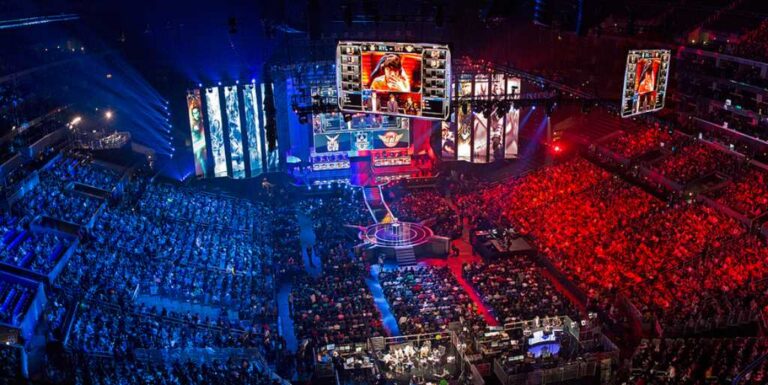
Last year over 40,000 people packed into Sangam Stadium, in South Korea, to watch the finals of the League of Legends World Championships, which had a total prize fund of over £1.3million.  Yet we are still flagging, massively, behind Asia and the US.  Sundance DiGiovanni, founder of Major League Gaming, stated in 2013 “I think that you will see the same level of engagement and fandom that exists within markets like South Korea here in North America and Europe, and I think it’s going to happen faster than a lot of people expect.”  Not fast enough, we are so far behind, but at least the Europeans are trying.  ESL One hosted a Dota 2 tournament in Frankfurt in June and they are hosting Counterstrike: Global Offensive tournament, based in Cologne, in August.  Europe seems to have switched on to the eSports vibe, and it is running rampant.  So why in the United Kingdom, and a greater part of Europe, are eSports so small?

The United Kingdom however is lagging massively, and when I say massively, I mean 28 Kbps dial up.  We have no dedicated teams, we have no committed players and we have no drive.  We don’t even have the infrastructure to support a dedicated eSports scene in the United Kingdom.  The issue is a combination of both dedication from teams, aka the Community within the United Kingdom, and local businesses.  Around the US, Asia and parts of Europe, gaming teams get sponsored to play competitive games; some earn the equivilent wages of a small time footballer.  They have followers that purchase merchandise to support their team, and watch them either physically or electronically.  Currently our nation is supporting foreign teams; I support Ninjas In Pajama’s, a Scandanavian team.  If there was a local team, I would support them, as there is a sense of pride in these teams, their gaming style and their attitude.

Awesome guys, they even have team shirts!

Luckily there is a light at the end of this very dark, long tunnel.  The European Gaming League is beginning to recognise the lack of scene within the United Kingdom, and the vaccum is it creating.  They have their first United Kingdom based event in Peterborough, August 20th-22nd, at CityLAN.  Their 4vs4 Call of Duty: Advanced Warfare tournament has over £7,500 in prizes for the Xbone version, and over £2,000 for the PS4 version.  As well as three Fifa 15 opens throughout the Sunday, it promises to be a great starter event.  This could pave the way for an eSports scene within the United Kingdom, as well show the level of interest the nation has.

Even Fiddlesticks wears a Union Jack.

What we need is more support for the Dota 2 and League of Legend scenes, more tournaments based in the United Kingdom.  Counter Strike: Global Offensive & Call of Duty: Advanced Warfare are good support games, as most people play them.  Based of the figures and numbers, MOBA’s seem like the way to go.  However, only we can hope and pray that someone picks these up.  It is all good and well supporting console gamers, but the PC is the way to go.  Come on UK, lets get on board with the rest of the world!

Retribution Falls a.k.a “You can’t take the sky from me, again…”

0

So, I have just finished a story, an adventure if you will, one so bold and vibrant that it reached into my very soul and hugged me. This was a story about love, about friendship, about ships and piracy and crime, with a bunch of mismatched characters on a crew underneath a Captain with enough issues of his own but not a care in his head so long as he can keep his ship flying. I am of course talking about…

No! It’s too soon. It will always be too soon! 🙁

No, not Firefly.

I’m talking about a book. This particular book is called Retribution Falls and it is the first in a series of Tales of the Ketty Jay.

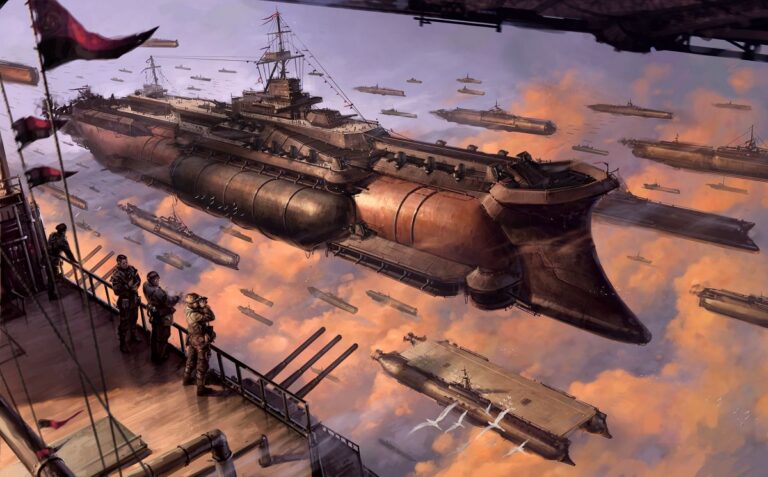
The Tales of the Ketty Jay series is a fantastic, swashbuckling adventure full of airships, pirates, magic, monsters and political intrigue, with enough humour and sincerity to capture any imagination.

Written by Chris Wooding, Retribution Falls follows Dorian Frey and his ragtag motley of crew members as he seeks fortune and fame as a Freebooter on his ship, the Ketty Jay. Joining him on his journeys are the ship’s doctor, Malvery, a drunken layabout who fills our “sad clown” role for the book. Then there’s Jez, a newcomer to the Ketty Jay as ship’s navigator. Jez has senses sharper than Frey has ever seen, is stronger than her slight frame would suggest and just plain refuses to die. Jez is a fantastic character with a wealth of depth and mystery which, without spoiling the story, has something of the supernatural to her, something that really adds to the feel of this series’ world.

We then have Pinn and Harkins, the two fighter pilots of the ship. Pinn and Harkins counter each other fantastically, with Pinn’s brash bravado and fearless attitude clashing excellently with Harkins’s cowardice and paranoia, much like Klunk and Zilly from the old Dastardly and Muttley in Their Flying Machines cartoon.

Harkins and Pinn, respectively. Actually how I envision them a little too.

Then there’s Crake. Crake is very much, to continue the Firefly similarity here, the Simon of the crew: learned, on the run from the authorities and with no real sense of connection or care toward the rest of the crew. Crake is a demonist. Did I mention demons were a thing in this world? What this means is that Crake summons demons of varying strengths and binds them to objects such as his magical golden tooth which lets him influence the minds of others, kind of like a Jedi mind trick.

Crake also has his companion, Bess. Now, remember that Crake is a demonist.

Bess is a golem, an animated suit of armour with a soul infused into the metal.…I like Bess. Bess breaks things, a lot. Much like Summer! See?! Steampunk Firefly!!

There is, of course, a wealth of other characters that I would love to discuss with you, such as the Century Knights, but there just isn’t enough room in this short little review window, so perhaps when I come to read the rest of the series and talk about them in turn.

I went into Retribution Falls knowing nothing, having no prior knowledge of the series, of the setting or its characters. I bought the book on a whim while I was waiting to get my hands on the next Dresden Files books I needed to read (another fantastic series that you all need to check out) and I came out the other side completely in love.

Retribution Falls is a wonderful foray into the realms of steampunk, magical fantasy, pirate adventure and socio-political structures.

I am definitely going to be rushing out to get my hands on the three remaining books in the series and cannot wait to gorge myself on the rest of the story!

I highly suggest you all go and do the same.

Keep your eye out for this, its current print cover here in the UK.


I’ve been Craig.

Stay shiny!

Reliving the past: “The Immortal” (Sega Genesis)

0

Apart from Sonic the Hedgehog and Herzog Zwei, few video games evoke as many fond, and exasperating memories as Will Harvey’s classic adventure, The Immortal, on the Sega Genesis.

Originally released for Apple IIgs and ported to numerous systems, The Immortal is a fiendishly difficult, but incredibly rewarding experience. Though short in length (it can be beaten in roughly 30 minutes if you know what you’re doing which will take many hours), it has a surprisingly rich and intriguing story, and one of the most memorable, thrilling final boss battles ever conceived.

You play an old, nameless greenhorn wizard searching for your lost master, Mordamir. As you traverse eight levels of a dangerous, trap-filled dungeon known as the “labyrinth of eternity” in isometric view, you’ll unravel the mystery of your master’s disappearance. You will also meet your end more times than a cat with nine lives.

image
You’ll die! Hahahahahaha!

I doubt it’s a coincidence that the game’s cover and title screen feature the grisly visage of the Grim Reaper. There are just so many ways to die in The Immortal – plummeting down pits, being eaten by ravenous worms, butchered by goblins or trolls, immolated by fire, dissolved by acidic slime, eaten alive by spiders, drowned by a water monster, and even potentially poisoning yourself in various ways. Part of the allure of the game actually stems from making mistakes and witnessing the gruesome ways your plucky wizard perishes. I even went out of the way to embrace death just to enjoy the gruesome spectacle.  To add to the macabre, there are an equal amount of even more ghastly deaths awaiting your foes in the Genesis version.

Unlike the previous computer and the NES versions, The Immortal features scenes of extreme violence and gore after each successful combat. You muster your stamina by dodging and then start slashing the enemies to bits with your sword. For magic, there are several spell scrolls to pick up, and at one point even a magic spellbook that allows you to cast a minor fireball spell infinitely.

image
Me no talk to you!

The Immortal is arguably one of the most blatant gory games of the 16-bit era, even surpassing the immensely bloody Mortal Kombat, yet it’s relatively quiet profile by comparison meant that nobody voiced their discontent, A crack on a goblin’s head with your trusty staff results in their cranium exploding in a shower of blood, brains, and eyeballs. You’ll eviscerate goblins up the middle and watch as their legs flop over the flayed halves of their bodies. Slicing them in half results in their innards spilling out all over the floor, and trolls have their own separate demise that include being skinned. It’s certainly not for the squeamish!

image
Can we talk now? Oops!

The game also has certain points where you can hover around to avoid the giant worms and tiny aracnids by using the magic carpet and the levitation spell. This mechanic feels redundant as it’s almost like controlling a car that can constantly accelerate. An accident waiting to happen, the controls are quite horrendous and it’s hard to survive these trying segments, as well as the one further in the game with the creature in the water canals known as “The Norlac”while travelling precariously on a barrel.

image
Up, up and away!

There’s more to The Immortal than just death and dismemberment, however.. The Immortal is, at its core, an adventure game with thought provoking puzzles waiting to be solved.. Solving each stage requires both luck and logic, as well as a heaping amount of trial and error. Unlike the video games of today, It doesn’t hold your hand. Many of the puzzles in The Immortal will test your patience and increase your blood pressure countless times during repeated attempts to solve them, and the solution is pretty vague.

This will undoubtedly frustrate most gamers, yet it’s one of the reasons I was enthralled to the game back when I first played it. I just kept coming back for more with each failure. Though it’s a strictly single-player journey, my best friend came over, and we would play the game together in the hope that two heads were better than one when it came to the game’s devious obstacles. Stressful it may be, but the feeling of elation when you finally do get past a hellish tough point is heavenly. Rarely have I felt such a great sense of satisfaction for completing a level in a video game.

Rarely have I ever been as frustrated, however, once I encountered the game’s notorious worm room. Late in the adventure, you discover a sensor that emits a high-pitched squeal relative to the proximity of the game’s wizard-devouring invertebrates. The problem is, the sensor lasts only briefly, forcing you to hurry through the room carelessly. The manual attempts to outline a route is largely indecipherable and more often than not you’ll find yourself becoming wormcowder. Indeed, I had to rely on divine luck alone to  successfully clear this room .

image
Hello there!

When I was a young gamer, and before I became “King”, I was desperate enough to call EA’s hintline – the only time I have ever done such a thing for a video game. A friendly staff responded, “There’s really no help I can give you. You just have to get lucky and hurry through it.” Well, thanks a lot, so much for being a helpful hint guy! It was $1.99 per minute well spent!

After traversing the dreaded Worm room, the rest of The Immortal is tough, but certainly doable. Many of the tasks are quite memorable, from navigating a hall covered in sticky spider webs and egg sacs, to using the lethal slimes to your advantage. Certain key items that seem hazardous to your health eventually prove useful, but it’s also possible to accidentally waste an item that is needed later on, forcing the player to restart.

The game’s graphics look appropriately dingy, but are by no means hideous. The colors are drab and muted, but suit the game’s dark atmosphere perfectly. Complimenting this gloomy ambience is an outstanding soundtrack that easily ranks among the creme de la creme the Genesis system had to offer. It may not have been known for its audio processor, but the music and sound effects in The Immortal are truly fantastic. Weighty wooden doors thud loudly, entrails spill with a repugnant, sloshy plop, and the grim soundtrack pulls you into the tenebrous, twitchy atmosphere like no other.

image

In Electronic Arts’ massive catalog, The Immortal is little more than a footnote, but it has left  a lasting impression on gamers who’ve played it for its sheer difficulty, extreme gore, ingenious puzzles, and phenomenal soundtrack. It may lack replayability, but that hasn’t stopped me from coming back dozens of times over the years, just to experience it again and to ensure my Genesis is in working condition. Not forgetting, more botched attempts at the worm room. Chomp!


Age of Sigmar: A Revisit

So it has been over two months since DHD burned his miniatures, and nearly a month since my scything response to his actions.  During that time plenty of people have stepped forward, made their comments/points known to myself, some have flammed, some have been supportive; most people agreed he was an idiot.  So as a quick recap, why did this dude burn his minatures?  He didn’t get the game he had waited for, so burnt his minatures in protest.  Sort of the same as burning your wages because you didn’t get a promotion, or binning your food because it was too expensive at Marks & Spencers.  Toys.  Pram.  Thrown.  Anyhow, I am not here to mock this guy anymore, the internet has done that for me, I am here to make some truths known.

Let me start with “Forging the Narrative”, something which is currently essential in the Games Workshop ethos, but why I hear you cry.  Fairness, sportsmanship and enjoyment.  I’ll repeat this for those of you that see rules, and instantly try to break them, not for development purposes, but for victory.  Fairness, sportsmanship and enjoyment.  Hurts doesn’t it, when you can’t put a hundred points of wargear on a General and have an unbeatable unit.  Aww, can’t get your own way?  Can’t table your opponent by turn two?  Tough shit; at the end of the day no one liked spending longer setting up than it took to lose a game.  Granted there are players out there that didn’t play like that, but sadly the large majority did play exactly like this.  On too many beginners days I watched “New players” come with printed lists, armies purchased the day previous and proceed to teabag their opponent, who as a side note, never returned.  The community wanted change, they got change.  The people who didn’t like the change were those who have abused it so badly for too long, too long.

This is a story that forged a narrative, just in case your confused...
This is a story that forged a narrative, just in case your confused…

So the new rule set is a different set of rules altogether; some hate it, some love it, most can use it and deal with it.  It isn’t designed to be WHFB 9th Ed; people need to get over this, and quickly.  The ruleset was brought out to support the MAJORITY of people wanting to play fantasy, the people who didn’t want to play it because they could never break into it.  Look at it like this; you want to play WH40k, you pick an army and you see the synergy pretty much within the first few games.  Close Combat, Ranged, Armour, Combination of types; it is there for all to see, no issue, no stress.  You buy an army and you learn.  Warhammer never had that, you either relied on forums to copy and paste army lists, a staff member to tell you what worked and what needed to be avoided at all costs, or you faced months of struggle & expendiature trying to find out what did and didn’t work.  Why would you ever play a game like that; where your first few months are just plain losses to people who don’t want to help you develop, but just want to win!?  I look back now and wonder how Warhammer survived for so long with the community it had.

Building an army for Warhammer Fantasy used to look like this: What’s broken; add.  What isn’t totally broken, but murders tons of shit; add.  What works; add.  What doesn’t work; leave out.  Done.  No narrative, no creativity or character to an army other than the actual, manufactured army theme.  Building an armour for Age of Sigmar, well, lets have a look.  Oh I can add various units from various armies; cool theme.  Not broken; cool theme.  What people are struggling to get their head around is how to build a “Balanced” army; YOU DON’T!  You SPEAK (I know most gamers may not get this, but its something that happens) to your opponent.  You ask them what they are fielding, and you “Balance” the game out.  It isn’t a matter of “Put down everything I own even if you just have a single unit” style game.  The POINT of Forging the Narrative is sort of like roleplaying; except you are both the Gamesmaters writing your own story.  It is about having fun, and fun is something that hasn’t been associated in social Warhammer play for years.

Not gaming, but proves a point.

Yes some of the rules don’t make sense; firing into close combat is a prime example, it doesn’t exist in any game Games Workshop currently produces (well except the Hobbit, but you run the risk of hitting your own guys), but so what.  This is what game evolution looks like, who knows what rules changes are around the corner!  Errata’s may modify the rule set, change how shooting works, clarify certain specifications.  We just don’t know, but a ruleset isn’t the make or break of a game, if we are honest.  Sometimes theme and setting can be enough to win people over, and to be fair the ruleset isn’t totally crap.  It works, and works well.  In my play testing of the ruleset so far, I absolutely love it.  Gives us a smooth, flowing game with no hiccups, good rules (apart from the errant few; please, like 40k is flawless rules wise) and a great story.  The story is, as per usual, massively above par for gaming standards, and that is something that Games Workshop is proud of.  Before the naysayers vocally whine like a lost lamb, about “Interlectual Property”; please.  No game in todays world has a bloody absolutely unique, one of a kind background stories.  Back up and check your fictional history because you start trying to swing that “Hammer of Knowledge”.  I’ll defeat you with my “Shield of Intelligence” wearing my “Armour of Reading”, whilst smashing your teeth in with my “Mace of Fu”.

Honestly, since I have played it, read about it and checked it out, more people have been talking about Age of Sigmar than spoke about Warhammer Fantasy.  It was the ruleset the community needed, something that people could gain access to with simplicity and without having to commit to being tabled for months before actually just raging out and “Forum Warrioring” an army list to victory.  Yes, you lost a great “Strategy Battle” wargame, but you gained something that can now be played by a wider audience, increasing the number of opponents, and thus the quantity of the games.  What it is now down to, is explaining what “Forging the Narrative” means, as the old Neck-Beards are tabling people at AoS, by just fielding more units; NO!  STOP!  DIE!  Do not pass go, do not collect $200.  Drive your car, with your Top Hat on, off the cliff; leave the dog.  We need to be a community that gets behind this, that supports the game.  It has given us a system that we can all access, that isn’t open to depressing abuse and can help us grow the community around a fantasy setting.

So, in conclusion;

  • Don’t be a neckbeard
  • Learn what “Forging the Narrative” actually means
  • Embrace change or GTFO
Neckbeard; check. Forum armylist; check.

What I am saying is, please just enjoy the game.  Don’t sing the end of times, don’t cry into your pillow because you can’t table people anymore.  Remove the inner rage, actually learn to enjoy the games for what they are; fun.  Fun is something that has been lacking, massively, for the past ten years in Warhammer Fantasy.  Lets not ruin it now.

For Sigmar

MANCHESTER MCM 2015 – An Overview

MCM_ComicCon_Manchester_h

When I first walked into a Manchester convention, especially one of the first set inside the Gmex, it felt like you were walking into Bilbo’s living-room. Cramped, sweaty, people trying to move around, grinding against each other. When I walked into the entrance this year, I felt like I was walking into the Great Hall. Spacious, welcoming, dangerous (on the wallet; so much shiny); I really felt like I could relax, without the unrequited touching of humans. I was overwhelmed with the amount of space MCM had this year, and it wasn’t just filled with random, repeating stuff. I happily wandered around, even during its busiest periods, and I didn’t feel rushed or crowded. It was just right, and it had many an offering to provide to the newbie, and the veteran, of MCM.

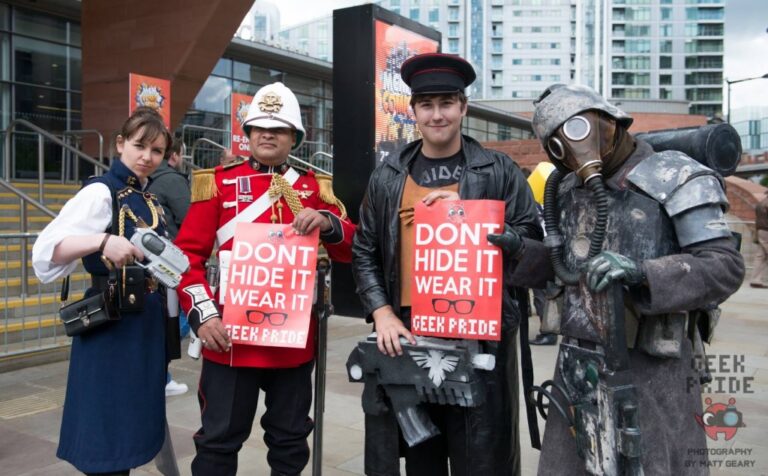
The weather was great across the weekend, and even when Manchester brought its inevitable deluge of water, it didn’t dampen spirits. I absolutely loved the level of Cosplay Manchester has to offer now, it really has upped its game, it was fantastic. Although the number Cosplayers were vast, the EuroCosplay competition is steam-rolling towards it’s conclusion. The competition was fierce, with several Cosplayers looking amazing (check more pics out HERE), however Bryony Harris, of Kaldorei Cosplay, smashed all opposition to become crowned MCM’s winner.

She will now go on to represent at London’s final in a little under three months time (GO MOTH BABIES!). What makes me proud to be a geek, and I am not afraid to admit it, its the acceptance to just be stopped and photographed. I love it, it makes everyone’s day when they get a picture with their “Hero”, so thank you everyone who Cosplays!

The atmosphere at the event was great, the air was filled with excitement and enjoyment, no negativity, just a relaxed sense of being. The main hall was a buzz, filled with not only the stalls of people looking to sell their wares, but it was rife with demonstrations for everyone to try. Esdevium Games brought up their many games for us to try, and I happily watched (and assisted with sound effects) a game of Star Wars: Armada! Those guys worked tirelessly all weekend to bring great games to life for those of us who have never tried them before.

11863307_1000557493308300_1222265397717281486_n11201878_1000557686641614_4253602002574460855_n11828692_1000557636641619_4773215591837035131_n

Konami also had an area for those of us who are also new to Yu-Gi-Oh collectable card game, informing us all about the competitions that are held around the UK. Gamemania had a stand for those of us who are console gamers, sadly I never got a chance to try any of the games out, so let me know what you thought. Finally we saw some amazing PC builds at the Gladiator Computers stand, water cooled machines of excellence! These masterful machines are hand built to perfection, and showcased some seriously hardcore games, at amazing levels of performance. Definitely be saving up to purchase one of their builds, as I need a new PC.

Also in the hall, hidden away, were Redshirt Films, a great Independent Film company based out of York. Some of their great work includes “I am Tim” a web series based around Tim Helsing, the last descendant of Van Helsing. “Nights of the Round Table” a short web-series based around the mishaps of a group of role players. Finally their up and coming film “The Away Mission” is about two Red shirts left behind on a planet, and although not out yet, is something I am looking forward to watching (Trekkie here!). We were lucky to get an interview with Jaime and James, both writers and stars of Red-shirt Films, check it out here.

One of the reasons we go to events is to meet the stars, and we did manage to meet a couple. Katrina Law and Karl Yune were in Manchester to talk about Arrow, and although it was cool to see them, man they were swamped! Maile Flanagan was situated in the main hall, talking about her voicing Naruto and generally being around most of the day for people to get photos and autographs. Robert Llewellyn was around on Saturday discussing Red Dwarf, but again he was packed with fans vying for his attention. We don’t like taking fans away from their Geek out moments. However we did manage to catch Sylvester McCoy, one of the most famous Doctor Who’s, and grab some words with him, check that interview out here. Finally we managed to out bid all other Geeks and grab some time with Sean Kelly of Storage Hunters, talking about his upcoming comedy tour around the UK.

To wrap the weekend off I took a walk around the… “….The Comic Village. You will never find a more talented hive of artists and writers. We must be cautious.” Okay, it was a bad play on words, but amongst this well placed crowd of tables are some of the United Kingdoms best talent to date. The famous UK award winning illustrator and comic book artist John McCrea was present, displaying his work from DC & Marvel. Lee Bradley, a UK based artist who has drawn Spider-man & Transformers, and is currently working with Marvel. Jack Lawrence, creator of Darkham Vale, whose other work has blessed the pages of 2000AD, Dark Horse & Image Comics. Romantically Apocalyptic were present, with their stand seriously representing “Zee Captain”, a great web-series comic that is well worth your time. Lastly, but definitely not least, “Metal Made Flesh“, which was funded through a Kickstarter a while ago. A Cyberpunk illustrated book, written by Jeremy Biggs and drawn by Simeon Aston, this is a collection of three short stories. Brought together by great writing, and beautiful artwork, this is a labour of love. It was a great pleasure to meet Jeremy, and the book is outstanding.

So overall I had a great weekend, MCM was fantastic! Since its origins it has come so, so far, creating a place where Geeks in and around Greater Manchester, can be themselves. The Cosplay, the atmosphere, the space, the offerings; all of it has come together to create a great convention! If things can only get better, then Manchester is going to be setting benchmarks. I had such a good time, I even forgot to write about the only negative part of MCM, but I can save that for another article. I do not think it fair, nor right, to sully the great weekend. If you get a chance to go to the next one, I would definitely advise for you to buy a ticket and just enjoy yourself. Embrace the inner Geek, dress up, and rock out at MCM 2016.  See you there.

Check out more pics of the event HERE on our facebook

Calling all Board Game Designers! Chaos Unpub is Coming

Are you a board or card game designer? Do you have a prototype you’d like to get some feedback on? Do you fancy getting a gander at the next big thing in the table-top industry?

IMG_0631-300x224[1]
Rus by Mike Ibeji
Well, if you’re in the area (or willing to travel!) then this may be the event for you. Miles Ratcliffe of Chaos Publishing is holding a designer event on 24 October 2015 known as the Chaos Unpub, in the village of Sutton Benger near Swindon. This is open to anyone, from the amateur creator with cardboard chits and handwritten tokens, to the published designer with printed games in the market and even to people just looking to playtest and give their invaluable feedback.

City Rollers by Adam Porter

I’ve been quite fortunate to attend two of the last Chaos Unpub events and gained so much from both. To top it off, Miles and Dave (along with their capable crew!) put on a great venue with food, drink and feedback forms all supplied for a small donation. So if you want to get your game in front of some experienced play-testers and get the notes to take it to the next level then be sure to get your creative buns down to Wiltshire, I promise you won’t regret it!

For more information, visit the Facebook page here to book your slot and get some extra deets on the event.