Home Blog Page 108

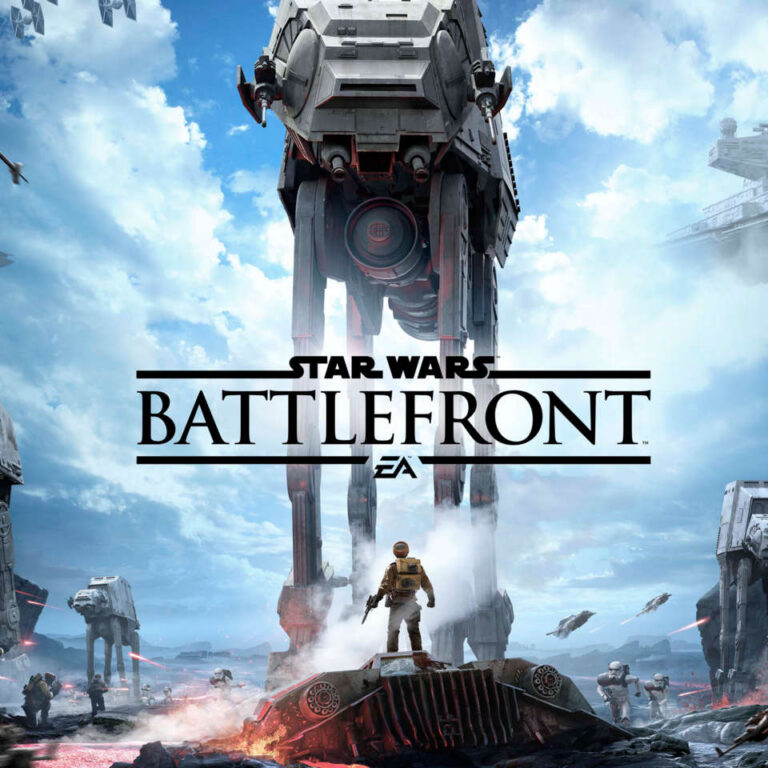
Star Wars Battlefront Beta – What a Non Starwars fan thought

2848833-2848826-star+wars+battlefront+key+art

Not being Star Wars fan (ducks for cover)  this game kind of slipped under the radar  but holy shit the beta was awesome. The feel of the maps, the graphics… I am in awe.

Let’s start this article with a statement shall we? I don’t have any strong feelings for Star Wars one way or the other, it’s always just kind of been there. I’ve seen the latest 3 (before the force awakens) films and too be honest, Jar Jar seems like a pretty cool guy. So why am I the one to write about this game? Because, I liked Battlefront 2.

In a time before getting digital games was easy and the PS2 was still king, as it pretty much still is in my opinion, me and my friend Joel used to stay up all night playing galactic conquest in battlefront 2 and it was genuinely amazing. Being young sometimes gives you rose tinted glasses for the older games but after a replay on PC everything seems to stand up today, so Battlefront should have its work cut out for it right?

00131d813258ee574996fd76adc0d5bb90d12cec
A subtle part of modern gaming that is usually overlooked is matchmaking. I know that most of my time playing games is usually spent waiting for lobbies or players to ready up but Dice have done a real service by making getting in to game absolutely painless. I’m not usually a fan of fixed servers and would usually prefer a server browser but I guess Dice have won me over this time.

When you select a game mode you are instantly put into a lobby with people and that to me feels like a huge success no matter what games you play; however, the actual way matchmaking works could have been executed better. Hopefully this is only because the game in beta but I had real difficulty getting me and 3 friends on the same team for a match. Some people will say this is a good thing, helping to balance matches but I call bullshit, The buddy system, as cool as it is really is a huge step back from the squads you could make in battlefield leading to mass frustration and constant hopping between games.

Some of the guys I played with are huge star wars ner… fans and every question about the accuracy of the game was followed by “it feels right”, “It’s exactly what I wanted” or “can you shut up?” and again, as a non Star Wars fan this filled me with a new hope, for games to be recreations and not just new platforms. The maps look breath taking, not so much Hoth as it’s just kind of a snowy planet but the drop pod level was absolutely gorgeous.

Star-Wars-Battlefront-_4-17_A
Everything about the combat of Battlefront screams Battlefield but also doesn’t at the same time, it does by having the same engine but doesn’t because I’m actually quite good at it which is a massive plus for me. The blasters feel powerful but believable, the vehicles feel natural to use and heroes… actually weren’t that great now I come to think about it. They’re fun to jump about as and use their powers but overall they’re just a bit too bland.

There are a bunch of mixed feelings towards all of the power ups being generated at random points on the map, I for one don’t hate it as I think it gives players a chance to run around and think tactically about where they are going to have to be but again, this makes the game feel a little bland when you’re camping at spawn points. The power-ups themselves feel pretty awesome, the thermal imploder is pretty much a wub wub grenade for any of you dubstep fans, what’s not to love?

If you didn’t try the Battlefront beta you really missed out, make sure to give it a try if you can as it’s definitely one to buy.

Kung Fu Panda board game announced – and it’s not a Monopoly reskin

Well, it certainly looks the part!

Yep, you read it right people. Modiphius Entertainment, makers of the John Carter RPG, Achtung! Cthulhu and the new Thunderbirds board game have signed a licensing agreement with Dreamworks Animation to produce Kung Fu Panda: the Co-operative game.

Letting you step in to the action as either Po or one of the Furious Five, the boardgame will feature intense dice rolling action, as the players co-operate to defeat Tai Lung and other villains from the Kung Fu Panda films and animated series.

Each of the heroes; Po, Tigress, Monkey, Mantis, Crane and Viper will be represented by awesome miniatures and have a growing arsenal of martial arts as they progress through a series of exotic adventures. By defeating villains, completing quests and helping others, players will gain Kharma to upgrade their characters abilities and secure the use of legendary artifacts from Master Shifu with which to face yet deadlier perils

This doesn’t give a whole lot away, sounding supiciously similar to many other dungeon-crawler archetypes like Descent and the Pathfinder card game. However, ME have already shown they can make great games with well-loved licenses. The popularity of Kung Fu Panda is enough to have me intrigued as to what they’ll do with this one, and whether it will have enough substance to not be written off as a kid’s game.

So what do you folks think? Worth checking out, even if just to play as a chunky panda who kicks tooshie?

Images and press release from Modiphius Entertainment.

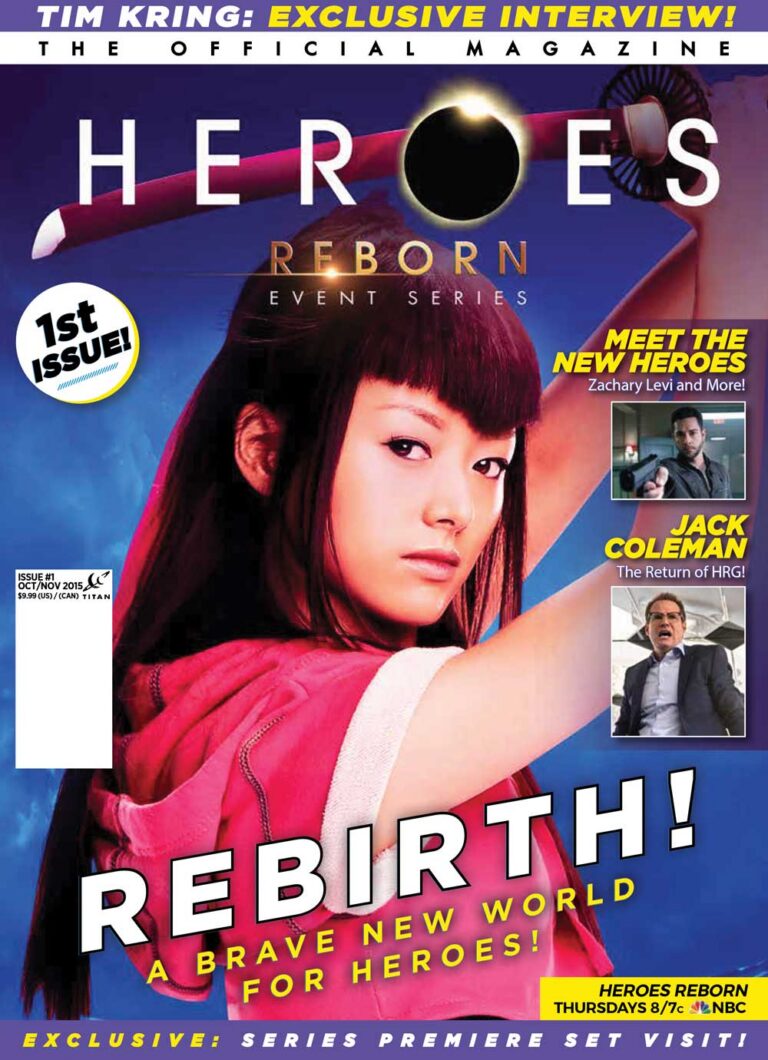
Heroes: Reborn Event Magazine (Issue 1)

Heralding the return of the TV series Heroes is Heroes: Reborn, the Event Magazine, a special magazine scheduled for a limited-run whilst Heroes: Reborn is being aired.

Those who are slightly older will recall the awesome first season of Heroes, as well as the subsequent seasons that suffered from the writer’s strike and the law of diminishing returns. Thus, there is a lot of back-story involved in the world of Heroes for those that are new to the franchise, especially as some of the characters from Heroes will be returning in Heroes: Reborn.

As such, Heroes: Reborn, the Event Magazine is an in-depth primer into the world of Heroes. The magazine offers insights into the characters, new and old alike, with a series of interviews with the actors. What was especially fascinating was the interview with Heroes creator Tim Kring. Unlike other magazines however, there are also interviews with directors and designers.

The magazine takes care not to reveal too much of the plot for Heroes: Reborn, but there are some inevitably mild spoilers to be found. Also, the magazine does not delve into the back-story from the previous series of Heroes, which would have helped people new to the series.

Heroes-Reborn-Magazine-1

Official Force Awakens Movie Poster revealed

Well its here, the Official poster for the Force Awakens!

What do you think…. on a scale of 1 – AWESOME!?

so many high hopes for this film and is that a new Deathstar in the background?!!

capture image

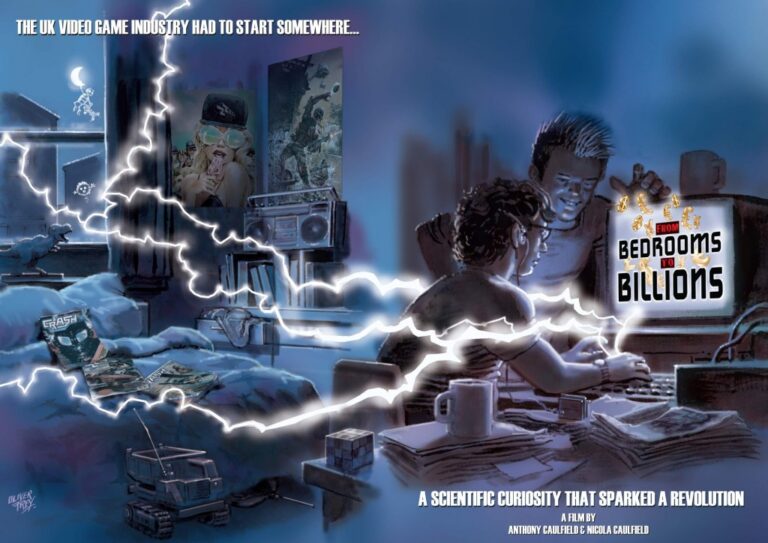
From Bedrooms to Billions

Layout 1

Film title: From Bedrooms to Billions

Director: Anthony and Nicola Caulfield

Starring: Peter Molyneux, Jeff Minter, Dave Perry and many more.

Release date: 3rd October

Certificate: E

Available to watch via DVD/Blu-Ray & Netflix.
I haven’t seen many documentaries that cover video games and their history, and of the few that I have seen such as Video game: The Movie and Atari: Game Over, the focus is aimed more towards the rise and popularity of the American/Japanese video games industry. Yet within these few documentaries one area seems to be constantly overlooked, if not left out altogether. However directors Anthony and Nicola Caulfield set out to fix this little issue in 2014 with their documentary From Bedrooms to Billions.

As originally planned, From Bedrooms to Billions was intended to be a 3 part television show, but due to UK Broadcasters believing that the video games market was too niche, it was never commissioned. This didn’t deter the eager directors though, and turning to crowd funding, they got their film made. Told in 3 parts, the documentary focuses on the rise of the industry, the steady level and finally the gradual fall due to the rising popularity of both American and Japanese games, which as the observant might see, is covered in the opening credits.

Focusing on the rise and fall of the UK’s video games industry during the 1980’s, From Bedrooms to Billions offers an extensive insight into the lives of a small group of bedroom developers who decided to create their own games, resulting in a movement that turned the world of video games on its head. It may come across as an extreme statement, but as From Bedrooms to Billions shows, the effects of the UK’s rise to dominance in the video games industry are still being felt today, with many of the original developers now working in high positions for the American video games industry.

One of the key things that makes this documentary so enjoyable is the lack of narration throughout, with the film being carried along by a collection of wonderfully shot interviews intertwined with a great selection of archive footage, (some of which has never been seen before), in a film that is clearly dedicated to the enthusiasts of that particular era.

The cast is impressive, with people such Jeff ‘Yak’ Minter, (the ever friendly founder of software house Llamasoft), the elusive creator of Jet Set Willy Matthew Smith, and computer composer Martin Galway, who gives an insight in to what happens behind the scenes. The result is a fantastic well-structured documentary that both directors have created by bringing these individual stories together.

On more than one occasion, the UK video game movement of the 80’s is compared to the earlier punk movement, with references and images to various icons from the punk era making an appearance. I don’t personally agree with the comparison as the punk era was seen as a generation who wanted to fight back against a system that they believed was flawed, whereas the original developers had to pave their own way with technology that had never really been used before.

At around two-and-a-half hours long, From Bedrooms to Billions can certainly feel like a lengthy documentary, (my first viewing was done in 3 segments) but it never felt like it was a chore to watch due to the overall enthusiasm and enjoyment of all those who featured in the film.

The knowledge is extensive and interesting and for someone such as myself, who grew up in an age where the big American/Japanese industries were already starting to take over, (I myself was lucky enough to have an Amstrad CPC 464 as my first gaming machine) it’s a brilliant insight into video game history, and how a bunch of bedroom coders from the UK helped shape the industry we know and love today.


Improper Books titles go digital!

0

According to a recent press release by Improper Books, their titles: Porcelain – A gothic fairytale, Night Post, Butterfly Gate and the newly added to the roster Mulp, are to be available digitally on Sequential, a comic and graphic novel app, available for iPad. Sequential works with publishers including Knockabout, Fantagraphics, Dark Horse, Top Shelf, SelfMadeHero, NBM, Secret Acres, Myriad Editions, and Blank Slate Books, as well as a number of small press publishers and creator-owned works.

The Improper Books titles had previously been available only as hard copies, but since 14th October, they have entered the digital world as well.

Since this was a special occasion, these titles can be bought at half-price until tomorrow, 19th October.

Their latest book: Briar, by Benjamin Read and Chris Wildgoose will become available come the 21st of October.


“We’re absolutely delighted to have partnered with Sequential to release these books digitally for the first time. Sequential’s app and carefully curated line is truly impressive, and having been asked so many times by readers, it’ll be wonderful to finally have our books available digitally worldwide,” said Benjamin Read, one of the founders of Improper Books.

Russell Willis, the founder of Sequential, said, “We’re thrilled to welcome Improper Books on board. Their impressive line-up of creator-owned work is original, enchanting, and beautifully illustrated, and fits perfectly into Sequential’s curated collection of the best indie graphic novels and comics.”

SQ - Improper Books - White iPad


Halo: Fleet Battles Review

Newly minted studio Spartan Games brings us Halo Fleet Battles, translating the all-conquering Xbox game franchise to a tabletop near you, Spike Direction spins up his MAC and gives it a go…

Halo: Fleet Battles enables you to fight space battles set in the Halo universe, either as the human’s UNSC Navy or The Covenant, on a scale roughly comparable to Star Wars: Armada, largely focused on the movements of capital ships.

What we’ve got here is, The Fall Of Reach set, which acts as a starter set for Halo: Fleet Battles, giving you everything you need (except for a tape measure) to play a pretty decent sized game, or campaign right out of the box, based on that famous losing battle from Halo history.

The Epoch Heavy Carrier, never before seen outside of Bungie/343 archives.

Opening the box the first thing that struck me is how much you get, for roughly £80 you get rules, two huge fleets (the models are shown actual size on the side of the box, nice touch),cardboard scenery in the form of planets, asteroids and such, and an absolute mountain of counters, reference cards and special dice, compared to similar games this is pretty good value, and the models are made from appropriately coloured plastic, so they don’t even require painting (unless you really want to, I’ve always thought it a real chore for anything based around ships or spaceships), and they look fantastic, Halo fans will recognise the covenant ships from the games, and the human frigates such as good old Forward Unto Dawn are represented by a horde of teeny models each about the size of a 20p. The UNSC fleet centres around a Epoch class heavy carrier, a ship apparently designed by someone at Bungie many years ago, but never seen by normal humans until the release of this game, a nice bit of deep background there.

I was keen to get my hands on a Pillar Of Autumn (that’s a Halcyon class cruiser folks) and while there are similar ships in the set (Marathon class heavy cruiser) that exact class of ship seems to be coming in a future expansion, along with representations of The Master Chief, Cortana, Captain Keyes, and truly MASSIVE models of the Infinity and covenant supercarrier Long Night Of Solace, so there’s lots to look forward to, if this game performs well.

The mechanics of the game are pretty straight forward, your fleet is split into battlegroups and the players move and attack with alternate battlegroups until all their ships have been activated, there are also mechanics for launching fighters, bombers and attack craft, all of which boils down to gathering great handfulls of special dice and rolling for hits, with modifiers for speed, intervening terrain, special weapons and so on. The way it works is not a million miles away from X Wing and Star Wars Armada.and pretty intuitive once you’ve got it all figured out.

And there’s the rub, a fairly major snag which seriously got in the way of my enjoyment of this game at first, and it centres around this little fella.

DSC_0247
Otherwise know as the riddle of the sands…

It’s not badly written as such, but it is written in a way that makes learning the game very difficult, hiding the essential details of basic game mechanics behind unnecessary fluff or in separate sections, with one crucial nugget of information tucked away, chapters apart from it’s friends in the movement phase, or whatever. This means referring back to the rulebook is a bit of a pain, in fact, and I may be wrong, but there’s at least one rule that I couldn’t find in the book anywhere, that I’ve only seen on the reference sheet.

I’m also a little confused as to what level of player this is aimed at, in some ways it seems as if Spartan Games want to attract Halo players who may be new to the tabletop, for example there’s a lengthy, adorable section towards the beginning of the rulebook, explaining what dice are for, that I’m now going to quote,

“Halo Fleet Battles uses dice to generate results for actions. The use of dice generates exciting random outcomes that simulate the chaos of battle, the varying skill levels of crew members and much more. The use of dice means that you can never completely predict the outcome of any tabletop action, and that, even in the darkest hour, there is always hope…”

Problem is, anyone green enough to need that explained to them is going to be hopelessly lost in the gaming design mire that follows, and more experienced gamers are just going to want to get to the meat and get playing, without the handholding.

It’s not all bad though, during my playtesting I was rescued by my saviour, The Fall of Reach campaign guide. This series of missions introduces the main rules a few at a time, giving you a couple of games to work out the basics, before realising two games in you were doing it all wrong, getting the hang of it, then throwing in the rules for fleet commanders, attack craft and so on. Without that I’d have been hopelessly lost, with it I just about figured out how to play properly.

It’s not all doom and gloom though, now that I understand it, this game is pretty good. The basic mechanics are straightforward, hingeing around the old ‘roll x dice, count your successes’ formula, but modifiers coming from terrain, fleet commanders and ship loadout rules among others enable players to steer outcomes, either by cancelling out their opponents successes, or altering the Firepower Rating, which changes what you need to achieve in order to get a success. It’s pretty well balanced, with the UNSC having numbers on it’s side, while the Covenant ships are hard as nails.

The UNSC fleet converges, combining their fire for maximum damage. While a Covenant Battlecruiser swoops in with it's Plasma Beam sweeping through multiple targets.
The UNSC fleet converges, combining their fire for maximum damage. While a Covenant Battlecruiser swoops in with it’s Plasma Beam sweeping through multiple targets.

The overall feel of the game is also quite satisfying, with the emphasis clearly put on tactical maneuvering and the strategic skill of the players, rather than throwing in too much randomness, or struggling with steering the ships into the right position (the movement mechanic is very simple and direct, and measuring distance is permitted at any time, there is no range guessing), as in the aforementioned Star Wars games. The end result is to feel like a UNSC admiral on a bridge somewhere, following a battle on a tactical display, giving orders for firing solutions and so on. Should it catch on, this would make a great tournament game.

In short, despite niggles with the writing of the rulebook, Halo Fleet Battles has got off to a strong start and I heartily recommend to all Halo fans with tabletop leanings,

I need more people to play with!

Matt Dixon – Transmissions 2 Kickstarter

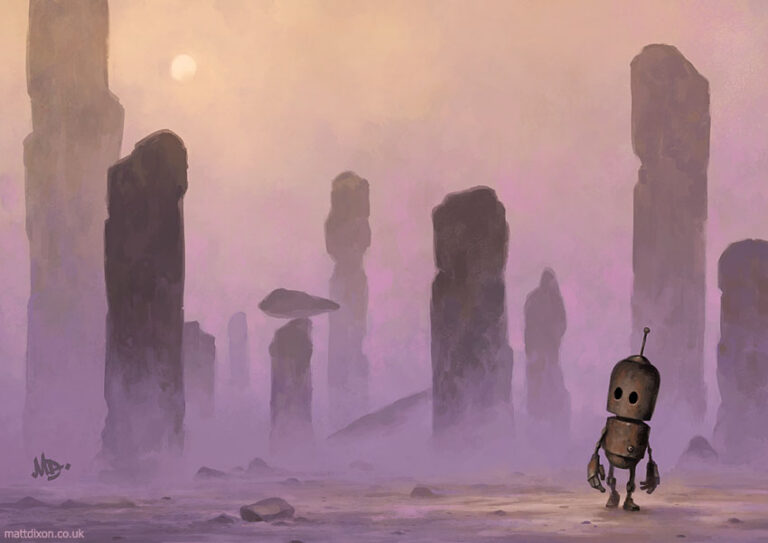
My favourite artist at the moment, apart from my Big Sis (Anarkitty) of course, is a rather talented and genuinely nice chap called Matt Dixon.

Matt has been painting and illustrating for many years now and has clients that include Blizzard, Electronic Arts and Wizards of the Coast, but if his name sounds familiar, or even his face ( replete with long flowing mane) then it is probably because you have seen him at… well… every con in the country.


Mr Dixon is a prolific Convention exhibiter and a regular face on the con scene, (something my wallet will not thank him for) and you will have no doubt walked past, or admired, his booth (easy now) and wears at some point in time; his forte  being curvy, fantasy Pinups or, as is the case of this article, pretty damn cute Robots.

Having had great success with his first art book Transmissions, Matt has being busily working away at more designs and is now looking to release a second book, Transmissions 2, via Kickstarter

https://www.youtube.com/watch?v=WIFg1TwdaFw

“My first collection of robot art, Transmissions, was published in 2013 and has been a popular item on my comic convention table ever since. I’ve painted lots more robots since then, and it’s now time to publish a new volume, Transmissions 2. Transmissions 2 will be the same format as the first book. A4 in size with 32 full colour pages and perfect bound with a laminated soft cover. Like Transmissions, it will include a mixture of individual paintings and sequential art.

The project was funded in less than 48 hours, which was amazing. I’m so pleased I chose to use Kickstarter to fund Transmissions 2 as it’s really brought me closer to the people who enjoy the art. It’s been great to get so much support and feedback. It really feels like a team effort and I’m really excited to see how things progress. We’re now working towards our first stretch goal which will add extra pages to the book. It would be wonderful to hit that goal so that all the backers get a bigger book, and I get to spend more time painting robots!”

As you can see, it has already smashed its initial target and is looking to move onto some great stretch goals. So why not get with the Programming and make a pledge to own this absolutely stunning book.

You can Check out Matt’s Kickstarter HERE

And you can also view an interview we did with him last year at LSCC below

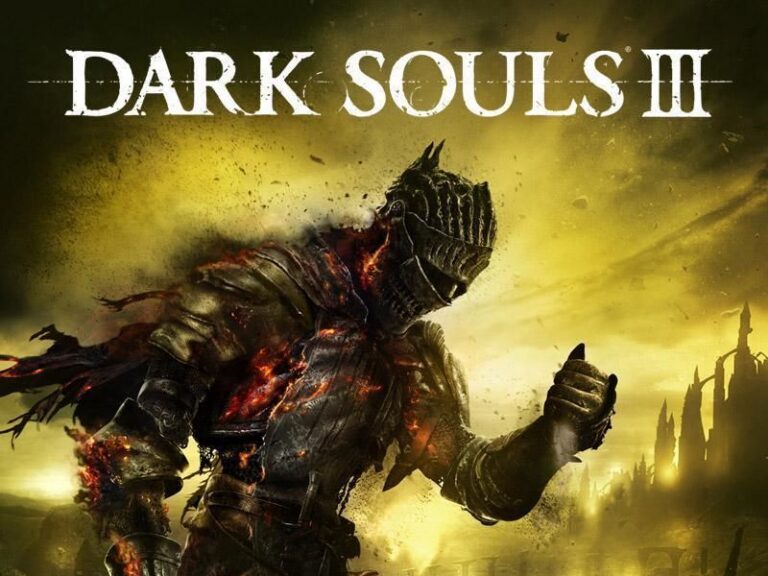
Dark Souls 3 – More Like Demon’s Souls 2

0

I am an enormous Soulsbourne fan, having completed each game multiple times and having done SL1 runs of the Dark Souls games (I’m not yet hardcore enough to do an SL1 Demon’s Souls run, and will complete my BL4 Bloodborne run eventually). These games, spearheaded by renowned games designer Hidetaki Miyazaki, are special in a way many games could never hope to be, and they’re harder than a concrete hammer so they grow on you like the world’s best virulent ailment.

Which I why I was happy to get some time on the Play Expo’s Dark Souls 3 machines on Saturday and Sunday, playing through 3 of the 4 available classes and working my way through the playable demo. Here, then, are some of my initial thoughts based on my 40 minutes of gameplay.

darksoul3

Visuals

I’ve seen the art style for DS3 labelled as ‘Dark Souls put through a Bloodborne filter’, and that definitely shows. The world is a little more ragged and jagged than Dark Souls 1 or 2, with more texture and details even on the basic enemies. Everything has been upgraded significantly for the new generation, and the animations are just as smooth and well-crafted as expected from a major AAA release.

One little touch I liked was how one’s Estus flask becomes progressively duller as you drink from it, providing a visual reminder of your luck and lifeline running low that works much better than a lower number. It shows an incredible attention to detail, and makes me excited to see how other standard items look as they’re used.

dark_souls_3_gamescom_screens-6-600x338

Weaponry

I got to play with a Broadsword, a Spear, an Axe, a Greatsword and the Scimitars, as well as using some magic and the parry shield on the Academy Assassin class. The Spear has a bit of a wind up, as a real spear would, which requires a lot more learning than I had time for, and the parry shield has a tight window along the same lines as Dark Souls 2. This, and only limited shields being able to parry, makes for a different experience where parrying is not the default tactic, another positive step forward.

The Broadsword and Axe handled very well, moves chaining together in a realistic way, and the Scimitars were quite flashy. One thing I found was that the poise damage – the extent to which an enemy is knocked back or staggered – is much less than in previous games. Only the Greatsword really stopped an enemy mid-tracks, and then only standard-sized enemies.

Unlike in Bloodborne, blocking is key. There are some overhead smashes that ignore shields, meaning playing like a cautious turtle cannot be the default setting, but it was nice to see the shield be so important. The parry shield understandably didn’t negate all damage, and blocking took more stamina, but it was still vital to surviving the game’s enemies.

Magic was standard. I wish I had more to say, but it did what’s expected of it. Perhaps a little slow, which might be meant to balance it as a tactic in PvE and PvP or might be a sign of a low level character. One would hope the former.

Dark_Souls_3_-_E3_screenshot_4_1434385717-Copy

Gameplay

The thing I most though whilst playing through the game, rolling and back-stepping, back-stabbing and guard-breaking, was how alike the game is to Demon’s Souls. The atmosphere in the demo was very 1-1, and the animations and quickness of the rolling reminded me of the true Alpha of the Soulsbourne games. There’s even a Red Eye Knight guarding something important! Dark Souls 3 seems like the game Miyazaki would have wanted to make right at the outset, at least from the slender slice I got to play.

An improved Demon’s Souls though, with back-stabs a little more difficult to pull off than in Demon’s Souls and Dark Souls 1, but still important tools. Their window is narrow, and some enemies know how to counter fishing for the back-stabs. And, as I mentioned, parrying is harder too, requiring a broader range of tactics from players. Also, the noise you when you successfully land a critical blow is like God him/herself slamming the weapon into your enemy, bloody thunder.

Aside from that, there is much of the intricate level design fans have come to expect, with dead ends and routes that double back on each other, shortcuts to unlock and traps laid carefully for unsuspecting players. And those damned Hollows with the firebombs are back, ready to wreck your day.

Overall

I’m really damned excited.

Dept of Monsterology Sabbaticals #1

0

department_monsterology_vol2_rennie_holden_renegade_arts_preview_header

The last time I mentioned Dept. of Monsterology published by Renegade Arts Entertainment it was in the back end of 2013, an impressive pulp sci-fi inspired indie comics gem from writer Gordon Rennie and artist P J Holden that definitely made an impression.

Now in the back end of 2015 Dept. of Monsterology has returned with the imminent release of the of “Sabbaticals”, the second book in the series, with the story following the events of first book “Monsterology 101” here’s a look at the first issue.

Michael Calvary and Emma Hampton of Team Carnacki are venturing into Scotland investigating a house said to be the gate way to another world, whilst Professor Sonam and his young protégé Samwi are in Nepal. Team Challenger however are in South America where Amelia Court and her partner Harry Wilmington (a brain encased in a robotic body) have stumbled across something in the jungle whilst in the field with some grad students. Elsewhere Professor De Tovar is on his own personal mission and Professor Brooker is playing around with a dimensional portal in his lab at Dunsany College .

For a first issue this sets a lot of plates spinning establishing where the numerous characters are and what’s happening in their locations which doesn’t leave much room for anything else. What it does do though is leave the reader wanting to find out what’s going to happen next with a completely bonkers cliff hanger ending, which is exactly how a first issue should be. As well Gordon Rennie’s pulp infused writing ,which seems even more gleeful than before, P J Holden’s art (and Steve Denton’s colours) is a big draw with the pair creating drastically different environments each one looking suitably atmospheric, whether it’s eerie houses next to Scottish Lochs, the dense jungle of South America or desolate mountains in Nepal.

Dept of Monsterology Sabbaticals will be published by Renegade Arts Entertainment November 25 Issue one is available digitally now with other issues to follow prior to the books release.