Home Blog Page 8

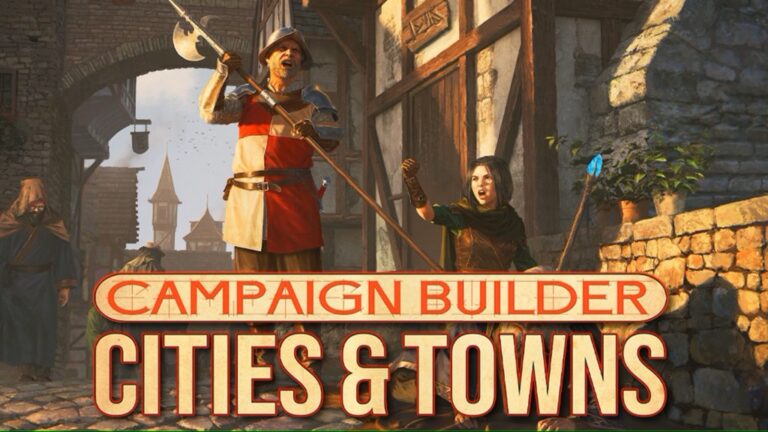
Campaign Builder: Cities & Towns

When planning a campaign, it can be tough to create environments for your players’ characters to occupy. It can become especially troublesome as the number of towns and cities that could populate your world become denser and more intricate. How do you know what questions to keep track of when constructing your settlements? Is there a proportion of houses to taverns you need to be aware of? Why do they exist in the first place?

As a writer, making these choices is essential, as you raise the expectations of your audience; be they the reader of prose or a band of adventurers coming out of the tavern and feeling just fine. Questions also have to be considered as to how well documented the environments should be, and whether trade routes have been firmly established and need to be placed on a ‘consistent’ map.

Smaller maps allow for focus on particular places as different locations are created, giving each town and city visited distinct identity from its neighbours – but care needs to be taken in ensuring that there is balance and a smidge of logic as to how all the pieces of that puzzle fit together.

Keeping all this in mind, Kobold Press’ kickstarted Campaign Builder: Cities & Towns is a guide for people who think everything above to be the most daunting thing ever, which, to be fair, is totally understandable.

As someone who has tried to tackle the question before, I know just how even a glance at a map can raise certain assumptions and questions before exploration has even begun. Mostly, a map reveals where places exists and where they are relative to others, but also how large the scope of exploration is expected to be – a town map invites a tighter focus and in-depth dive into a location with plots driven by organizational and interpersonal conflicts, whereas a world map invites awe and a desire to explore every nook and cranny and possibly an inclination that their quest is directly tied to geopolitical conflicts.

The first chapter from Kobold Press’ introduction to city building brings your attention to the interpersonal environment of your city by posing some questions which help build the bare bones of the city you want to build;

  1. What is the city’s age?
  2. What is the city’s primary function?
  3. What are the city’s trade goods?
  4. What is the city’s size and population?
  5. What is the city’s government structure?
  6. BONUS QUESTION: What is the frequency of and general stance on magic?

It is fascinating to consider these and links to the larger question of what do people eat? How do the inhabitants of this town sustain themselves? What do they farm and/or forage? Do they import goods, and if so how do they afford the costs? Or are they exporters, in which case where does it go and how far? It seems like the kind of questions that would not normally be considered, as they have no plot-relevance, but it is one which supports how believable you can make the world feel.

These considerations raised by Kobold Press are important. Not only are these questions that players might raise, but also it allows the city to be manageable for Dungeon Masters. How long has the city been around for? If it’s relatively new, it’s presumably rather – and also has some teething problems with law enforcement and managing with local wildlife.

Bringing magic into the equation is an optional question, which depends on the relevance to plot or setting that is constructed – is it wild and free, educated and monitored, or frowned on and hunted down? Each answer sets a tone for the city and its inhabitants and helps develop a feeling within of just how unique each place is to visit and the possibilities it holds.

That being said some of the work here could be taken with a pinch of salt. Ironically, it’s the section on economy and trade goods. Whilst it might seem like a small nitpick, parties may decide to acquire goods for themselves. Dungeon Masters should probably adjust some of the prices according to their own logic, such as grain and flour – despite flour is made using grain, the processed product costs exactly the same (1 copper) as the original foodstuff.

Logically, there should be a least an increment of one more copper due to the labour costs to process the food. There are other minor issues which crop up, such as unspecified units of measurement, and some missing prices for some of the trade goods mentioned in city production tables.

A lot of questions are asked and it’s only the first chapter. There’s more to building a city than just those questions, and Kobold Press divides the book into five chapters to provide Dungeon Masters with ample opportunities to expand and develop the intricacies of the internal operations of their cities and aspects tjay players can become involved in

  • Chapter 1 sets the parameters for your city: its age, primary function, trade goods, size and population, and government structure, plus the level and prevalence of magic.
  • Chapter 2 details geography and climate, architecture, and city districting.
  • Chapter 3 talks about the people: rulers, the guilds and organizations, henchmen and hirelings, and monstrous citizens. This chapter also includes statistics for urban NPCs and monsters.
  • Chapter 4 shows you how to run urban adventures and campaigns: how to stage encounters, the roles of citizens, crime and punishment, city wealth and taxation, how to direct player characters and keep track of nonplayer characters, and more.
  • Chapter 5 brings you player options, like character backgrounds, subclasses, spells, and magic items, as well as new rules for incorporating a contact network and running a business.
  • The book even includes an Appendix within which are numerous tables and diagrams to support the visualisation and random generation of cities!

I found Kobold Press’ work to be succinct and informative, breaking up the questions with gorgeous artwork, examining aspects of the city to help develop its inner workings and machinations. There is even an interesting guild guide, laying out the responsibilities of NPCs, or even players, as well as the benefits such a position would offer.

The fifth chapter offers more involved player backgrounds and subclasses to enable players to feel invested in these cities, such as a street magician for roleplay opportunities, a monk built around parkour for making there way through the city and a circle of sewer druid – just imagine the possibilities there…

This is a fantastic toolkit for all who want to improve their worldbuilding arsenal, and one we recommend to writers and dungeon masters everywhere.

The Great War: Western Front – Review

WW1 isn’t a war that you get many games about, due to its static nature, but seeing the footage of The Great War: Western Front on Youtube replete with a campaign map, stacks of units on each side, real-time battles that included creeping barrages, tanks and waves of infantry really got my Historical gaming juices flowing.. Basically WW1 Total War right?!

And so, I got it on steam for £34 spent a couple of hours going through the tutorial, readied myself for the epic campaign annnnd completed it in one sitting of 5 hours. To say I was disappointed was an understatement.

Conceptually the game has a lot of promise. You have a campaign map thats broken into hexagonal territories, each consisting of a number of stars to indicate how many times you have to win a great victory before you can capture one. Lesser victories increase battle fatigue and reduce national will (this is the main mechanism for winning the game) but to take an area you need a great victory and that means taking all objectives. So in theory quite hard to do and with only basic tech at the start not something you can do from the off, even with overwhelming force.

On top of this if you don’t carry on an attack in an area the stars are replenished and it puts you back to square one (or Hex one as it is). So far, so WW1, great! There is an added level of nuance to the campaign map and battles, in that when you fight you build trench lines, add machinegun nests and barbed wire, all of which persist throughout the game when you fight in the same area. Also if you fight in an area for the first time, there maybe be minimal trench lines or even non at all and you have to start from scratch which is a great idea. You’re building your defenses and they affect how effective that area is at repulsing attacks. 


Seeing waves and waves of enemy troops smashing against your trench line, watching the first line fall, and then reinforcing from reserve lines you built is enjoyable and placing artillery in optimal positions as well as having pre-battle bombardments from siege artillery is a great touch. To give that feeling of trench warfare.

The thing is though there’s all this potential in the game but it seems squandered or even just bolted on. The campaign map is tiny, the campaign itself is super short and I spent most of my time doing very little because I didn’t want to waste national will by launching assaults on trench lines I knew I’d lose against. So much so that the battle of Ypres didn’t happen until like May 1918 and when I had 6 to 1 odds on the enemy and half of my army artillery and tanks.

Added to this research is slow, battle is Infrequent (based on the short game) and there just doesn’t seem to be much depth within. Even the persisting battlefield is pretty pointless because you don’t really get to witness it that much. Also you can’t destroy trenches and artillery craters/damage disappears.

It’s quite frustrating to be honest because you can see what the game could be and if you don’t mind just multiplayer battles, if you can find one, then it’s not bad but for that grander experience it has very little to offer and for me kinda turned me off the whole thing.

A shame, great potential, badly executed.

Roll Initiative!

To celebrate the release of Dungeons & Dragons: Honour Among Thieves – which explodes into cinemas in the UK and Ireland on March 31st 2023 – we have a selection of D&D merch to give away that you’ll truly treasure, including branded hoodies, caps, water bottles, tankards and tote bags.

If you want to be in with a chance of winning these amazing prizes, then like and follow us on social media and tell us your favourite character class from D&D. Winners will be picked at random, so tag a friend, party member or dungeon master.

A charming thief leads a band of unlikely adventurers as they embark on an epic quest to retrieve a long-lost relic, but their adventure goes dangerously awry when they run afoul of the wrong people. Dungeons & Dragons: Honour Among Thieves brings the rich world and playful spirit of the legendary roleplaying game Dungeons & Dragons to screen in a hilarious and action-packed adventure.

Dungeons & Dragons: Honor Among Thieves Review

Last night was the UK premiere of a film I’ve been waiting to see since talks began in 2013 and to say I was apprehensive was an understatement. The last D&D film wasn’t exactly great and Hollywood doesn’t have a great record of sticking to the source material. So with notebook in hand I walked into a film and to quote a fellow Dungeon Master “Take a chance, roll the dice” and lets Roll Initiative with Dungeons and Dragons: Honor Among Thieves.

The film is set in the “Forgotten realms” or to most of us it’s just called “The Realms” and tells the story of a group of adventures looking to “acquire” a long lost relic, but find themselves running afoul of the wrong people…

On top of this each character has a well-known class:

  • Chris Pine as Edgin Darvis, a human bard and former member of the Harpers. 
  • Michelle Rodriguez as Holga Kilgore, a human barbarian who was exiled from the Uthgardt Elk Tribe.
  • Justice Smith as Simon Aumar, a wild magic half human sorcerer who is the descendent of Elminster Aumar, a notable wizard.
  • Regé-Jean Page as Xenk Yendar, a human paladin who narrowly escaped the lich Szass Tam’s “rise to power” in Thay and as a result, “ages more slowly than a normal human”.
  • Sophia Lillis as Doric, a tiefling druid raised in the Neverwinter Wood by a wood elf enclave. She is a member of the Emerald Enclave and has organized a resistance against the Lord of Neverwinter who targeted the forest “for its resources”.
  • Hugh Grant as Forge Fitzwilliam, a human rogue.
  • Daisy Head as Sofina, a Red Wizard of Thay with a focus in necromancy and “ties to Thay’s tyrannical magocracy”.

So far, so D&D. And indeed watching the film it seemed to hit the TTRPG marks really well. to the point that you can follow the rolls as the party move through the film as if it was a party playing along on the tabletop. I found myself commenting a few times through the duration of the film “check for traps” “stealth check” “perception check” and of course specific character classes doing what they do…. barbarians, am I right?! which I thoroughly enjoyed. Watching Doric use her class feature to wild shape multiple times and then Polymorphing into an OWLBEAR! Was just pure D&D delight. Simon uses some fan-favourite spells as well which include Shield, Magic Missle and Pulse wave; While Sofina uses Misty step and Lightning bolt with ease.

One spell that was used that made the “Critter” in me clap and jump for joy was seeing the use of “Bigbys hand”, a spell often used by the Gnome Bard Scanlan Shorthalt of Critical Role group Vox Machina.

There’s plenty of heads-up details in this TTRPG adaptation that breaths character beyond just its special effects. Although the monster designs were straight out of a monster’s manual, especially on a chonky red dragon named Themberchaud that garnered a lot of laughs from the audience, the Characters themselves did seems slightly pre gened and left little to be attached to, character tropes are abundant coming with some dread, loss or a reason to prove themselves etc which is a general thing in DnD when creating a character.

They often use specified D&D terms to discuss spellcasting such as attuning, names that only players of D&D would know are thrown about like Mordenkainen, even using components and verbal incantations when casting spells, when rolls fail on them you can see enemies taking advantage of those “concentration checks” during fights. There’s one joke made about the “arbitrary limitations” of a certain spell that was used and got a lot of laughs.

When Honor Among Thieves utilises its tabletop source material, it becomes a D&D film that far surpasses the abysmal 2001 venture. Though Doric’s tiefling design is rather plain. I was expecting her to be red or blue or even purple, unfortunately, it only goes as far as horns and a tail. This being said we got to see other favourites like Mimics, Dragonborns, Tabaxis, Displacer beasts and of course Gelatinous cubes. The visuals were great and the wildshapes were clean, the use of cinematography especially for a fantasy realm was beautiful and was accompanied well with a soundtrack that would be more than welcome in a campaign setting in your own Dungeon.

Oh and if you’re a fan of the original animated series, you are definitely in for a treat. Aswell as a few cameos from the guys at Critical Role.

Was it perfect? No, being somewhat predictable and the characters not having a lot of depth did take away from it a bit BUT I did thoroughly enjoy it. Only time will tell if this much-evolved Gygaxian outing was indeed a Critical hit or a Natural 20?

Sci-Fi Weekender XIV

Sci-Fi Weekender is a massive UK festival celebrating the very best in science-fiction, fantasy and horror, which has seen people travelling from as far as Hawaii and Belgium to attend. Last year’s SFW was held just four months previously and the organisers had promised that SFW-XIV in Great Yarmouth would be bigger and better.

In short; it was.

There was a distinctly Wednesday (Addams) theme to the proceedings, due to the current popularity of the Wednesday series. Victor Dorobantu (Thing) was one of the special guests.  Also attending were Nina Wadia (Fate Mother in The Sandman) and Chase Masterton (Leeta in Star Trek: Deep Space 9).

It was great to see all the guests really getting into the event; Dorobantu gave an impromptu magic act and was always happy to talk about his work (interview coming soon.) Wadia proved to be charmingly mischievous, whilst Masterton was always warm and friendly. Unlike most conventions, SFW offers good accessibility to the guests, who remained happy to chat throughout the weekend.

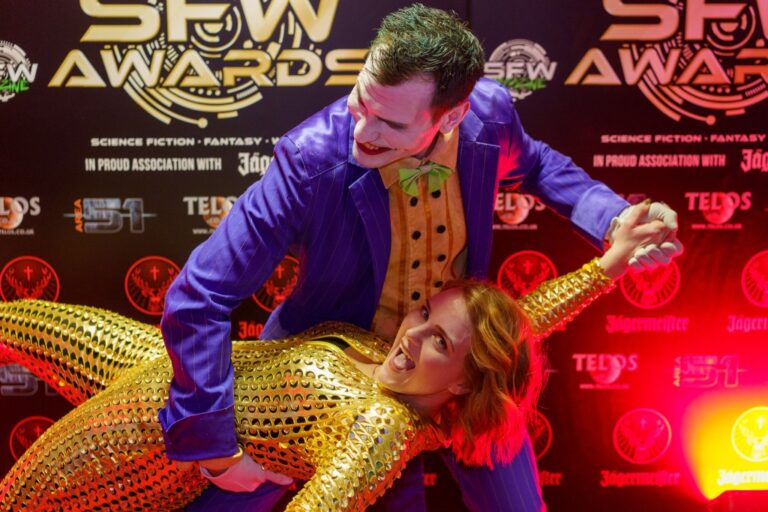
The event began with the SFW Awards ceremony on the Thursday night, which acted as a preview of the coming weekend, as well as recognising the hard work of the community supporting the event. Professor Elemental compèred the ceremony, with Madam Misfit coming on to entertain the audience.

Following the opening ceremony on Friday morning, there were interviews and panels throughout the weekend. These included talks by Dorobantu, author and researcher Dacre Stoker, and writer Stephen Cox, as well as panels discussing the popularity of horror, the art of Doctor Who and the passion of writing.

The evenings were set aside for a feast of entertainment.  The highlight had to be the Friday evening, with Madam Misfit’s debut on the main stage (following her breakout performance at the last SFW). The queen of chap hop delivered a punk-infused electric swing performance that blended rap with body positivity and inclusivity, and concluded with a conga-line throughout the main void, before a bouncing version of Nellie the Elephant.

This was followed by the cantina band Blues Harvest, fresh from their performance at London’s Mandalorian Forge, playing their blues-tinged tunes. The highlight of their set was when Darth Elvis came on to the stage for an epic performance of his songs, although this was underscored by the poignancy that this would be his final live performance at SFW, before hanging up his cape at Cantina 2. However, as Darth Elvis explained, going out on a high is what he always wanted.

Saturday’s entertainments were kicked off by the cosplay finals, swiftly followed by Jollyboat’s geeky sea-shanties, which were infectiously fun and delivered with a carefree enthusiasm. John Robertson was undoubtedly the highlight of Saturday night, with his live-action videogame The Dark Room . Terrifyingly hilarious, blending together gamer culture with biting inditements on modern life; “Congratulations; you survived three years of the world on Hard Mode…”

Comedians were interspersed throughout the weekend, including Pop-Up Puppet Cinema’s re-enactments of classic sci-fi films and Donna Scott’s wry observations on modern life. George Coppen had the audience in stitches with tales of his gloriously bizarre encounters as a dwarf, which highlighted the absurdity of modern life. His observations were relatable, emphasising the reality that there is no such thing as one-size fits all.

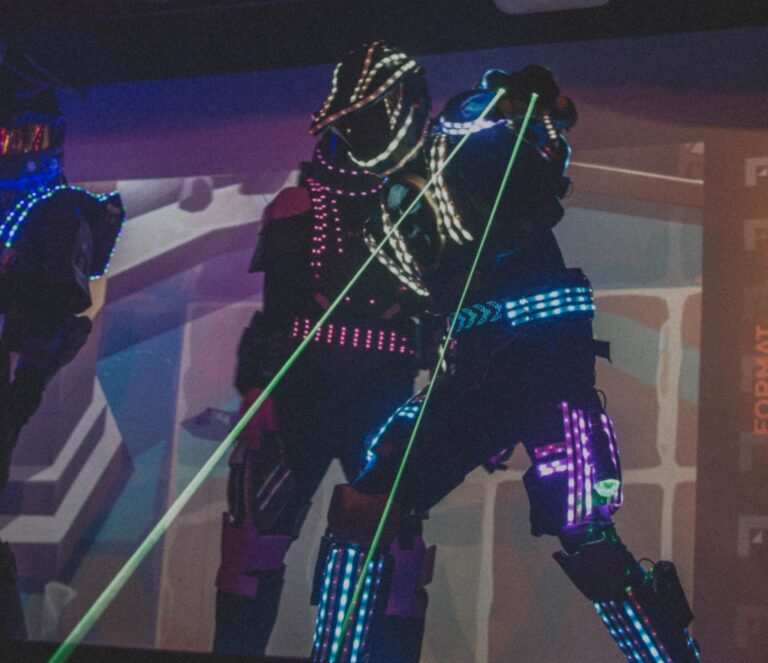
Weaving through all of this were the Area 51 performers, in their fantastic costumes, who added a carnivalesque flair throughout the proceedings and transformed a holiday park into a literal geek camp. This, when combined with the incredible costumes of cosplayers, created a truly magical experience. Meanwhile, Jimcredible’s endlessly entertaining compèring of the main stage throughout the weekend kept everything in line, despite the creative chaos around him.

Each night concluded with a DJ set on the main stage, with Nick Maxwell on Friday and Level Up Leroy on the Saturday. The latter was the grand finale of the weekend, which provided an epic conclusion with pretty much every guest on the stage dancing to Level Up Leroy in an audio-visual onslaught that celebrated the very best in geekdom.

SFW is an event that rewards direct involvement. Passively sitting back is absolutely fine and you will enjoy witnessing the shenanigans, but the atmosphere of shared joy that has been cultivated means that those who interact will get so much more out of the event. Even the holiday park staff involved themselves, with the bar staff in costume and the security team clearly enjoying themselves.

In many ways there is just too much for one person to take in.  Just like any other festival with multiple entertainment streams, from the morning until late at night, things will be missed. It is therefore incumbent upon attendees to plan in advance what they want to see, using the schedules posted online, and to pace themselves.

The on-site accommodation was warm and comfortable, providing the ideal place to rest and decompress and any issues were quickly dealt with by site maintenance. There was even a pool onsite for chilling out in during the day. The only downside was the lack of signposts: it was surprisingly easy to become lost amongst the identical caravans!

The SFW Bible app has recently been released on the Android Play Store and Apple app Store.  This looks set to become a core resource for accessing Sci-Fi Weekender information in the future. It has already proved to be a fantastic tool for checking the schedules each day. There is now a SFW radio too, accessible through the SFW Bible. They have so far played Wasteland by The Mission, Love Like Blood by Killing Joke and Behind Blues Eyes by The Who, which offers insight into their playlist.

If last year’s event was SFW emerging from its lockdown slumber, then SFW-XIV was the roaring furnace of it operating at full blast… and what a weekend it was!

Photos by Peter Gatehouse, used with permission.

Full disclosure: the author was a guest interviewer.

Cyberpunk RED: Black Chrome

Technology is one of the core elements of any cyberpunk setting.  As such, Black Chrome, a sourcebook for the Cyberpunk RED roleplaying game, is filled with details about new equipment and gadgets.

Black Chrome could be compared in many ways to the Chrome Books for the earlier Cyberpunk 2020 RPG.  However, whilst the Chrome Books advanced the technology curve of the setting, Black Chrome reflects William Gibson’s quote of “The street finds its own uses for things.”

Those hoping for cutting edge cyber-wear and full-body conversions will be disappointed, as Black Chrome maintains the same level of technology.  Instead, the sourcebook introduces new equipment without making existing technology redundant.  It offers new equipment that is sufficiently balanced so that it expands the options available to players, rather than making everything else redundant.

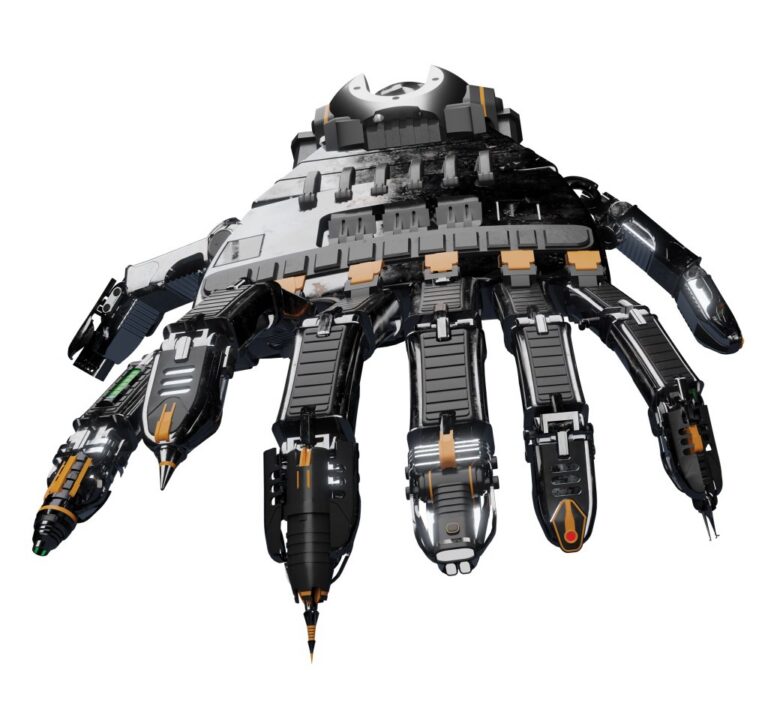
There is a lot to be found in this sourcebook, with new weapons, vehicles, apps, armour and fashionwear (Cyberpunk is all about style over substance, after all).  One thing that is new is the linear frames, essentially exoskeletons similar to those seen in Elysium or Edge of Tomorrow.  Whilst these do bestow obvious advantages to the wearer, these are balanced by their high costs and limited accessibility.

Black Chrome also discusses the economics of cyberpunk, specifically how players acquire new technologies.  It is no longer a matter of players browsing  through the equipment section and choosing what they want.  These restrictions reflect modern-day challenges of supply and demand, but can also create new story-hooks for adventures.  The players can have this new – and highly restricted – artifact, but only if they are willing to do a dangerous mission for a ‘fixer’.

We are also introduced to ‘night markets’, regular gatherings of grey/black market traders where players may be able to acquire new toys.  Black Chrome includes five sample night markets, the organisers behind them and floor plans for each one.

Every item in Black Chrome also comes with its own illustration, which always helps in describing new technology.  The artwork is in glorious full colour and reflects modern aesthetics.  It is great to see how the digital version of the book is fully hyperlinked, which makes ‘flicking’ through the pages far easier.

Overall, Black Chrome is an excellent addition to the Cyberpunk RED roleplaying game. It may not be an essential addition, but it will be one that becomes increasingly useful as GMs look for new and interesting things that can be introduced to surprise unsuspecting players.

Format celebrates Geek Pride Day

Format is the UK’s biggest community gaming nightlife event. Formerly known as Manchester Gamers Unite, Format hosts industry-leading nightlife events, bringing together the very best for an evening of gaming.

This Geek Pride Day (25th May), Format’s organisers are inviting the UK gaming community for a night of celebration, where they will be hosting an exclusive line-up of game developers and publishers at the Impossible in Manchester.

Over 24 game studios will be taking over three floors of this iconic Manchester venue.  There will opportunities to play fantastic titles ahead of the pack, as well as tons of giveaways and activities to be take part in.

Attendees will have the opportunity to meet Merge Games, the games publisher and studio behind Alex Kidd and Dead Cells.  Flix Interactive, developers of the acclaimed Sea of Thieves, will also be in attendance.  Ubisoft will be showcasing their new games, alongside PQube and the renowned virtual reality studio Rezzil, and many more.

“Format is the UK’s biggest games industry nightlife event and we’re ecstatic to be getting back to doing what we do best, uniting the best of the game development and gaming community for an evening of gaming, music, good food, and fantastic vibes!” Said Simran Whitham, CEO at Format. “For our May 2023 event, we’re collaborating with the largest number of game showcases, brands, content creators, and community leaders we’ve ever taken on. We’ve added a whole new floor of exhibitors, and we can’t wait to show everyone what we have in store.”

Geek Pride Readers can claim 25% off the £7 Entrance Fee by using the code ‘FRM_MCR25’ at the checkout here.

M3GAN

M3GAN follows Gemma (Allison Williams), a brilliant roboticist who invented M3GAN (Model 3 Generative ANdroid), called ‘Megan’; a lifelike doll programmed to be a child’s greatest companion. When Gemma becomes the unexpected caretaker of Cady (Violet McGraw), her 8-year-old niece, she decides to give the girl a M3GAN prototype, a decision that leads to unimaginable consequences.

There have already been several ‘killer doll’ films, from Annabelle to Child’s Play, but instead of demonic spirits or the souls of serial killers, here we see the unintended consequences of artificial intelligence.  This creates a far more pertinent antagonist and allows M3Gan to become a platform discussing the role of AI in our lives.

We witness the evolution of Megan’s reasoning and how rash commands compound the issue during the first two acts, which crackle with tension.  It is in the final act when the violence explodes, including some neat twists and a delightful Chekov’s Gun.

Although the film firmly adheres to the three-act structure, there are some neat twists.  The police, for example, were surprisingly effective at making connections.  There were also jump scares that were genuinely shocking, despite being telegraphed in advance.

The film is excellently shot by Gerard Johnstone and incorporates unsettling elements into otherwise normal scenes.  A prime example is the opening scene presenting a stereotypical toy advert, but the toy’s teeth create an unsettling atmosphere that pervades much of the film.

Jenna Davis is great as the voice of Megan, but Amie Donald’s movement as Megan imbues the character with the ‘uncanny valley’ of modern robotics, especially with regard to their mechanical movements and rigid arms.

M3GAN incorporates a variety of themes without feeling convoluted.  Parenting is at the forefront, as Gemma’s relationship with Cady matures throughout the film and she accepts her responsibility as a parental figure.  There is also a fascinating discussion on the nature of grief, which is delicately handled, as well as the aforementioned role of AI in our lives.

Despite being a horror film, the amount of gore is comparatively low.  The focus here is more on the growing tension that permeates the film.  Nonetheless, there are scenes of implied brutality that will have some viewers wincing.

M3GAN is brilliantly acted, with Allison Williams playing Aunt Gemma’s growing parental responsibility brilliantly.  There is scene with Gemma and Cady discussing the death of Cady’s parents that was especially powerful to watch.

At a runtime of 90 minutes, this is a tightly-scripted film by Akela Cooper, which never feels bloated.  However, there is one plotline that is set up but never actually goes anywhere, despite a scene focusing on it.  This might be to lead to a potential sequel, but so much was made of it that it felt out of place in not being adequately resolved.

Although M3GAN adheres firmly to the three-act structure, the unique take on the classic killer-doll trope with AI-gone-wrong keeps the film fresh and interesting.

Aliens: Vasquez by V Castro

One of the most iconic characters in Aliens, other than Ripley and Hicks, has to be the marine smart gunner Jenette Vasquez – there is a reason why the classic line of “Lets Rock!” is so widely known.

V Castro‘s book Aliens: Vasquez expands on Vasquez, giving greater insight into her background.  However, given most of us already know the end of her story in Aliens, this book is firmly focused on the Vasquez family.  The first quarter of Aliens: Vasquez is dedicated to Jenette, including a brief synopsis of her final moments.  The remainder of the story focuses on her twin children, Ramon and Leticia.

This is a book that is deeply embedded within Latin American culture, giving a unique flavour to Aliens whilst remaining true to the character of Vasquez and bringing her beliefs and language to fore, which adds distinct texture to the story.

V Castro has written a Vasquez story that we never knew that was needed, expanding on a single character and creating a futuristic portrayal of the rich Latin American culture in the Aliens universe.  However, the story remains accessible to anyone not already familiar with Aliens.

Aliens: Vasquez takes place over approximately fifty years, incorporating Vasquez’s childhood, her training and life in the marines followed by her children’s childhood and their eventual encounters with the Xenomorphs (not much of a spoiler, given it’s in the title and has one on the cover)

Jenette’s children Leticia and Ramon are fascinating characters.  They are quite different and their individual motivations work well within the structure of the story.  We are given chapters exploring both of the children (as well as their mother), but it is Leticia who is the principal character in this story.

Make no mistake, this is an Aliens story and there are dozens of subtle nods to Aliens film throughout the text, but these do not eclipse the story.  Jenette’s meeting Drake, and their subsequent friendship, was particularly well done – adding greater background to their companionship and yet being respectful to the characters in the film.

The pacing is blindingly fast.  However, there is a tendency to skip over some moments and jump forward in time, giving little chance for the characters to breathe or to expand on the background, other than what is essential to the plot.  Readers are introduced to fascinating characters for a chapter, only for them to be never mentioned again.  Castro has done well to cover as much as she can within the constraints of the book’s word-limit.

Ultimately, this is a book that I really wanted more from.  What we have is absolutely fantastic.  Jenette’s cultural heritage adds some much-needed texture to the character, so she is no longer just the ‘smart gunner’, which synchronises wonderfully with the overarching story.  However, the necessities of the story and constraints of the word-limit means that sometimes characters are left underexplored.

Hopefully, there will be a sequel, as this is a story that really needs more.

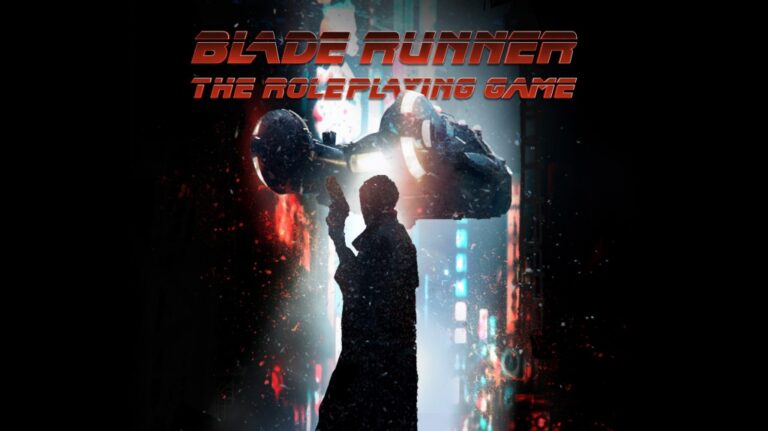
Blade Runner: The Roleplaying Game

This has been a long time coming.  The original Blade Runner film was a seminal classic and became a cultural touchstone for the cyberpunk genre.  Many games mimicked the tone and aesthetic of the film, but there has never been an official RPG based on them, until now.

The general premise of Blade Runner: The Roleplaying Game is that all characters play Blade Runners; law enforcement officers tasked with detecting and terminating rogue replicants.  This focus allows players to specialise in different branches of policing, from crime scene investigations to pursuit.

Players also have the option of playing replicants.  Whilst a replicant is physically superior to a human, thereby gaining bonus attributes, this is balanced by replicants needing to take baseline tests to ensure they do not become sanctioned and potentially ‘retired’.

Blade Runner has always been firmly entrenched within the cyberpunk genre, but this is cyberpunk that is less cybernetics and combat and more urban noir and dystopian decay.  Other than the obvious influences, the Blade Runner RPG is seemingly heavily influenced by police procedural television shows.  Players can expect to see themselves having to requisition equipment, just as much as investigating crimes involving replicants.  And make no mistake, this is a game focused on solving crimes involving, but not necessarily committed by, replicants.  Anyone hoping for a wider exploration of the Blade Runner universe will be disappointed.

The system used by the Blade Runner is similar to previous Free League games.  As such, anyone who has previously played their games will be instantly familiar with the game mechanics.  The game takes a rules-light approach, where players only need to make a skill check at critical moments for dramatic purposes.

The game mirrors the themes of the films (as well as books and comics) by incorporating humanity points and promotion points.  Humanity points track a character’s dedication and empathy, whilst the Promotion points follows their career.  Each of these can be spent for bonuses, such as spending a point of Promotion to requisition a piece of restricted equipment.

The game has a bar for passing skill checks (6 on a six-sided dice).  Although custom dice, which can be bought from your local game store or direct from Free League, are recommended, normal dice can be used.  Due to the high bench mark for passing skill tests, there are various ways that players can leverage skills, equipment and circumstances to improve their chances of success, thereby encouraging roleplay and collaboration between players.

This is a game that seeks to mimic the Blade Runner films, with massive amounts of background lore on Los Angeles, but only a limited amount of information on the wider world and the colonies.  The game makes a point of stating that the player character’s jurisdiction is limited to only Los Angeles and they will only ever leave under exceptional circumstances.  Those wanting to explore more of the world of Blade Runner will be disappointed, unless GMs are willing to dedicate time to making a new location.  This issue could be potentially remedied in new supplement.

It has to be said that the game looks gorgeous.  All of the artwork in the core rulebook, starter set and GM screens looks amazing.  The design aesthetic is incredibly atmospheric, setting the tone and mood of the game perfectly.  However, the yellow on black theme was hard on the eyes at times.

The Stater Set is excellent value for money (less than £40) for beginners.  The set comes with everything needed to play an investigation using pregenerated characters and lots of handouts.  The map is also wonderfully designed and would make an excellent feature for any game of Blade Runner, regardless of the investigation.

The core rulebook is densely packed with information.  Despite this, readers never feel overloaded, as the book is simply gorgeous to look at.  There is also lots of advice given to GMs on how to run a game.

Overall, the Blade Runner RPG is perfect for anyone with an interest in the films or just the cyberpunk genre, as the system wonderfully evokes the themes and mood of the genre.  However, the in-depth nature means that it may be unsuitable for some inexperienced GMs, compared to lighter settings.  It is also recommended to print the background material relating to crimes and police procedures, otherwise players may find themselves unsure of how to proceed.