When I was introduced to EaseUS I have to admit I was dubious. The idea of free Data Recovery Software was something that seemed nigh on impossible to be worth checking out. Nevertheless, I persisted, and am extremely glad I did.
Ooooh. Shiny.
A few years ago I put together a pilot for a story-driven/ radio play style podcast based on billboard salespeople dealing with the aftermath of the rapture. It was based a little on personal experience; most salespeople in most jobs are literally the worst people you can imagine. I sent the pilot out to a few people and they weren’t really into it (I was asking for £15 a month for hosting over 3 years), so I sort of forgot about it.
After I needed to format the hard drive it was in, I’d decided that would be the end of it. Oh well, shows get lost all the time. I still had the script if I wanted to record again so, ho-hum. I was glumly resigned to the fact that that was the end of that idea.
In walks EaseUS. I hadn’t really thought of using Data Recovery Software before and was then shocked to find it was free for the first 2GB of recovery. But how far back could the software go? It was my understanding that once you’ve formatted a hard drive that’s it, data gone. Luckily for me, I’m basically a philistine.
The first thing I noticed about the software is how easy to use it is (maybe that’s why they called it EaseUS? ). It has a friendly UI that compartmentalises your computer into the various drives it comprises of, as well as external devices. After an initial quick scan turned up some stuff I’d recently deleted (old videos and thumbnails for my channel) the software began working on a deep scan.
Easy.
After around 45 mins the scan had completed. In short, I was impressed! Searching around the various file types I found some old photos from a phone I hadn’t had in years, as well as some music I’d downloaded way back in the day. I’m sure you can guess where this is going, though. As I went through the sound files there it was: P88PILOT.MP3. I recovered it instantly and gave it a listen. Amazingly, there were no artefacts, no blemishes, and no distortion. EaseUS has recovered the file completely and for no charge.
There’re two kinds of people who run roleplay games. The first are those who spend hours creating meticulous maps of all the places their players could possibly visit, spending literally millions of moneys on paper and ink and wasting their own precious, precious time. Stop doing that. Buy this book.
The second are those who rely on squared paper and felt tips to draw their maps on the fly, usually ending up with ink-stained fingers, a child’s interpretation of a t-junction and a deep sense of personal disappointment. You deserve better than that. Your players deserve better than that (well, except Tim). Buy this book.
Models: Model’s own
The Big Book of Battlemaps is a collection of dozens of hard-wearing, wipe-clean, beautifully designed pages of fantasy locations, perfect for the GM looking to up their game. No longer will an impromptu trip to the sewers be an embarrassing dash across four parallel lines with some wiggly bits in the middle for water, accompanied by a chorus of “What’s this supposed to be?”. It’s a barrel, Tim. It’s a flippin’ barrel.
Produced by Loke Battlemaps and designed by Matt Henderson, this book is a lifesaver. About the same dimensions as your average rule-book, it fits perfectly in my gaming tub (along with dead character sheets from three years ago and not one single pencil) and can be whipped out faster that you can say “Roll initiative”.
What’s so good about it?
Let’s nutshell this:
It totally won the 2018 UK Games Expo People’s Choice Award for Best Accessory. I bet you didn’t even place.
Fifty-eight incredible full-colour maps featuring dozens of different fantasy environments
The same size as most roleplay books so it fits easily in your GM kit backpack/box/Tesco bag.
Features both single- and double-page maps for greater play area so you can choose to play on an A4 or A3 sized area
Classic 1” grid design for your fantasy roleplay miniatures.
Wipe-clean pages! Add bloodstains, acid pools, grasping vines and more! Just remember to use dry-wipe markers…
Wire-bound pages so all the maps lie flat on the table
Be inspired by all the evocative locations
So let’s talk about why this is such a good tool for any GM. First of all, no matter how long you spend preparing for a game you will never be able to predict all the places that your players will pick a fight. Before I got this book, if my players decided to run down to the seaside to go rock-pooling, I had to break out my blue pen and ask a lot of their imaginations. Now I can just pull out this book and BAM! shoreline. BAM! tavern.
BAM!
People who don’t need this book:
GMs who will never use miniatures in combat for religious reasons
Gifted artists with infinite time on their hands for prep
For the rest of us, The Big Book of Battlemaps is an indispensable tool for producing awesome environments at the drop of a hat with zero preparation. Even better, if you prefer your battlemaps supersized, Loke have produced an even bigger Giant Book of Battlemaps, to be released in late 2018! And if fantasy isn’t your bag, have a look at their recently-ended Kickstarter for details on their Big Book of Sci-Fi Battlemaps.
The Big Book of Battlemaps is available now from your friendly local gaming shop or online at gamingbooks.co.uk for around £19.99. Learn more about Loke Battlemaps other products at www.battlemats.co.uk
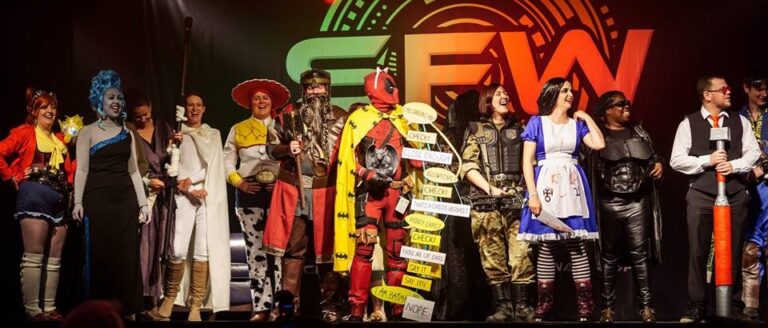
One of the highlights of the recent SFW in the City 2 was the diverse costumes worn by the talented cosplayers there. The sheer breadth of cosplay ranged from faithful recreations of those worn on screen to imaginative re-envisioning of iconic characters.
Here, in no particular order, is just a fraction of some of the fantastic costumes that were on offer at the scifi festival last weekend.
Sci-Fi Weekender’s (SFW) annual satellite event, the Sheffield-based SFW in the City, held its second event last weekend. Smaller and more intimate than the main event, SFW in the City still provided a welcome break from the mundanity of everyday life.
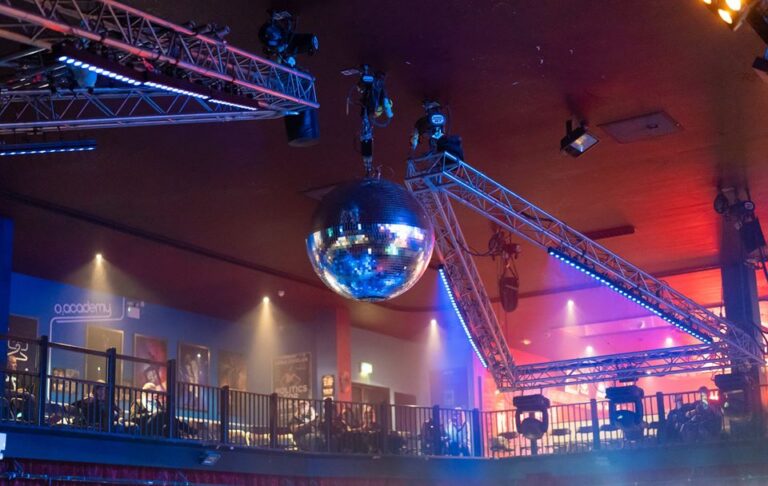
The venue for the weekend was Sheffield’s o2 Academy, a multi-room affair that provided a central hub with smaller, quieter, rooms available (AKA; the Timeport and the Spaceport).
The organisers had obviously assimilated what they had learnt from last year’s SFW in the City, as the space was much better used. Along with greater number of stalls and stands, there was also a retro gaming zone, which offered a great area for chilling out between events. Likewise, many stall-holders had brought portable spotlights to mitigate the venue’s dim lighting.
Headlining the event were Tim Rose (the puppeteer of Admiral Ackbar from Star Wars) and Nick Moran (Scabior in Harry Potter), Adrian Rawlins (James Potter in Harry Potter) and Frazer Hines (Jamie MacCrimmon in Doctor Who). Whilst all of these were fun to listen to and offered a glimpse of what happens behind the scenes, none of them could be considered really big names.
Alongside this were a series of author panels, where writers like Ian Whates, Sam Stone, Bryony Pearce and others discussed the current trends of the publishing world and how it has changed over the years. The authors’ different backgrounds ensured that they each brought a unique perspective to the panels.
Joining the panels and interviews were a series of performances by Pop-Up Puppet Cinema, where hand puppets re-enact classic films, such as Jaws and Back to the Future. Instead of a faithful retelling, these were pitch-perfect parodies of the films. The fact that these performances often filled the Spaceport indicates how well-received it was.
One of best day-time performances on Saturday was Just A Minute, compered by David Howe, where Bryony Pearce and Ian Whates lost to a hand puppet from Pop-Up Puppet Cinema. Sunday’s highlight was undoubtedly the Cosplay Competition. Such competitions can often be drawn-out affairs, but the Jim Credible’s energy and humour whilst compering ensured the contest never dragged.
Saturday night was undoubtedly the high-point of the weekend, which opened with the audience participation game FoxDog before leading into the headline act of the night; the Blue Harvest cantina band. The band played a rocking set of science-fiction inspired blues-rock for a wonderfully geeky performance. Saturday night was finished off with a set from the sci-fi DJ Level Up Leroy, who brought a diverse selection of music and never stayed in one genre too long.
Whilst the food venue’s food bar offered some a slight increase in the food available, the menu was still comparatively limited. This problem was compounded by the venue’s strict door policy of not allowing any food into the venue. Given that there were several decent pubs and restaurants – including a fantastic Chinese restaurant – all within easy walking distance, this was not as much of a problem as it could have been, but it was an annoyance.
If there was to be a criticism aimed at SFW in the City, then it would have to the be lack of A-list guests. However, SFW events have been always been about the atmosphere than the guests. That said, the guests are what first attracts people to a new event. Ultimately, where else would you see Thor stopping an unmarked police car?
All in all, I can see wait to see what SFW have planned for 2019…
All photos are by Peter Gatehouse and are used with permission.
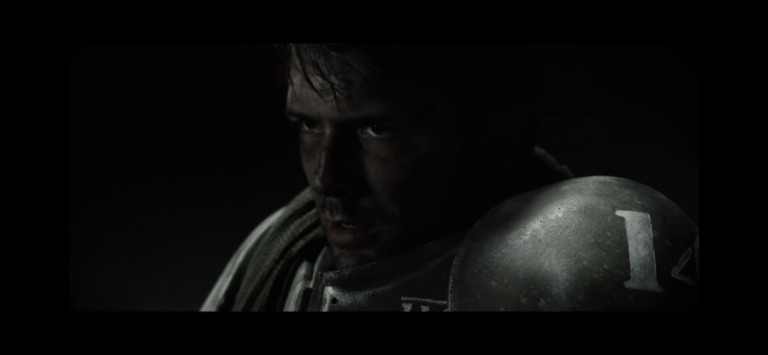
Directed by Richard Boylan and Written by Boman Modine, Guardsman is a rather glorious, short fan film about, well a guardsman, down on his luck and surrounded by Xenos.
Shame it wasn’t longer but good to see good quality, 40k,fan made, live action and Animiated shorts coming out… maybe GW will take the hint and give their IP over to someone who can do justice to the source material on the big screen.
In August, it was announced that Sci-Fi Weekender (SFW) would be leaving its venue near Pwllheli, due to circumstances beyond their control. Since then, the organisers have been scouring the UK for a new location that can meet the various demands of such a multi-facetted event.
Rather than a signing convention, SFW is more akin to a festival. Until recently, SFW called Haven’s Hafan y Mor holiday park home. However, building work was rescheduled by Haven, which resulted in the caravan park no longer being available for the March event. This left the organisers with the herculean task of finding a new venue, for their tenth anniversary, with six months before it was scheduled to be held.
“You do not conjure up a holiday park that sleeps 6,000 people overnight,” explains Jonni Davis, CEO of Chic Festivals, the organisers of SFW. “We went out to fourteen different parks, which was a massive job. They were all over the country and we wanted to understand the attitude of the management and to meet the cleaners and bar staff. I wanted to see the facilities and how easy it is to get there.”
Darth Elvis @ SFW in the City, by Peter Gatehouse
One of the greatest challenges in finding a suitable venue was date availability. SFW has booked a significant number of special guests who will be flying in from across the globe and – until recently – seemingly had nowhere to go.
After visiting many sites, one particular resort stood out. A 5-star holiday park resort that has facilities that Chic feel could only enhance this science fiction festival. “There was only one that ticked the box for us,” says Davis. “For when we do the next generation, I want it to be even better.”
However, there is one slight snag; the date.
More than anything else Chic did not want to cancel their tenth anniversary and not share the celebrations of this auspicious occasion with the attendees who help make this happen each year. Instead, to resolve the date challenge, Chic have decided that SFW-X will become two events. “It is our tenth anniversary, so let us give people a double-experience,” says Davis. “We do a party, as scheduled, but let us go to another dimension. We are going to do the most rockest night-time entertainment ever.”
SFW-X: Part 1 will be held on the original weekend at the o2 Academy in Sheffield, on Friday 29th March and Saturday 30th March. All of the original headliners (Christopher Judge and Brian Blessed) for these dates will be there, along with the unique SFW entertainment that we have grown to know and love, such as Doctor and the Medics.
SFW-X: Part 2 will take place at Vauxhall holiday park near Great Yarmouth on Thursday 31st October 2019 until Sunday 3rd November 2019. This date change will be unique for this year and SFW will revert back to being held in the usual period in March from 2020, but at the new venue.
Part 2 will be the full-blown geek camp experience, incorporating the SFW Awards, with a new programme of entertainment to make SFW worthy of their new destination. “This is purposeful built for entertainment,” says Davis. “We are even going to open the swimming pool for something unbelievably cool, which has never been done before.”
All passes and accommodation bookings will be transferred and honoured to the new site for SFW-X: Part 2. However, as a thank you to their fans, all ticket-holders will receive a free weekend pass to SFW-X: Part I in Sheffield, based on what they booked for SFW-X originally.
“People have birthdays and look forward to Christmas, with presents and wrapping paper” concludes Davis. “Great Yarmouth is in wrapping paper just now, and I am going to start unwrapping it a little bit at a time. What is actually inside the box, when we all get there, is going to blow them away.”
We at Geek Pride love Vampire: The Masquerade (V5 reviewed here). Some of us have been playing since the early nineties (yes, we are that old). So, when we learned that two gaming accessory craft-houses have teamed up with White Wolf to create Vampire: The Masquerade themed accessories, we could not help but take notice.
Accessory crafter Dog Might have created a line of hardwood accessories, including a gorgeous storyteller screens, in two designs, which are both atmospheric and practical. The storyteller screens are made of three African Wenge panels with a catalysed lacquer finish, and are perfect for hiding carefully crafted plots from the wandering eyes of the players
Meanwhile, Elderwood Academy also has something special for those diehard Vampire: The Masquerade fans: The Tome — a spell book-styled game box with plenty of room for dice, pencils, notes, and cards. These one-of-a-kind mock spell books are carved out of dark walnut, bound in onyx leather and adorned with your clan’s sigil (sadly no Clan Ravnos – a distinct oversight that will be remembered in the coming Gehenna…)
All in all, Vampire: The Masquerade is looking just as good as V5 plays.
Mark Rein-Hagen revolutionised roleplaying games with the release of Vampire: The Masquerade in 1991. Until then, most roleplaying games were stereotypical dungeon crawls or laser battles amongst the stars. Instead, Vampire emphasised storytelling over combat and subsequently kickstarted the World of Darkness setting (later releasing Werewolf: The Apocalypse, Mage: The Awakening and many others).
Since then, there has been the 2nd Edition and the Revised Edition of Vampire, before the series ended in 2004, with the Final Nights. It was then replaced by Vampire: The Requiem. However, such was the enduring popularity for Vampire: The Masquerade, that a 20th Anniversary Edition was released seven years later, which proved to be incredibly successful.
V5 is the latest version of Vampire: The Masquerade, and is a vastly different beast to the previous versions. Whilst previous editions revised the existing system, by adding new content and tweaking game mechanics, V5 is new system. It is still recognisably Vampire – the Clans and Disciplines are all there – but they have been updated for a new era in gaming.
One of the most fundamental changes to the system is the use of blood. Unlike previous versions of Vampire, where the Blood Pool was tracked like magic points, there is now a single statistic called Hunger. This attribute impacts upon everything a character does, and the higher the number, the greater the impact, and the only way it can be reduced is through feeding. Rather than focussing on managing the amount of blood a vampire has, this shift towards a vampire’s need to feed both streamlines the process and brings to the fore the type of a creature that a vampire is.
This example of one of such change to the rules exemplifies how Vampire: The Masquerade has changed. Although structurally it is far different to the previous versions of Vampire, V5 is conceptually far closer to how Vampire was first envisioned all those years ago.
Some players might not like all of the new rules. For example, the mechanics for Thin Bloods feels long-winded, lacking the streamlined approach of the rest of the system. However, V5 has been structured in a modular fashion, meaning that some rules can be left out with little impact on the rest of the game.
One of the downsides of this new system is that ongoing campaigns will not be able to be translated into the new rules and previous sourcebooks will naturally become out of date.
Alongside the updated system, the ongoing metaplot of Vampire has been moved forward, and the setting has evolved. Vampires have once again become the hunted, with the rise of the Second Inquisition, the explanation of which is both glorious to read and makes fantastic sense. The presentation will undoubtedly find some storytellers wanting to run Second Inquisition games in the style of the classic BBC series Ultraviolet.
On the subject of presentation, the artwork is glorious, and includes both painted and photographic images. Photography can sometimes have a distinctly amateurish tone, but these photos are particularly fantastic and evoke the nature of a modern-day vampire.
Despite incorporating over twenty-five years of established backstory, V5 never becomes inaccessible to new players. This is due in part to the new rules system meaning that any players, both existing and new, would be starting a game afresh.
“Vampire has been a major influence over the supernatural entertainment genre almost since its first publication.”
Says Jason Carl – and who is to argue with the Vampire V5 Producer for White Wolf. It was, after all, White Wolf who first published Vampire: The Masquerade, with a fifth edition recently released
Created by Mark Rein Hagen in1991, Vampire: The Masquerade literally redefined roleplaying. Its gothic-punk themes were unlike anything at the time. Vampire: The Masquerade was an atmospheric game that focused on the experience of roleplaying over combat and monster hunting.
By the mid-nineties, Vampire: The Masquerade, and the associated World of Darkness, dominated the roleplaying spectrum. No longer did players want to hunt the vampire, they wanted to be the creatures of the night.
With the fifth edition of Vampire, “V5”, (reviewed here) released at GenCon last month, Jason Carl spoke to Peter Ray Allison about Vampire: The Masquerade and its enduring appeal.
What was it about Vampire: The Masquerade that has made it have such an impact?
When Vampire first hit store shelves in 1991, it looked and felt like no other roleplaying game, with its iconic green marble cover and gritty black-and-white illustrations. It looked serious and realistic, and the way it played focused on powerful stories and deep character relationships rather than on tactical combat or underground explorations. It departed from traditional fantasy tropes of the day and ventured boldly into newer, darker territory. That was revolutionary.
Vampire was the first game where you played the monster. Was this part of what made the game so compelling?
It wasn’t just that you played the monster, which by itself was an innovation. It was that you played a monster who struggled against your own monstrous nature, and this inner struggle fueled powerful stories that encouraged critical explorations of evil within ourselves and in the world.
This, combined with its striking visual aesthetics, gave Vampire a literary and dramatic weight that made it appealing to audiences who hadn’t been interested in roleplaying games before. And these audiences brought new, different expectations, styles, and points of view into the hobby. It was a watershed moment that changed roleplaying games, forever.
How did you maintain the quintessential nature of Vampire: The Masquerade whilst creating the V5 system?
Our design team started by examining first principles, asking themselves: what, at its core, is Vampire really about? From that question, they identified several elements that are key to the Vampire roleplaying experience: the inner struggle of humanity against the monstrous Beast; the vampire’s constant hunger for blood; exploring the nature of evil; and the grand tapestry of vampire politics and survival set against the growing threat of humanity.
All of these elements started with Vampire: The Masquerade’s first edition and remained with the game throughout its history, but they took fresh look at each idea and thought carefully about what each would look like in today’s world, both in terms of game design and story.
Are there any particular systems/themes that you feel are quintessentially Vampire: The Masquerade?
The Hunger and Humanity systems are critical to getting the right Vampire feel when playing the game. They’ve been expressed a little differently in different editions, but their basic framework hasn’t changed until V5.
In previous versions of the game, that struggle was represented by a 10-point scale that measured the vampire’s relative state of humanity against a uniform hierarchy of sins (same sins for all vampires, regardless of their origins, cultures, or beliefs), and the rules made it relatively easy to avoid or delay losing humanity.
The hunger system seems to have undergone a fundamental change – why was that?
Hunting for blood to slake the vampire’s eternal thirst was supposed to be an important part of this personal horror – after all, it’s a pretty awful thing to have to sustain one’s existence by taking the blood of others – but the game’s “blood pool” mechanic seemed too abstract and lacking emotional intensity.
So, we shifted the spotlight of the humanity vs. beast struggle, shining it with greater focus on the vampire’s hunger for blood and the vampire’s hunt to obtain it. We felt that by focusing on this fundamental truth of the vampire’s nightly existence, we could explore more deeply the personal horror aspects of the game that it always promised.
The result was the Hunger system, pioneered by developer/editor Karim Muammar and writer Karl Bergstrom, and then refined by the design team. They envisioned a system that, instead of measuring how much blood the vampire has in its body, measured how hungry it felt. The Hunger system supposes that a vampire can ignore its hunger only for so long… eventually, it must feed, or risk the Beast driving it to terrible compulsions that might lead to actions even more terrible than hunting and feeding.
What were your influences when creating V5?
The team found a lot of inspiration in every previous edition of Vampire: The Masquerade that has come before V5. We felt like we were standing on the shoulders of giants. But the very first edition was our most important touchstone.
Other influences include visual media like Let The Right One In, Only Lovers Left Alive, The Hunger, The Lost Boys, Ultraviolet, and We Are the Night; literary works like the Vampire Chronicles of Anne Rice and Dracula by Bram Stoker; and countless roleplaying games that the team played and admired, including Call of Cthulhu, Kult, Dungeons and Dragons, Night’s Black Agents, Mutant, and Trail of Cthulhu.
Where do you go from here? Will there be further expansions of Vampire: The Masquerade?
We are completing our work on two setting books, one each for the Camarilla sect and the Anarch sect. The tension between these two vampire factions is increasing in the modern nights, and we explore how both have reacted to external and internal threats, and what it means fundamentally to belong to either them.
We also have player aids coming soon, like the Storyteller’s Screen and custom dice, and a deluxe edition of the core book.
Will there be fifth editions of other World of Darkness games?
This is our ambition. White Wolf is a transmedia company: we want to tell the stories of the vampires, werewolves, mages, and other supernatural creatures not only through tabletop roleplaying games, but also through licensed products like board games, card games, comic books, live-action roleplaying (LARP) events, and maybe someday film or television.
“I’ll continue writing and developing Vampire books until someone drives a stake through me.”
(Matthew Dawkins describing his dedication to Vampire: The Masquerade)
Anyone who has taken the time to read writing credits will notice that Matthew Dawkins frequently crops up in Vampire sourcebooks. Matthew is a freelance writer and book developer for Onyx Path Publishing. As well as the World of Darkness Line Developer, he has also been involved with White Wolf as a writer and community director.
Needless to say, he knows his Vampire. So, it should be of no surprise to learn that Matthew is also known for his Gentleman’s Guide to Vampires series on YouTube. This is not a mere fan service, extolling the virtues of his favourite game, but an excellent series of concise discussions on various aspect of Vampire: The Masquerade and its extended metaplot.
Following the release of the fifth edition of Vampire: The Masquerade, otherwise known as V5 (reviewed here) released last month at GenCon, Dawkins took the time to speak with Peter Ray Allison about Vampire: The Masquerade and how it has risen from the dead, like its namesake.
What was it about Vampire that made it have such an impact?
Vampire was a game that spoke to a section of society largely unexplored by roleplaying games. The stereotypical way we view a lot of D&D players in the late ’80s and early ’90s was unfair, but that view was still largely in force at a time when RPGs weren’t seen as “cool” or “mature”. Then along comes Vampire, a horror game in which you get to play the monsters, struggling with maintaining your hidden life from your loved ones, friends, and workmates.
A game with a topic like this – much as with movies that came out around this time about outsiders living in an outsider culture – struck a nerve with a lot of young people, but older roleplayers too, who wanted to play a game with mature elements that spoke to their personal experiences. That, and it was frankly just exciting to play vampires in a modern, gloomy setting.
How do you think Vampire: The Masquerade influenced the gaming culture?
Vampire influenced gaming culture massively. This is most visible in the field of live action roleplay, where players would dress as their characters, play them in bars and other venues, and live a little as their vampire of choice. Live action wasn’t new, but a world where you could play as gothic, tragic monsters was.
Vampire helped lay the groundwork for serious gaming with serious topics. It was one of those important games of the 1990s to show gaming didn’t just have to be wading into a dungeon and hacking up goblins, not that there’s anything wrong with that. Vampire wasn’t the first game to play with horror, or to encourage tragedy in roleplay stories (just like at Call of Cthulhu or even the Nightlife RPG, both of which predate Vampire), but perhaps it was the first to normalise it.
Was Vampire: The Masquerade the first game where you played the monster?
The ability to play the “bad guy” or “bad girl” was an incredibly appealing prospect for Vampire, but what it offered was context. Vampire’s expanding metaplot, the richness of the clans, each of which possessed a distinct character, and the feel of a vibrant, dangerous world, helped lock players in. Playing a monster was the bait, but the game’s depth was the hook.
Why has Vampire: The Masquerade remained so popular despite being replaced by Vampire: The Requiem?
Vampire: The Masquerade came to a natural conclusion in the early ’00s with books increasingly leading to the Gehenna (apocalyptic) event. There was only so long Gehenna could be teased without conclusion, and White Wolf of the time needed to take a new direction.
With Masquerade wrapped up, they embarked upon Requiem, which was a huge success sales-wise and is enjoying a popular, improved second edition published by Onyx Path. However, like the vampires they loved, Masquerade fans didn’t just die. Some moved on to Requiem, others continued playing Masquerade.
Do you think that Vampire: The Masquerade influenced films like Blade, Underworld and Twilight?
Blade as a character existed before Masquerade, but the movies came out subsequent to the game, and I think the connections between Masquerade and the modern Blade media is pretty apparent to see.
It’s de rigeur to dismiss Twilight as teenage angsty drama, a Dawson’s Creek with vampires. But here’s the thing: the Twilight Saga is immensely popular. It deals with some mature topics, albeit in ways you wouldn’t commonly see in a Vampire game. Did Masquerade influence Twilight? Perhaps peripherally, in the sense that Masquerade helped make vampires sexy and modern.
But should Twilight affect Masquerade? We’re not going to see “sparkling vampires” but we would be foolish not to look at what makes a series of books and movies like Twilight popular and see if we can appeal to any of the same audience.
What gaming mechanics have you seen stem from Vampire: The Masquerade?
The dice pool system has travelled far and wide since Vampire: The Masquerade’s initial release. We shouldn’t try and take all the credit for that of course, given Shadowrun has dice pools of six-sided dice before we or Ars Magica entered the arena with our ten-siders. The idea of characters being divided between clans instead of classes is something that also moved into other games.
I do know the factions in that D&D setting were directly inspired by the clans in Vampire. Likewise, look to other games where family, lineage, and guild are more important than profession and match the similarities with Vampire.
Are there any particular systems/themes that you feel are quintessentially Vampire: The Masquerade?
In terms of Vampire: The Masquerade of old, one of my favourite parts is the concept of Generation. How far removed from Caine – the first vampire – is your character? It’s a simple system that governs blood expenditure, the amount of power you can wield, and the respect other vampires give you. It’s also a fine character-building tool, as naming ancestors helps a Storyteller come up with plots and justify dots on your character sheet.
As for fifth edition, I lean toward Hunger. Where once a blood pool quantified how much blood a vampire possessed in their system, Hunger is now a constant threat, with a hunger die being added to every roll made in the game. Theoretically, at any point a vampire may now feel the pangs of Hunger and want to feed. They can suppress this or indulge. This, to me, gets to the root of what makes playing a vampire exciting.
What were your influences when creating material for this new edition of Vampire: The Masquerade?
My main influences are the previous editions of Vampire, the dystopian works of authors like J.G. Ballard and Will Self, true crime, and excellent movies like Byzantium. What We Do In The Shadows is also a fantastic Vampire movie, which while not necessarily hitting the typical Masquerade horror beats, definitely speaks to how a house-sharing coterie act.
Where do you go from here?
My priority for Vampire right now is Chicago by Night, which Onyx Path will be running a Kickstarter for later in 2018. Chicago will be the first city sourcebook for this new edition, and I intend for it to become the template for future city books. We want to make it definitive and distinct.
I know Werewolf is in its planning stages, so I would be surprised if the other games such as Wraith, Changeling, Mage and Demon didn’t follow in years to come.
We use cookies on our website to give you the most relevant experience by remembering your preferences and repeat visits. By clicking “Accept All”, you consent to the use of ALL the cookies. However, you may visit "Cookie Settings" to provide a controlled consent.
This website uses cookies to improve your experience while you navigate through the website. Out of these, the cookies that are categorized as necessary are stored on your browser as they are essential for the working of basic functionalities of the website. We also use third-party cookies that help us analyze and understand how you use this website. These cookies will be stored in your browser only with your consent. You also have the option to opt-out of these cookies. But opting out of some of these cookies may affect your browsing experience.
Necessary cookies are absolutely essential for the website to function properly. These cookies ensure basic functionalities and security features of the website, anonymously.
Cookie
Duration
Description
cookielawinfo-checkbox-analytics
11 months
This cookie is set by GDPR Cookie Consent plugin. The cookie is used to store the user consent for the cookies in the category "Analytics".
cookielawinfo-checkbox-functional
11 months
The cookie is set by GDPR cookie consent to record the user consent for the cookies in the category "Functional".
cookielawinfo-checkbox-necessary
11 months
This cookie is set by GDPR Cookie Consent plugin. The cookies is used to store the user consent for the cookies in the category "Necessary".
cookielawinfo-checkbox-others
11 months
This cookie is set by GDPR Cookie Consent plugin. The cookie is used to store the user consent for the cookies in the category "Other.
cookielawinfo-checkbox-performance
11 months
This cookie is set by GDPR Cookie Consent plugin. The cookie is used to store the user consent for the cookies in the category "Performance".
viewed_cookie_policy
11 months
The cookie is set by the GDPR Cookie Consent plugin and is used to store whether or not user has consented to the use of cookies. It does not store any personal data.
Functional cookies help to perform certain functionalities like sharing the content of the website on social media platforms, collect feedbacks, and other third-party features.
Performance cookies are used to understand and analyze the key performance indexes of the website which helps in delivering a better user experience for the visitors.
Analytical cookies are used to understand how visitors interact with the website. These cookies help provide information on metrics the number of visitors, bounce rate, traffic source, etc.
Advertisement cookies are used to provide visitors with relevant ads and marketing campaigns. These cookies track visitors across websites and collect information to provide customized ads.










 What was it about Vampire: The Masquerade that has made it have such an impact?
 The hunger system seems to have undergone a fundamental change – why was that?

 What gaming mechanics have you seen stem from Vampire: The Masquerade?

