This week we find out what Iggul’s been up to, the scallywag
This week we find out what Iggul’s been up to, the scallywag

We’ve all seen the amazing light shows in homes across America that are lovingly created during the festive season, it has become somewhat of a national tradition. Well it seems that the competition just stepped it up with this truly epic Halloween themed light show.
The two I have included for your enjoyment are the iconic Bohemian Rhapsody by Queen and Hells Bells by AC/DC all created by the Thomas family from Naperville, Illinois. Whilst it is of course for everyone’s enjoyment the family do ask that should you wish to donate, they are collecting for the charity GiGi’s Playhouse: http://gigisplayhouse.org/
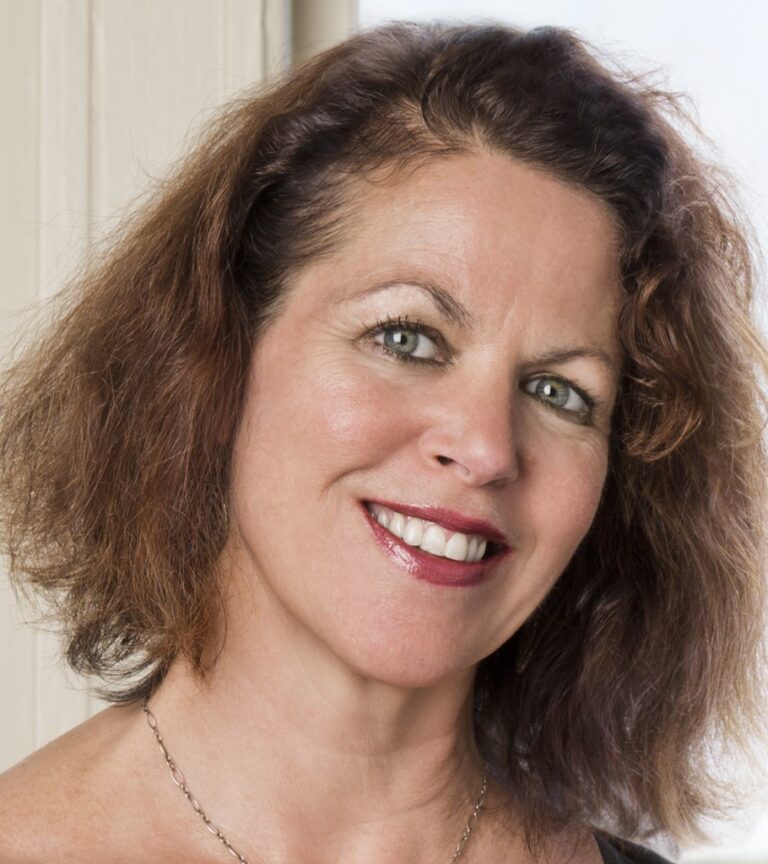

Dana Fredsti is the author of the Ashley Parker trilogy, which recently concluded with Plague World (reviewed here). However, long before she became known as a horror writer, she was also an actress, theatrical sword fighter and later a writer of erotic thrillers (under the pseudonym of Inara LaVey).
During her acting career, Dana appeared in Sam Raimi’s Army of Darkness, and whilst long-standing Evil Dead fans were unimpressed with the comedic moments, it was bloody funny (literally) and eminently quotable (“This is my boom-stick!”). This was not merely a background part for Dana, as she was one of the few Deadite sword-fighters (which reminds me to say nice things about her).
One of the more infamous films that Dana starred in was Princess Warrior. For those interested, the film can now be found on Amazon or Ebay at prices higher than the total amount of money that Dana made working on it (the princely sum of $25 a day). Dana has since written about her experiences in her essay, The Skeleton Wore Fishnets.

Plague World is the third novel in Dana Fredsti’s Ashley Parker trilogy. Described as “Buffy, but with zombies instead of vampires”, the series is packed with humour and geek references alongside the horror and zombies. When a book opens with a quote from Big Trouble in Little China, you know you are in for a ride.
So without further ado (and remembering that she stabs people with swords): Ladies and Gentlemen, I present Dana Fredsti.
When did you first begin writing?
As soon as I was old enough to string words together. My first story, written before I hit five years, was The End of the Sun. It had a beginning, middle and an end, so obviously I had an instinctual understanding of plot structure at a very early age. I can still recite it. *clearing throat*:
“One day the sun came out. The next day the sun did not come out. It was the end of the sun.”
How do you balance a strong vein of humour with gut-wrenching horror in your Ashley Parker novels?
I find it very difficult to write without humor in any genre. I think I’ve only written one published story that was devoid of humor and it was not easy to write, although I love the finished product. Writing in first person also brings out my humor in both the narrative and the dialogue because I have an admittedly snarky inner voice talking to me a lot of the time.
As for horror, I’ve always loved being scared and grew up on Hammer films and the original Dark Shadows soap opera (which, to a first grader, was extremely scary at the time), along with Moona Lisa’s hosted sci-fi and horror movies on the weekends. I’ve always thought that well placed humor underscores horrific events, and vice versa. It’s fun to relieve tension with a joke, only to have something horrible happen shortly thereafter.
In the acknowledgements to Plague Town, you reference Buffy the Vampire Slayer as being a source of inspiration for the series, but what else influenced Ashley Parker?
The character of Ashley definitely was, to some degree, influenced by my own sense of humor and physical skill set, as well as my personal ethics. I also like strong female characters, ones that manage to be strong and kick-ass without losing their sense of humor or having to necessarily carry a huge chip on their shoulder or pack a lot of personal baggage.

One of these references includes Sam Raimi’s Army of Darkness, which you were involved in – could you tell me more about that?
I was involved in two separate areas: on-set armourer’s assistant and sword-fighting Deadite/sword captain. I got the first position because Brian, the on-set armourer, was my then-fiancé and he needed an assistant. I had the necessary skills to do the job and had quite a bit of fun “distressing” plastic armour (which means making it look real and like it’s actually been worn as opposed to upsetting it) and helping the various extras get armored up. Brian handled the “hero” armour (the real stuff) and helping the actors don the various pieces/parts. We both did a lot of repairs – replacing leather straps and buckles, repainting, etc.
I got the job as Deadite/Sword Captain because I was training with Dan Speaker and Jan Bryant at the Academy of Theatrical Combat, and they were the fight choreographers for the film.
When it came time for the Deadite scenes to be shot, I switched over to sword-fighting Deadite, and also helped train groups of extras in the very basics of swordplay. I spent a lot of time working on fight choreography with my various fight partners, and then filming.
During the fight between Evil Sheila and Ash, I killed the same soldier over and over again as part of the background fighting. I also did a few hours as a background extra in King Arthur’s village, and was a lighting stand-in for Sheila in the kiss scene in the barn. And no, I did not kiss Bruce Campbell.
There wasn’t any actual makeup involved in our Deadite costumes, at least not the “A” Deadites. “A” Deadites wore full body latex suits and masks, so all skin was covered up. That was then topped with armor (carefully distressed to look like it’d been in the grave for a while) and costume pieces. “B” Deadites wore partial suits, and “C” Deadites wore what were basically skeleton Halloween costumes. If you saw Deadites that looked kind of chunky, those were the stuntmen. The rest of us who came from the Academy of Theatrical Combat were mostly female (I dieted down for this!) or very thin males.
What inspired you to add a quote from Big Trouble in Little China at the start of each novel?
When I first started writing Plague Town, Egg Shen’s quote “But that’s how it always begins, very small” just popped into my head, so I wrote it down. I thought about opening Plague Nation with a quote from a different movie, but decided to stick with Big Trouble for all three of them.
By Plague World, Ashley Parker is an established character within the series, how did you find new ways to develop her character?
I didn’t actively look for ways to develop her. She pretty much evolved as I was writing, just by taking what seemed like the natural progression for someone with her background who then goes through these horrific events and trials by fire, so to speak. What would she do? How would she react? Would she grow stronger or weaker? More sympathetic/empathetic or develop a hard shell? Stuff that I was going through in my personal life also snuck in there in terms of creating a darker side of Ash than I’d originally intended.

You add a unique alternative to the walking dead in the series. Could you explain how you came up with this gruesome idea?
If you’re talking about the Half Deaders, I wanted something to create the equivalent of a ‘vampire with a soul’ since the original pitch I was given was Buffy with zombies. And since I had wild cards, which are fully immune, I thought it would be fun to have another possible reaction to the zombie virus; that being the need to eat human flesh in order to avoid dying and becoming an actual zombie. Moral dilemma time!
How much of the series was planned and did it ever deviate?
I had all three books basically outlined (short outlines with lots of room for growth), but the timeline I’d originally planned (the trilogy was supposed to span a year or two) shrunk down to a few months so some stuff didn’t make it into the books because they wouldn’t fit within the shorter passage of time for the events. I didn’t plan on killing certain characters at all either. And the biker gang was going to have a much smaller part originally and now they’re part of the book’s climax.
How did writing Plague World compare to other novels in the trilogy?
Plague Nation was difficult because I had ‘second book syndrome’ but Plague World was an uphill battle all the way until I got to the last few chapters, and then I couldn’t stop writing. I had a lot of things going on personally and professionally (day job professionally) last year that made focusing on Plague World very difficult, and I also just didn’t know how I was going to wrap everything up. I had a few things mapped out, but it really didn’t come together until I wrote it. I really hope I never have that much difficulty writing a book again, that’s for damn sure.

Plague World is darker in tone than previous Ashley Parker novels – was this intentional or something that happened during the writing process?
I was in a very dark place for a while last year. I used to think suicide was incredibly selfish, but that’s because I’d never experienced a time where the amount of emotional pain I was in outweighed my ability to cope with it. I didn’t – and wouldn’t – do it because my biggest fear is who would take care of my cats if I died suddenly, and… well, I found a hidden cache of strength to draw from. Because of all of this, I was able to take Plague World in a darker direction and I think the choices I made for my characters were stronger because of it. I don’t think I would have been able to kill certain characters or put Ashley through the emotional/mental/physical pain I did had I not been in a pretty dark place myself and gained new perspective on which to draw from.
Was there anything removed during the editing process that you wish you had kept in?
My editor and I work closely together and if I really disagree with any of his edits, he generally lets me have my way. And I’ve learned to be able to let go of things if they bog down the pace. I can always use them later!
What do you have planned for the future?
Well, if Titan wants them, I have ideas for more Ashley books and I’m also pitching a new urban fantasy series to them. In the meantime, my fiancé and I are working on a YA Sci-Fi trilogy together that I’m really excited about. I am not allowed to mention any spoilers, however.
My fiancé hates spoilers, which makes it entertaining to write a pitch/outline with him. “Yes, hon, we do have to include the ending in the outline because agents and editors generally don’t take kindly to sell copy in place of outlines.”
Dana Fredsti, thank you very much.


Hello,
This is an open letter to those amongst the GamerGate movement who consider themselves moderate, who have not – and would never have – sent a death or rape threat or serious gendered abuse to another person. I’m writing to those people who feel a genuine slip in journalistic ethics happened with Zoe Quinn and who are concerned that such problems are endemic.
You are almost certainly not the stereotype of a GamerGate supporter: You are not a white, straight, cis misogynist. Perhaps you are a feminist yourself, or someone who works for or in support of abuse victims.
You, dear moderate, are the kind of person who posts in /r/KotakuInAction condemning the doxxing of Felicia Day within hours of her posting something critical of ‘GG’. You are unhappy with how people like yourself are being tarred with the same brush as the people who do such things.

Hopefully I’ve got your attention here. I have been following the GamerGate movement as a complete outsider, someone who was completely divorced from internet culture during August and returned to find the abuse and ‘Quinnspiracy’ in place, plopped onto my feeds like a frog’s corpse.
I started completely against GamerGate. How could I not be: all that GamerGate is known for was the abuse of female developers and misogynist lightning rod Anita Sarkeesian? How could I not think its members were the vile trolls who abuse people like Laurie Penny and Caroline Criado-Perez when that’s the public face – and most notable facet – of the movement you belong to?
However, I never like to take things on face value, and so I went to study what was really happening in the GamerGate movement. And what I found was a group of people trapped in a siege mentality, fighting against the understandable tarring of anyone under the GamerGate movement as abusers. There were people encouraging doxxing and abuse, but they were mostly shouted down.
If this were the movement in its totality, in reality, then things would be different. Perhaps people like Brianna Wu and Felicia Day would not have faced the abuse they have. Sadly, though, this is not GamerGate. GamerGate is something larger, and worse: it is the cover for abuse.
GamerGate: Origins
It is odd that a movement based on the idea of conspiracy in the games media hasn’t really given its own origins any thought. But then, why would people check themselves in this manner: nobody wants to think they are the bad guys, do they?
For those moderate GamerGate supporters who may not be aware, GamerGate started with Zoe Quinn – developer of the critically-acclaimed Depression Quest – being accused of infidelity and impropriety by her ex-boyfriend Eron Gjoni. This led to claims of corruption within particularly the Gawker company, many of which have been successfully repudiated.
From there, the abuse that Zoe Quinn was already receiving as a female game dev. ramped up, and broader allegations were made about other indie developers and other journalistic outlets. These two aspects of the movement soon dubbed GamerGate developed quickly, with some discussing the idea of ethics in games journalism and others stepping up the abuse to unacceptable levels.
The problem, though, is that the more respectable aspect of GamerGate was planned out by those looking to abuse and assault Quinn and others like her. Please, moderate GamerGate follower, I beg you to have an open mind as you read this, a comprehensive display of evidence that shows GamerGate’s ethics elements were very likely explicitly planned by those also planning to escalate this abuse.

#NotYourShield… except you kind of are
Do you see now? It is ironic, and probably a hilarious joke to those who have been abusing women, that these people have likely made you moderate and casual GamerGate supporters use a hashtag called #NotYourShield when you are literally their shield. There are a core of horrific people intent on only doing damage and hurting, and they have used sock puppets, false flag accounts, and the like to build your protection around them.
If only 10% of those who support GamerGate are horrible misogynists who want to remove women from ‘their’ hobby, that means there are thousands of people who are going onto Twitter to abuse women, doxx them, create false accounts to smear female developers. And they have then put a barrier of tens of thousands between them and their victims, given themselves a sheen of respectability on the backs of people like you.
This, then, is the problem – as I see it – with the movement as it stands: why you are losing the PR battle, and why it feels like the world is against you. The identity you have as a gamer has been cleverly and cynically co-opted by people who only want to watch the world burn. When people say GamerGate’s core is misogyny and abuse, they are right. But that doesn’t mean that is the core of people’s intentions in joining the movement.
Moving On
Every time a famous woman or media organisation says something negative about GamerGate, they are immediately assaulted online, sometimes even run out of their homes. You’re not the ones doing this, are you? You are doing the positive things like raising money for charity, or condemning the doxxing from weird and rabid anti-GamerGate folks.
As a result, you probably need to think hard about your association with this movement. When people talk about GamerGate in terms of white, privileged neckbeards, they are talking about the script-kiddies and violent MRAs who use you to make them feel like heroes.

But there is a momentum in the more positive aspects of GamerGate, and it would be a shame to lose that. As such, I’m not here to just tell you to leave this movement, but I have some suggestions for you as to what you can do to continue to campaign for such ethics:
Please, I know you’re a good and rational person. I know you care deeply about video games, like I and most people here at Geek Pride do. I know you have never considered making a woman feel terrified to be in her own home. So, moderate GamerGate supporter, I beg you: leave the movement and make a real difference to the hobby I love so dearly.
Sean
P.S. – Just to pre-empt something that I constantly see brought up by people in pro-GG discussions: you cannot compare yourselves to religions or other movements right now and claim that the radicalisation is in any way similar. This is partially because of the sample size we’re talking about: in a religion of billions, there will always be truly horrible people, but GamerGate is tens of thousands strong at best. But, mostly, it is because of the clear roots of the movement in the criminal abuse of women in online spaces.

Air New Zealand jumped to the top of Awesome Airlines when they unveiled their new safety video.
The airlines managed to cover everything from seat belts, life vests, and oxygen masks to, electronic devices and emergencies during takeoff all while giving a very Middle Earth feel. Air New Zealand takes two Lord of The Rings fans on the journey of a lifetime through Middle Earth.
Encountering Orcs, Elves, Dwarves and even Hobbits they make their way through in this awesomely geeky safety video. Oh did I mention there are cameos by some of the actors from the films? So keep an eye out and you might spot a favorite. I suppose this isn’t surprising coming from the airline. They are known for their different approach to safety. Getting peoples attention is always a good thing, especially when it’s something as redundant as a safety video.
It appears that Theonering.net is calling this a tribute to the end of all things Middle Earth. What do you think?
It really is the most epic safety video ever made.

After being leaked online earlier Marvel Entertainment went ahead and released the full teaser trailer, alongside an excellently timed tweet:
Dammit, Hydra.
— Marvel Entertainment (@Marvel) October 22, 2014
AND released the Official Avengers: Age of Ultron movie poster!
Damn! I’m SO looking forward to this!

Officially, we are to get out first peek at an ‘Age of Ultron’ trailer after next week’s Marvel’s Agents of SHIELD.
‘Officially‘.
‘Unofficially’, the trailer has already hit the net…and my god, did it look amazing. Swift action was made, and the trailer has been dealt with – the video is now down so those who didn’t see will have to wait until next week to see (presumably) the same trailer…but, a couple of things to take away from it.
– James Spader’s voice. Gives me shivers.
– Quicksilver and Scarlet Witch…leading a riot?
– Melting Iron Man hand…the creation of Ultron, or a new armour?
– Banner (dehulked) looking very…very uncomfortable aboard a plane
– Prototype Ultron, made out of Iron Man scrap armour
– Creepy-ass music, “I’ve got no strings…to hold me down…”
– Banner on the run…in the snow
– Ultron playing ‘daddy’ to Scarlet Witch and Quicksilver
– Ultron Bots
– Stark sounding defeated, Fury looking civilian, Natasha being a realist
– IRON MAN IN A HULKBUSTER, TAKING ON THE HULK
– Andy Serkis? What are you doing without any CGI?
– Hulk / Black Widow moment (also ballet shot – will we see some Black Widw backstory emerge?)
– Thor angry with Stark, lifting him up by the throat
– MORE HULKBUSTER AND CREEPY MUSIC
– BROKEN CAP SHIELD
– ULTRON FINAL FORM
– “THERE ARE NO STRINGS ON ME.”
UPDATE:
Marvel responded in quite possibly the best way possible
Dammit, Hydra.
— Marvel Entertainment (@Marvel) October 22, 2014
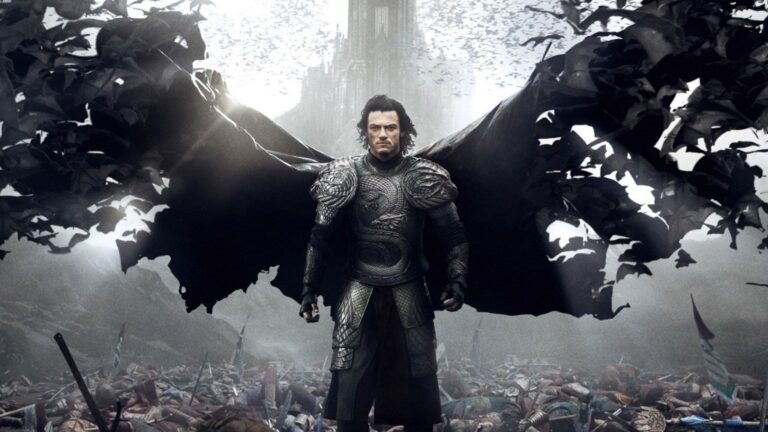
If you’re expecting this review to start off with a vampire joke, you will be sorely disappointed. I will not sink to the depths of “This film sucked”, “Watching this film was like getting staked through the heart” or “Given a choice between watching this film again and being impaled, I’d take the latter”.
Although I had high hopes for Dracula Untold and for the most part felt like I’d been slapped in the face with the money I spent, there are some things which work fantastically. Charles Dance‘s (Game of Thrones) performance makes me afraid of dark caves and Faustian deals, Luke Evans (The Hobbit: The Desolation of Smaug) plays a pretty good Vlad and the representation of the creatures of the night give me hope for a post-Twilight world where vampires are genuinely frightening.
This is the overwhelmingly frustrating thing; this movie worked so well in some areas, but failed miserably in others.
Characters
I’m going to say it – Luke Evans works as Vlad. Whilst some people can say his range of acting just veers between snarling and looking grim in this film, I actually thought he pulled it off. His performance did the role well, and I did get the qualities they were pushing for in this film – that Vlad was just a man who did what he had to do in order to keep his family (and country) safe. A man who sells his soul and walks the thin borders of hell to keep the Turks from ravaging his lands.
The protagonist, Mehmed II, was meh. Okay, jokes aside, he literally serves as no more than a plot point – being the reason for Vlad to make the dark contract and become a vampire. Whilst Dominic Cooper (Captain America: The First Avenger) does work the part, I kind of thought that it was the kind of role you could have any other actor play; it wasn’t the best of his career, nor was it the worst, it just didn’t really do much to stick out in my mind. He was little more than your typical, run-of-the-mill villain for the hero to best.
Charles Dance, who played the Master Vampire, was very, very good. He was menacing, he was unnatural, he was superior – in my opinion, although there were too few scenes of him, the minimalist coverage of this all-powerful creature made the character even more mysterious and intriguing. It could be argued that it is not Mehmed who is the main villain of this film, but this creature who made a Faustian deal with the protagonist, a man who is so sure that Vlad will break the contract, that he doesn’t have to do anything other than sit back and wait for the inevitable.
At first I severely hated the character of Mirena, Vlad’s wife, played by Sarah Gadon (Cosmopolis), she seemed to force Vlad to make all the wrong choices, and takes none of the blame. Looking back however, I find myself warming to her; when Dracula shows her he is a monster, she doesn’t turn away from him and even covered for him during the daytime which helps her character recover slightly in my eyes.
There are other characters, such as Vlad’s son, Vlad’s advisers, Mehmet’s generals…but none of them really make that big of an appearance or performance.
Writing
Alright, I’m just going to get this out of the way right now. An issue I had with the plot was that it reminded me so much of the video game Castlevania: Lords of Shadow to which it is somewhat inferior. With the game, Vlad’s transformation is a kind of plot twist, whereas here it is too predictable. I mean, for people who have any idea who Dracula is then the plot is not a “will he/won’t he” scenario, but a countdown.
The story is adequate, but there are times when the writing suffers from just plain stupidity. I won’t give specific examples to avoid spoilers but will give a keyword for a moment in the movie which just had me going “What? Why? How does this make sense? Who does this?”; ‘Blindfolds’.
Vampirology
I liked it, ‘kay?
These people did do their research. You have the run-of-the-mill powers that come with being a vampire, enhanced strength and aversion to daylight, and then you have the ones which haven’t really been touched by modern cinema – an aversion to silver, bat control and metamorphosis, which, I have to confess, I found cool as shit.
However, there are times when the writing seems a tad inconsistent. There is a fantastic sequence where Vlad is skirting around gaps in a tent to avoid crossing over chinks of light, which is what a creature of the night should be doing. However, in the previous scene when he was inside the structure he walked past slits in the castle wall like they were nothing. Additionally, silver’s effectiveness is variable throughout the film. At one point it seems to burn the skin, marking it horribly and then the next it seems more like an irritation, like he’d just brushed against a stinging nettle.
Conclusion
The film, rated PG-13 (for intense sequences of warfare, vampire attacks, disturbing images, and some sensuality) is surprisingly lacking in what I took to be a darker take on the whole origin of Dracula mythos. There are sword fights, but no blood. There is action, but a considerable amount is built up to then be done off-screen or via bad bat-CGI.
The costumes and art department, those guys and girls need to get more respect for the work they did. Most notably in the film, the Master Vampire’s cave is a great setting. The Master Vampire himself is an intimidating work of art and Dracula’s armour is badass.
The other thing to take away from this is that although this film didn’t exactly peak the interests of a critic, audiences still love it. So whilst people may still rip it to pieces and it may not be THE movie to see this Halloween, that doesn’t mean you shouldn’t go see it.
So ultimately, don’t go see this movie if you’re a stickler for facts. Don’t go and see this movie if you are looking for another interpretation of Bram Stoker’s work. Do go see it if you want to see some badass vampires wrecking shit, or if you ever wanted to imagine what Bram Stoker’s Dracula would be like if they tried to mash it together with 300.

As part of their solicitations for January 2015, Marvel Comics has announced they will be returning to the universe of stars and wars for the first time since 1986 with Star Wars #1.

Written by Jason Aaron (Scalped, Wolverine and the X-Men) and with art from John Cassaday (Astonishing X-Men, Planetary), Star Wars #1 will feature a number of variant covers by some of the biggest names in the business including J. Scott Cambell, Bob McLeod, Sara Pichelli and John Tyler Christopher.

More covers are to come with some even rumoured to involve familair Marvel characters in classic Star Wars environments, but to whet your appetite, Marvel have released three of the covers by Alex Ross, Skottie Pippin and Joe Quesada which are doing a pretty good job of rekindling that old flame. Is it time to give Star Wars a second chance? Search your feelings. You know it to be true…

Wolverine knocking back a cold one on Nar Shadda? Maybe Spidey swinging through the shimmering spires of Coruscant? Let us know which Marvel characters you’d like to see kicking it in the Star Wars universe in the comments!
Geek Pride are a website dedicated to all things geek. Providing you with News, Reviews, Blogs, Podcasts, Gaming, and much more. At Geek Pride we are proud of who we are and you should be to. Don't Hide it, Wear it!
Contact us: [email protected]
© Copyright - Newspaper WordPress Theme by TagDiv