It is perhaps for this reason why Branagh felt so compelled to deviate from the original story. Characters were consolidated, in order to streamline the plot and make it easier to follow. Unfortunately, this consolidation created some later plot holes.
It would be fair to say that David Suchet’s portrayal of Poirot was exemplary and remains in the eyes of many as the definitive version of the fastidious Belgian detective. In Murder on the Orient Express, Branagh had quite successfully portrayed his own interpretation of the character, which he now builds upon in Death on the Nile.
Although Branagh portrays Poirot’s obsessive need for order and his rich accent, he also presented a far more emotional Poirot than viewers have seen before. Whilst it is true that Poirot does become angry in the books, it is usually in the form of a snapped rebuke, not shouting at people in fury.
Death on the Nile also presented a new element to the character, with a young Poirot serving in the first World War. This black-and-white prologue concludes with Poirot being permanently scarred, thus growing his signature moustache to hide the disfigurement. This was a significant deviation from Agatha Christie’s character of Poirot, who had not served in the World War 1. However, other than providing insight into Branagh’s version of Poirot, it contributed little to the film’s plot.
Branagh is joined by some truly exemplary talent, including Gal Gadot, Rose Leslie, Russell Brand, and even Dawn French and Jennifer Saunders. Brand was probably the weakest, for whilst he was otherwise great in the role as the doctor Windlesham, his accent noticeably slipped every time he shouted.
The setting and scenery in the film look amazing and are wonderfully shot. The downside is that there appears to be significant amount of green screen used throughout the film, much to its detriment. This is most noticeable with the conflicting levels of lighting between the characters and the background. That said, the locations are truly sumptuous. The scenes are also brilliantly framed, making Death on the Nile interesting to watch.
Ultimately though, there is an over-indulgence in the visuals, with many scenes feeling overlong and staying past their welcome. This is a film that would have benefitted from a harsher editing process to give a more tightly-plotted narrative.
By further developing his own version of Poirot, Branagh has created a character that shares many of the same qualities as Agatha Christie’s classic detective but is quite different. This film would have been a fantastic murder mystery by itself, but in attempting to make this an adaption of Death on the Nile and providing a more emotional version of Poirot, they have hamstringed themselves and lessened the overall experience.
Dana Fredsti has made a name for herself in the horror genre for visceral horror and powerful female characters with a strong vein of humour. Following the success of her Ashley Parker trilogy of zombie novels, Fredsti embarked upon the Lilith series of supernatural horror stories.
Hollywood Monsters is the latest novel in the Lilith series, where stuntwoman Lee Striga returning to Hollywood as she attempts to restore some semblance of normality to her life. However, this is no normal Hollywood, but one that has a simmering layer of supernatural creatures lurking within the shadows of the silver screen.
The portrayal of Lee Striga is exemplary. Fredsti entwines her own experiences being a stuntwoman with the vivid fancies of her imagination. Hollywood Monsters works best when Lee is navigating the vagaries of Hollywood politics. The characters’ interactions are spiced with a naturalistic dialogue that makes Hollywood Monsters an absolutely joy to read.
Fredsti’s vision of this supernatural Hollywood remains consistently logical; where else could you hide supernatural entities, other than behind the ‘magic’ of Hollywood special effects and stunt work? It is this interaction between this supernatural side of Hollywood and the real world that is the most fascinating.
This is Hollywood very much in the grips of the #MeToo movement, especially in the form of a vicious producer, who’s legacy is felt throughout Hollywood Monsters. Fredsti pulls no punches when portraying the misogynistic nature of Hollywood, both then and now, as well as peeling back the layers of the relationships that underpin the film industry.
Although this is a work of fiction, the underlying themes and mood of Hollywood Monsters are incredibly prevalent. Yet, there is sufficient levity to balance the cultural exploration without eclipsing the dialogue.
There is a sense of the past coming to collect in Hollywood Monsters, partly through the use of flashbacks, but also in a foreshadowing of what is to come. Pressure is continually building throughout the narrative, which explodes into cataclysmic horror during the final act.
It is almost a disappointment when the action begins, as the narrative shifts from an exploration of Lee Striga’s life into a rollercoaster of survival horror. That said, there are some truly gut-wrenching moments that are unflinchingly delivered. This shift in tone was initially jarring, but was well used in counterpointing the shock at what happens.
Overall; Hollywood Monsters was an absolute blast to read. There is a joy and lightness of touch to Dana Fredsti’s writing, where warmth and humour are used to contrast moments of terror and bring them into stark relief. Anyone looking for a fun horror novel with contemporary themes would not go far wrong with Hollywood Monsters.
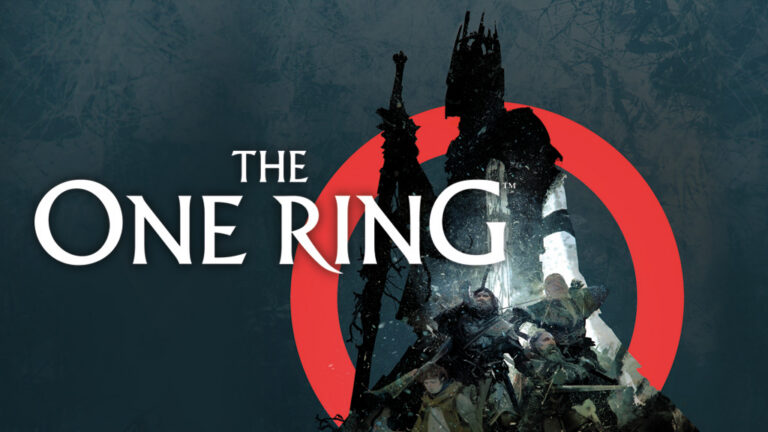
The One Ring roleplaying game now focuses on the north-west region of Middle Earth, called Eriador, and is set during a time of growing darkness during the end of the third age of the Lord of the Rings. This time is approximately between The Hobbit and The Lord of the Rings. Although this period has been previously explored and portrayed in books and films, the designers have taken the approach of assuming unreliable narrators for the events of the books. This allows The One Ring to be set within a familiar setting but still has enough flexibility for player agency.
The rulebook looks fantastic. Despite the large size (nearly 250 pages), it is an absolute pleasure to read. The artwork throughout is fantastic and is reminiscent of the pen-and-ink line drawings in The Lord of the Rings novels. The page design and aesthetics are evocative of an ancient tome, reinforcing the mood and feel of the game.
Player characters in The One Ring are a team of adventurers, be they captains, champions or similar, from a variety of races. However, there are no magicians or magic users in The One Ring. Instead, the only way for players to have any form of magic is through acquiring mystical items. Magic in The One Ring, is very much the purview of non-player wizards.
It is possible to have such non-player-character (NPC) wizards accompany the player characters, especially through the patron mechanics. Patrons are non-player characters that sponsor and guide the adventurers. This allows the storyteller an easy method for kickstarting adventures whilst empirically tying the game into the Lord of the Rings setting.
The mechanics underpinning The One Ring roleplaying game are streamlined and easy to use. The core physical/mental attributes are surprisingly limited, with only Strength and Wits being used. This may seem restrictive, but does streamline the game and make it accessible to new players.
Mimicking Tolkien’s writing, there is a lightness of tone throughout The One Ring that is unlike moderb fantasy-based roleplaying games at the moment, which have a far grittier tone (Symbaroum, for example, reviewed here). Yet, permeating the game and setting is a growing darkness emerging from the shadows.
This encroaching darkness is represented mechanically with Sorrow and Darkness, which reflects a character’s growing exposure to brutality and despair. Once Sorrow reaches a specific setting, dependent on the character’s Hope, the character becomes Miserable, resulting in negative modifiers to their dice rolls. This can be alleviated by allowing the character to succumb to a momentary madness. A good example of this is when Boromir attempted to take the ring from Frodo towards the end of The Fellowship of the Ring.
There are also a variety of optional mechanics, such as the Hunts. This is not recommended for new characters or for players unfamiliar with the setting, as it can make the game more challenging for the players, with little payoff. However, it does mimic Frodo’s repeated encounters with the Nazgûl, as the ring wraiths search for him. This darkness is accrued by the player characters; when it reaches a threshold, the eye of Sauron focuses upon them and the hunt begins. The hunters are not necessarily the nine (although that would be amusing just for the players’ reactions), but could be any of Sauron’s dark forces.
Adventuring Phase and Fellowship Phase mechanically essentially represent the in and out of game character development. The Adventuring Phase covers the adventures that the characters embark upon, whilst the Fellowship Phase is the time between adventures, where characters can heal, learn new skills and pursue personal goals. None of this is new per se, but it does embed the concept of downtime and how it should be used.
Player characters are able to choose from any of the core races and careers that we find in The Lord of the Rings. The choice of a character’s race goes beyond their attribute bonuses, as it also determines the level of interest in the group by Sauron. A group of hobbits and dwarves are seen as less of a foe than those of humans and elves, reflecting Sauron’s prejudices.
However, whilst there are lore masters, who are essentially researchers, there are no player character magicians. This mirrors the existing lore in Lord of the Rings, where the only ones who can cast magic are the wizards (Gandalf, Radagast and Saruman). This is not to say that characters do not have access to magic, but that it is only through mystical items.
The Patrons are interesting mechanic for the player group, as they are the one who sponsors each group. Patrons provides an excellent system for bringing the group together and giving them initial direction, as well as an overarching theme and goal to work towards. The patrons are not fixed and can change, depending on how each adventuring party develops and where their interests take them.
The final section is dedicated towards running the game, with a GM section on running adventures in Middle Earth. There are some excellent ideas here for exploring the setting, which avoids re-treading The Lord of the Rings. There is a less of a focus on the impending cataclysmic battles, but more on slowing the awakening darkness that is coming to life.
As with all Free League games, there is an over-reliance on random elements to dictate the progress of adventures. Whilst this can be useful for players unfamiliar with running a game, it does feel like an anachronist throwback to early roleplaying games with random encounter tables. However, these random tables can be used to as a menu of options for creating adventures, allowing the GM to create thematically appropriate foes, rather than relying on randomised dice rolling.
A starter boxset has also been released and has to one of the best boxsets out there. The boxset includes separate player and storyteller booklets, as well as background on Rivendell in a third booklet, expanding the potential settings for players to explore.
What especially makes starter boxset of value, even for those who already have the core rulebook, are the dice and fantastic maps. The maps provide an excellent means for planning adventures and journeys, as well as being perfect handouts for the players. There are also pre-generated characters that can be used by the players or as ready-made non-player characters for players to encounter.
The box has also been incredibly designed, maximising the surface areas. The inside of the box features a map on the base, whilst the underside of the box lid contains quick reference tables, allowing it to be used as an improvised GM screen.
A thick cardboard Loremaster screen has also been released, with quick reference rules, such as injury tables and advantages/complications reference on the GM facing side and an evocative full-length image facing the players.
Overall, The One Ring roleplaying game is an excellent roleplaying game with a light-weight rule system. Whilst some elements feel anachronistic, these are in the minority and the thematic approach of the game is embedded with the system.
With the Easter holidays creeping up slowly, only Sonic the Hedgehog could fill the need to keep your little speed demons in check and fully entertained. To say I loved the first film is an understatement, especially as the director took criticism on the chin, listened to what fans were saying, and then took the appropriate steps to rectify those critiques. In return, we got a Sonic that was both Game accurate and fan service respectful with the end result being a very well-received film by all; those that mattered anyway.
It was therefore with this success, a sequel was quickly on the cards and the film carries on pretty much from the after credit scene in the first film with Miles “Tails” Prower, a two-tailed fox on the search for the blue streak hero after Dr “Eggman” Robotnik had been ejected to the mushroom planet.
Now having Tails in the second film, was a natural progression, especially as the promotional poster was made to look like the Sonic 2 game cover. He was the proverbial Padawan learner to Sonics newly established Jedi Knight and kept the film grounded and real. With a friend who sonic had to look out for but who was also essential to him beating Robotnik; just like the game.
Sonic 2 poster inspired by original Game cover
Knuckles on the other hand was an interesting add for me, bearing in mind he didn’t come into the franchise until the Sonic 3 game, so why they added him into the second film seemed strange. Despite this, his place in the movie was well thought out and Idris Elba did a great job at bringing him to life. I’m really looking forward to seeing him in the upcoming Knuckles series.
Jim Carrey is once again in his element, if this is his final film? He can hold his head high as he will leave the same way he came in, with comedy. Carrey brings his textbook humour and energy back again as Dr Ivo Robotnik. Bigger and as maniacal as ever “poppas got a brand new stache” and he does it so effortlessly you forget he’s playing a game character. He may be the villain but you love him all the same, does Robotnik make this film? absolutely! His mannerisms, his presence, even the fan service of the “Mean Bean” coffee house taken from the Genesis game of the same name. Jim Carrey does it again.
All in all I cannot rave about this film enough it took the winning formula from the first movie, built upon it, and came out with something that, I’d say, surpasses its predecessor, with a truly funny and heartwarming message about acceptance of your uniqueness and perseverance through hardship. A lesson, as a father, whose kids were there with me I felt was a great one for them to be party to.
We cannot wait for the 3rd installment.
Sonic the hedgehog 2 is on general release now! “GOTTA GO FAST!”
FILM BREAKDOWN
**Spoilers ahead**
The sequel picks up literally where we left off. Dr Robotnik (Jim Carrey returning) is trying to escape the mushroom planet when Knuckles (voiced by Idris Elba) arrives, promising to help Robotnik return to Earth, in exchange for telling him the location of Sonic (Ben Schwartz returning).
Back on Earth, Sonic attempts to help the public as a vigilante “trademark Blue Justice” but as he is still young, makes many mistakes. Sheriff Tom Wachowski (James Marsden) tells Sonic to remain patient for the day his powers will be needed and gives a heartwarming fatherly speech.
When Tom leaves with his wife Maddie(Tika Sumpter) for her sister Rachel’s(Natasha Rothwell) wedding in Hawaii, Sonic enjoys some cut loose fun until an unwelcomed guest, Robotnik, accompanied by Knuckles attacks him and demands the location of the legendary Master Emerald, of which the mentions of “Unlimited Power” interests Robotnik, but Tails, arrives in time and helps Sonic escape.
Tails reveals he had been watching Sonic with his self-invented gadgets, ever since the latter’s electromagnetic pulse and witnessed his bravery in battling Robotnik. Impressed by his genius and newfound friendship, Sonic encourages Tails to help him reach the Master Emerald first while Robotnik aids Knuckles in the same task and reunites with Agent Stone, including his favourite latte with steamed Austrian goats milk.
Sonic remembers the old map that Longclaw entrusted to him has an emerald inscribed on it also a hidden magical message from the wise owl. A secret message that pinpoints the emerald’s location in Siberia where they find a compass in an ancient temple, but Robotnik and Knuckles attack them, during which Knuckles reveals he is the sole survivor of the echidna tribe that died along with the Owls and was intent on killing him in revenge.
As an avalanche starts, Tails is injured, Robotnik and Knuckles leave with the compass as Sonic calls Tom to make a ring portal to save them. As Sonic introduces Tom to Tails, the wedding goers, who were secret agents working for the newly established Guardian Units of Nations (GUN) investigating Sonic’s whereabouts, captures all three.
Maddie and Rachel rescue Sonic, Tails, and Tom from GUN’s custody using Tails’ gadgets while Robotnik and Knuckles find an underwater temple containing the Master Emerald. The temple awakens, alerting Sonic and GUN of Robotnik’s threat. With Tails still injured, Sonic goes to the temple solo and engages Knuckles again, but Robotnik being the villain, double-crosses knuckles, steals the emerald and leaves both Knuckles and Sonic to perish in the collapsing temple (Game mechanics fan service by having sonic use an air bubble to breath). However, Sonic and Knuckles escape the temple, reconcile, and agree to work together to defeat Robotnik as Tails shows up (in the fan service Tornado) and rescues them in a biplane.
In Green Hills, an emerald-enhanced Robotnik destroys GUN’s forces and creates a giant mech version of himself and in my opinion the greatest use of Panteras “Walk” ever is used, Pantera in a family film!
Sonic, Tails and Knuckles work together to fight the mech and reclaim the Master Emerald, but the relic is shattered. Tom and Maddie rescue Sonic, but Robotnik, using the mech’s backup power, destroys the car and tries to crush them. Sonic uses the Chaos Emeralds that emerged from the Master Emerald to transform into Super Sonic, yes he went full super saiyan, to save the couple.
Just like in the game, Sonic can use this ability for 60 seconds and by my count, they used him as SS for 60 seconds, brilliant fan service. With his new powers, Super Sonic destroys the mech, crashing with Robotnik still in it. Sonic ends the calamity, reverts back to normal and hands the Chaos Emeralds for Knuckles to recreate the Master Emerald. With the Owls and Echidnas extinct, Sonic, Tails, and Knuckles decide to safeguard the Master Emerald in a cooler while living with the Wachowskis.
Now….the after mid credit scene!
GUN unsuccessfully tries to find Robotnik’s body in the crash when they stumble across a hidden 50-year-old file named “Project Shadow”, in which Agent Stone overhears while posing as one of the GUN soldiers. Elsewhere, a capsule containing a black-and-red hedgehog, SHADOW, opens.
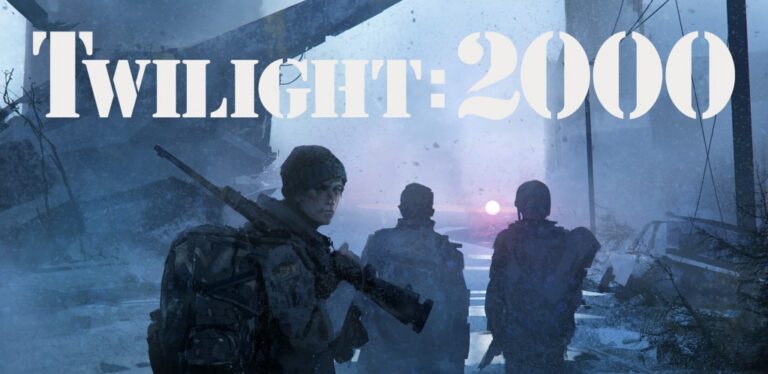
Twilight: 2000 is a military-SF post-apocalyptic tabletop roleplaying game (RPG), which debuted in 1984. Since then, the game has undergone several editions, with an increasingly – and amusingly preposterous – convoluted backstory behind World War 3. It also spawned the spin-off RPG Merc: 2000.
This latest edition, by Free League, reboots the setting and utilises an entirely new rules system as a foundation for the game. Those familiar with previous Free League games will recognise the system, as it is based on the hexcrawling system established in Mutant: Year Zero and Forbidden Lands, but developed further to fit the gritty setting of Twilight: 2000.
The rules system is focused around a twin-dice conflict-resolution system, where one die is for the skill and the other is for the attribute. The better the skill, the larger-sided dice is used, allowing players to roll higher, based upon how competent their characters are.
Rather than making Twilight: 2000 a modern/near-future setting like the original, it is now set in an alternative history. Described as “The world war that never was”, Twilight: 2000 posits ‘What if the Cold War went hot?” In some ways, this echoes Tales from the Loop and Things from the Flood, which are also set in that era. This removes some of the contemporary geopolitics from the game and makes it focused on telling stories about what it takes to survive in such a world.
The core setting for Twilight: 2000 is Poland and Sweden, with a fantastic array of background material, including a detailed map for each area, as well as a broad overview of what is happening in the rest of the world. Twilight: 2000 also includes tools for players wanting to set games within their own region. However, the vast amount of information about these settings will be an excellent resource for GMs.
It would be fair to say that previous editions of Twilight: 2000 were beset by jingoistic flag-waving, with an Us (NATO troops) vs Them (Russia) mentality. This, in turn, was compounded by such a fetishistic approach to guns that it would have even made the NRA blush.
Instead, Free League take a more holistic approach to the setting, highlighting the challenges of surviving in an apocalyptic setting, which are more than just who has the biggest gun. Survivalism and collaboration are now core themes of the game. Players can still able to lay waste to vast swathes of the enemy using a machine gun, but dysentery can still kill their characters.
However, this is a world beset by raiders and warlords, setting up their own dominions. Here the ‘Us’ is the player group and the ‘Them’ is the setting itself, be it warlords, raiders or scavengers. This is a game about surviving after a world war, not during one.
Twilight: 2000 is focused on two styles; typical roleplaying campaigns and what is called “hexscape crawl”. Stories in Twilight: 2000 campaigns are centred around survivalism and cooperation. However, the potential stories here are very much location-based. There are several ready-to-play scenarios included, which are not only great to run but also act as sources of inspiration.
A hexscape crawl is driven by the hex-based maps, where each hex is provides a new situation for the players to encounter. This essentially mimics the wandering monsters table from classic dungeon-crawls, but each encounter is not necessarily antagonistic. It is possible to run this as a single-player, as a series of randomly-generated encounters, but I suspect this would diminish some of the roleplaying elements in the game.
One downside of this game is that, by its very nature, the tight narrative limits the types of stories that can be told in a post-apocalyptic setting. As a consequence, there is a limited variance in the stories: much of the focus is on surviving in such a landscape but there is little on rebuilding society. That said, with some tweaking, it could be very easy to tell a game in the style of TV shows like Jericho or Jeremiah.
The Twilight: 2000 box-set comes complete with everything that players will need to run the game. This is no starter set, but a complete game in and of itself. The box-set includes two rulebooks (player and referee guides), a deck of equipment cards, a pack of dedicated dice, area maps (for each of the settings), and location maps for combat. Having everything you need to play the game in a box is a rarity.
A complete box-set sometimes indicates that this is all that will be released for the game, but this is not the case for Twilight: 2000. Urban Operations has already been announced as a future supplement and more can be expected in the future.
After constant delays, the Loki and Sylvie Helmet Replica Set deom Zavvi has finally shipped and is arriving in homes as we speak. Is this a must have or a hard pass? Read on to see our thoughts
Special Features
Sylvie and Loki helmet replica set
Inspired by the Loki Disney+ TV series
Exclusive to Zavvi (UK and EU)
Limited Edition — 1000pcs
Officially Licensed
Perfect for Display and/or Cosplay
Includes Certificate of Authenticity
Packaged inside a Collector’s Box
Materials: Brushed Antique Brass Finish
The Loki and Sylvie Helmet Set are described as follows
Zavvi – The Home of Pop Culture
Take on the role of the God of Mischief with the Sylvie and Loki helmet replica set. These officially licensed pieces are inspired by the hit Disney+ TV series Loki and are available exclusively on Zavvi (UK and Europe).
Presented in a stylish collector’s box, these wearable headpieces are made from durable iron and feature a brushed antique brass finish for maximum authenticity. Display them proudly as part of your Marvel Cinematic Universe (MCU) collection, or go and cause some chaos as you dress up in your Loki cosplay outfit.
For any fan of the MCU, these are essential collector’s items. Make sure you grab yours quick, as the Sylvie and Loki helmet replica set is limited to only 1,000 pieces (certificate of authenticity included).
Must have or must pass?
The amount of time this took to arrive is, unfortunately, a staple of ordering from Zavvi. It can often feel like you are in an unending limbo with them.
The item finally shipped and arrived. Retailing at £99.99, you would hope it was well packaged. Unfortunately, the packaging was a single walled postage box with only plastic airbags as protection. Plenty of room for your display collectible to rattle around and had the box taken any hits, it afforded little protection.
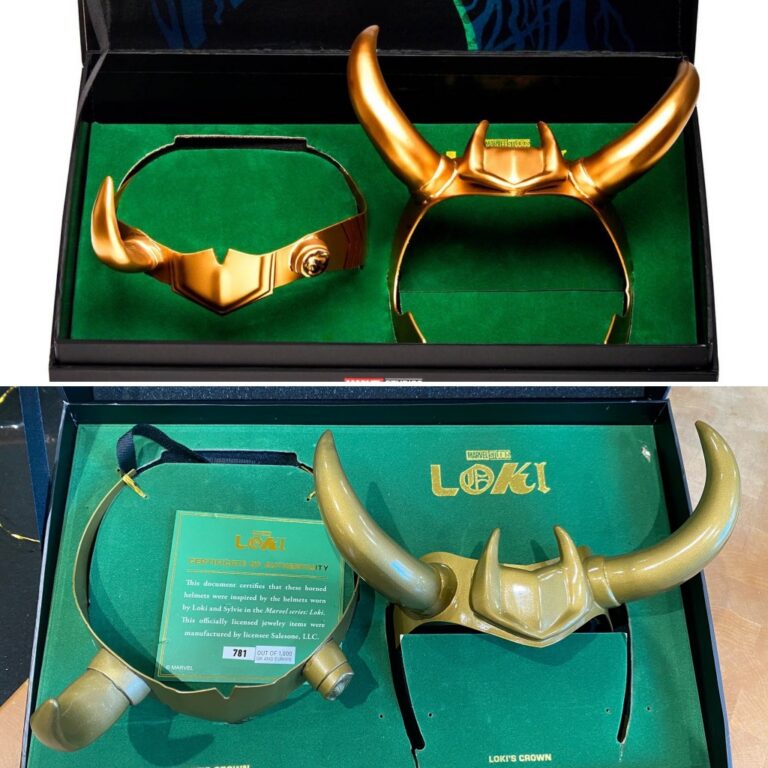
The item itself is a rigid outer box with the horrible Loki logo on it (The author is aware she is biased and hates the logo). So far everything is in line with the description.
Then you look inside, and then the disappointment starts. The first impression was “Is that PLASTIC?” Followed by “Holy hell, it’s not?” Although these items are metal, the paint job is terrible, nothing like the display photo. It makes these look like cheap knock-off toys. Not the best start…
Oof..
It doesnt get better…
The internal packaging is looks cheap and riddled with damage. Rememberm, this is intended as colletable display set. Even the certificate of authenticy is ripped. The gold ties are closer in color to the image on their site than the crowns are.
On the offchance that you never wanted to display these, as they are advertised as for cosplay, Loki’s crown is horrifially heavy and wont fit on your head unless bent. All supported by a stap less then 1cm wide. As an experienced cosplayer I can say that wearing this would be near impossible. The crown would need to be significantly bent to fit the average head and the strap would need to be swapped for something else. Also, the crown is so heavy that the included stap to support it without discomfort to the wearer.
Sylvies crown would be easier to wear, simply by being smaller, but has the same downside in needing to be bent. The quality of it was also shocking.
In summary:
For an item that is described as a display piece that can be worn, the poor design and unwearable nature of it does not justify price. There are plent of alternate versions that can be found online for your cosplay needs, which would look amazing, not break the bankstill and come with a nice tiara display. Save your money.
You can also read more of our Loki content here, with our review of Season!
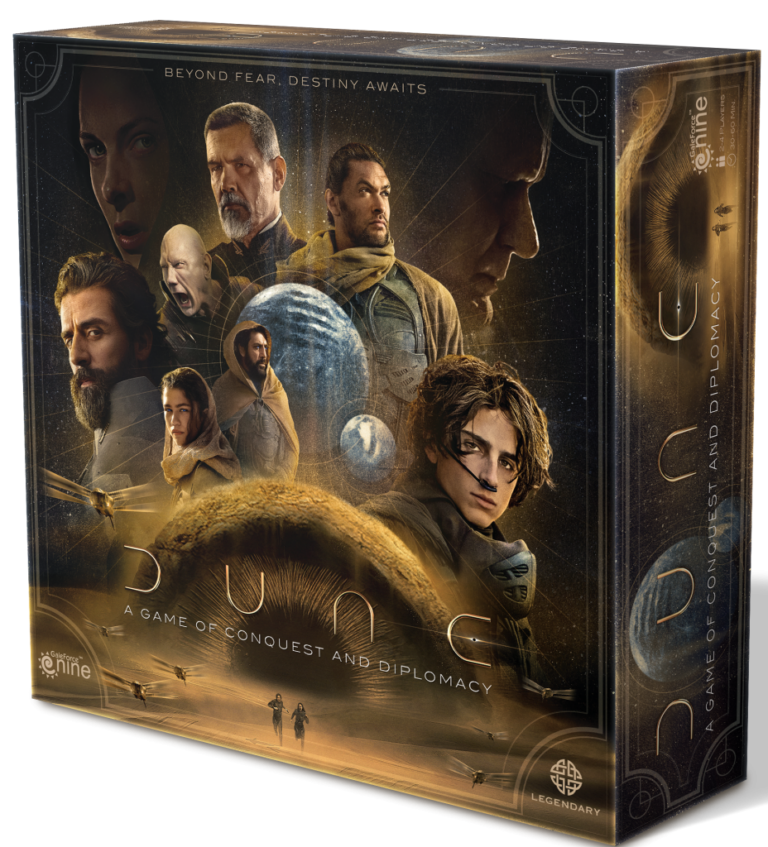
Dune: A Game of Conquest and Diplomacy, or simply “Dune”, is based on Frank Herbert’s novel Dune. The game was first published in 1979, five years before the cinematic adaption of the book was released. The game has been out of print for some time, but a new and updated version has recently been released by Gale Force 9.
It would be fair to say that the original Dune board game was ahead of its time, presenting a multi-way asymmetrical game of resource management and area control. However, the game was excessively granular, with an emphasis on information gathering being key to winning.
Whilst Gale Force 9’s version is visually inspired by the Denis Villeneuve‘s Dune, the focus nonetheless remains the same as the original. Each player takes on one of four factions; House Atreides, House Harkonnen, the Fremen or the Imperium. Each faction has unique advantages, in keeping with their character. For example, the Atreides have Prescience, which allows them to see part of their opponent’s battleplans.
In order to achieve victory, each player needs to control three of the five strongholds, or – if this has not been achieved by the end of turn 5 – the player with the most victory points at the end wins. This relates primarily to how much spice has been acquired by each faction, but is dependent on other factors too.
The board game is designed for, and works best with, three to four players. In a two-player game, the factions are consolidated into Atreides/Fremen and Harkonnen/Imperium, whilst the victory conditions necessitate four of the five strongholds being controlled.
The system has been streamlined for accessibility and is quick to grasp, but is sufficiently flexible such that it allows significant adaptability in how each player approaches the game. One of the major changes is the five-turn limit, which becomes a major factor within the game.
This deadline changes the game’s mood from the previous version. With this deadline in place, players are forced to abandon the previous version’s conservative intelligence gathering for a more opportunistic approach, taking advantage of shifting events. That said, this tight deadline makes for an equally tight gameplay experience, typically 60-90 minutes, thus a playthrough of Dune is never stretched out for too long.
The game also looks amazing and is heavily inspired by the 2021 Dune film. Although some of the tokens might have benefited from being slightly larger, this is a well-made game. The rules are well explained and thematically appropriate for the game, as well as including a tactical overview of each faction for new players. The game is also easy to setup, taking five minutes for everything to be in place.
“Anyone could have been you, whereas I’ve always been anyone.”
(Smith, Jonathan Groff, The Matrix: Resurrections)
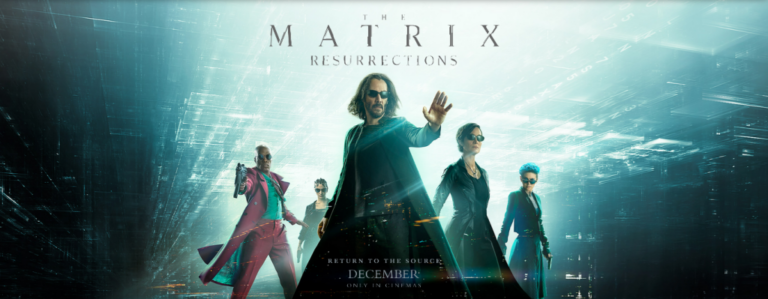
It has been eighteen years since The Matrix: Revolutions, and, in my opinion, the earlier sequels of The Matrix were not the best. Whilst they upped the ante in terms of action and visual effects, they were shallow copies of the original movie, replacing deep philosophical musings about reality and self with convoluted dialogue that felt like they had thrown random words at the wall to see what stuck.
Thus, hopes for Lana Wachowski’s The Matrix: Resurrections were low, to say the least. We had all been burned before and The Matrix seemed doomed to be subject to the law of dwindling returns.
The Matrix: Resurrections advances the timelines of The Matrix franchise forward sixty years. Neo (Keanu Reeves) and Trinity (Carrie-Anne Moss) have been resurrected as Thomas Anderson and Tiffany, but are unaware of their true natures. Anderson is now a games designer, who has been reluctantly forced to make a sequel to his hit video game trilogy The Matrix by Warner Brothers (yes, Warner now exists in The Matrix universe…)
Many characters have been recast. The exceptions are Jada Pinkett Smith returning as Niobe and Lambert Wilson making a fairly pointless return as The Merovingian. Those characters who had been recast were initially disconcerting; however, as the film progressed, they became a natural fit. Yahya Abdul-Mateen II plays a more flamboyant Morpheus. Likewise, Jonathan Groff’s Smith echoes the original Agent Smith, whilst adding his own interpretation of the character. Jessica Henwick, as Bugs, acts as Neo’s mentor and guide through his awakening.
The Matrix: Resurrections embraces the disconcertion caused by recasting, by echoing scenes from previous The Matrix films and even displaying them as flashbacks. The storyline is complex and multi-tiered, but still fun, especially where Warner Brothers light-heartedly poke fun at themselves.
One thing that doesn’t change too much is the cinematography and choreography, which are just as excellent as they always were. There is fantastic attention to detail, with small details that may only be fully appreciated after repeated viewings. The fight scenes are wonderfully shot, giving a sense of depth and movement that other films rarely achieve. The Matrix: Resurrections is a visual feast that can only be fully appreciated on the big screen, especially for the scenes in the machine city.
The costumes also look amazing, combining the legacy of alternative fashion from the previous films with modern-day couture. The clothing changes throughout the film: as the lead characters accept their true identities, they go from wearing generic clothes that blend into the background, to attire more fitting for their nature.
At the start, Thomas (Neo) and Tiffany (Trinity) are both portrayed as looking tired and haggard, but as the film progresses and the action begins, they look fantastic without any airbrushing of their age. The Matrix: Resurrections accepts that people age, but that does not diminish their appeal. For those of us who are old enough to remember The Matrix on the big screen, seeing Trinity and Neo revitalised like this is powerful and beautiful.
For those of us who are old enough to remember the original of The Matrix on the big screen, seeing Trinity and Neo revitalised like this is powerful and beautiful.
Those expecting a popcorn flick will be disappointed, as the nature of plot is as complicated as the original. The Matrix: Resurrections is a film that requires you to think about what is happening. Lana Wachowsk, David Mitchell and Aleksandar Hemon’s script explores multiple levels of reality and variations of the truth, echoing the real world’s struggle with misinformation and “alternative facts”. The script particularly shines whenever the lead characters are involved, as Reeves and Moss’s delivery elevates the excellent writing.
This is a film that acknowledges all that has gone before, whilst at the same time embracing new technologies and themes. A prime example is that the once ubiquitous landlines that were used for entering the matrix are now replaced by mirrors. Likewise, doors can be used to create portals, much like The Keymaker in the previous films. The chemistry between the two main characters is exceptional. Wachowski uses the established familiarity between the two actors to deliver some fantastic scenes in their characters’ awakenings.
At nearly two and a half hours, The Matrix: Resurrections is the longest of The Matrix films. A couple scenes were unnecessary, with some returning characters feeling superfluous, other than making a comment about modern life. Losing some of these elements would have made for a tighter narrative and greater focus on the film’s core themes.
Ultimately, The Matrix: Resurrections is about change and evolving to embrace these changes. It is about overcoming the drudgery of modern-life to rekindle the passions that once drove you and finding people who enable you to embrace your true self.
It could be argued that The Matrix: Resurrections has a very specific audience in mind; those that first watched The Matrix in 1999 and were inspired by the subsequent shift in the cultural zeitgeist, but have now settled into modern life.
After the return of MCM London on October 22nd, we felt that the return was a little underwhelming. In our review, Laura noted that after two years, the ongoing restrictions and pertinent fears surrounding the pandemic this return of the convention giant would be “an interesting test case for a return to ‘normal’ for the industry”. I had similar feelings about the Birmingham convention, owing to the fact that the convention had made the decision not to return to Manchester or Glasgow – and so, as of 2021, Birmingham was the only MCM convention outside of London and as such had a lot to live up to.
Along came November 13th and 14th, and I arrived at the NEC a little unsure of what to expect. I had always known that due to the nature of the building, the NEC would have multiple events going on at the same time – as such, this would have a knock-on impact of the size of the convention. How much space would be dedicated to the independent artists? How would they fit in the interactive components, especially to accomodate for space over COVID fears?
The Convention
One Covid Passport later (tests were provided on the day for a cost), and I found myself walking amidst the smatterings of stalls that lined the hall of MCM Expo. The morning was relatively quiet, but soon the cosplayers and attendees all started arriving in their droves until the space felt quite packed. People were chattering and greetings being shouted from each corner as long-time friends met for what must have been the first time in over a year. Stall vendors welcomed new and intrigued eyes to peruse their wares, with a variety of content on offer. The Artist Alleys were a bit neatly packed, but all the vendors seemed to be making the most and striking up pleasant conversation with all who stopped by – I did recognise a few familiar faces, and picked up some goodies from fairly new ones. Similarly, there were several stalls available to pick up a variety of figurines and merchandise. I was especially surprised to stumble across severally reasonably priced Limited Edition Dungeons & Dragons books which I had only previously been able to locate online for at least twice the asking price.
Unfortunately, this tightness of spaces seemed to be shared by the attendees as well as the vendors – it was impossible to maintain social distancing, and many people came by not wearing masks. Fears of such an eventuality had caused a few friends to back out at the last moment, and there were times when I felt uncomfortably close to people as I went about moving from stall to panel.
There was a significant lack of decoration too, which seemed to put more pressure on the cosplayers and stalls to light up the venue – no banners from the ceilings, or adorning the walls. Even the passes were a dull, blank and filled with only necessary information. Even the adverts were muted to almost non-existent; at least London had one Wheel of Time stall, here in Birmingham there was nothing except the panels and guests! It seemed rather unfortunate to consider it as a glorified shopping hall, but this year it felt rather subdued and almost colourless – another complaint which had been raised at the London MCM Expo prior.
Meeting the Stars
I have mixed opinions on this aspect. Not because of the stars, but more the handling of them by MCM. Now, I understand that with some actors availabilities being tight and the cancellation of Brian Herring would have narrowed down the options – however, interviews with the stars were organised on the day and relied on press keeping a close eye on their emails throughout the day to be told of opportunities. On the Saturday, I was able to sit in on an interview with Roger Clark (Arthur Morgan) and Rob Wiethoff (John Marston), who were talking about their roles in the Red Dead franchise.
Roger got the opportunity talk about the medium of acting through performance capture is the current technology, and how it had been a massive privilege to experience. He felt that it was is in a state of development where we can see the potential and improvement in other mediums, such as film and television. I asked about the possibilities of improvisation, and he agreed that motion capture definitely allowed for a little more leeway with improvisation, enabling the camera to capture aspects to help fully immerse into the character. However, as an actor you still have a script to work with and there are expectations from the director to meet. Robert discussed his position as a returning actor, as when the original Red DeadRedemption was produced he felt that returning to the franchise was a great opportunity after the fun that was Red Dead Nightmare. In terms of attitude for the character (young John when compared to Old John), “he’s never going to back down from anyone ever”. Arthur Morgan and the others don’t give John respect, and it’s very different to the John we saw in the first game, with Rob utilising an anecdote of fitting in as a freshman to symbolise John’s place amidst the crew. In terms of the future, Rob was cautiously optimistic that the franchise could include more John Marston, but is unsure of how they would fit it in the timeline – what timeframe could the game be set in? It was a shock to be called back at all for the sequel, let alone the DLC. He recalls being called out of the blue for more work and was initially under the assumption that it would be a cameo as was the case for other prevalent Rockstar voice actors. Finally, he mused about the possibility of taking Red Dead to the big screen stating that he would love to come back due to his fondness for the John Marston, but the question remains unclear whether he would be able to reprise his role or make a cameo appearance.
My final talk came on the Sunday with John Rhys-Davies. There was so much to talk about and so much to say, that I have to link a video as John took control of the meeting and turned a short 15 minute interview into over half an hour with a legend. It was quite amazing to listen to him as he regailed us with his stories, and especially to learn that he was working on his own book which he would like to narrate himself!
Full credit for this video comes from Red Carpet News TV.
The panels, on the other hand, were very well managed. There was a careful seating plan, and everyone seemed very eager to welcome the celebrities to the stage. Indeed, with Ian McDiarmid, the panel hall erupts in cheers and applause as the Emperor himself stepped out onto the stage, waving before taking a seat on a couch. During this time, McDiarmid was very at ease and regailed us with tales and information such as the the fact that he was not first actor to be approached for the role of Palpatine in the original movie. In fact, he was cast as a replacement as the original actor found the contact lenses for the role incredibly uncomfortable. He talked about his work with George Lucas following this appointment, and how he was given creative freedom with the role as he had belief in actors making the characters their own. The only instruction he remembers being explicitly given was that he should think of his eyes as Sideous’ contact lenses in the Phantom Menace. He found returning to the role for the Disney movie to be very exciting, and was especially enamoured with the prop throne in Rise of Skywalker which allowed for the ‘mad’ physical aspect of flight that provided a kind of ‘evil satisfaction’ (and gave a wry smile at the applause he received when mentioning that he had a sort of ‘evil satisfaction’).
Upon opening up to questions from the floor, I had the opportunity to pose a question myself to McDiarmid; if Disney handed you a blank cheque to bring to life an aspect of Star Wars he would love to expand – such as, for instance, a series about an archaeologist unearthing a Sith Holocron which acts as a time capsule containing a record of the early days of Sheev Palpatine. McDiarmid had a good chuckle at the idea of a blank cheque, remarking it was unlikely but that maybe I should approach Disney with my pitch. The question opened up an opportunity for him to discuss the recent endeavours into lesser-known corners of the Star Wars universe, and how it lined up with ideas and concepts that George had envisioned but never pursued because the technology never matched how he imagined it. To him, The Mandalorian was a representation of George’s dreams finally being realised.
Verdict
This MCM was not quite the triumphant return to conventions that most had expected. The lack of decor left me with not a sour taste in my mouth, but more an absence of any kind – the muted convention had left me with a muted response. I attended with a group, and I felt that without them I would have been completely underwhelmed with what exactly happened at MCM – however, we still had a good time. We walked about, talked, attended panels and left with bags of merchandise. It was a fun trip out, but MCM should feel a bit…more. It should leave you thinking about the games, the films and television shows coming up.
I completely understand that COVID has certainly had a knock-on effect on the entertainment industry, but I have a small hope that next year sees the returns of the wholehearted celebration of old and new in glorious colourful fashion.
The first volume (reviewed here) in the At the Mountains of Madness artbook collection concluded just as the cranking tension of the narrative rollercoaster reached the peak and things were going to kick off. Whilst it was the perfect moment for a cliff-hanger, it did mean that readers were waiting a year to see how the story.
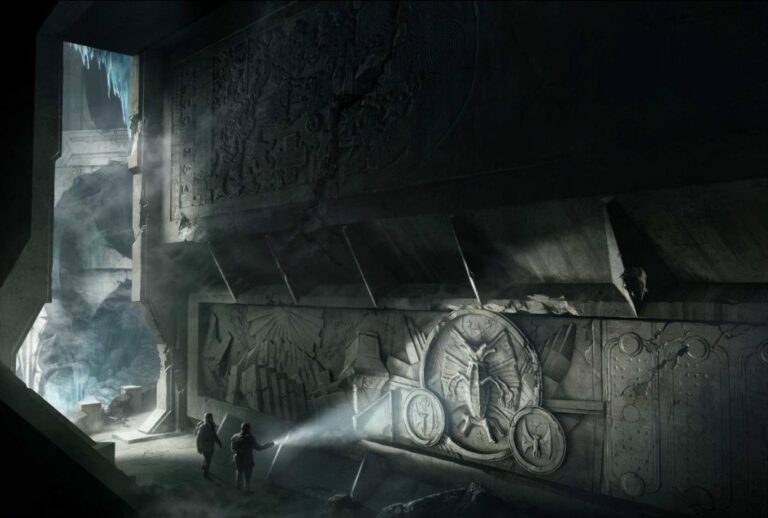
Francois Baranger continues his epic artwork rendering Lovecraft’s 1936 tale. Baranger perfectly captures the windswept grandeur of the arctic wilderness, often putting the scale of landscape into perspective through small human elements. This reinforces the vastness of the environment as well as underscoring how brutal it is to humans.
These moments are used incredibly effectively when the research team explore the ruins, as insignificant figures are held in stark contrast to the colossal buildings they have discovered. As well as the conveying their size, this conveys the understanding that these could never have been built by humans: they are just so alien.
Colour is also used effectively as well. Warmer colours like reds and browns, are sparingly used to convey the human elements, whilst cooler colours, like whites and blues, dominate the artic wilderness. Likewise, light and shadows are used to draw the eye, whilst darker colours are used to indicate dangers. The artwork becomes increasingly darker as the story progresses, reflecting the encroaching danger the explorers face.
One of the greatest challenges of an artbook about Lovecraft’s fiction is that the horrors are rarely described. Readers are offered small details, but never given a full description of them, other than “indescribable” (thanks Lovecraft…). However, Baranger conveys the indescribable nature of Lovecraft’s elder gods by obfuscating their details through smoke and the like.
Readers only see glimpses of these alien horrors, probably far more than we do in Lovecraft’s original text, but their full visage is never revealed. Thus, the reader’s sanity is preserved.
This artbook uses H.P. Lovecraft’s original text of At the Mountains of Madness for historical accuracy, including elements of Lovecraft’s unacceptable tendencies. Remaining aware of this will allow readers to appreciate his writing whilst recognising just how offensive some of his views were.
One thing to note: this artbook is huge, coming in at least A3 in size. It is certainly not something that could be read in the bath. However, the book needs to be this size in order for the artwork to be fully appreciated. To be any smaller would have lost some of the details in the paintings and diminished their sense of scale, which is so important for this tale.
There could be an argument for releasing the artwork in single volume. However, given the amount of time and effort required to paint all of the artwork contained in both books, splitting the story into two separate volumes reduces our waiting time.
We use cookies on our website to give you the most relevant experience by remembering your preferences and repeat visits. By clicking “Accept All”, you consent to the use of ALL the cookies. However, you may visit "Cookie Settings" to provide a controlled consent.
This website uses cookies to improve your experience while you navigate through the website. Out of these, the cookies that are categorized as necessary are stored on your browser as they are essential for the working of basic functionalities of the website. We also use third-party cookies that help us analyze and understand how you use this website. These cookies will be stored in your browser only with your consent. You also have the option to opt-out of these cookies. But opting out of some of these cookies may affect your browsing experience.
Necessary cookies are absolutely essential for the website to function properly. These cookies ensure basic functionalities and security features of the website, anonymously.
Cookie
Duration
Description
cookielawinfo-checkbox-analytics
11 months
This cookie is set by GDPR Cookie Consent plugin. The cookie is used to store the user consent for the cookies in the category "Analytics".
cookielawinfo-checkbox-functional
11 months
The cookie is set by GDPR cookie consent to record the user consent for the cookies in the category "Functional".
cookielawinfo-checkbox-necessary
11 months
This cookie is set by GDPR Cookie Consent plugin. The cookies is used to store the user consent for the cookies in the category "Necessary".
cookielawinfo-checkbox-others
11 months
This cookie is set by GDPR Cookie Consent plugin. The cookie is used to store the user consent for the cookies in the category "Other.
cookielawinfo-checkbox-performance
11 months
This cookie is set by GDPR Cookie Consent plugin. The cookie is used to store the user consent for the cookies in the category "Performance".
viewed_cookie_policy
11 months
The cookie is set by the GDPR Cookie Consent plugin and is used to store whether or not user has consented to the use of cookies. It does not store any personal data.
Functional cookies help to perform certain functionalities like sharing the content of the website on social media platforms, collect feedbacks, and other third-party features.
Performance cookies are used to understand and analyze the key performance indexes of the website which helps in delivering a better user experience for the visitors.
Analytical cookies are used to understand how visitors interact with the website. These cookies help provide information on metrics the number of visitors, bounce rate, traffic source, etc.
Advertisement cookies are used to provide visitors with relevant ads and marketing campaigns. These cookies track visitors across websites and collect information to provide customized ads.










 Dune: A Game of Conquest and Diplomacy
























 The first volume (reviewed

