

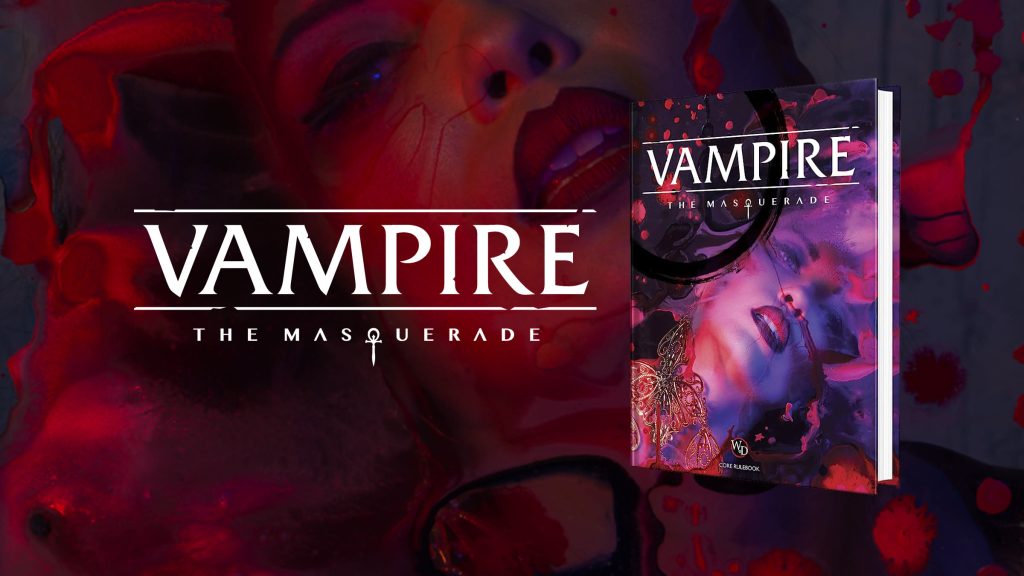
With the release of Vampire: The Masquerade in 1991, White Wolf revolutionised roleplaying games. Storytelling, rather than combat, was the key element. In the World of Darkness, players take on the role of monsters in stories that explore the human condition.
It was no surprise that Vampire: The Masquerade went on to win numerous awards, including the Origins Award for Best Roleplaying Rules of 1991 and the Casus Belli’s award for the best role-playing game of 1992, for the second edition. The World of Darkness would expand to include numerous roleplaying games, video games, card games, novels and inspired a television series.
In October 2015, Paradox Interactive bought White Wolf studio and, three years later, incorporated the studio into its parent company. As a consequence, White Wolf ceased internally developing and publishing products. This did not stop the World of Darkness, which saw new editions of Hunter: The Reckoning and Werewolf: The Apocalypse being released, as well as the critically-acclaimed LA By Night web series.
However, on 23rd May 2025, like a vampire rising from the ashes, White Wolf was reinstated as an independent studio. Although White Wolf remains part of Paradox Interactive, all future development will be brought in house.
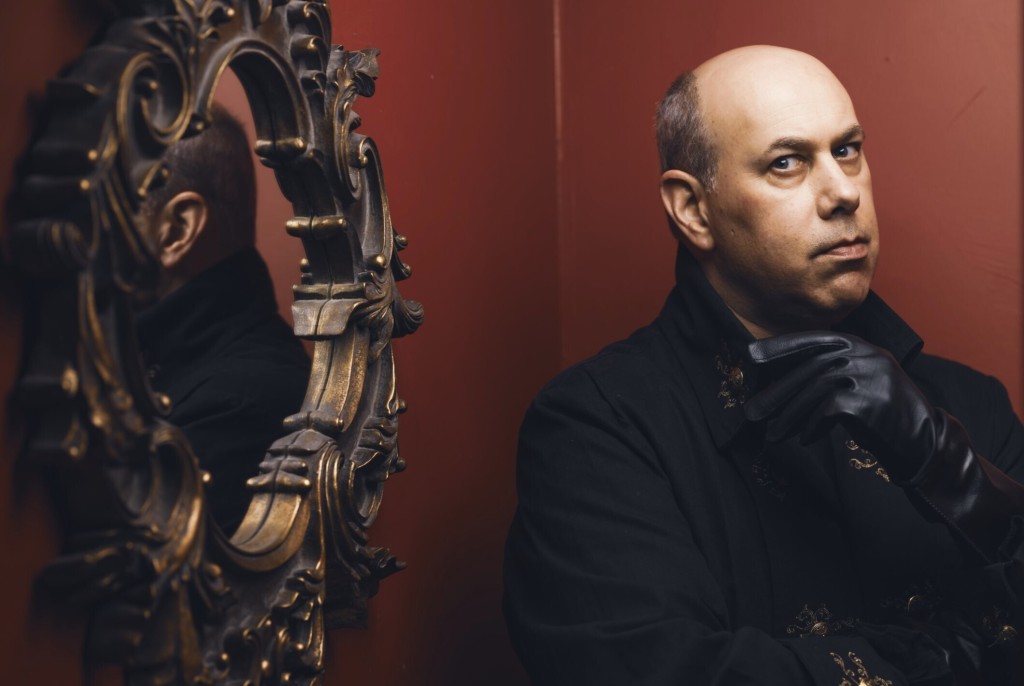
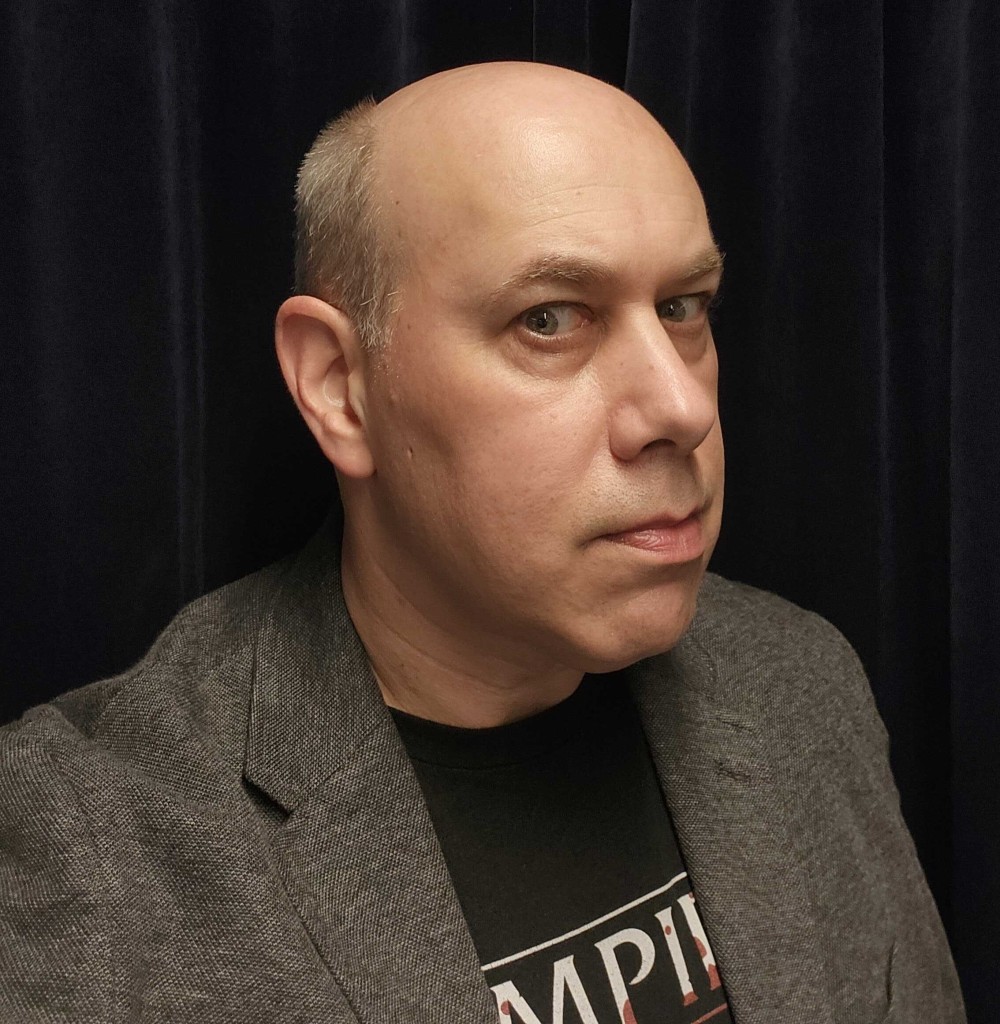
Peter Ray Allison sat down with community brand manager Jason Carl to discuss what the return of the White Wolf means for World of Darkness and their future games.
When did you first encounter the World of Darkness?
I came in as early as was possible, without being an employee of White Wolf. I was at Gen Con in 1991 when the original Vampire: The Masquerade dropped like a gothic punk bomb on the world. I clutched my copy proudly to my chest. Even then I thought it was a transformative game.
I raced home to Seattle after Gen Con, and nobody would play it with me. I couldn’t find another player, until, a few weeks later, I stumbled upon a bulletin board advertisement for a Vampire: The Masquerade live action role playing game experience in Seattle. This was just weeks after the game arrived, so that was surprising, but cool. My very first exposure to Vampire, as a player, was through a very informal live action role playing experience.
Even then, fans and players realised the potential for this game to be something other than just a typical tabletop role playing game. I really felt I had found my people.
It wasn’t too long after that, that I joined Wizards of the Coast, working on Magic the Gathering and then later Dungeons and Dragons, 3rd edition. At the same time, I had an opportunity to begin writing freelance for White Wolf. My first book was a Vampire: The Dark Ages source book – Liege Lord and Lackey. It was all about ghouls and mortals in the dark mediaeval times.
That must have been one of the first vampire LARPs?
It was very informal, with a dozen people gathered in a Seattle park. It was less of a LARP, than people sitting around in character applying informal resolution procedures to what is essentially a tabletop game. It wasn’t LARP in the way that we would think about live action role playing today. That would come later, with the arrival of Night Owl productions a year later, which was the very first Vampire: The Masquerade LARP. The Camarilla fan club followed very quickly thereafter.
What is it about the World of Darkness that continues to be so popular?
I don’t think it’s a secret, but it is something that we don’t often stop to consider. The answer is the same today as it was over thirty years ago, but the context is different: you are the monster.
When the game first dropped, that was a revolutionary idea. The idea that not only could you play the vampire, but you were not necessarily the hero. You might be the protagonist and could even be heroic, but you weren’t necessarily the hero. You’re the monster.
The game had that as its core concept; the struggle of humanity against your inner beast. On the flip side, it is a game about the consequences of being monstrous, that was revolutionary and I still think it’s revolutionary today. The context has changed, but the message is obvious and still clearly resonates with us all.
You said in World of Darkness: The Documentary that “You’re an outsider, playing the ultimate outsider.”
By playing the monster you are automatically outside everything. Vampires are not only outside society and culture, but they’re outside nature itself. They are, by definition, unnatural. I don’t know if it’s possible to get more outsider than that. The same is true, of course, for werewolves, mages, changelings, even hunters to a degree, and all the other denizens of the World of Darkness. They are far outside cultural and societal norms, and they’re outside the natural world as well.
Your role is the brand marketing manager, but what does that entail?
I’m responsible for making sure that as many people know about the World of Darkness as possible, that the games that we offer resonate with them, and how we talk about those things in our marketing. Our public relations must reflect the games themselves and align with what our audiences want from us. It’s not as fancy as it sounds.
I build brand marketing campaigns. You could think of actualplays like LA by Night and New York by Night, as a marketing campaign in a way, but it’s also a community activity.
What were the drivers behind White Wolf returning as a studio?
We were primarily a licencing organisation. We managed the brand, but the product development and a lot of the world building would occur at the product level with our partners, which has been fantastic. We’ve gotten some great partner games, video games, tabletop role playing games, board games, card games, LARPs and a lot of great collectibles and merchandise as well.
It’s grown so much and there’s so much demand now for the IP [intellectual property] that we decided the best way to approach the growing demand and interest is to become not only the licensor, but also our own publisher again. White Wolf in the past was both publisher and licensor. That changed when we joined Paradox Interactive, and now the best way to manage that growth and demand is to bring it back full circle.
That means, from a brand marketing standpoint, that I’ll be crafting first party marketing, not just guidelines for our licensees. I’ll be working with our own internal business unit that is developing the IP, and the IP management will now live centrally.
Why return to using White Wolf as the studio name?
We became World of Darkness when we integrated fully into Paradox, and that change was about signalling that this is not a publishing company, but a licencing and IP management organisation.
As we return to the original format of the company, the business unit needs a name change again to signal that it’s not just licencing, which stays an extremely important and equal branch of the brand, but now it joins first party publishing as well. It seemed logical to return to the name that was familiar to our community. They’re already familiar with the name White Wolf. They know what it stands for and they know what products they can expect us to give them.
It seemed natural to bring the name back, rather than try to find a new name that would try to describe something that people are already familiar with.
The name White Wolf has a lot of brand recognition, doesn’t it?
Very often, when we work with new licencing partners, they often refer to us both World of Darkness and White Wolf, interchangeably. We know there isn’t going to be a hurdle in letting people know what White Wolf means, or in educating people that White Wolf is a game studio as well as a licensure.
How will White Wolf, as an independent studio, impact future World of Darkness games?
We’re really lucky, because being a part of Paradox means we get tremendous support. They support expanding our business to be our own publisher, distributor and sales agents, in addition to managing all the work that we currently do as an independent business entity.
We are doing things that Paradox doesn’t necessarily see as part of its core products and function. Transmedia storytelling across a number of different markets and segments and different game types is something that we do really well. Paradox actively supports us and are going to continue to do that.
What it means is that we’re going to build our team. We’re going to hire more people. We’ve already launched a search for a creative director. That’s not the only new role – we will be expanding the team so that it can do everything that I’ve just talked about.
It means we’ll be developing our own tabletop titles in house, rather than working with a licensee. Our tabletop licensee has been Renegade game studios for several years now. They have brought so many fantastic support books and supplements into the world for Vampire: The Masquerade, Hunter: The Reckoning and Werewolf: The Apocalypse. I don’t think they could have done more than they’ve done in the framework that we’ve had to work with. Making TTRPG development in-house again means that we can do even more. We can bring games to market faster and with more transmedia coherence than we were able to achieve before.
Even though White Wolf is an independent studio, you’re still part of the Paradox Interactive corporate hierarchy. How will that relationship evolve?
Many things will remain unchanged. Paradox has been an incredibly supportive and generous partner, and they help us with things that have been difficult for us to do for ourselves. We get tremendous support from their marketing communications teams. We get support from Accounting and Finance and legal teams as well. We get great guidance from the management team, and everyday support in ways that might not seem obvious when you’re not part of a larger company. I don’t expect any of that to change.
Before Friday [23rd May, 2025], we were a licencing organisation living inside Paradox. On Friday, we’re going to be a licencing organisation and a first-party publisher within Paradox. Nothing about the relationship between us and Paradox changes. Our role just gets a lot larger.

We have had Vampire: The Masquerade, Hunter: The Reckoning and Werewolf: The Apocalypse. Where does White Wolf go from here?
One of the things that I’m most excited about with this change is that we are going to be able to develop much more quickly and coherently.
Some of the titles are fan favourites that we haven’t seen in the last eight years, but we recognise are underdeveloped. I’m talking about things like Mage: The Ascension. That’s been in discussion for a long time, but it hasn’t been practical for us to take on the necessary development. Let’s face it; Mage is an intense game to develop. It takes a lot of time. It requires resources and it’s something that we feel that we weren’t in a good place to start developing internally until we have more resources.
A personal favourite of mine that’s been in discussion for a long time is Dark Ages Vampire; the dark mediaeval setting. I’m not sure, but that’s definitely going to get attention. Changeling: The Dreaming will likely get attention, and there could be others as well.
I’m not able to give you a list of what’s going to happen first. It’s not impossible that a video game of a particular game line might appear before a tabletop game or a card game. This transmedia coherence is very labour intensive, and it’s not something we were set up to do until now.
I was going to ask about Mage: The Ascension.
It’s on everybody’s wish list, right? I can’t give a timeline, of course. I can’t even promise it’s the next thing that we might do, but we’re well aware that Mage is an under-developed property. We’re well aware that it has a global legion of hardcore fans.
I personally think it’s going to be fascinating to work on Mage, given the world we live in now, a world we tried to predict in previous iterations of Mage: The Ascension. The world is far more interesting and strange than we ever thought it would be. How do Mages exist in this world today? That fascinates me, and I can promise you we are thinking about it intently.

What impact has White Wolf had on roleplaying games?
In the World of Darkness documentary, we talked about the impact of White Wolf on the roleplaying industry. It was something new and different and fresh, and it was revolutionary in a lot of its concepts. I think that the impact we have today is similar, but in the context of today’s world, what it means to be an outsider, what it means to be a monster, has changed.
The world is full of anti-heroes. It’s a very popular protagonist figure, but our games still focus on the inner struggles of us as people and how we express that struggle to the world around us, to our families, to our friends, and how we grapple with the issues.
All these games – Werewolf, Hunter, Changeling, Mage and Vampire – they’re all about consequences. They’re all about dealing with the consequences of finding yourself an outsider in a complicated world that’s moving fast, and it has a lot of forces that really want to either dictate how you live your life or that want to control your responses to the stimuli and environment.
Of course, as the monster, you’re having none of this. How you deal with that struggle, how you deal with fading humanity as a vampire, with the poisonous pride of magic being a mage, or with the environmental doom, despair and rage of Werewolf, is very much about the world today.
We’ve done a great job at expressing those ideas in the three 5th edition games we’ve released so far, but there’s more to come. What we see in the tabletop gaming space amongst our audience is a real desire to explore those specific stories. How do I tell stories with my friends safely about being a terrible monster and the consequences it brings? How do I tell stories with my friends safely about my environmental rage and despair at what seems to be an impossible war? What are the social impacts of stories like that?
I don’t think they can be underestimated. They’re important to the way we craft and frame the World of Darkness stories. I don’t think that that has changed.
The new edition of Werewolf: The Apocalypse has been updated for a more nuanced approach to roleplaying.
We’re all very proud of the core mechanics of these games. Rage in Werewolf and hunger in Vampire express not only the core of what it means to be these creatures, but they also offer you a mechanical way to think about the pressures and consequences of your state of being, and a fun way to interact with the story itself.
Hunger was a brilliant rules addition. It enforces every moment the idea that you’re a vampire and there are consequences for what you’re doing, and it’s a lot of fun. And the same with rage. Now, how will we apply that to something like Mage: The Ascension?
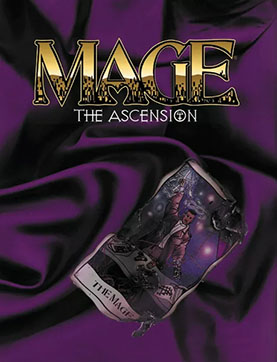
Pride and paradox are two very powerful themes in Mage.
If anything is the core of Mage, it is the danger of hubris. That’s a very pertinent story to tell today. We live in a world in which we are observed constantly; sometimes willingly, sometimes not. The temptation to get that magical ultimate power, to misuse it, arguably for the common good, would be incredible. How would you withstand that pressure? What would you do with it, and what consequences would you suffer as you grapple with that pride?
Can you tell I’m really looking forward to getting into this?
What does the future hold for you?
Tomorrow, in Los Angeles, there is a mini convention; Darkness Emergent. By Night Studios do this twice a year. They bring a travelling show that includes live action role playing of a very high quality for hundreds and hundreds of players. They bring tabletop games, board games, panels, seminars, lectures, social events. I understand that there’s a World of Darkness trivia contest this weekend, and even World of Darkness karaoke. And no, I don’t know what that means, but I’m about to find out.
I mentioned the search for the creative director. We’ve got more searches coming up, building the team, getting it in place and making sure it has everything it needs.
I am incredibly jealous of you going to Darkness Emergent
There’ll be another one in November. I don’t know what the location is, but they’ll announce it this weekend. It’ll be in the States, but I know they are looking at options for the UK. It’s a little bit more difficult to organise over there for them, but I know it’s one of their ambitions.
Thank you very much, Jason Carl

